Hechos 12
Abware̱se̱ŋ Wo̱re̱-ɔ · Toca un versículo para ver sus referencias cruzadas.
Ane̱ŋ ne̱ Owure Hɛrɔd a tii Peetroo tiikpa, ne̱ Wuribware̱ a kɔɔre̱ mò̱ le̱e̱ mò̱ ke̱sare̱e̱‑rɔ‑ɔ
1Amɔ saŋ mɔ Owure Hɛrɔd a le̱e̱ ɔ waa asɔre̱e̱ awuye ne̱ bo̱ bo̱ Yɛro̱salɛm maŋ‑nɔ‑ɔ bo̱ko̱ bo̱rɔkraa. 2Ne̱ ɔɔ sa ne̱ mò̱ asoogyaa awuye a ba ke̱paŋ bo̱ mɔɔ Yohanee mò̱ daa Yakubu. 3Mò̱ a ŋu fe̱yɛ Yakubu ke̱mɔɔ‑ɔ a waa Yudaa awuye kɔne̱‑ɔ, ne̱ ɔɔ be̱e̱ kra Peetroo. Ɔɔ waa amo̱ ŋke ne̱ Yudaa awuye e̱ waa kasu kanɔ ngyaŋŋe̱ ko̱ ne̱ ba gyi Bodobodoo-ne̱-yiisi-mo̱ŋ‑te‑ro‑o. 4Bamo̱ a kra mò̱‑ɔ, ne̱ baa tii mò̱ tiikpa, ne̱ baa sa ne̱ asoogyaa awuye ana ane̱ŋ ntuŋ nna a de̱e̱re̱ mò̱ se̱. Ne̱ Owure Hɛrɔd a waa mò̱ mfɛɛre̱ fe̱yɛ ɔ sa a bo̱ gyaŋŋe̱ gyi mò̱ ase̱ŋ saŋ ne̱ kasu kanɔ ngyaŋŋe̱ ko̱ ne̱ ba gyi Wuribware̱-a‑kya-ane̱-yɔwe̱ a ateese‑o a lo̱we̱‑ɔ. 5Amo̱se̱‑ɔ ne̱ baa tii mò̱. Amaa asɔre̱e̱ awuye‑o a ye̱re̱ ke̱bware̱ko̱re̱ se̱ kake ke̱maa fe̱yɛ Wuribware̱ lee mò̱ le̱e̱ owure‑o ke̱sare̱e̱‑rɔ. 6Fe̱yɛ nyaŋe̱ ne̱ Owure Hɛrɔd yɛ ɔ gyaŋŋe̱ ase̱sɛ na o gyi Peetroo ase̱ŋ‑ɔ, ke̱mo̱ ndɔɔ kanye na Peetroo da asoogyaa awuye anyɔ mbo̱ŋtɔ‑rɔ, na baa ŋure mò̱ agbarabi anyɔ, na asoogyaa awuye ko̱ mɔ ye̱re̱ ke̱kyaŋ ne̱ baa tii Peetroo ke̱mo̱‑rɔ‑ɔ kibunogyi‑ro.
7Mfe̱ŋ ne̱ Wuribware̱ kabɔɔ ko̱ a bo̱ ye̱re̱ Peetroo ase̱ ke̱kyaŋ ne̱ ɔ bo̱ ke̱mo̱‑rɔ‑ɔ. Amo̱ a gye̱ kanye gbaa ooo, ne̱ ke̱kyaŋ‑ɔ‑rɔ a laŋŋe̱‑rɔ. Ne̱ Wuribware̱ kabɔɔ amo̱ a le̱ŋkpaŋ Peetroo ke̱baakpa, ne̱ oo kyiŋŋi. Ne̱ kabɔɔ‑ɔ yɛ, “Waa me̱naŋ ko̱so̱!” Puri amo̱‑rɔ ne̱ agbarabi ne̱ baa bo̱ da mò̱ asare̱e̱‑rɔ‑ɔ a saŋŋe̱ le̱e̱ da. 8Ne̱ Wuribware̱ kabɔɔ‑ɔ yɛ, “Ke̱re̱ se̱ na fo̱ waa‑rɔ fo̱ ase̱be̱ta na fo̱ buŋ fo̱ waagya.” Ne̱ Peetroo a waa ane̱ŋ. 9Ne̱ Peetroo a gya mò̱ se̱ le̱e̱ ke̱kyaŋ‑ɔ‑rɔ, na ɔ mo̱ŋ nyi ke̱tɔ ne̱ Wuribware̱ kabɔɔ‑ɔ e̱ waa‑ɔ, a le̱e̱ fe̱yɛ aa waa mò̱ fe̱yɛ mò̱ a ku dee‑o ne̱e̱. 10Ne̱ baa kyo̱ŋ asoogyaa awuye katuŋ gye̱ŋkpɛɛsɛ‑ɔ na kanyɔse̱po̱‑ɔ se̱. Ne̱ ŋkee lalalo̱we̱‑ɔ, ne̱ baa bo̱ fo̱ po̱ne̱ dabe̱ ne̱ baa ba ke̱gye̱re̱tɔ bo̱ waa, ne̱ o tii kabo̱re̱ ne̱ ka lwee maŋ‑nɔ‑ɔ. Mfe̱ŋ ne̱ po̱ne̱ amo̱ fɔŋfɔŋ a buŋŋi, ne̱ baa kyo̱ŋ le̱e̱, ne̱ baa bo̱rɔ kabo̱re̱ ko̱, ne̱ puri‑ro mfe̱ŋ Wuribware̱ kabɔɔ amo̱ a ŋaa yɔwe̱ Peetroo.
11Ŋkee fe̱raa, ne̱ Peetroo a pini ke̱tɔ ne̱ kaa waa‑ɔ, ne̱ ɔ yɛ, “Mbe̱yɔmɔ fe̱raa, mo̱ a ŋu fe̱yɛ a gye̱ kase̱ŋtiŋ. Wuribware̱ ya suŋ mò̱ kabɔɔ‑ɔ fe̱yɛ ɔ bo̱ lee mo̱ le̱e̱ Owure Hɛrɔd ke̱sare̱e̱‑rɔ, na o lee mo̱ le̱e̱ ke̱tɔ ke̱maa ne̱ Yudaa awuye e̱ kpa fe̱yɛ ko̱ waa mo̱‑ɔ‑rɔ.”
12Mò̱ fɔŋfɔŋ a ŋu ane̱ŋ ne̱ a du bo̱ sa mò̱‑ɔ se̱‑ɔ, ne̱ ɔɔ yɔ Yohanee Maak mò̱ nyi Mariya aye̱, na ase̱sɛ bwe̱e̱tɔ a gyaŋŋe̱ mfe̱ŋ kanye amo̱ ba ko̱re̱ ke̱bware̱ko̱re̱ ba sa Peetroo. 13Ne̱ Peetroo a da lɔŋ a kanɔ a po̱ne̱‑ɔ se̱, ne̱ bamo̱ kabre ko̱ ne̱ ba te̱e̱ mò̱ ɛ Rosa‑o a le̱e̱ ya ke̱e̱. 14Ne̱ oo pini Peetroo bo̱re̱, ne̱ mò̱ akatɔ a gyi bwe̱e̱tɔ hare̱e̱ ɔ taŋ se̱ a o buŋŋi po̱ne̱‑ɔ sa Peetroo, ne̱ oo kiŋŋi lweero ya tɔwe̱ gywii bamo̱ fe̱yɛ Peetroo ye̱re̱ kawu. 15Ne̱ baa tɔwe̱ gywii mò̱ fe̱yɛ, “Fo̱ e̱ lɔ e̱bo̱ŋ ne̱e̱ e̱e̱e̱?” Ne̱ ɔɔ ye̱re̱‑rɔ fe̱yɛ, “A gye̱ kase̱ŋtiŋ.” Amo̱se̱‑ɔ ne̱ baa be̱ŋŋaa mò̱ fe̱yɛ, “Wuribware̱ a kabɔɔ ne̱ Peetroo de, ne̱ ka kuŋ mò̱‑ɔ ne̱e̱.” 16Saŋ mɔ pɛɛɛ na Peetroo saŋ ɔ da po̱ne̱‑ɔ se̱. Ne̱ ŋkee fe̱raa baa bo̱ buŋŋi, ne̱ bamo̱ a ŋu mò̱‑ɔ, ne̱ aa kpe̱ŋ bamo̱ e̱ye̱e̱. 17Ne̱ ɔɔ ya mò̱ ke̱sare̱e̱ bo̱ tɔwe̱ gywii bamo̱ fe̱yɛ bo̱ laatɔ, ne̱ ɔɔ tɔwe̱ ane̱ŋ ne̱ Wuribware̱ a lee mò̱ le̱e̱ tiikpa‑ɔ pɛɛɛ gywii bamo̱. Ne̱ ɔ yɛ, “Mo̱nꞌ ya tɔwe̱ amo̱ gywii Yakubu na Kristoo awuye ne̱ baa saŋ‑ɔ pɛɛɛ.” Ne̱ ɔɔ le̱e̱ bamo̱ ase̱ mfe̱ŋ be̱e̱ yɔ to̱ŋ ko̱.
18Kaye̱ a ke‑o, ne̱ ase̱ŋ a to̱ asoogyaa awuye ne̱ ba de̱e̱re̱ tiikpa‑ɔ se̱‑ɔ. Nte̱tɔ ya waa Peetroo? 19Ne̱ Owure Hɛrɔd yɛ bo̱ buwi kpa mò̱. Amaa baa kpa mò̱ kpo̱ne̱. Amo̱se̱ se̱‑ɔ ne̱ oo bise asoogyaa awuye‑o amo̱ ase̱ŋ, ne̱ ɔɔ sa kanɔ fe̱yɛ bo̱ mɔɔ bamo̱.
Amo̱ kamɛɛ‑rɔ ne̱ owure‑o a le̱e̱ Yude̱ya swe̱e̱re̱ se̱ ya kye̱na Kaye̱sare̱ya maŋ‑nɔ kafwe̱e̱.
Ane̱ŋ ne̱ Hɛrɔd a wu‑o
20Ne̱ Owure Hɛrɔd duŋ a fwii Tiro na Sidɔŋ e̱maŋ awuye si. Amo̱se̱‑ɔ ne̱ baa kpɔwe̱ abɛɛ yɔ a bo̱ ya ŋu mò̱, bo̱ le̱e̱ fe̱yɛ bamo̱ ateese gyisɛ pɛɛɛ a le̱e̱ owure a swe̱e̱re̱‑ɔ se̱ ne̱e̱. Pwɛɛ ne̱ baa yɔ‑ɔ, baa tɔwe̱ gywii ɔnyare̱ ne̱ ɔ de̱e̱re̱ owure a lɔŋ‑ɔ‑rɔ a ayaafɔre̱‑ɔ se̱ ne̱ ba te̱e̱ mò̱ ɛ Balasitus‑o ne̱e̱, ne̱ oo sure si fe̱yɛ ɔ kya bamo̱‑rɔ. Ne̱ baa yɔ owure‑o ase̱ ya tɔwe̱ gywii mò̱ fe̱yɛ ɔ sa a mò̱ duŋ yuri.
21Ne̱ owure‑o a sa kake, ne̱ ɔɔ te̱e̱ ase̱sɛ‑ɔ pɛɛɛ baa mò̱ akatɔ‑rɔ. Ne̱ oo buŋ mò̱ awuretɔ, ne̱ ɔɔ kye̱na mò̱ kawuregya se̱, ne̱ ɔɔ sa se̱ŋsa gywii ase̱sɛ‑ɔ. 22Ne̱ ase̱sɛ‑ɔ a kyo̱rɔ mò̱ se̱ŋsa sasɛ fɛɛ‑rɔ fe̱yɛ, “N gye̱ se̱sɛ e̱ gye̱ ne̱ ɔ sa se̱ŋsa‑ɔ, kisi ko̱ ne̱e̱.” 23Ne̱ Wuribware̱ kabɔɔ ko̱ a ba kame‑ro ko̱lɔ bo̱ da mò̱, ne̱ aso̱ŋsɔɔ a gyi mò̱ e̱kyo̱rɔwe̱, ne̱ oo wu, a le̱e̱ fe̱yɛ ɔ mo̱ŋ kyo̱rɔ Wuribware̱ fe̱yɛ mò̱ a sa mò̱ kuwure na ke̱dabe̱.
24Saŋ amo̱ ase̱sɛ bwe̱e̱tɔ maa se̱ ba nu abware̱se̱ŋ, na ba kɔɔre̱ ba gyi. 25Ne̱ Bar‑Nabas na Sɔɔl a lo̱we̱ ke̱tɔ ne̱ baa yɔ ke̱mo̱ se̱‑ɔ, ne̱ baa taa Yohanee Maak, ne̱ bamo̱ aa mò̱ a kiŋŋi yɔ Ante̱yɔke̱ya maŋ‑nɔ.
¿Sabías que…?
La huida de Pedro y la muerte de Herodes
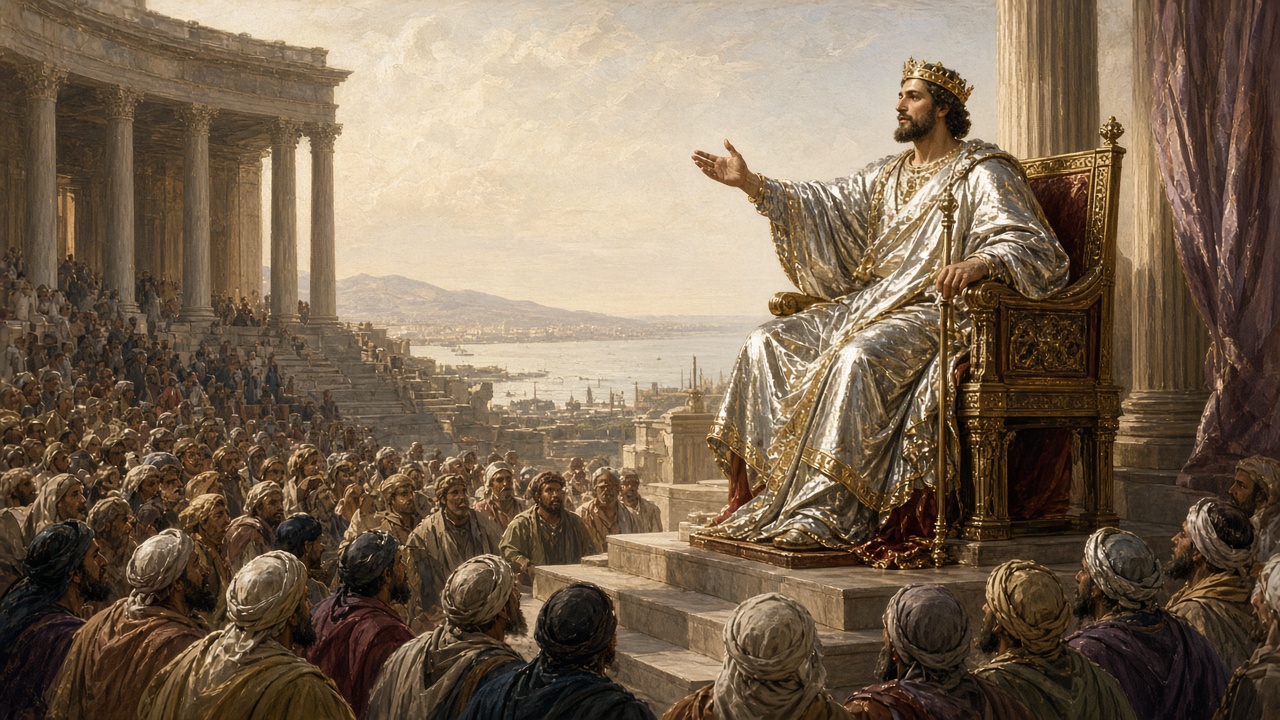
- El rey Herodes de este capítulo es Herodes Agripa I, nieto de Herodes el Grande, que con el tiempo llegó a poseer todo el reino de su abuelo y el título de rey. Hizo matar a Santiago y encarceló a Pedro. El Diccionario Bíblico de Easton (1897) dice que, en el segundo día de una fiesta en honor del emperador Claudio, Agripa apareció en el gran teatro de Cesarea con magníficas vestiduras de plata; era temprano, y los rayos del sol deslumbraban a quienes lo veían.Fuentes: Herod Agrippa I · el propio texto bíblico
- El Santiago muerto a espada era Santiago, hijo de Zebedeo, hermano del apóstolo Juan, un pescador que había trabajado como socio de Pedro. El Diccionario Bíblico de Easton (1897) lo presenta como el primero de los apóstoles en ser muerto y dice que Herodes Agripa lo hizo decapitar. El Santiago a quien Pedro pide que se avise a los creyentes es otro hombre: el mismo diccionario lo identifica como el Santiago que encabezaba la iglesia en Jerusalén.Fuentes: James (Son of Zebedee) · James (Brother of Jesus) · el propio texto bíblico
- Cuando comprendió que estaba libre, Pedro fue a la casa de María, madre de Juan Marcos, en Jerusalén, que el Diccionario Bíblico de Easton (1897) llama lugar habitual de reunión de los discípulos; mucha gente estaba reunida allí orando. La sirvienta que acudió a la puerta exterior se llamaba Rode, nombre que significa una rosa; llena de alegría al oír su voz, corrió adentro para anunciarlo y olvidó abrir la puerta. Juan, llamado también Marcos, era hijo de María —Marcos, su nombre romano, poco a poco reemplazó al nombre judío Juan— y más tarde salió de Jerusalén con Bernabé y Saulo.Fuentes: Mary (Mother of John Mark) · Rhoda · John Mark · el propio texto bíblico
Notas escritas con ayuda de IA a partir de fuentes abiertas (Theographic Bible Metadata, CC BY-SA 4.0; Easton’s Bible Dictionary, dominio público) y revisadas antes de publicarse.
Lugares de este capítulo
- Caesarea · Hoy: Caesarea Maritima · 32.500, 34.892 · versículo 19
- Judea · Hoy: Judea 1 · 31.777, 35.234 · versículo 19
- Sidon · Hoy: Sandikli archaeological site in Sidon · 33.561, 35.372 · versículo 20
- Tyre · 33.271, 35.196 · versículo 20
- Jerusalem · 31.777, 35.234 · versículo 25
Solo aparecen lugares identificados con alta confianza (90 % o más según las fuentes académicas reunidas por OpenBible). Mapa de la época: DARE (Digital Atlas of the Roman Empire), CC BY 4.0; mapa actual: © colaboradores de OpenStreetMap; lugares: OpenBible.info (CC BY 4.0).
Créditos y licencia de esta traducción
Abware̱se̱ŋ Wo̱re̱-ɔ
New Testament in Chumburung (GH:ncu:Chumburung)
copyright © 2010 Wycliffe Bible Translators, Inc.
Language: Chumburung
Translation by: Wycliffe Bible Translators, Inc.
Copyright Information
© 2010, Wycliffe Bible Translators, Inc. All rights reserved.
This translation text is made available to you under the
terms of the Creative Commons License: Attribution-Noncommercial-No Derivative Works.
( http://creativecommons.org/licenses/by-nc-nd/3.0/ )
In addition, you have permission to port the text to different file formats, as long as you
do not change any of the text or punctuation of the Bible.
You may share, copy, distribute, transmit, and extract portions
or quotations from this work, provided that you include the above copyright
information:
You must give Attribution to the work.
You do not sell this work for a profit.
You do not make any derivative works that change any of the actual words or punctuation of the Scriptures.
Permissions beyond the scope of this license may be
available if you contact
us with your request.
The New Testament
in Chumburung
© 2010, Wycliffe Bible Translators, Inc. All rights reserved.
This translation is made available to you under the terms of the
Creative Commons Attribution-Noncommercial-No Derivatives license 4.0.
You may share and redistribute this Bible translation or extracts from it in any format, provided that:
You include the above copyright and source information.
You do not sell this work for a profit.
You do not change any of the words or punctuation of the Scriptures.
Pictures included with Scriptures and other documents on this site are licensed just for use with those Scriptures and documents.
For other uses, please contact the respective copyright owners.
2025-05-16
Fuente: http://ebible.org/ncuNT/ · eBible.org