Salmos 128
Godɨn Eghaghanim: Akar Gavgavir Dɨkɨrɨzir Ghurim ko Igiam · Toca un versículo para ver sus referencias cruzadas.
God gumazamizir an akam baragha an gɨn zuiba, a deragha me gami
Godɨn Dɨpenimɨn ghuavanaga an ziam fer ighiam.
1Gumazamizir Ikiavɨra Itir Godɨn atiatia an apengan ikia, an akaba baragha dar gɨn zuiba,
me bar akongegh.
2Ingangarir nɨ amibara nɨ dar dagɨaba inigh
bizir nɨ ifongezibagh ivezam.
Eghtɨ bizir nɨ amiba bar deraghtɨ
nɨ bar akuegham.
3Nɨn amuim, wainɨn ikarɨzimɨn mɨn
ava ovɨzir avɨriba iti moghɨn, a borir avɨriba batam.
Nɨn boriba bar avɨrasemegh nɨn avir mɨriam,
olivɨn temer igiabar mɨn bar an okarigham.
4Bar guizbangɨra,
gumazir Ikiavɨra Itir Godɨn atiatia an apengan itim,
a kamaghɨrama otogham.
5Ikiavɨra Itir God, uan Dɨpenimɨn aven Saionɨn Nguibamɨn iti,
a deragh nɨ damu.
Nɨ zurara nguazimɨn itir dughiam,
nɨ Jerusalemɨn nguibamɨn itir bizibar gantɨ da deraghvɨrama otiv.
6Kɨ kamaghsua, nɨ dughiar ruarimɨn ikɨ
uan igiar boribar gan.
Eghtɨ Israelia deraghvɨra ikɨ.
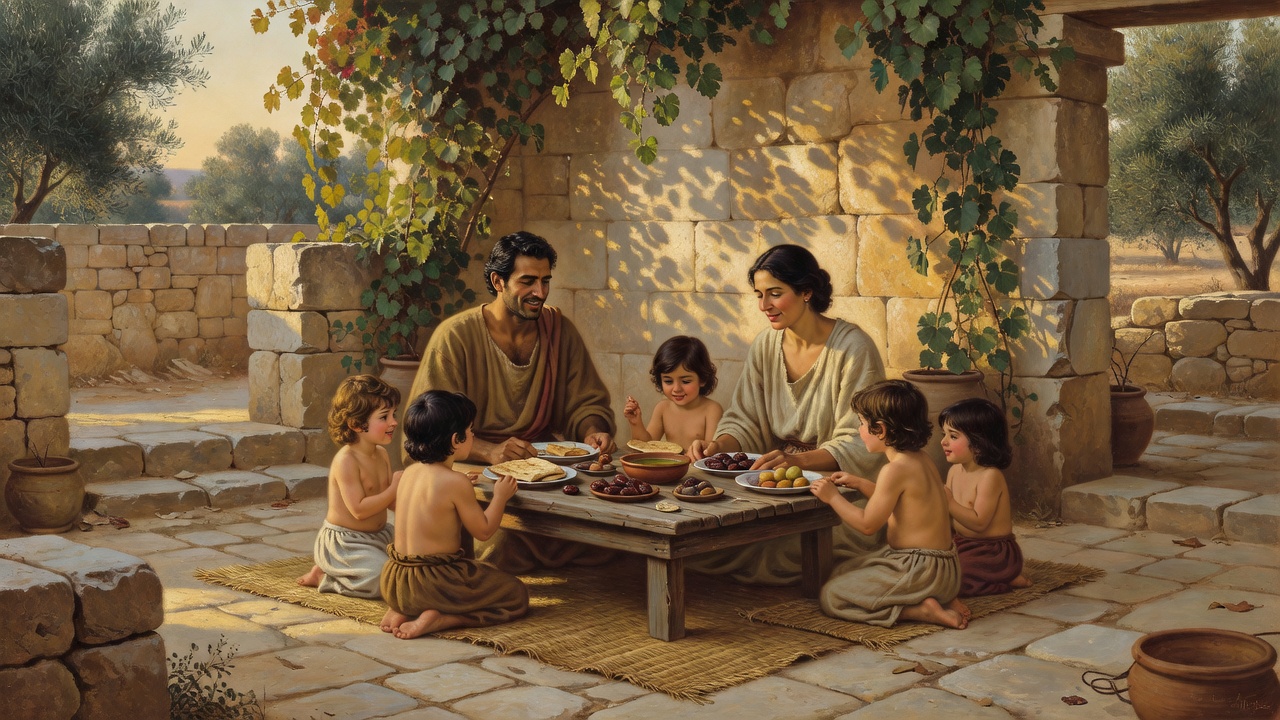
¿Sabías que…?
Bendiciones Familiares y la Paz de Jerusalén
- El Salmo 128 utiliza metáforas agrícolas familiares para describir la abundancia doméstica, comparando a la esposa con una vid fructífera y a los hijos alrededor de la mesa con vigorosos renuevos de olivo.Fuentes: el propio texto bíblico
- El salmo está catalogado como un Cántico de ascenso gradual, vinculando el trabajo cotidiano y la dicha familiar con el bienestar colectivo de Sion y Jerusalén.Fuentes: el propio texto bíblico · Zion
- La bendición final de paz sobre Israel hace eco del significado tradicional de Jerusalén, cuyo nombre alude a una posesión o fundamento de paz.Fuentes: el propio texto bíblico · Jerusalem
Notas escritas con ayuda de IA a partir de fuentes abiertas (Theographic Bible Metadata, CC BY-SA 4.0; Easton’s Bible Dictionary, dominio público) y revisadas antes de publicarse.
Lugares de este capítulo
Solo aparecen lugares identificados con alta confianza (90 % o más según las fuentes académicas reunidas por OpenBible). Mapa de la época: DARE (Digital Atlas of the Roman Empire), CC BY 4.0; mapa actual: © colaboradores de OpenStreetMap; lugares: OpenBible.info (CC BY 4.0).
Créditos y licencia de esta traducción
Godɨn Eghaghanim: Akar Gavgavir Dɨkɨrɨzir Ghurim ko Igiam
The Holy Bible in the Aruamu language of Madang Province, Papua New Guinea, 2020 Edition
Buk Baibel long tokples Aruamu long Madang Provins long Niugini long 2020
copyright © 2020 Pioneer Bible Translators
Language: Aruamu
Translation by: Pioneer Bible Translators
Contributor: The Seed Company
GOD'S STORY in the Aruamu Language of Papua New Guinea
This translation is made available to you under the terms of the
Creative Commons Attribution Share-Alike license 4.0.
You have permission to share and redistribute this Bible translation in any format and to make reasonable revisions and adaptations of this translation, provided that:
You include the above copyright and source information.
If you make any changes to the text, you must indicate that you did so in a way that makes it clear that the original licensor is not necessarily endorsing your changes.
If you redistribute this text, you must distribute your contributions under the same license as the original.
Pictures included with Scriptures and other documents on this site are licensed just for use with those Scriptures and documents.
For other uses, please contact the respective copyright owners.
Note that in addition to the rules above, revising and adapting God's Word involves a great responsibility to be true to God's Word. See Revelation 22:18-19.
2025-05-15
Fuente: http://png.bible/msy2020/ · eBible.org