1 Timoteo 4
Abureni NT Portions · Toca un versículo para ver sus referencias cruzadas.
Ogbo Atu̠ghu̠me̠ni̠ Igunugha̠
1E̠mu̠gh E̠tu̠tu̠ bho̠ amar agba a̠mutiom ma̠a̠, d̠a̠ rekunuguma̠ a̠d̠a̠ma̠ bho̠, idi a̠nwunom ta̠ etiba̠ra̠ e̠d̠u̠a d̠a̠ ologi ima̠ra̠ bho̠, sa̠ ta̠ e̠nagha ma̠ aru̠mu̠gh igunugha̠ na̠ i̠tu̠ghu̠me̠ni̠ a̠ruru. 2Wa̠ ibhelebhel i̠gbamigunugha̠ na̠ a̠d̠ighi ma̠ ola̠ eloghoma̠n bho̠ na̠ asa ma̠ ari̠ghe̠l awa bho̠. 3Awa ibhin ma̠ o̠walan ilom bha̠ e̠tu̠tu̠, sa̠ na̠ edin od̠e idi ra̠d̠ien ya̠ A̠zib̠a̠ ale̠m agu̠o̠ ola̠ a̠nwunom ogbo ya̠ ima̠ra̠ bho̠ ta̠ e̠da ebhin na̠ ali̠se̠bh sa̠ ta̠ eleriom ya̠gia̠ga̠i bho̠. 4Kabar kabar A̠zib̠a̠ ale̠m, o̠ku̠a a̠d̠ighi be̠le̠ni̠, i̠yar oghel d̠o̠ ma̠ odi abar i̠se̠, ya̠a̠ o̠da obhi̠n na̠ ali̠se̠bh. 5Ezin bho̠, o̠nu̠o̠kpe̠ ta̠ A̠zib̠a̠ na̠ a̠siseiny na̠ e̠b̠ab̠alame̠ni̠ ma̠ ed̠ia̠n bho̠.
Ob̠eb̠i Ob̠a̠ra̠motu ta̠ A̠zizo̠s
6Ku̠gba ma̠a̠ anwa a̠tu̠ghu̠me̠ni̠ ma̠ i̠di̠ar i̠nye̠n ma̠ a̠rumor na̠ aru̠marani̠, bha̠ anwa oten ob̠eb̠i ob̠a̠ra̠motu ta̠ Akrai̠st A̠zizo̠s, o̠ni̠ ola̠ o̠nu̠o̠kpe̠ ologi ima̠ra̠ bho̠, na̠ ib̠eb̠i i̠tu̠ghu̠me̠ni̠ ya̠ anwa ibhin onyen ologi i̠nagha bho̠, imuzo d̠a̠ ozu. 7Ya̠a̠, ko onwuna̠ ma̠ abar a̠gboloma̠ ma̠ i̠karabh asu̠gbagba na̠ id̠ud̠ul ya̠ emirobh. Kpe̠le̠me̠ni̠ tu̠ghane̠ ma̠ orugh a̠ghud̠um ola̠ ta̠ a̠nigha̠ ma̠ A̠zib̠a̠ ma̠ itutumeni. 8Oselegi ma̠ ozu d̠a̠ i̠di̠ar ya̠ ta̠ e̠lo̠gh agu̠o̠, ya̠a̠ orugh a̠ma̠rugh oghila̠n A̠zib̠a̠ d̠a̠ eb̠la̠ re̠kal ya̠ ta̠ e̠lo̠gh agu̠o̠. Isibhe ma̠ ogua̠n i̠se̠n oghud̠um onon na̠ wa̠ na̠ a̠ru bho̠. 9Onon a̠ga̠i atu̠ghu̠me̠ni̠ ola̠ akpe̠ ko̠ni̠ko̠ni̠ ma̠ o̠mar o̠da obhin. 10Ebula̠ o̠ku̠a sa̠ i̠yar na̠ owia̠n na̠ ogir ibom, ezin bho̠ i̠yar na̠ obhin A̠zib̠a̠ wa̠ od̠i d̠a̠ a̠ghud̠um bho̠ na̠ ob̠em ologi, i̠na bha̠ Witenemeni eb̠la̠ a̠nwunom bho̠, okunukun ogbo ya̠ ima̠ra̠ i̠na bho̠. 11Kparame̠ni̠ ma̠ agba ma̠ i̠di̠ar i̠nye̠n a̠nigha̠ awa, ma̠ atu̠ghu̠me̠ni̠ awa nyen. 12Ko oma̠ra̠ ka̠ o̠ni̠ ta̠ a̠din agu̠o̠ anwa i̠ro̠ ma̠ okubh o̠ni̠ bho̠ a̠kpon anwa aki̠ri̠me̠ni̠. Ya̠a̠, rughe ma̠ ado̠l ya̠ ipa̠n ogbo ima̠ra̠ bho̠ ta̠ e̠ta, d̠a̠ a̠fugh o̠nu̠ na̠ od̠ighi i̠di̠ar d̠oyom, d̠a̠ etula̠n d̠oyom, d̠a̠ ologi ima̠ra̠ d̠oyom, na̠ d̠a̠ e̠b̠ab̠ala ologi d̠oyom. 13Kisa̠ ami̠ ta̠ a̠ru, bha̠ bhine gha̠n ma̠ obhel a̠sen A̠d̠ire E̠tu̠tu̠ bho̠ d̠a̠ a̠kokod̠ia̠n, kikiome, ma̠ atu̠ghu̠me̠ni̠. 14Ko oghel enigha̠ e̠mu̠gh wa̠ od̠i na̠ anwa bho̠, wa̠ unigha̠ nyam igiel bho̠ ikei bho̠ i̠gbamagi̠ ma̠ aru̠gu̠o̠ d̠awa d̠a̠ ozu d̠oyom, iwa̠ igboloma̠ bho̠. 15Ru̠ru̠ane̠ ma̠ a̠gboloma̠ ma̠ i̠di̠ar i̠nye̠n, bo̠ka̠ eloloma̠ ogir d̠oyom emite ma̠ ola̠ ko̠ni̠ko̠ni̠ ta̠ abi̠gh 16Mare̠ ma̠ a̠kpona̠ ma̠ od̠ighi i̠d̠i̠ar d̠oyom na̠ atu̠ghu̠me̠ni̠ d̠oyom. Ro̠ ma̠ ogir ogir i̠di̠ar i̠nye̠n, ezin bho̠, ka̠ anwa igir o̠ku̠a sa̠ anwa ta̠ a̠tenemeni ma̠ ozu d̠oyom na̠ a̠nwunom ya̠ na̠ e̠nagha nyam bho̠.
¿Sabías que…?
Falsa enseñanza y entrenamiento en la piedad
- El capítulo dice que el Espíritu declara expresamente que, en tiempos posteriores, algunos abandonarán la fe para seguir espíritus engañosos y enseñanzas de demonios. Estarán influidos por la hipocresía de mentirosos, cuya conciencia ha sido cauterizada con un hierro candente, y prohibirán el matrimonio y exigirán abstenerse de ciertos alimentos.Fuentes: el propio texto bíblico
- La carta responde a esas exigencias diciendo que Dios creó esos alimentos para que los reciban con acción de gracias quienes creen y conocen la verdad. Toda creación de Dios es buena, y nada de lo que se recibe con acción de gracias debe rechazarse, porque es santificado por la palabra de Dios y la oración.Fuentes: el propio texto bíblico
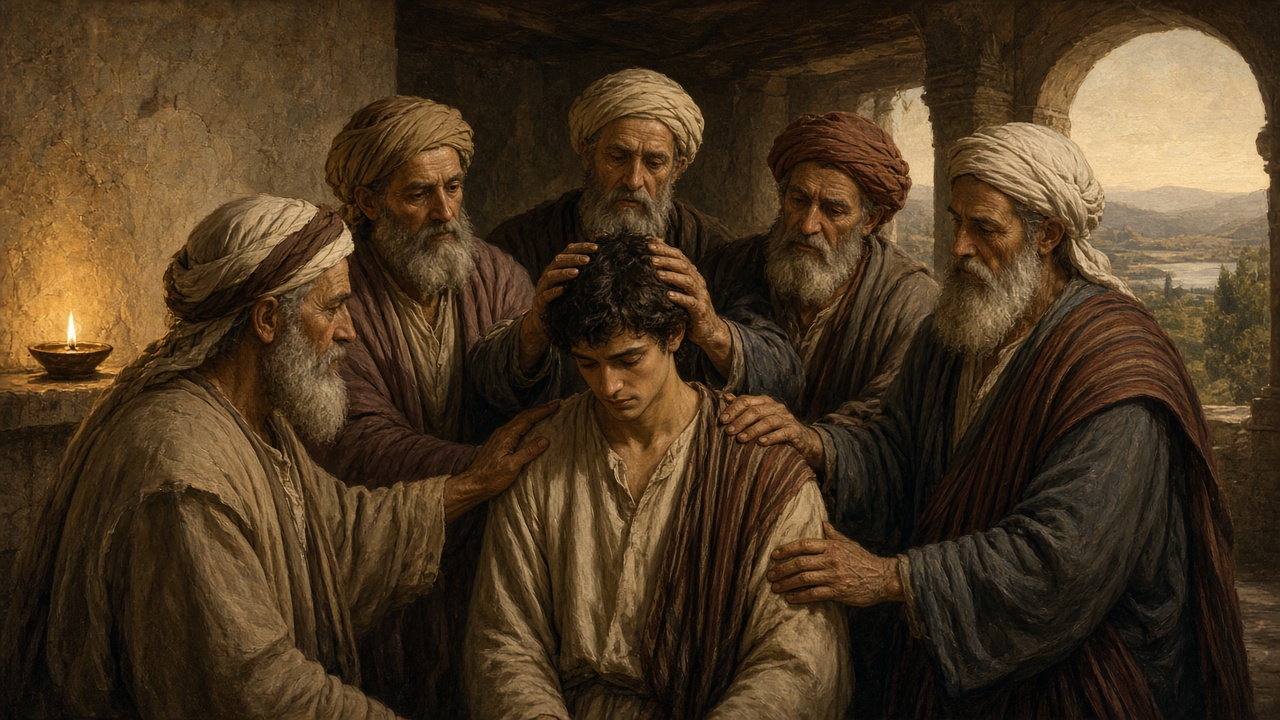
- El autor exhorta al joven a quien se dirige a no dejar que nadie menosprecie su juventud, sino a ser ejemplo en el habla, en la conducta, en el amor, en la fe y en la pureza. Hasta que el autor llegue, debe dedicarse a la lectura pública de las Escrituras, a la exhortación y a la enseñanza, y no descuidar el don que le fue dado mediante profecía, cuando los ancianos le impusieron las manos. El ejercicio físico, añade la carta, tiene un valor limitado, mientras que la piedad es valiosa en todo sentido y encierra promesa para la vida presente y para la venidera, un dicho que la carta llama digno de confianza y de plena aceptación.Fuentes: el propio texto bíblico
Notas escritas con ayuda de IA a partir de fuentes abiertas (Theographic Bible Metadata, CC BY-SA 4.0; Easton’s Bible Dictionary, dominio público) y revisadas antes de publicarse.
Créditos y licencia de esta traducción
Abureni NT Portions
Abureni: Abureni NT Portions (New Testament)
copyright © 2022 Luke Initiative for Scripture Translationand The Seed Company
Language: (Abureni)
Contributor: The Seed Company
This translation is made available to you under the terms of the
Creative Commons Attribution Share-Alike license 4.0.
You have permission to share and redistribute this Bible translation in any format and to make reasonable revisions and adaptations of this translation, provided that:
You include the above copyright and source information.
If you make any changes to the text, you must indicate that you did so in a way that makes it clear that the original licensor is not necessarily endorsing your changes.
If you redistribute this text, you must distribute your contributions under the same license as the original.
Pictures included with Scriptures and other documents on this site are licensed just for use with those Scriptures and documents.
For other uses, please contact the respective copyright owners.
Note that in addition to the rules above, revising and adapting God's Word involves a great responsibility to be true to God's Word. See Revelation 22:18-19.
2025-07-02
Fuente: http://ebible.org/mgj/ · eBible.org