Job 8
Biblica® Ochiw Thuolo Motingʼo Loko Manyien™ · Toca un versículo para ver sus referencias cruzadas.
Bildad odwoko Ayub
1Eka Bildad ja-Shua nodwoko kama:
2“Ibiro dhi nyime kiwacho gik ma kamago nyaka karangʼo?
Wecheni chalo mana ka yamo makudho matek.
3Bende Nyasaye nyalo ngʼado bura ma ok nikare?
Bende Jehova Nyasaye Maratego nyalo weyo timo gima kare?
4Kane nyithindi otimo richo e nyime,
noweyogi mondo giyud kum mowinjore gi richogi.
5To ka inyalo dok ir Nyasaye
mi iket kwayoni ne Jehova Nyasaye Maratego,
6kata ka dine in ngʼama ler kendo ngimani oriere tir,
to dine oani malo mokonyi,
kendo dine oduogi kari mowinjore kodi.
7Kata obedo ni chakruok mari ne rachrach,
ndaloni mabiro nyime biro bedo malich miwuoro.
8“Penj ane tiengʼ mosekalo
mondo ingʼe gik mane kweregi opuonjore,
9nikech wan to nyoro eka nonywolwa,
kendo ok wangʼeyo gimoro,
kendo ndalowa e pinyni chalo tipo.
10We ipuonjri rieko kuom joma chon
mondo iyud rieko kod ngʼeyo mane gin-go?
11Bende togo nyalo dongo marabora kama thidhna ongee?
Koso odundu bende nyalo dongo maber kama pi onge?
12Kapod gidongo maber kendo pod ok ongʼolgi oko,
to gitwo piyo moloyo lum.
13Mano e gima timore ne joma oweyo Nyasaye;
kamano e kaka geno mar joma okia Nyasaye rumo.
14Gima ogeno kuome en gima nono;
kendo gima oyiengoree chalo mbui mar otiengʼ-otiengʼ.
15Koro ka giyiengore e mbuyi,
to mbuyi dikonygi adier, ma ok oyiech?
Koso ka gimako usi,
to usi diresgi ma ok ochot.
16Ochalo gi yien motwi kama otimo pi to chiengʼ goyo
ma bedene yarore piyo piyo e puodho;
17tiendene olawore e lwendni,
kendo kere e dier kama otimo kite.
18To ka opudhe oko kama otweyeno,
to kanyo kwede kawacho ni, ‘An ne ok aneni!’
19Ngimane ner mi rum adier,
kendo yiende mamoko ema twi e lowo mane entiereno.
20“Adier, Nyasaye ok kwed ngʼama onge ketho,
bende ok ochwak joma timbegi richo.
21Obiro miyo ichako inyiero
kendo ibiro bedo mamor.
22Wasiki biro rwako wichkuot ka law,
kendo miech joma timbegi richo ok nochak one kendo.”
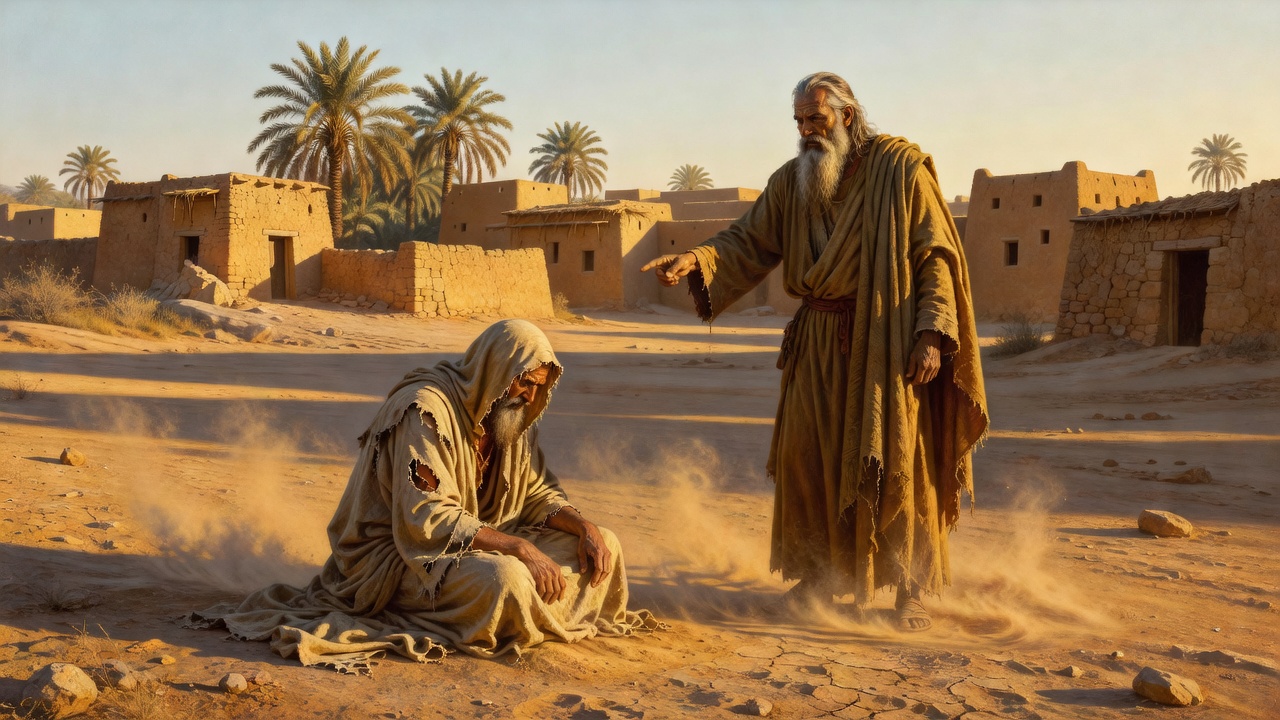
¿Sabías que…?
El llamado de Bildad a la sabiduría antigua
- Bildad es identificado como suhita, lo que probablemente lo vincula con Súa, una región árabe poblada por los descendientes de Abraham y Cetura. En este capítulo, pronuncia el primero de sus tres discursos severos a Job, afirmando que la justicia divina es absoluta e inalterable.Fuentes: Bildad · el propio texto bíblico
- En lugar de recurrir a su propia experiencia, Bildad apela al conocimiento acumulado de las generaciones pasadas, comparando los días humanos con una sombra pasajera. Para ilustrar la ruina del impío, utiliza metáforas de la naturaleza como juncos que se marchitan sin agua y la fragilidad de una telaraña.Fuentes: el propio texto bíblico
Notas escritas con ayuda de IA a partir de fuentes abiertas (Theographic Bible Metadata, CC BY-SA 4.0; Easton’s Bible Dictionary, dominio público) y revisadas antes de publicarse.
Créditos y licencia de esta traducción
Biblica® Ochiw Thuolo Motingʼo Loko Manyien™
Dholuo: Biblica® Ochiw Thuolo Motingʼo Loko Manyien™ (Bible)
copyright © 2020 Biblica, Inc.
Language: Dholuo
Translation by: Biblica, Inc.
Biblica® Open New Luo Translation™
Copyright © 1980, 2002, 2003, 2020 by Biblica, Inc.
Used with permission. All rights reserved worldwide.
“Biblica” is a trademark registered in the United States Patent and Trademark Office by Biblica, Inc. Used with permission.
All content on open.bible is made available under a Creative Commons Attribution-ShareAlike 4.0 License ( http://creativecommons.org/licenses/by-sa/4.0/ ).
You are free to:
Share — copy and redistribute the material in any medium or format
Adapt — remix, transform, and build upon the material for any purpose, even commercially
Under the following conditions:
Attribution — You must attribute the work as follows: “Original work available for free at www.biblica.com and open.bible” Attribution statements in derivative works should not in any way suggest that we endorse you or your use of this work.
ShareAlike — If you remix, transform, or build upon the material, you must distribute your contributions under the same license as the original.
Use of trademarks: Biblica® is a trademark registered in the United States Patent and Trademark Office by Biblica, Inc. and may not be included on any derivative works. Unaltered content from open.bible must include the Biblica® trademark when distributed to others. If you alter the content in any way, you must remove the Biblica® trademark before distributing your work.
This translation is made available to you under the terms of the
Creative Commons Attribution Share-Alike license 4.0.
You have permission to share and redistribute this Bible translation in any format and to make reasonable revisions and adaptations of this translation, provided that:
You include the above copyright and source information.
If you make any changes to the text, you must indicate that you did so in a way that makes it clear that the original licensor is not necessarily endorsing your changes.
If you redistribute this text, you must distribute your contributions under the same license as the original.
Pictures included with Scriptures and other documents on this site are licensed just for use with those Scriptures and documents.
For other uses, please contact the respective copyright owners.
Note that in addition to the rules above, revising and adapting God's Word involves a great responsibility to be true to God's Word. See Revelation 22:18-19.
2025-05-10
Fuente: http://ebible.org/luo/ · eBible.org