Isaías 5
Biblica® Ochiw Thuolo Motingʼo Loko Manyien™ · Toca un versículo para ver sus referencias cruzadas.
Wend jarit puoth mzabibu
1Abiro wero wend ngʼat ma ahero,
wer mar puothe mar mzabibu niya:
Jal ma ahero ne nigi puoth mzabibu
e bath got kama omewo.
2Ne opure maber mogolo kite duto manie iye
kendo opidhoe olembe mabeyo ahinya moyier.
Ne ogero kama otingʼore gi malo mar ngʼicho e chuny puodhono
bende noloso kama ibiyoe mzabibu.
Eka nomanyo olembe mabeyo
to kata kamano neginyago mana olembe maricho.
3“Koro un joma odak Jerusalem to gi jogo modak Juda;
ngʼadieuru bura e kinda kod puotha mar mzabibu.
4Angʼo machielo mane onego otim e puotha mar mzabibu
maloyo mano mane atimone?
Kane adwaro olembe mabeyo
to angʼo mane omiyo onyago mana mago maricho?
5Koro abiro nyisou
gima abiro timo ne puotha mar mzabibu:
Abiro golo chiende oko,
kendo ibiro kethe,
abiro muko ohingane
kendo nonyone piny.
6Bende anaweye kojwangʼore
ma ok olose kata doye kendo ongʼono,
kod kuthe ema nodongie.
Abiro chiko boche polo
mondo kik koth ochwene.”
7Puoth mzabibu mar Jehova Nyasaye Maratego
en od jo-Israel,
kod jo-Juda
e puodho mamiye mor.
Osedwaro mondo ngʼado bura makare obedie,
to oneno mana nek
kendo osedwaro mondo one tim makare,
to owinjo mana ywak mar lit.
Masiche kod ngʼado bura
8Unune malit, un joma mayo ji utegi ma gisegero
kendo umayo ji puothegi,
maonge kama odongʼ
ma udongʼ ka udak kendu e pinyno.
9Jehova Nyasaye Maratego osewacho ayanga ka awinjo ni:
“Kata kamano ute madongo biro dongʼ gunda,
kendo ute madongo moger mabeyo biro dongʼ maonge joma odakie.
10Heka apar mar mzabibu nogol mana olemo karaya achiel kende,
kendo kodhi moromo gorogoro nonyag cham maromo debe kende.”
11Unune malit un joma chiewo gokinyi
kulawo kuonde kongʼo,
un ma ubudho kuneno nyaka chuny otieno
ka umer maonge rieko.
12Gitimo nyasigi gi kongʼo, gi nyatiti, gi orutu,
gi oyieke kod asili,
to ok gidewo gik ma Jehova Nyasaye osetimo
bende ok giluoro tij lwete.
13Omiyo koro joga biro dhi e twech
nikech bedo maonge winjo;
jotendgi kech biro nego,
Kendo oganda modongʼ to riyo ema biro nego.
14Kuom mano piny joma otho ongʼamo dhoge malach
ka dande oyawore malich;
kendo enomuony jotelo kod oganda mamoko
e kinde ma gikokee gi mor.
15Omiyo dhano nodwok piny
kendo ogendini duto nogol tekogi,
kendo timbe jonjore notieki.
16To Jehova Nyasaye Maratego notingʼ malo gi timne makare,
kendo Nyasaye maler nonyis lerne gi timne makare.
17Eka rombe nokwa e legegi giwegi;
to nyirombe nokwa e gundni mane mag jomoko.
18Unune malit un joma osiko katimo richo ka umede gi miriambo,
kod timbe anjawo,
19kod joma wacho ni joga niya, “Nyasaye mondo oreti,
kendo otim gima odwaro timo,
mondo wanene.
We gima Jal Maler mar Israel dwaro timo otimre
mondo wangʼeye.”
20Mano kaka nobed malit ne joma luongo tim mamono ni ber
to tim maber ni rach;
jogo maketo mudho kar ler
to kar ler gikete mudho,
joma keto gik makech kar mamit
to mamit giketo kar makech.
21Mano kaka nobed malit ne jogo mariek e wengegi giwegi
kendo kwano ni ongʼeyo gik moko duto.
22Mano kaka nobed malit ne thuondi mag madho kongʼo
kendo molony e ruwo kongʼo makech.
23Un ma uweyo joketho nikech asoya,
to joma onge ketho ema utamo e adiera margi.
24Kuom mano kaka lew mach wangʼo yugi
kendo kaka lum motwo lal nono e mach,
e kaka tiendgi notow
bende maua mawuok e itgi nolwar mana ka buru,
nikech gisedagi chik mar Jehova Nyasaye Maratego
kendo chayo wach Jal Maler mar Israel.
25Kuom mano Jehova Nyasaye osekecho gi joge;
kendo oserieyo bade kuomgi monegogi.
Gode yiengni kendo
ringre joma otho odhurore e wangʼ yore ka yugi.
To kata bed ni magi duto osetimore,
to mirimbe pod ok okwe,
nimar pod okecho kodgi.
26Otingʼo bandera malo ne ogendini moa mabor,
kendo ogoyo tungʼ koluongo jogo moa e tunge piny.
Gibiro mapiyo piyo
ka giringo matek.
27Onge kata mana ngʼato achiel kuomgi ma ol kata machwanyore,
bende onge kata ngʼato achiel kuomgi ma nindo tero,
bende onge moro ma okanda ombekni e nungone
kata ma tond wuochene ochot.
28Asernigi bith
bende atungegi duto oywa motegno,
kendo faresegi ombongʼ tiendgi ojingʼ,
tiend gechegi winyore ka kalausi.
29Giruto ka sibuor
kendo gingʼur ka sibuoche matindo,
bende gimor ka gidwaro mako le,
mi gitingʼ-gi e dhogi maonge ngʼama nyalo resogi.
30Odiechiengno ginirut kuome
mana ka mor mar ataro.
Kendo ka ngʼato ongʼiyo pinyno
to none mudho gi kuyo;
kata mana ler mar chiengʼ boche polo noum.
¿Sabías que…?
El cántico de la viña y los seis ayes
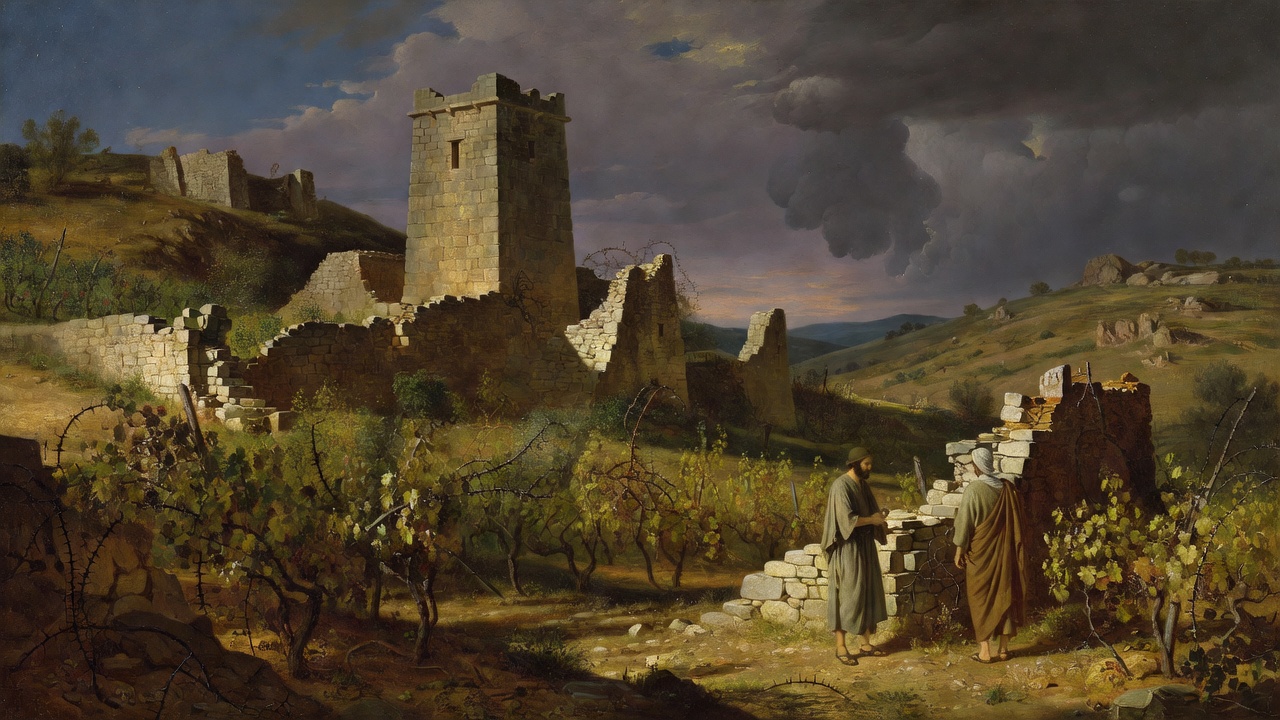
- El cántico que abre Isaías 5 describe el meticuloso trabajo de la viticultura en la antigua Judea: despedregar laderas fértiles, levantar una torre de vigilancia de piedra, excavar un lagar en la roca y plantar cepas escogidas protegidas por un vallado y un muro. El poema se convierte en una parábola judicial donde la viña representa a la casa de Israel y a los hombres de Judá, de quienes se esperaba justicia en lugar de derramamiento de sangre.Fuentes: el propio texto bíblico
- El capítulo presenta una serie de seis ayes proféticos que denuncian abusos sociales y morales específicos en Judá. Entre ellos destacan los terratenientes que acumulaban propiedades juntando casa a casa y campo a campo, los jueces que aceptaban sobornos para absolver a culpables privando de justicia al inocente, y los gobernantes entregados a banquetes mientras desoían la instrucción divina.Fuentes: el propio texto bíblico
- El ministerio profético de Isaías en Jerusalén se dirigió al pueblo de Judá durante un prolongado período que comenzó a mediados del siglo VIII a.C. El capítulo concluye advirtiendo que el Señor daría una señal a ejércitos extranjeros distantes y disciplinados, equipados con carros, arcos y veloces caballos, para ejecutar juicio sobre la tierra.Fuentes: Jerusalem · Prophecies of Isaiah · el propio texto bíblico
Notas escritas con ayuda de IA a partir de fuentes abiertas (Theographic Bible Metadata, CC BY-SA 4.0; Easton’s Bible Dictionary, dominio público) y revisadas antes de publicarse.
Lugares de este capítulo
Solo aparecen lugares identificados con alta confianza (90 % o más según las fuentes académicas reunidas por OpenBible). Mapa de la época: DARE (Digital Atlas of the Roman Empire), CC BY 4.0; mapa actual: © colaboradores de OpenStreetMap; lugares: OpenBible.info (CC BY 4.0).
Créditos y licencia de esta traducción
Biblica® Ochiw Thuolo Motingʼo Loko Manyien™
Dholuo: Biblica® Ochiw Thuolo Motingʼo Loko Manyien™ (Bible)
copyright © 2020 Biblica, Inc.
Language: Dholuo
Translation by: Biblica, Inc.
Biblica® Open New Luo Translation™
Copyright © 1980, 2002, 2003, 2020 by Biblica, Inc.
Used with permission. All rights reserved worldwide.
“Biblica” is a trademark registered in the United States Patent and Trademark Office by Biblica, Inc. Used with permission.
All content on open.bible is made available under a Creative Commons Attribution-ShareAlike 4.0 License ( http://creativecommons.org/licenses/by-sa/4.0/ ).
You are free to:
Share — copy and redistribute the material in any medium or format
Adapt — remix, transform, and build upon the material for any purpose, even commercially
Under the following conditions:
Attribution — You must attribute the work as follows: “Original work available for free at www.biblica.com and open.bible” Attribution statements in derivative works should not in any way suggest that we endorse you or your use of this work.
ShareAlike — If you remix, transform, or build upon the material, you must distribute your contributions under the same license as the original.
Use of trademarks: Biblica® is a trademark registered in the United States Patent and Trademark Office by Biblica, Inc. and may not be included on any derivative works. Unaltered content from open.bible must include the Biblica® trademark when distributed to others. If you alter the content in any way, you must remove the Biblica® trademark before distributing your work.
This translation is made available to you under the terms of the
Creative Commons Attribution Share-Alike license 4.0.
You have permission to share and redistribute this Bible translation in any format and to make reasonable revisions and adaptations of this translation, provided that:
You include the above copyright and source information.
If you make any changes to the text, you must indicate that you did so in a way that makes it clear that the original licensor is not necessarily endorsing your changes.
If you redistribute this text, you must distribute your contributions under the same license as the original.
Pictures included with Scriptures and other documents on this site are licensed just for use with those Scriptures and documents.
For other uses, please contact the respective copyright owners.
Note that in addition to the rules above, revising and adapting God's Word involves a great responsibility to be true to God's Word. See Revelation 22:18-19.
2025-05-10
Fuente: http://ebible.org/luo/ · eBible.org