Apocalipsis 11
Nan kalin Apo Dios · Toca un versículo para ver sus referencias cruzadas.
Nan Chwa ay Tistikho
1Sak et naagtan si kag sokod ay ilokodko. Ya ket kinwanin nan nangifilin ken sak-en, “Ligwatmo! En ka lokchen nan Timplon Apo Dios ya nan altar. Sam et filangen nan kaad-achan nan cha enchad-ayaw sidi. 2Ad-im magtek itapi ay menlokod isnan awwichan nan Timplo tay naichowa chi isnan pagano, ta ikkancha nan laychencha ay angnen ay mangikhatikhatin isnan Nasantowan ay Ili ay Jerusalem isnan epat poo ya chwa'y fowan.” 3Et sak ifaa nan chwa ay tistikhok ay ensasanga ya enfafacho is sako ta en cha ipadto nan kalin Apo Dios isnan las-od si sinlifo ya chwan khasot ya enem poo ay akhew.
4Nan naycha ay chwa ay tistikhok, et chaicha nan nakwani id sangad-om ay chwa ay kaew ay olibo, ya chwa ay pagsilawan isnan sakhang Apo Dios ay Apon nan lofong. 5Mo wad-ay mangapos ken chaicha, et fomala nan apey is katopekcha ay mamoo isnan olay sino ay fosocha, ya at matey cha ay matey. 6Isnan chey tolo ay tawen ya kakhedwa ay mamadpadtowancha, wad-ay kamabfalincha ay mangipawa isnan ochan ta maid paat ochan si omali. Wad-ay akhes kamabfalincha ay menfalin isnan eb-eb is chala. Mabfalin akhes ay kad-in pal-iyencha nan olay ngag sisa ay ilan si pisti is kalota mo siya nan laychencha ay angnen.
7Mo kinwas et nan nay chwa ay tistikho nan palawagcha, falokniten nan chey ay enkik-iwi ay fomala isnan fito ay maid pengpeng nan kaachaemna chaicha, ya afakena ya pateyena chaicha. 8Et aped maiwayang nan awakcha isnan karsan nan chey ay chakchake ay ili ay naikolosan nan Apocha ay Jesus. Nan chey ay ili et mabfalin ay maiyalig isnan ili ay Sodoma paymo Egipto. 9Ya at mafob-oya nan awakcha isnan tolo ya kakhedwa ay akhew. Fob-oyaen nan am-in ay ilan si takho ay malpo isnan olay entona issa ay ili, ay nateketeken nan ekhad ya kalicha. Sa cha't iyad-i nan maikaofancha. 10Ya enlal-ayad nan katakhotakho is kalota isnan nateyan nan naycha ay chwa ay mamadto, tay kananchan chaicha kano nan nangiyali isnan angsan ay likhat si takho isnan lota. Enlal-ayad cha tay chachama nan lagsakcha ya sa cha't en-asilikhalo. 11Ngem issan nakwasan nan tolo ya kakhedwa ay akhew, ya ket sinomkhep ken chaicha nan anges ay nalpo ken Apo Dios ay kasin nanakho ken chaicha. Sa cha't tinmakcheg, ya am-in ay nangiila ken chaicha, et chad-ama nan egyatcha. 12Osto ay siya chi, ya ket chinngen nan naycha'y chwa nan fokhaw ay nalpo id chaya ay mangwanin, “Tomongcho kayo isna.” Et iniilan kannay nan cheycha'y kafosocha nan linmamakhancha id chaya is kalifoo. 13Isnan chey kannay ay olas, ya ket ay nanayyekha is chad-ama, ya napakawas nan pagkapoon nan afob-ong nan chey ay ili, ya piton lifo ay takho nan natey isnan chey ay yekha. Am-in nan egay natey et chad-ama nan egyatcha ya chinad-ayawcha nan matangtangad ay Dios ay wad-ay id chaya.
14Nakwas nan ikadwa ay kakaegyat ay likhat. Ngem ilaenyo! Ad-i omannong et wad-ay nan maikatlo ay kakaegyat ay likhat.
Nan Maikapito ay Trompeta
15Ket ay nentrompeta nan maikapito ay anghel, ya wad-ay cha nan nenfokhaw id chaya ay mangwanin, “Mailapo idwani maid et kasin teken ay en-apo isnan lota mod-i yangkhay nan Apo tako ay Dios, ya nan infaana ay si Cristo ay siya nan en-apo is eng-engkhana.” 16Sa et nenfalintomeng ay nentowad san chwan poo ya epat ay amam-a ay tomotokcho isnan tronocha isnan sakhang Apo Dios. Chinad-ayawcha 17ay mangwanin,
“Sik-a nan Apo ay Dios ay Makabfalin Am-in. Sikhod ay wad-ay ka id sangad-om ya sisya ka idwani. Enyaman kami tay inpailam nan katataa ay kamabfalinmo et nay inlapom ay en-ap-apo! 18Chad-ama nan songet nan kailiili ken sik-a Apo, ngem idwani nan mangipail-am isnan songetmo ya mangokomam isnan natey. Idwani akhes nan manobfalitam isnan mamadtom ay faam, ya nan am-in ay takhom, am-in nan mangiyegyat ken sik-a, matangad ya fan-ig. Ya idwani akhes nan mamakawasam isnan cheycha'y namakawas isnan katakhotakho isnan lofong.”
19Sa et natekwafan nan Timplon Apo Dios id chaya, et naila sidi nan kason ay kawad nan tolakhan Apo Dios. Osto ay siya chi ya ket ay cha enkoryapyap, ya mamadnge nan engeg ya cha makaktaab nan keleb, nenyekha, sa et nen-ochan is chadchake ay cholalo.
¿Sabías que…?
Los dos testigos y la gran ciudad
- Apocalipsis 11 dice que los cuerpos de los dos testigos yacerán en la calle de la gran ciudad, llamada en sentido figurado Sodoma y Egipto, donde también fue crucificado su Señor. Una entrada de diccionario explica Sodoma como ardiente, o la amurallada, una ciudad destruida por fuego del cielo a causa de la maldad de sus habitantes, una destrucción que las Escrituras recuerdan con frecuencia. Egipto, la tierra del Nilo y de las pirámides, se describe igualmente como un lugar de gran importancia en las Escrituras.Fuentes: el propio texto bíblico
- A los dos testigos se les da poder para profetizar durante mil doscientos sesenta días, vestidos de cilicio. Son los dos olivos y los dos candeleros que están delante del Señor de la tierra, y tienen poder para cerrar el cielo de modo que no llueva, para convertir las aguas en sangre y para herir la tierra con toda clase de plagas.Fuentes: el propio texto bíblico
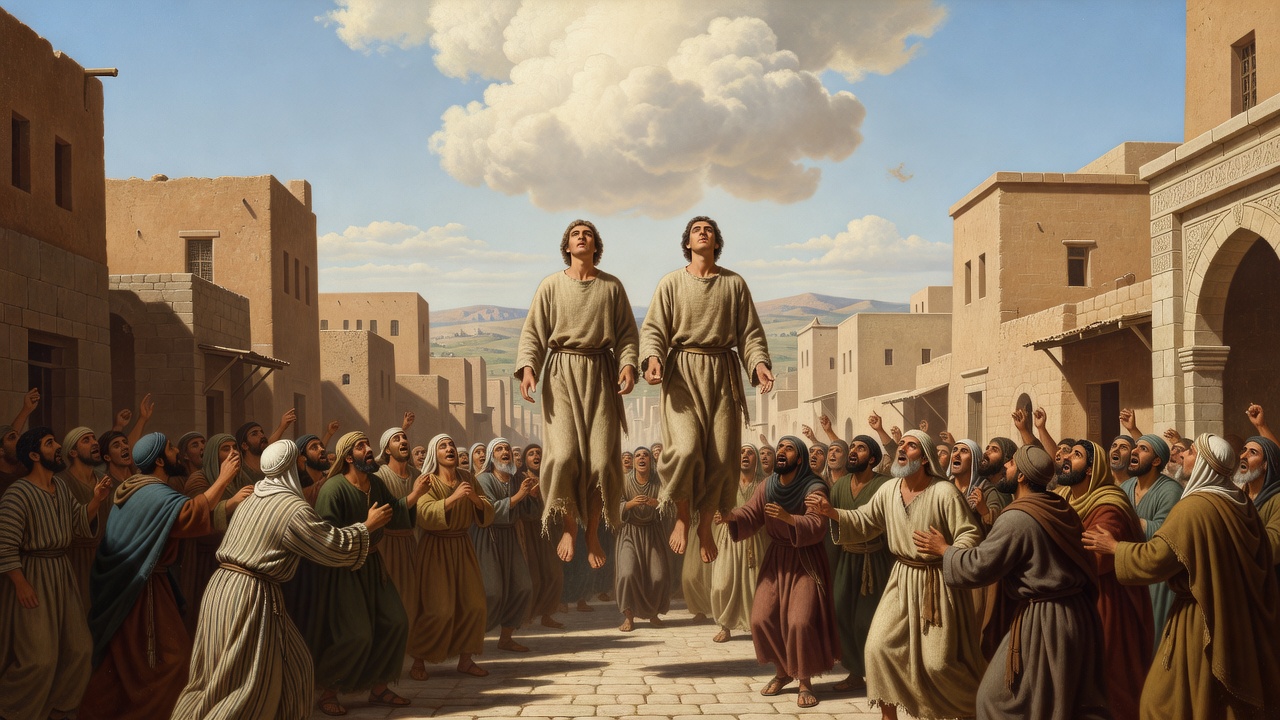
- Cuando los dos testigos terminan su testimonio, la bestia que sube del Abismo los vence y los mata. Durante tres días y medio, pueblos, tribus, lenguas y naciones ven sus cuerpos y no permiten que sean puestos en un sepulcro, mientras los habitantes de la tierra se burlan de ellos, celebran y se envían regalos, porque los dos profetas los habían atormentado. Después de eso, el aliento de vida que viene de Dios entra en ellos; se ponen de pie y suben al cielo en una nube, mientras sus enemigos los observan.Fuentes: el propio texto bíblico
Notas escritas con ayuda de IA a partir de fuentes abiertas (Theographic Bible Metadata, CC BY-SA 4.0; Easton’s Bible Dictionary, dominio público) y revisadas antes de publicarse.
Lugares de este capítulo
Solo aparecen lugares identificados con alta confianza (90 % o más según las fuentes académicas reunidas por OpenBible). Mapa de la época: DARE (Digital Atlas of the Roman Empire), CC BY 4.0; mapa actual: © colaboradores de OpenStreetMap; lugares: OpenBible.info (CC BY 4.0).
Créditos y licencia de esta traducción
Nan kalin Apo Dios
New Testament in Bontok, Central
copyright © 1992 Wycliffe Bible Translators, Inc.
Language: Central Bontok (Bontok, Central)
Translation by: Wycliffe Bible Translators
Contributor: Wycliffe Bible Translators, Inc.
Copyright Information
© 1992, Wycliffe Bible Translators, Inc. All rights reserved.
This translation text is made available to you under the
terms of the Creative Commons License: Attribution-Noncommercial-No Derivative Works.
( http://creativecommons.org/licenses/by-nc-nd/3.0/ )
In addition, you have permission to port the text to different file formats, as long as you
do not change any of the text or punctuation of the Bible.
You may share, copy, distribute, transmit, and extract portions
or quotations from this work, provided that you include the above copyright
information:
You must give Attribution to the work.
You do not sell this work for a profit.
You do not make any derivative works that change any of the actual words or punctuation of the Scriptures.
Permissions beyond the scope of this license may be
available if you contact
us with your request.
The New Testament
in Bontok, Central
© 1992, Wycliffe Bible Translators, Inc. All rights reserved.
This translation is made available to you under the terms of the
Creative Commons Attribution-Noncommercial-No Derivatives license 4.0.
You may share and redistribute this Bible translation or extracts from it in any format, provided that:
You include the above copyright and source information.
You do not sell this work for a profit.
You do not change any of the words or punctuation of the Scriptures.
Pictures included with Scriptures and other documents on this site are licensed just for use with those Scriptures and documents.
For other uses, please contact the respective copyright owners.
2015-03-17
Fuente: http://ebible.org/lbk/ · eBible.org