Génesis 2
Nan kalin Apo Dios · Toca un versículo para ver sus referencias cruzadas.
1Siya chi ya nakwas et ay nakhaeb nan chaya ya nan lofong ya am-iam-in ay wad-ay ischi. 2Isnan ikapito ay akhew, tay nakwas et am-in nan chinnona, nentengaw si Apo Dios. 3Binindisyonana nan ikapito ay akhew ya siya chi nan inpeyna ay nasantowan ay akhew, tay siya chi nan nentengawana issan osto ay nangikwasana isnan am-in ay chonona ay nenpawad-ay. 4Siya chi nan inangnen nan chaya ya nan lofong ay nawad-ay.
Nan Oma id Eden
Issan cha nangab-an Apo ay Dios isnan lofong ya chaya, 5maid cha tomofo ay mola paymo lokham tay maid inpalpal-ina is ochan, ya sa et maid takho is mensama isnan lota. 6Wad-ay magtek eb-eb ay mananchanom isnan olay entona ay lota.
7Idwani inmala si Apo ay Dios isnan chapog is kalota ya khinmaeb is lalaki. Sa na't insop-ok nan omipabfiyag ay anges is kaelengna ket ay nenfalin ay takho ay enfibfiyag.
8Sa et minolaan Apo ay Dios nan esa'y oma id Eden ay apet falaan si akhew, sa na't inpatee ischi nan takho ay khinaebna. 9Inpatofona ischi nan am-in ay ngag sisa ay ilan si kaew ay kalal-ayad nan ilana ya khawis ay kanen nan fekhasna. Ya wad-ay nan nenkhakhawa ischi ay kaew ay omipabfiyag ya nan kaew ay omichawchaw isnan mangammowan isnan khawis ya ngaag.
10Wad-ay nan wanga ay nen-ayos ay nalpo id Eden ya mananchanom isnan oma, sa et awni ya nasisyan is epat ay wanga. 11Nan ngachan nan inmona et Pison. Siya na nan wanga ay menliliwes isnan am-in nan ili ay Havila. 12(Mad-anan ischi nan telen ay pasig fallitok sa et nan fangfanglo ay niket ya nan nenkapateg ay fato.) 13Nan ikadwa ay wanga et Gihon nan ngachana. Siya na nan wanga ay menliliwes isnan am-in nan ili ay Cus. 14Nan ngachan nan ikatlo ay wanga et Tigris ay omayos isnan apet falaan si akhew nan ili ay Asiria. Sa et nan ikap-at ay wanga et nan Eufrates.
15Siya chi ya inalan Apo ay Dios nan lalaki ya inpeyna siya isnan nay ay oma id Eden ta nongnongena ya tokkhongana. 16Sa na't infilin ken siya ay mangwanin, “Mabfalin ay mangan ka isnan olay ngag sisa'y fekhas si kaew isnan nay oma. 17Ngem kecheng magtek yangkhay nan fekhas nan kaew ay omichawchaw isnan mangammowan isnan khawis ya ngaag nan ad-im kankanen, tay at matey ka ay matey isnan chey kannay ay akhew ay mangakkanam sidi.”
18Awni ya ket kanan Apo ay Dios, “Ad-i khawis mo aped maeesang nan lalaki. Khomaeb ak is kafachangna ay maifakhay ken siya.” 19Adi kad inmala si Apo ay Dios isnan lota ay khinaebna isnan am-in ay enkik-iwi ya am-in ay entat-ayaw, et inyeyna isnan lalaki ta ilaena mo ngag nan ipangachana. Et mo ngag nan inpangachana isnan am-in ay enkik-iwi siya chi nan ngachancha. 20Inagtan nan lalaki nan am-in ay entat-ayaw ya nan am-in ay enkik-iwi is ngachancha, naamo ya atap, nay met achi maid paat ischicha nan maifakhay ken siya is kafachangna.
21Sa et inpaseyep Apo ay Dios nan lalaki, ya osto ay naseyeseyep inalana nan esa'y tadlangna sa na't kasin nen-om-omen nan nangal-ana. 22Et isnan chey ay tadlang nan nangab-an Apo ay Dios isnan fafai, sa na't intakcho ken siya.
23Ket ay kanan nan lalaki,
“Na! Ket ay naay chadlo si is-isok!
Tadlangko nan tadlangna
ya awakko nan awakna.
Fafai nan makwani ken siya tay nalpo isnan lalaki.”
24Siya chi nan khotokna ay nan lalaki et taynana nan amana ya inana ta maiyamong isnan asaw-ena, et enfalin cha is esang ay awak.
25En-iso ay nenlalafos nan lalaki ya nan fafai, ya ad-icha mabfain.
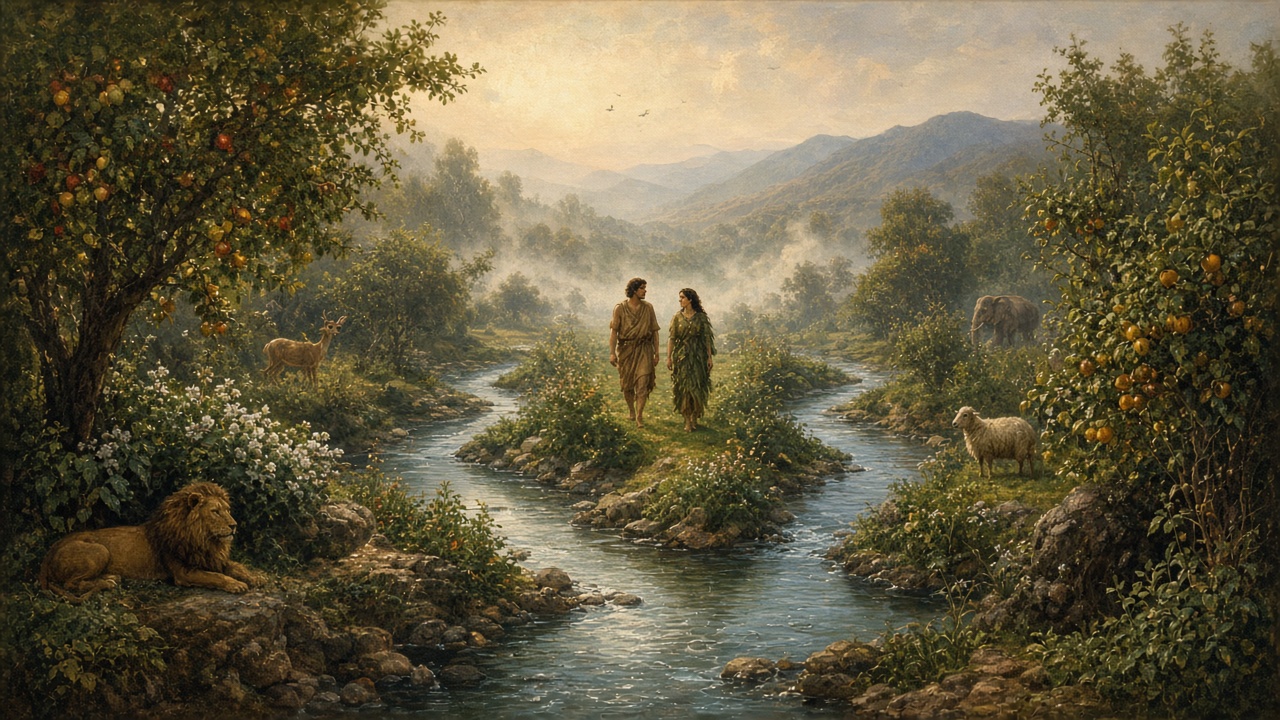
¿Sabías que…?
Adán, el Edén y los cuatro ríos
- Adán, que significa “rojo”, es una palabra babilónica y el nombre común del ser humano, con el mismo sentido en hebreo y en asirio. Se le dio al primer hombre. Fue formado del polvo de la tierra —de ahí el nombre— y Dios sopló en sus narices el aliento de vida.Fuentes: Adam · el propio texto bíblico
- Un río salía del Edén y se dividía en cuatro brazos: el Pisón, el Gihón, el Hidekel y el Éufrates. Algunos identifican el Pisón con el Fasis o el Halis; otros, con el Indo, el Ganges u otros ríos más. El Gihón ha sido identificado con el Nilo, y otros lo consideran el Oxo, el Araxes o el Ganges. El Hidekel es el Tigris, llamado por los acadios el río de Idikla; Gesenius entendió el nombre como “el Tigris rápido”.Fuentes: el propio texto bíblico · Pison · Gihon · Hiddekel
- El sitio del Edén, el jardín en el que vivieron los primeros padres, se ha discutido más que casi cualquier otra cuestión geográfica. Se ha situado en Armenia, en la región al oeste del mar Caspio, en Media, cerca de Damasco, en Palestina, en el sur de Arabia y en Babilonia. El Easton's Bible Dictionary (1897) lo busca a lo largo del Tigris y del Éufrates del Asia occidental, en la tierra de Sinar, o Babilonia.Fuentes: Eden
Notas escritas con ayuda de IA a partir de fuentes abiertas (Theographic Bible Metadata, CC BY-SA 4.0; Easton’s Bible Dictionary, dominio público) y revisadas antes de publicarse.
Lugares de este capítulo
- Assyria · 36.359, 43.153 · versículo 14
- Euphrates · Hoy: Euphrates River · 31.004, 47.442 · versículo 14
- Tigris · Hoy: Tigris River · 31.004, 47.442 · versículo 14
Solo aparecen lugares identificados con alta confianza (90 % o más según las fuentes académicas reunidas por OpenBible). Mapa de la época: DARE (Digital Atlas of the Roman Empire), CC BY 4.0; mapa actual: © colaboradores de OpenStreetMap; lugares: OpenBible.info (CC BY 4.0).
Créditos y licencia de esta traducción
Nan kalin Apo Dios
New Testament in Bontok, Central
copyright © 1992 Wycliffe Bible Translators, Inc.
Language: Central Bontok (Bontok, Central)
Translation by: Wycliffe Bible Translators
Contributor: Wycliffe Bible Translators, Inc.
Copyright Information
© 1992, Wycliffe Bible Translators, Inc. All rights reserved.
This translation text is made available to you under the
terms of the Creative Commons License: Attribution-Noncommercial-No Derivative Works.
( http://creativecommons.org/licenses/by-nc-nd/3.0/ )
In addition, you have permission to port the text to different file formats, as long as you
do not change any of the text or punctuation of the Bible.
You may share, copy, distribute, transmit, and extract portions
or quotations from this work, provided that you include the above copyright
information:
You must give Attribution to the work.
You do not sell this work for a profit.
You do not make any derivative works that change any of the actual words or punctuation of the Scriptures.
Permissions beyond the scope of this license may be
available if you contact
us with your request.
The New Testament
in Bontok, Central
© 1992, Wycliffe Bible Translators, Inc. All rights reserved.
This translation is made available to you under the terms of the
Creative Commons Attribution-Noncommercial-No Derivatives license 4.0.
You may share and redistribute this Bible translation or extracts from it in any format, provided that:
You include the above copyright and source information.
You do not sell this work for a profit.
You do not change any of the words or punctuation of the Scriptures.
Pictures included with Scriptures and other documents on this site are licensed just for use with those Scriptures and documents.
For other uses, please contact the respective copyright owners.
2015-03-17
Fuente: http://ebible.org/lbk/ · eBible.org