Mateo 3
Ugud apudyus = Ti baro tulag · Toca un versículo para ver sus referencias cruzadas.
Sat Nantudtuduwan Juan un Mambubunyag
1Utdiya timpu’n inggawan da Jesus Nazaret, dummatong si Juan un Mambubunyag si igaw ud Judea un maid tagtagguwan na ot nantudtudu un kanana’n, 2“Mandadaoli kayu ot igongda yu dat basuḻ yu ta dandaniyon dit timpu’n mangiyapuwan Apudyus.” 3Si Juan dit ug-ugudon dit ingkanglit propeta Isaias un,
“Awad tagu’t dit igawa maid tagtagguwan na un mampappakuya kanana’n, ‘Isagana yu dit daḻan dit Apu. Manggodngon yu dit daḻan un ayona.’ ”
4Sat badut Juan, naganay si dutdut di kamelyu kan nambakakat si geddang ot dudun kan dilu dit ikatagu na. 5Aduadu dat tagu’n ummoy nandongoḻ kan siya un nanligwat Jerusalem, sin losana nilakub Judea kan losana nandodomanga boboḻoy sin wangwang Jordan. 6Impudnu da dat basuḻ da asin Juan binunyagan dida utdin wangwang Jordan. 7Yoong mailan man Juan un adu’n Fariseo kan Saduceo un umoy kan siya mampabunyag, kanana kan dida un, “Dikayu’n ganak di uḻog! Singngadan nat nangibaga kan dikayu un mampabunyag kayu daḻap maligligan yu dit dumatonga mandusaan Apudyus? 8Masapula ipaila yu utdan angwat yu un tuttuwa’n mandadaoliyan yu dat basuḻ yu. 9Adiyu kanana mailisi kayu utnat kanan yu un, ‘Ulay ta kaganakan dikami kan Abraham.’ Ta tuttuwa tun ibagak kan dikayu un mabalin Apudyus mangwa’t kaganakan Abraham sidatu un batu. 10Ot sat manusaan Apudyus kan dikayu maiyalig si wasay un maibibiyada maipokpok sit pong-ad dit kayu. Ot losana kayu’n adi mamunga’t napiya mapokpok asi maidawat sin apuy. 11Bunyagok dikayu si danum un siya’d mangipaila’n nandadaoliyan yu dat basuḻ yu. Yoong sat maitagtagnob kan sakon, bunyagon dikayu si Ispiritu Santu kan apuy. Taḻona nangatu nu sakon ot adiyak pay maibilanga mamegkeng sit sandalyas na. 12Maiyalig si tagu’n nakaaggom si igau un mantopa’t ilik. Aminona’n topaan asina iyaḻang dat nabgas ot aminona’n idawat dat nakupaw sit apuya adi makmaksop.”
Sat Nampabunyagan Jesus
13Utdit mambunbunyagan Juan sin wangwang Jordan, dummatong pay si Jesus un nanligwat Galilea daḻapnu mampabunyag kan siya. 14Yoong piyaon Juan un lappodan ot kanana’n, “Apay umoy ka mampabunyag kan sakona lobbong na un sakon okyanot nat bunyagom?”
15Yoong summungbat si Jesus un, “Kooma lawa uttun satun ta lobbong na un tungpaḻon ta dat losana ipakwan Apudyus.” Ot ummampayun pay si Juan.
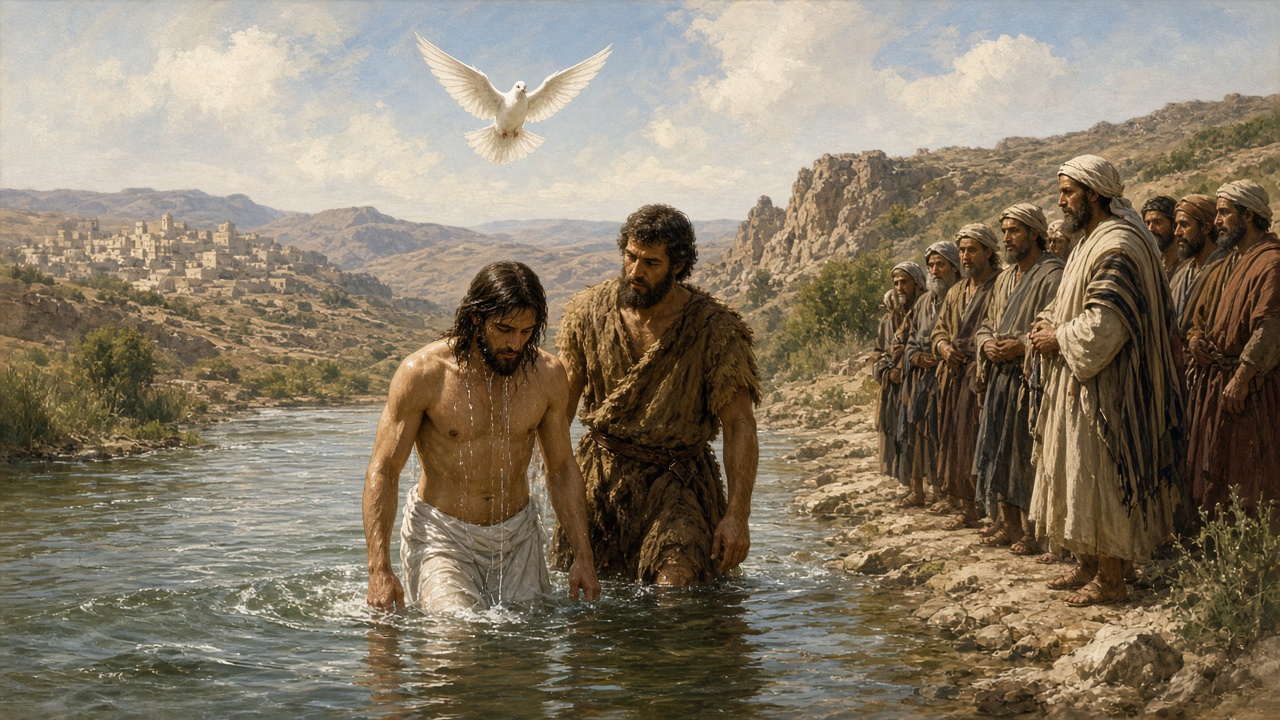
16Magangput mana mabunyagan si Jesus, dagusa tummakdang. Utdi, nambukat din langit ot innila na si Ispiritu Santu un dummoba un kama’t kalupati’n inumpa kan siya. 17Utdiyon inggaw ginga’n nanligwat langit un kanana’n, “Siyatu’d pipiyaoka Anak ku un taḻona masmas-omak.”
¿Sabías que…?
Arrepentimiento y bautismo en el Jordán
- Mateo identifica a Juan el Bautista como aquel de quien habló el profeta Isaías: una voz que clama en el desierto: “Preparen el camino del Señor”. El Diccionario Bíblico de Easton (1897) registra que la misión de Juan fue objeto de profecía, al citar este pasaje, Isaías 40:3 y Malaquías 3:1, y que era de linaje sacerdotal: su padre Zacarías, sacerdote del turno de Abías, y su madre Elisabet, de las hijas de Aarón. Una cronología fecha tanto el inicio del ministerio de Juan como su bautismo de Jesús en el año 26 d. C.Fuentes: el propio texto bíblico · John the Baptist · John the Baptist Begins Ministry · John Baptizes Jesus
- Juan vino predicando en el desierto de Judea, y personas de Jerusalén, de toda Judea y de toda la región alrededor del Jordán salieron a su encuentro, confesando sus pecados y siendo bautizadas en el río Jordán. El Diccionario Bíblico de Easton (1897) señala que, bajo los romanos, en el tiempo de Cristo, Judea designaba la más meridional de las tres divisiones de Palestina, distinta de Galilea y Samaria, e incluía los territorios de Judá, Benjamín, Dan, Simeón y parte de Efraín. Jesús vino de Galilea —llamada Galil por los judíos— al Jordán para ser bautizado por Juan.Fuentes: el propio texto bíblico · Judea · Galilee
- Juan advirtió a los fariseos y saduceos que no se apoyaran en la afirmación “Tenemos a Abraham por padre”, diciendo que Dios podía levantar hijos para Abraham de entre las piedras. El Diccionario Bíblico de Easton (1897) explica el nombre Abraham como “padre de una multitud” y lo describe como hijo de Taré, nombrado antes que sus hermanos mayores porque era el heredero de las promesas.Fuentes: el propio texto bíblico · Abraham
Notas escritas con ayuda de IA a partir de fuentes abiertas (Theographic Bible Metadata, CC BY-SA 4.0; Easton’s Bible Dictionary, dominio público) y revisadas antes de publicarse.
Lugares de este capítulo
- Judea · Hoy: Judea 1 · 31.777, 35.234 · versículos 1, 5
- Jerusalem · 31.777, 35.234 · versículo 5
- Jordan · Hoy: Jordan River · 31.761, 35.558 · versículos 5, 6, 13
- Galilee · 32.760, 35.527 · versículo 13
Solo aparecen lugares identificados con alta confianza (90 % o más según las fuentes académicas reunidas por OpenBible). Mapa de la época: DARE (Digital Atlas of the Roman Empire), CC BY 4.0; mapa actual: © colaboradores de OpenStreetMap; lugares: OpenBible.info (CC BY 4.0).
Créditos y licencia de esta traducción
Ugud apudyus = Ti baro tulag
New Testament in Kalinga, Limos
copyright © 2003 Wycliffe Bible Translators, Inc.
Language: Limos Kalinga (Kalinga, Limos)
Translation by: Wycliffe Bible Translators
Contributor: Wycliffe Bible Translators, Inc.
Copyright Information
© 2003, Wycliffe Bible Translators, Inc. All rights reserved.
This translation text is made available to you under the
terms of the Creative Commons License: Attribution-Noncommercial-No Derivative Works.
( http://creativecommons.org/licenses/by-nc-nd/3.0/ )
In addition, you have permission to port the text to different file formats, as long as you
do not change any of the text or punctuation of the Bible.
You may share, copy, distribute, transmit, and extract portions
or quotations from this work, provided that you include the above copyright
information:
You must give Attribution to the work.
You do not sell this work for a profit.
You do not make any derivative works that change any of the actual words or punctuation of the Scriptures.
Permissions beyond the scope of this license may be
available if you contact
us with your request.
The New Testament
in Kalinga, Limos
© 2003, Wycliffe Bible Translators, Inc. All rights reserved.
This translation is made available to you under the terms of the
Creative Commons Attribution-Noncommercial-No Derivatives license 4.0.
You may share and redistribute this Bible translation or extracts from it in any format, provided that:
You include the above copyright and source information.
You do not sell this work for a profit.
You do not change any of the words or punctuation of the Scriptures.
Pictures included with Scriptures and other documents on this site are licensed just for use with those Scriptures and documents.
For other uses, please contact the respective copyright owners.
2015-03-17
Fuente: http://ebible.org/kmk/ · eBible.org