Números 19
Biblica® Kiugo Gĩtheru Kĩa Ngai Kĩhingũre · Toca un versículo para ver sus referencias cruzadas.
Maaĩ ma Kũniina Thaahu
1Jehova akĩĩra Musa na Harũni atĩrĩ, 2“Ũndũ ũyũ nĩ wa kũrũmĩrĩrwo thĩinĩ wa watho ũrĩa Jehova aathanĩte: Ĩra andũ a Isiraeli makũrehere moori ndune ĩtarĩ kaũũgũ kana kameni, na ĩtarĩ yekĩrwo icooki. 3Mũmĩnengere Eleazaru, ũrĩa mũthĩnjĩri-Ngai; ĩtwarwo nja ya kambĩ, na ĩthĩnjĩrwo hau mbere yake. 4Nake Eleazaru, ũcio mũthĩnjĩri-Ngai, oe thakame na kĩara gĩake, na amĩminjaminje maita mũgwanja amĩroretie na mwena wa mbere wa Hema-ya Gũtũnganwo. 5Nayo moori ĩyo ĩcinwo yothe akĩonaga, ũguo nĩ kuuga rũũa rwayo, na nyama, na thakame, o na taatha wayo. 6Mũthĩnjĩri-Ngai ũcio oe rũkũ rwa mũtarakwa, na mũthobi, na guoya wa rangi wa gakarakũ, aciikie igũrũ wa moori ĩyo ĩrahĩa. 7Thuutha wa ũguo mũthĩnjĩri-Ngai ũcio no nginya athambie nguo ciake na ethambe mwĩrĩ na maaĩ. Thuutha ũcio no acooke kambĩ, no arĩ na thaahu o nginya hwaĩ-inĩ. 8Mũndũ ũrĩa ũrĩcinaga moori ĩyo no nginya athambie nguo ciake na ethambe mwĩrĩ na maaĩ, na o nake atiinde arĩ na thaahu nginya hwaĩ-inĩ.
9“Mũndũ ũtarĩ na thaahu acooke ahakũre mũhu ũcio wa moori ĩyo na aũige handũ hatarĩ na thaahu nja ya kambĩ. Mũhu ũcio ũigagwo nĩ kĩrĩndĩ kĩa andũ a Isiraeli, nĩgeetha ũhũthagĩrwo maaĩ-inĩ ma kũniina thaahu; ũcio nĩguo wa gũtheranagia kuuma mehia-inĩ. 10Mũndũ ũrĩa ũrĩhakũraga mũhu wa moori ĩyo, no nginya athambie nguo ciake, o nake atiinde arĩ na thaahu nginya hwaĩ-inĩ. Ũndũ ũyũ nĩ watho wa gũtũũra harĩ andũ a Isiraeli na ageni arĩa matũũranagia nao.
11“Mũndũ ũrĩa ũngĩhutia kĩimba kĩa mũndũ o na ũrĩkũ arĩikaraga arĩ na thaahu mĩthenya mũgwanja. 12No nginya etherie na maaĩ mũthenya wa gatatũ, na mũthenya wa mũgwanja; hĩndĩ ĩyo athirwo nĩ thaahu. No angĩaga gwĩtheria mũthenya wa gatatũ na wa mũgwanja, ndagaathirwo nĩ thaahu. 13Mũndũ o wothe ũngĩhutia kĩimba kĩa mũndũ o na ũrĩkũ na aage gwĩtheria, ũcio nĩathaahĩtie Hema-ĩrĩa-Nyamũre ya Jehova. Mũndũ ũcio no nginya aingatwo oime Isiraeli. Tondũ ndaminjaminjĩirio maaĩ ma kũniina thaahu, mũndũ ũcio arĩ na thaahu; thaahu wake ndũthirĩte.
14“Ũyũ nĩguo watho wa kũrũmĩrĩrwo rĩrĩa mũndũ akuĩra hema-inĩ: Mũndũ o na ũrĩkũ ũngĩtoonya hema ĩyo, mũndũ o na ũrĩkũ ũrĩa ũgaakorwo thĩinĩ wayo-rĩ, nĩakanyiitwo nĩ thaahu mĩthenya mũgwanja, 15nakĩo kĩndũ o gĩothe kĩa nyũmba gĩgaakorwo gĩtarĩ gĩkunĩke nĩgĩkanyiitwo nĩ thaahu.
16“Mũndũ o na ũrĩkũ ũrĩ na kũu nja ũngĩhutia mũndũ ũragĩtwo na rũhiũ rwa njora kana mũndũ ũkuĩte gĩkuũ kĩa ndũire, kana mũndũ o wothe ũngĩhutia ihĩndĩ rĩa mũndũ kana mbĩrĩra, ũcio nĩakanyiitwo nĩ thaahu mĩthenya mũgwanja.
17“Nĩ ũndũ wa mũndũ ũrĩ na thaahu, ĩkĩra mũhu wa moori ĩrĩa yacinĩtwo ĩrĩ ya gũtherania ndigithũ-inĩ, naguo ũitĩrĩrio maaĩ matahĩtwo o hĩndĩ ĩyo. 18Nake mũndũ ũtarĩ na thaahu nĩoe mũthobi aũtobokie maaĩ-inĩ macio, na aminjaminjĩrie hema ĩyo na indo ciayo ciothe, na andũ arĩa maarĩ kũu thĩinĩ. Ningĩ no nginya aminjaminjĩrie mũndũ ũrĩa wothe ũhutĩtie ihĩndĩ rĩa mũndũ, kana mbĩrĩra, kana mũndũ ũragĩtwo, kana mũndũ ũkuĩte gĩkuũ kĩa ndũire. 19Mũndũ ũrĩa ũtarĩ na thaahu nĩakaminjaminjĩria mũndũ ũcio ũrĩ na thaahu maaĩ macio mũthenya wa gatatũ na wa mũgwanja, naguo mũthenya wa mũgwanja nĩguo akamũtheria. Nake mũndũ ũcio ũgũtherio no nginya athambie nguo ciake na ethambe mwĩrĩ na maaĩ, naguo hwaĩ-inĩ ũcio nĩagakorwo athirĩtwo nĩ thaahu. 20No rĩrĩ, mũndũ ũrĩ na thaahu angĩaga gwĩtheria, no nginya aingatwo kuuma kũrĩ kĩrĩndĩ, nĩ ũndũ nĩathaahĩtie handũ-harĩa-haamũre ha Jehova. Nĩgũkorwo ndaminjaminjĩirio maaĩ ma kũniina thaahu, nĩ ũndũ ũcio arĩ na thaahu. 21Ũyũ nĩ watho wao wa gũtũũra.
“Mũndũ ũcio wakũminjaminjanĩria maaĩ macio ma kũniina thaahu no nginya o nake athambie nguo ciake, na mũndũ o wothe ũngĩhutia maaĩ macio ma kũniina thaahu nĩagatinda arĩ na thaahu nginya hwaĩ-inĩ. 22Kĩndũ gĩothe mũndũ ũrĩ na thaahu akaahutia nĩgĩkanyiitwo nĩ thaahu, na mũndũ ũrĩa ũngĩhutia kĩndũ kĩu nĩagatinda arĩ na thaahu nginya hwaĩ-inĩ.”
¿Sabías que…?
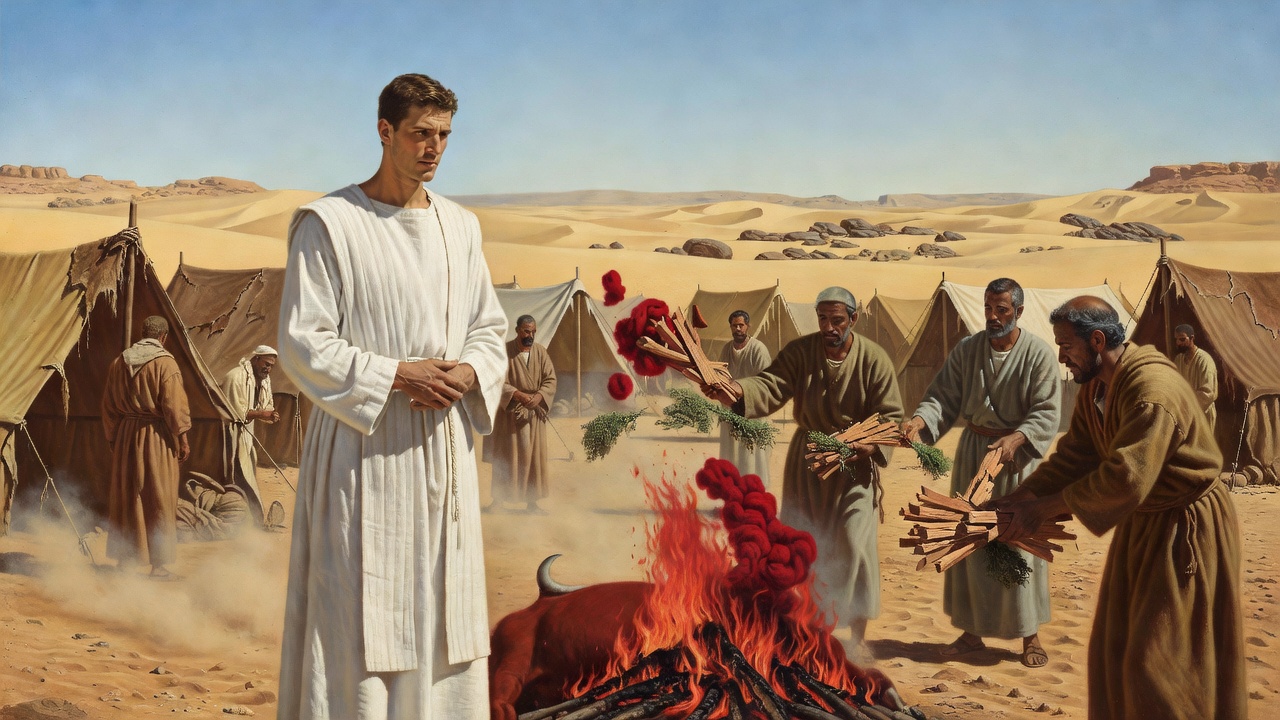
La novilla roja y la purificación de la impureza
- A diferencia de los sacrificios habituales presentados en el altar del tabernáculo, la novilla roja sin defecto y que nunca había llevado yugo era llevada fuera del campamento. Allí era sacrificada ante el sacerdote Eleazar y quemada por completo junto con madera de cedro, hisopo y lana escarlata.Fuentes: el propio texto bíblico · Eleazar
- Las cenizas de la novilla se guardaban fuera del campamento para preparar el agua de purificación. Paradójicamente, aunque esta mezcla purificaba a quienes contraían impureza por la muerte, todos los que manipulaban la novilla, recogían las cenizas o rociaban el agua quedaban ceremonialmente impuros hasta el anochecer.Fuentes: el propio texto bíblico
- Tocar un cadáver, un hueso humano, una tumba o permanecer en una tienda donde alguien había muerto causaba siete días de impureza ceremonial. Para purificarse, la persona debía ser rociada con el agua de purificación al tercer y al séptimo día, además de lavar sus vestiduras y bañarse.Fuentes: el propio texto bíblico
Notas escritas con ayuda de IA a partir de fuentes abiertas (Theographic Bible Metadata, CC BY-SA 4.0; Easton’s Bible Dictionary, dominio público) y revisadas antes de publicarse.
Créditos y licencia de esta traducción
Biblica® Kiugo Gĩtheru Kĩa Ngai Kĩhingũre Gikuyu: Biblica® Kiugo Gĩtheru Kĩa Ngai Kĩhingũre (Bible) of Kenya copyright © 2013 Biblica, Inc. Language: Kikuyu (Gikuyu) Contributor: Biblica, Inc. Wĩra ũyũ ũheanĩtwo na ũndũ wa rũtha rwa biacara rwa Creative Commons Attribution-ShareAlike 4.0 International License (CC BY-SA). Ũngĩenda kuona kobĩ ya rũtha rũrũ rwa biacara, rora rũrenda-inĩ rwa: http://creativecommons.org/licenses/by-sa/4.0, kana ũtũme marũa kũrĩ: Creative Commons, PO Box 1866, Mountain View, CA 94042, USA. Biblica® nĩ mũhũri wa biacara wandĩkithĩtio nĩ Biblica, Inc., kũhũthĩra mũhũri wa biacara wa Biblica® kũbataraga marũa ma gwĩtĩkĩrio kuuma kũrĩ Biblica, Inc. Kuumana na rũtha rwa biacara rwa CC BY-SA, no ũkobie kana ũtambie wĩra ũyũ ũtarĩ mũgarũre, ĩndĩ ndũkagarũre rũri rwa biacara rwa Biblica®. Ũngĩgarũra kana ũkobie wĩra ũyũ, na tondũ wa ũguo ũtuĩke nĩ wĩra mwerũ uumanĩte na ũcio-rĩ, no nginya weheria mũhũri wa biacara wa Biblica®. Wĩra-inĩ ũcio mwerũ no nginya wonanie nĩ maũndũ marĩkũ ũgarũrĩte, na ũtarĩrie wĩra-inĩ ũcio ta ũũ: “Wĩra wa kĩhumo warĩ wa Biblica, Inc. na ũheanĩtwo tũhũ ng’enda-inĩ cia www.biblica.com na open.bible.” Kĩmenyitha kia Mwene-wĩra no nginya kĩandĩkwo iratathi rĩa kĩongo kĩa wĩra kana rĩa ũhoro wa Mwene-wĩra ta ũũ: Biblica® Kiugo Gĩtheru Kĩa Ngai Kĩhingũre™ Kĩmenyithia kĩa Mwene-wĩra © 2013 nĩ Biblica, Inc. Biblica® Open Kikuyu Holy Word of God™ Copyright © 2013 by Biblica, Inc. “Biblica” nĩ mũhũri wa biacara wandĩkithĩtio wabici-inĩ ya United States Patent and Trademark Office nĩ Biblica, Inc. Ũhũthĩrĩtwo na rũtha. “Biblica” is a trademark registered in the United States Patent and Trademark Office by Biblica, Inc. Used with permission. No nginya wĩtĩkĩrie wĩra ũcio mwerũ ũgarũrĩte ũheanwo na ũndũ wa rũtha rwa biacara rũu rwa CC BY-SA. Ũngĩenda kũmenyithia Biblica, Inc. ũhoro wĩgiĩ ũtaũri waku wa wĩra ũyũ-rĩ, twandĩkĩre rũrenda-inĩ rwa: https://open.bible/contact-us. This work is made available under the Creative Commons Attribution-ShareAlike 4.0 International License (CC BY-SA). To view a copy of this license, visit http://creativecommons.org/licenses/by-sa/4.0 or send a letter to Creative Commons, PO Box 1866, Mountain View, CA 94042, USA. Biblica® is a trademark registered by Biblica, Inc., and use of the Biblica® trademark requires the written permission of Biblica, Inc. Under the terms of the CC BY-SA license, you may copy and redistribute this unmodified work as long as you keep the Biblica® trademark intact. If you modify a copy or translate this work, thereby creating a derivative work, you must remove the Biblica® trademark. On the derivative work, you must indicate what changes you have made and attribute the work as follows: “The original work by Biblica, Inc. is available for free at www.biblica.com and open.bible.” Notice of copyright must appear on the title or copyright page of the work as follows: Biblica® Kiugo Gĩtheru Kĩa Ngai Kĩhingũre™ Kĩmenyithia kĩa Mwene-wĩra © 2013 nĩ Biblica, Inc. Biblica® Open Kikuyu Holy Word of God™ Copyright © 2013 by Biblica, Inc. “Biblica” nĩ mũhũri wa biacara wandĩkithĩtio wabici-inĩ ya United States Patent and Trademark Office nĩ Biblica, Inc. Ũhũthĩrĩtwo na rũtha. “Biblica” is a trademark registered in the United States Patent and Trademark Office by Biblica, Inc. Used with permission. You must also make your derivative work available under the same license (CC BY-SA). If you would like to notify Biblica, Inc. regarding your translation of this work, please contact us at https://open.bible/contact-us. This translation is made available to you under the terms of the Creative Commons Attribution Share-Alike license 4.0. You have permission to share and redistribute this Bible translation in any format and to make reasonable revisions and adaptations of this translation, provided that: You include the above copyright and source information. If you make any changes to the text, you must indicate that you did so in a way that makes it clear that the original licensor is not necessarily endorsing your changes. If you redistribute this text, you must distribute your contributions under the same license as the original. Pictures included with Scriptures and other documents on this site are licensed just for use with those Scriptures and documents. For other uses, please contact the respective copyright owners. Note that in addition to the rules above, revising and adapting God's Word involves a great responsibility to be true to God's Word. See Revelation 22:18-19. 2025-05-07
Fuente: http://ebible.org/kik/ · eBible.org