1 Reyes 1
Biblica® Kiugo Gĩtheru Kĩa Ngai Kĩhingũre · Toca un versículo para ver sus referencias cruzadas.
Acerca de este libro
Sobre 1 Reyes
- El Easton's Bible Dictionary (1897) considera incierta la autoría de los libros de Reyes. Una tradición según la cual Jeremías los escribió queda, a juicio de Easton, respaldada por pasajes casi idénticos a partes de Jeremías y por sucesos que Jeremías conocía personalmente; sin embargo, Easton estima más probable que Esdras, después del cautiverio, compilara los libros a partir de documentos anteriores, quizá escritos por David, Salomón, Natán, Gad e Iddo. Easton sitúa la composición entre el 561 a. C., cuando Evil-merodac liberó a Joaquín del cautiverio, y el 538 a. C., el decreto de Ciro.Fuentes: Easton: Kings, The Books of
- Easton afirma que estos libros contienen los anales del reino desde la subida de Salomón al trono hasta que Nabucodonosor y los babilonios lo sometieron, un período que estima en unos 453 años. 1 Reyes comienza mientras David está muriendo: Adonías, su cuarto hijo, que había pasado a ser el heredero presunto del trono tras la muerte de Amnón y Absalón, se hace proclamar rey, pero Natán y Betsabé persuaden a David de que entronice a Salomón de inmediato. Salomón, hijo de David y Betsabé, cuya historia se registra en 1 Reyes 1-11, llegó al trono, sugiere Easton, hacia los dieciséis o dieciocho años.Fuentes: Easton: Kings, The Books of · Adonijah · Solomon
- En las Escrituras hebreas, los dos libros de Reyes formaban originalmente un solo libro; la Septuaginta fue la primera en dividirlos y, con la Vulgata, los numera como el tercer y el cuarto libros de Reyes, siendo los libros de Samuel el primero y el segundo. Easton observa que Crónicas da mayor relieve al oficio sacerdotal o levítico, mientras que Reyes da mayor relieve al oficio real, y que en la división de las Escrituras en tres partes hecha por los judíos estos libros se cuentan entre los Profetas. La narración remite a fuentes anteriores: el libro de los hechos de Salomón y las crónicas de los reyes de Judá y de Israel.Fuentes: Easton: Kings, The Books of
- Tras la muerte de Salomón, las diez tribus se rebelaron e invitaron a Jeroboam, hijo de Nebat, a ser su rey; Easton lo llama el primer rey de esas tribus y sitúa su reinado entre 976 y 945 a. C. Había huido a Egipto bajo la protección de Sisac I y luego trasladó su residencia de Siquem, su primera capital, a Tirsa, que siguió siendo la residencia principal de los reyes de Israel hasta que Omri compró a Semer el monte de Shomeron por dos talentos de plata y edificó Samaria. La narración posterior incluye a Acab, hijo de Omri y séptimo rey de Israel, cuya esposa era Jezabel: al culto del becerro introducido por Jeroboam añadió el culto de Baal, y fue severamente amonestado por el profeta Elías.Fuentes: Jeroboam · Tirzah · Samaria · Ahab
Notas escritas con ayuda de IA a partir de fuentes abiertas (Theographic Bible Metadata, CC BY-SA 4.0; Easton’s Bible Dictionary, dominio público) y revisadas antes de publicarse.
Adonija Gwĩtua Mũthamaki
1Hĩndĩ ĩrĩa Mũthamaki Daudi aakũrire na agatindĩka mĩaka-rĩ, ndaiguaga ũrugarĩ o na mamũhumbĩra na nguo. 2Nĩ ũndũ ũcio ndungata ciake ikĩmwĩra atĩrĩ, “Reke tũcarie mũirĩtu mwĩthĩ gathirange, atungatagĩre mũthamaki na ũndũ wa kũmũmenyerera, na akomage hamwe nake nĩguo mũthamaki, mwathi witũ, aiguage ũrugarĩ.”
3Magĩetha mũirĩtu mũthaka Isiraeli guothe, makĩona Abishagi ũrĩa Mũshunami, na makĩmũrehe kũrĩ mũthamaki. 4Mũirĩtu ũcio aarĩ mũthaka mũno; nake akĩmenyerera mũthamaki na akĩmũtungatĩra, no mũthamaki ndaigana gũkoma nake.
5Na rĩrĩ, Adonija, ũrĩa nyina aarĩ Hagithu, akĩĩyumĩria, akiuga atĩrĩ, “Nĩ niĩ ngũtuĩka mũthamaki.” Nĩ ũndũ ũcio agĩthagathaga ngaari cia ita na mbarathi, na andũ mĩrongo ĩtano mathiiage matengʼerete marĩ mbere yake. 6(Ithe ndaamũkaanĩtie ũndũ, kana akamũũria atĩrĩ, “Wĩkĩte ũna na ũna nĩkĩ?” Ningĩ aarĩ mũndũ mũthaka mũno, na nĩwe waciarĩtwo thuutha wa Abisalomu.)
7Nake Adonija akĩrĩkanĩra na Joabu mũrũ wa Zeruia, na Abiatharu mũthĩnjĩri-Ngai, nao magĩtĩkĩra kũmũteithĩrĩria. 8No Zadoku mũthĩnjĩri-Ngai, na Benaia mũrũ wa Jehoiada, na Nathani ũrĩa mũnabii, na Shimei, na Rei, na arangĩri arĩa a mwanya a Daudi matianyiitanĩire na Adonija.
9Nake Adonija akĩruta igongona rĩa ngʼondu, na ngʼombe, na njaũ iria noru Ihiga-inĩ rĩa Zohelethu, hakuhĩ na Eni-Rogeli. Nake agĩĩta ariũ a ithe othe, na nĩo ariũ a mũthamaki, na andũ othe a Juda arĩa maarĩ anene a nyũmba ya ũthamaki, 10no ndaigana gwĩta Nathani ũrĩa mũnabii, kana Benaia, kana arangĩri arĩa a mwanya, o na kana mũrũ wa ithe Solomoni.
11Nake Nathani akĩũria Bathisheba, nyina wa Solomoni atĩrĩ, “Nĩũiguĩte atĩ Adonija mũrũ wa Hagithu nĩatuĩkĩte mũthamaki, Daudi mwathi witũ atekũmenya? 12Na rĩrĩ, reke ngũtaare ũrĩa ũngĩhota kũhonokia muoyo waku na muoyo wa mũrũguo Solomoni. 13Ũkĩra ũthiĩ kũrĩ Mũthamaki Daudi ũmwĩre atĩrĩ, ‘Mũthamaki mwathi wakwa, githĩ ndwehĩtire kũrĩ niĩ, ndungata yaku ũkĩnjĩĩra atĩrĩ: “Ti-itherũ Solomoni mũrũguo nĩwe ũgaatuĩka mũthamaki thuutha wakwa, na nĩwe ũgaikarĩra gĩtĩ gĩakwa gĩa ũthamaki”? Rĩu-rĩ, nĩ kĩĩ gĩtũmĩte Adonija atuĩke mũthamaki?’ 14Ũrĩ o kũu ũkĩaria na mũthamaki, na niĩ njũke ndoonye kuo nĩguo njĩkĩre hinya ũguo ũkũmwĩra.”
15Nĩ ũndũ ũcio Bathisheba agĩthiĩ kuona mũthamaki ũcio mũkũrũ kanyũmba gake ga thĩinĩ, kũrĩa aatungatagĩrwo nĩ Abishagi ũrĩa Mũshunami. 16Bathisheba akĩinamĩrĩra, agĩturia ndu mbere ya mũthamaki.
Nake mũthamaki akĩmũũria atĩrĩ, “Ũkwenda atĩa?”
17Akĩmũcookeria atĩrĩ, “Mwathi wakwa, wee mwene nĩwehĩtire harĩ niĩ ndungata yaku na rĩĩtwa rĩa Jehova Ngai waku, ũkiuga atĩrĩ: ‘Solomoni mũrũguo nĩwe ũgaatuĩka mũthamaki thuutha wakwa, na nĩwe ũgaikarĩra gĩtĩ gĩakwa kĩa ũnene.’ 18No rĩrĩ, Adonija nĩatuĩkĩte mũthamaki, na wee mũthamaki mwathi wakwa ndũmenyete ũhoro ũcio. 19Nĩarutĩte igongona inene rĩa ngʼombe nyingĩ, na njaũ noru, na ngʼondu, na ageeta ariũ a mũthamaki othe, na Abiatharu ũrĩa mũthĩnjĩri-Ngai, na Joabu ũrĩa mũnene wa mbũtũ cia ita, no ndetĩte Solomoni ndungata yaku. 20Mũthamaki mwathi wakwa, andũ a Isiraeli othe nĩwe macũthĩrĩirie, nĩguo ũmamenyithie nũũ ũgaikarĩra gĩtĩ kĩa ũnene thuutha waku wee mũthamaki, mwathi wakwa. 21Kwaga ũguo-rĩ, rĩrĩa mũthamaki mwathi wakwa agaakoma ahurũke hamwe na maithe make, niĩ na mũrũ wakwa Solomoni tũgaatuuo ta andũ ageri ngero.”
22Hĩndĩ ĩrĩa aaragia na mũthamaki, Nathani ũrĩa mũnabii agĩkinya. 23Nao makĩĩra mũthamaki atĩrĩ, “Mũnabii Nathani arĩ haha.” Nĩ ũndũ ũcio Nathani agĩthiĩ mbere ya mũthamaki, akĩinamĩrĩra, agĩturumithia ũthiũ thĩ.
24Nathani akĩũria atĩrĩ, “Wee mũthamaki mwathi wakwa-rĩ, nĩũtuĩte atĩ Adonija nĩwe ũgaatuĩka mũthamaki thuutha waku, na atĩ nĩwe ũgaikarĩra gĩtĩ gĩaku kĩa ũnene? 25Ũmũthĩ nĩaikũrũkĩte na akaruta igongona inene rĩa ngʼombe nyingĩ, na njaũ noru, na ngʼondu. Na ageeta ariũ a mũthamaki othe, na anene a thigari othe, na Abiatharu ũrĩa mũthĩnjĩri-Ngai. Rĩu nĩ kũrĩa maraarĩa na makanyua marĩ hamwe nake, makiugaga atĩrĩ, ‘Mũthamaki Adonija arotũũra nginya tene!’ 26No rĩrĩ, niĩ ndungata yaku, na Zadoku ũrĩa mũthĩnjĩri-Ngai, na Benaia mũrũ wa Jehoiada, na ndungata yaku Solomoni ndanatwĩta. 27Ũndũ ũyũ-rĩ, nĩ mũthamaki mwathi wakwa wĩkĩte atamenyithĩtie ndungata ciake nũũ ũgũikarĩra gĩtĩ kĩa ũnene kĩa mũthamaki mwathi wakwa thuutha wake?”
Daudi Gũtua Solomoni Mũthamaki
28Hĩndĩ ĩyo Mũthamaki Daudi akiuga atĩrĩ, “Ĩtai Bathisheba oke.” Nĩ ũndũ ũcio Bathisheba agĩũka harĩ mũthamaki, akĩrũgama mbere yake.
29Nake mũthamaki akĩĩhĩta, akiuga atĩrĩ: “O ta ũrĩa Jehova atũũraga muoyo, ũrĩa wanaahonokia kuuma mathĩĩna-inĩ mothe, 30ti-itherũ ũmũthĩ nĩguo ngũhingia ũrĩa ndehĩtire kũrĩ we na rĩĩtwa rĩa Jehova Ngai wa Isiraeli, ngĩkwĩra atĩrĩ: Solomoni mũrũguo nĩwe ũgaatuĩka mũthamaki thuutha wakwa, na nĩwe ũgaikarĩra gĩtĩ gĩakwa kĩa ũnene handũ hakwa.”
31Nake Bathisheba akĩinamĩrĩra, agĩturumithia ũthiũ thĩ, na agĩturia ndu mbere ya mũthamaki, akiuga atĩrĩ, “Mũthamaki mwathi wakwa Daudi arotũũra nginya tene!”
32Mũthamaki Daudi akiuga atĩrĩ, “Ĩtai Zadoku ũrĩa mũthĩnjĩri-Ngai, na Nathani ũrĩa mũnabii, na Benaia mũrũ wa Jehoiada moke.” Rĩrĩa mookire mbere ya mũthamaki, 33akĩmeera atĩrĩ, “Thiĩi na ndungata cia mwathi wanyu na mũhaicie Solomoni mũrũ wakwa igũrũ rĩa nyũmbũ yakwa, mũmũikũrũkie nginya Gihoni. 34Mũrĩ kũu, mũreke Zadoku ũrĩa mũthĩnjĩri-Ngai na Nathani ũrĩa mũnabii mamũitĩrĩrie maguta atuĩke mũthamaki wa Isiraeli. Ningĩ mũhuhe karumbeta, na mwanĩrĩre atĩrĩ, ‘Mũthamaki Solomoni arotũũra nginya tene!’ 35Ningĩ mũcooke mwambate nake, oke aikarĩre gĩtĩ gĩakwa kĩa ũnene, na athamake handũ hakwa. Nĩndĩmũthuurĩte aathanage Isiraeli na Juda.”
36Benaia mũrũ wa Jehoiada agĩcookeria mũthamaki atĩrĩ, “Ameni! Jehova, Ngai wa mũthamaki mwathi wakwa arotũma gũtuĩke guo. 37O ta ũrĩa Jehova akoretwo arĩ hamwe na mũthamaki mwathi wakwa, aroikara hamwe na Solomoni na atũme wathani wake ũnenehe gũkĩra wathani wa mũthamaki mwathi wakwa Daudi!”
38Tondũ ũcio Zadoku ũrĩa mũthĩnjĩri-Ngai, na Nathani ũrĩa mũnabii, na Benaia mũrũ wa Jehoiada, hamwe na Akerethi na Apelethi, magĩikũrũka, makĩhaicia Solomoni nyũmbũ ya Mũthamaki Daudi, makĩmumagaria nginya Gihoni. 39Zadoku ũrĩa mũthĩnjĩri-Ngai akĩruta rũhĩa rwa maguta kuuma hema-inĩ ĩrĩa nyamũre na agĩitĩrĩria Solomoni. Ningĩ makĩhuha karumbeta, nao andũ othe makĩanĩrĩra, makiuga atĩrĩ, “Mũthamaki Solomoni arotũũra nginya tene!” 40Andũ othe makĩambata mamũrũmĩrĩire, makĩhuhaga mĩtũrirũ me na gĩkeno kĩnene, nginya thĩ ĩgĩthingitha nĩ mũrurumo.
41Adonija na ageni othe arĩa maarĩ hamwe nake makĩigua mũrurumo ũcio rĩrĩa maarĩ hakuhĩ kũrĩĩkia iruga rĩao. Rĩrĩa maiguire mũgambo wa karumbeta, Joabu akĩũria atĩrĩ, “Inegene rĩu rĩothe rĩrĩ itũũra-inĩ nĩ rĩa kĩĩ?”
42O akĩaragia-rĩ, Jonathani mũrũ wa Abiatharu ũrĩa mũthĩnjĩri-Ngai agĩkinya. Adonija akĩmwĩra atĩrĩ, “Toonya thĩinĩ. Mũndũ wa bata tawe no nginya akorwo nĩ ũhoro mwega aatũrehere.”
43Jonathani agĩcookia atĩrĩ; “Aca ti ũguo! Mũthamaki Daudi mwathi witũ nĩatuĩte Solomoni mũthamaki. 44Mũthamaki nĩoimagarĩtie Solomoni hamwe na Zadoku ũrĩa mũthĩnjĩri-Ngai, na Nathani ũrĩa mũnabii, na Benaia mũrũ wa Jehoiada, na Akerethi na Apelethi, na nĩmahaicĩtie Solomoni nyũmbũ ya mũthamaki, 45na rĩrĩ, Zadoku ũrĩa mũthĩnjĩri-Ngai, na Nathani ũrĩa mũnabii nĩmamũitĩrĩirie maguta kũu Gihoni atuĩke mũthamaki. Kuuma hau nĩmambatĩte makiugagĩrĩria, narĩo itũũra rĩothe rĩkamaamũkĩria. Rĩu nĩrĩo inegene rĩrĩa mũraigua. 46O na ningĩ, Solomoni nĩaikarĩire gĩtĩ gĩake kĩa ũnene gĩa ũthamaki. 47Ningĩ atongoria a ũthamaki nĩmokĩte gũcookeria Mũthamaki Daudi, mwathi witũ, ngaatho, makoiga atĩrĩ: ‘Ngai waku arotũma rĩĩtwa rĩa Solomoni rĩgĩe na ngumo gũkĩra rĩaku, naguo ũthamaki wake ũroneneha gũkĩra waku!’ Nake mũthamaki nĩainamĩrĩra na aakĩgooca arĩ o gĩtanda-inĩ, 48oiga atĩrĩ, ‘Jehova Ngai wa Isiraeli arogoocwo, ũrĩa wĩtĩkĩrĩtie maitho makwa meyonere mwana ũmwe wakwa agĩikarĩra gĩtĩ gĩakwa kĩa ũnene ũmũthĩ.’ ”
49Hĩndĩ ĩyo ageni othe a Adonija makĩmaka, magĩũkĩra, magĩĩthiĩra, o mũndũ na njĩra yake. 50No rĩrĩ, Adonija, nĩ ũndũ wa gwĩtigĩra Solomoni, agĩthiĩ akĩĩnyiitĩrĩra hĩa cia kĩgongona. 51Hĩndĩ ĩyo Solomoni akĩmenyithio atĩrĩ, “Adonija nĩaretigĩra Mũthamaki Solomoni, na nĩenyiitĩrĩire hĩa cia kĩgongona. Aroiga atĩrĩ, ‘Mũthamaki Solomoni nĩehĩte harĩ niĩ ũmũthĩ anjĩĩre atĩ ndekũũraga ndungata yake na rũhiũ rwa njora.’ ”
52Solomoni agĩcookia atĩrĩ, “Angĩona atĩ nĩ mũndũ wagĩrĩire, gũtirĩ rũcuĩrĩ rwake rwa mũtwe rũkaagũa thĩ; no angĩoneka na ũũru no agaakua.” 53Ningĩ Mũthamaki Solomoni agĩtũma andũ, nao makĩmũikũrũkia kuuma kĩgongona-inĩ. Adonija akĩinamĩrĩra harĩ Mũthamaki Solomoni, nake Solomoni akĩmwĩra atĩrĩ, “Inũka gwaku mũciĩ.”
¿Sabías que…?
La sucesión al trono de David
- Siendo el hijo mayor sobreviviente de David tras la muerte de Amnón y Absalón, Adonías reclamó la sucesión real respaldado por el comandante militar Joab y el sacerdote Abiatar. Sin embargo, David eligió a su hijo menor Salomón, quien contaba con el apoyo del profeta Natán, el sacerdote Sadoc y Benaía.Fuentes: Adonijah · Solomon · el propio texto bíblico
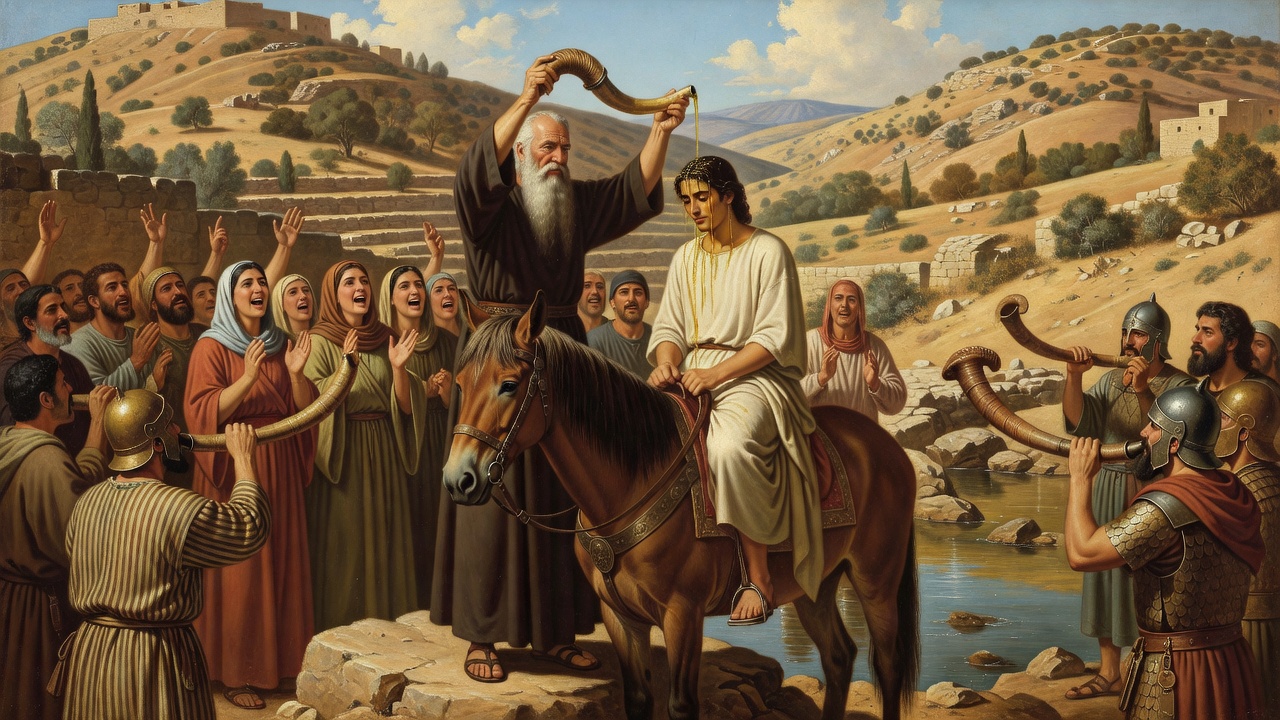
- Montar en la propia mula del rey constituía una proclamación pública decisiva de autoridad real. Por orden expresa de David, Salomón fue llevado al manantial de Gijón, donde Sadoc lo ungió como rey con aceite sagrado del tabernáculo en medio del sonido de cuernos y la aclamación popular.Fuentes: Gihon · Zadok · el propio texto bíblico
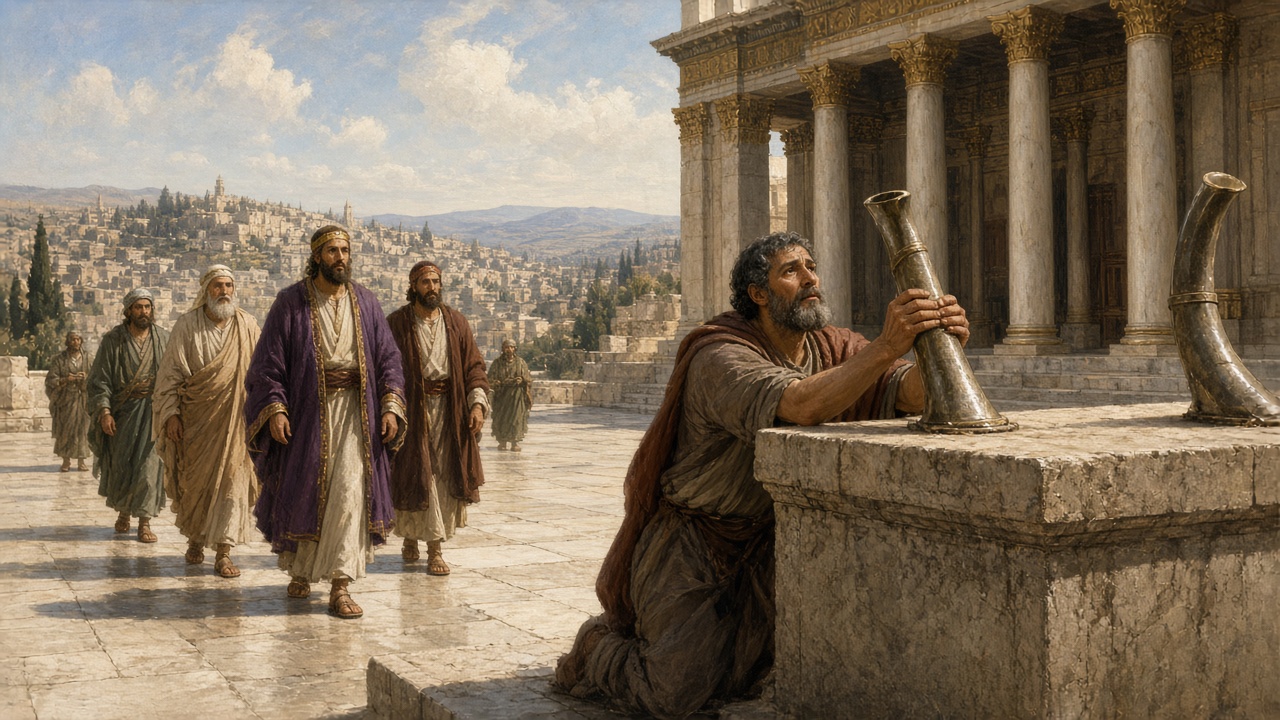
- Al enterarse de la coronación pública de Salomón, Adonías huyó aterrorizado y buscó asilo sujetándose a los cuernos del altar de los sacrificios. Salomón le otorgó clemencia condicional, perdonándole la vida siempre que demostrara ser un hombre digno.Fuentes: Adonijah · el propio texto bíblico
Notas escritas con ayuda de IA a partir de fuentes abiertas (Theographic Bible Metadata, CC BY-SA 4.0; Easton’s Bible Dictionary, dominio público) y revisadas antes de publicarse.
Lugares de este capítulo
- Shunem · Hoy: Sulam · 32.606, 35.334 · versículo 3
- Serpent’s Stone · Hoy: within 100 m of Bir Ayub · 31.767, 35.236 · versículo 9
- Gihon · Hoy: Gihon Spring · 31.773, 35.236 · versículos 33, 38, 44, 45
- Jerusalem · 31.777, 35.234 · versículo 40
Solo aparecen lugares identificados con alta confianza (90 % o más según las fuentes académicas reunidas por OpenBible). Mapa de la época: DARE (Digital Atlas of the Roman Empire), CC BY 4.0; mapa actual: © colaboradores de OpenStreetMap; lugares: OpenBible.info (CC BY 4.0).
Créditos y licencia de esta traducción
Biblica® Kiugo Gĩtheru Kĩa Ngai Kĩhingũre Gikuyu: Biblica® Kiugo Gĩtheru Kĩa Ngai Kĩhingũre (Bible) of Kenya copyright © 2013 Biblica, Inc. Language: Kikuyu (Gikuyu) Contributor: Biblica, Inc. Wĩra ũyũ ũheanĩtwo na ũndũ wa rũtha rwa biacara rwa Creative Commons Attribution-ShareAlike 4.0 International License (CC BY-SA). Ũngĩenda kuona kobĩ ya rũtha rũrũ rwa biacara, rora rũrenda-inĩ rwa: http://creativecommons.org/licenses/by-sa/4.0, kana ũtũme marũa kũrĩ: Creative Commons, PO Box 1866, Mountain View, CA 94042, USA. Biblica® nĩ mũhũri wa biacara wandĩkithĩtio nĩ Biblica, Inc., kũhũthĩra mũhũri wa biacara wa Biblica® kũbataraga marũa ma gwĩtĩkĩrio kuuma kũrĩ Biblica, Inc. Kuumana na rũtha rwa biacara rwa CC BY-SA, no ũkobie kana ũtambie wĩra ũyũ ũtarĩ mũgarũre, ĩndĩ ndũkagarũre rũri rwa biacara rwa Biblica®. Ũngĩgarũra kana ũkobie wĩra ũyũ, na tondũ wa ũguo ũtuĩke nĩ wĩra mwerũ uumanĩte na ũcio-rĩ, no nginya weheria mũhũri wa biacara wa Biblica®. Wĩra-inĩ ũcio mwerũ no nginya wonanie nĩ maũndũ marĩkũ ũgarũrĩte, na ũtarĩrie wĩra-inĩ ũcio ta ũũ: “Wĩra wa kĩhumo warĩ wa Biblica, Inc. na ũheanĩtwo tũhũ ng’enda-inĩ cia www.biblica.com na open.bible.” Kĩmenyitha kia Mwene-wĩra no nginya kĩandĩkwo iratathi rĩa kĩongo kĩa wĩra kana rĩa ũhoro wa Mwene-wĩra ta ũũ: Biblica® Kiugo Gĩtheru Kĩa Ngai Kĩhingũre™ Kĩmenyithia kĩa Mwene-wĩra © 2013 nĩ Biblica, Inc. Biblica® Open Kikuyu Holy Word of God™ Copyright © 2013 by Biblica, Inc. “Biblica” nĩ mũhũri wa biacara wandĩkithĩtio wabici-inĩ ya United States Patent and Trademark Office nĩ Biblica, Inc. Ũhũthĩrĩtwo na rũtha. “Biblica” is a trademark registered in the United States Patent and Trademark Office by Biblica, Inc. Used with permission. No nginya wĩtĩkĩrie wĩra ũcio mwerũ ũgarũrĩte ũheanwo na ũndũ wa rũtha rwa biacara rũu rwa CC BY-SA. Ũngĩenda kũmenyithia Biblica, Inc. ũhoro wĩgiĩ ũtaũri waku wa wĩra ũyũ-rĩ, twandĩkĩre rũrenda-inĩ rwa: https://open.bible/contact-us. This work is made available under the Creative Commons Attribution-ShareAlike 4.0 International License (CC BY-SA). To view a copy of this license, visit http://creativecommons.org/licenses/by-sa/4.0 or send a letter to Creative Commons, PO Box 1866, Mountain View, CA 94042, USA. Biblica® is a trademark registered by Biblica, Inc., and use of the Biblica® trademark requires the written permission of Biblica, Inc. Under the terms of the CC BY-SA license, you may copy and redistribute this unmodified work as long as you keep the Biblica® trademark intact. If you modify a copy or translate this work, thereby creating a derivative work, you must remove the Biblica® trademark. On the derivative work, you must indicate what changes you have made and attribute the work as follows: “The original work by Biblica, Inc. is available for free at www.biblica.com and open.bible.” Notice of copyright must appear on the title or copyright page of the work as follows: Biblica® Kiugo Gĩtheru Kĩa Ngai Kĩhingũre™ Kĩmenyithia kĩa Mwene-wĩra © 2013 nĩ Biblica, Inc. Biblica® Open Kikuyu Holy Word of God™ Copyright © 2013 by Biblica, Inc. “Biblica” nĩ mũhũri wa biacara wandĩkithĩtio wabici-inĩ ya United States Patent and Trademark Office nĩ Biblica, Inc. Ũhũthĩrĩtwo na rũtha. “Biblica” is a trademark registered in the United States Patent and Trademark Office by Biblica, Inc. Used with permission. You must also make your derivative work available under the same license (CC BY-SA). If you would like to notify Biblica, Inc. regarding your translation of this work, please contact us at https://open.bible/contact-us. This translation is made available to you under the terms of the Creative Commons Attribution Share-Alike license 4.0. You have permission to share and redistribute this Bible translation in any format and to make reasonable revisions and adaptations of this translation, provided that: You include the above copyright and source information. If you make any changes to the text, you must indicate that you did so in a way that makes it clear that the original licensor is not necessarily endorsing your changes. If you redistribute this text, you must distribute your contributions under the same license as the original. Pictures included with Scriptures and other documents on this site are licensed just for use with those Scriptures and documents. For other uses, please contact the respective copyright owners. Note that in addition to the rules above, revising and adapting God's Word involves a great responsibility to be true to God's Word. See Revelation 22:18-19. 2025-05-07
Fuente: http://ebible.org/kik/ · eBible.org