1 Corintios 15
Biblica® Kiugo Gĩtheru Kĩa Ngai Kĩhingũre · Toca un versículo para ver sus referencias cruzadas.
Kũriũka gwa Kristũ
1Na rĩrĩ, ariũ na aarĩ a Ithe witũ, nĩngwenda kũmũririkania Ũhoro-ũrĩa-mwega ũrĩa ndaamũhunjĩirie, na mũkĩwamũkĩra, na noguo mũtũũrĩte mũrũmĩtie. 2Ũhoro ũcio mwega nĩguo ũtũmaga mũhonoke, mwaikara mũrũmĩtie wega ũhoro ũrĩa ndaamũhunjĩirie. Angĩkorwo ti ũguo-rĩ, ũhoro ũcio mwawĩtĩkirie o tũhũ.
3Nĩgũkorwo ũhoro ũrĩa niĩ ndaamũkĩrire nĩguo ndaamũheire, ũrĩ wa mbere na wa bata mũno: atĩ Kristũ nĩakuire nĩ ũndũ wa mehia maitũ o ta ũrĩa Maandĩko moigĩte, 4na atĩ nĩathikirwo, na atĩ mũthenya wa gatatũ akĩriũkio kũringana na ũrĩa Maandĩko macio moigĩte, 5na atĩ akiumĩrĩra Petero, na agĩcooka akiumĩrĩra arĩa Ikũmi na Eerĩ. 6Thuutha ũcio, nĩoimĩrĩire makĩria ma ariũ na aarĩ a Ithe witũ magana matano ihinda o rĩmwe, na aingĩ ao marĩ muoyo o na rĩu, o na gũtuĩka amwe ao nĩmarĩkĩtie gũkua. 7Ningĩ agĩcooka akiumĩrĩra Jakubu na thuutha wa ũguo agĩcooka akiumĩrĩra atũmwo othe, 8na thuutha wa acio angĩ othe akĩnyumĩrĩra o na niĩ, haana ta mũndũ waciarĩtwo atarĩ mũkinyu.
9Nĩgũkorwo niĩ nĩ niĩ mũnini mũno harĩ atũmwo arĩa angĩ, o na ndiagĩrĩirwo nĩ gwĩtwo mũtũmwo, tondũ nĩndanyariirire kanitha wa Ngai. 10No wega wa Ngai nĩguo ũtũmĩte nduĩke ũguo ndariĩ, naguo wega wake kũrĩ niĩ ndwarĩ wa tũhũ. No nĩndarutire wĩra na kĩyo gũkĩra acio angĩ othe, no ti niĩ ndaarutaga wĩra ũcio, no nĩ wega wa Ngai ũrĩa warĩ hamwe na niĩ warutaga wĩra ũcio. 11Tondũ ũcio, o na kũngĩtuĩka nĩ niĩ kana nĩ o-rĩ, ũhoro ũyũ noguo tũhunjagia, na noguo inyuĩ mwetĩkirie.
Kũriũka kwa arĩa Akuũ
12Na rĩrĩ, kũngĩkorwo kũhunjagio atĩ Kristũ nĩariũkirio akiuma kũrĩ arĩa akuũ-rĩ, nĩ kĩĩ gĩtũmaga amwe anyu moige atĩ gũtirĩ kũriũkio kwa arĩa akuũ? 13Kũngĩkorwo gũtirĩ kũriũkio kwa arĩa akuũ-rĩ, o nake Kristũ ndaakĩriũkirio. 14Na angĩkorwo Kristũ ndaakĩriũkirio-rĩ, kũhunjia gwitũ no gwa tũhũ, nakuo gwĩtĩkia kwanyu no gwa tũhũ. 15Makĩria ma ũguo-rĩ, ithuĩ no tũgĩkorwo tũrĩ aira a Ngai a maheeni, tondũ nĩtuumbũrĩte atĩ Ngai nĩariũkirie Kristũ kuuma kũrĩ arĩa akuũ. No rĩrĩ, ndaakĩmũriũkirie angĩkorwo nĩ ma atĩ arĩa akuũ matiriũkagio. 16Nĩgũkorwo kũngĩtuĩka atĩ arĩa akuũ matiriũkagio, o nake Kristũ ndaakĩriũkirio. 17Na angĩkorwo Kristũ ndaariũkirio-rĩ, gwĩtĩkia kwanyu nĩ gwa tũhũ; mũgĩtũũraga o mehia-inĩ manyu. 18Ningĩ andũ arĩa marĩkĩtie gũkoma marĩ thĩinĩ wa Kristũ-rĩ, o nao nĩ kũũra morĩte. 19Na kũngĩkorwo kĩĩrĩgĩrĩro giitũ thĩinĩ wa Kristũ no kĩa muoyo-inĩ ũyũ tũrĩ-rĩ, twagĩrĩirwo nĩkũiguĩrwo tha gũkĩra andũ othe.
20No rĩrĩ, ti-itherũ Kristũ nĩariũkĩtio akoima kũrĩ arĩa akuũ, agatuĩka maciaro ma mbere ma arĩa makuĩte. 21Tondũ-rĩ, o ũrĩa arĩ mũndũ watũmire gĩkuũ gĩũke thĩ, o nakuo kũriũkio kwa arĩa akuũ nĩ mũndũ watũmire gũũke. 22Nĩgũkorwo o ta ũrĩa andũ othe makuaga nĩ ũndũ wa Adamu-rĩ, no taguo andũ othe magaacookio muoyo thĩinĩ wa Kristũ. 23No o mũndũ akaariũka ihinda rĩake mwene: Kristũ arĩ we wariũkire mbere; na thuutha andũ arĩa marĩ ake hĩndĩ ĩrĩa agooka. 24Thuutha ũcio nĩguo ihinda rĩa kũrigĩrĩria rĩgaakinya, hĩndĩ ĩrĩa akaaneana ũthamaki kũrĩ Ngai Ithe arĩkĩtie kũniina mothamaki mothe, na wathani, o na hinya wothe. 25Nĩgũkorwo no nginya athamake nginya rĩrĩa agaakorwo aigĩte thũ ciake ciothe rungu rwa makinya make. 26Na rĩrĩ, thũ ya mũthia kũniinwo nĩ gĩkuũ. 27Nĩgũkorwo “nĩ aigĩte indo ciothe rungu rwa makinya make.” Na rĩrĩa gũkwĩrwo atĩ “indo ciothe” nĩciigĩtwo rungu rwake, nĩgũkũmenyeka wega atĩ Ngai we mwene ti wa itari rĩu tondũ nĩ we waigire indo ciothe rungu rwa Kristũ. 28Aarĩkia gwĩka ũguo-rĩ, Mũriũ we mwene nĩagatuĩka wa gwathagwo nĩ ũcio waigire indo ciothe rungu rwake, nĩguo Ngai akorwo nĩ we maũndũ mothe thĩinĩ wa maũndũ mothe.
29Na rĩrĩ, kũngĩkorwo gũtirĩ ũriũkio-rĩ, arĩa mabatithĩtio handũ-inĩ ha arĩa akuũ mageeka atĩa? Angĩkorwo arĩa akuũ matikaariũkio o na atĩa-rĩ, andũ makĩbatithagio handũ-inĩ hao nĩkĩ? 30Na ithuĩ-rĩ, twĩtoonyagia ũgwati-inĩ o ithaa o ithaa nĩkĩ? 31Ngũmwĩra na ma, ariũ na aarĩ a Ithe witũ, ti-itherũ, o ta ũrĩa ndĩĩrahaga nĩ ũndũ wanyu thĩinĩ wa Kristũ Jesũ Mwathani witũ, atĩ niĩ nguaga o mũthenya. 32Angĩkorwo ndaahũũranire na nyamũ cia gĩthaka kũu Efeso nĩ ũndũ wa itũmi cia ũ-mũndũ-rĩ, ndaagunĩkire na kĩ? Angĩkorwo andũ arĩa akuũ matikaariũkio-rĩ,
“Nĩtũrĩe na tũnyue,
nĩgũkorwo rũciũ nĩgũkua tũgaakua.”
33Mũtikaheeneke: “Thiritũ njũru nĩĩthũkagia mĩtugo mĩega.” 34Arahũkai mwĩigue ta ũrĩa mwagĩrĩirwo, na mũtigage kwĩhia; nĩgũkorwo andũ amwe matiũĩ Ngai: ndoiga ũguo nĩgeetha ndĩmũconore.
Mwĩrĩ ũrĩa Ũkaariũkio
35No mũndũ ahota kũũria atĩrĩ, “Andũ arĩa akuũ mariũkagio atĩa? Magooka marĩ na mwĩrĩ ũhaana atĩa?” 36Nĩ ũrimũ ũrĩkũ ũyũ! Kĩrĩa wahaanda-rĩ, gĩtimeraga gĩtambĩte gũkua. 37Hĩndĩ ĩrĩa wahaanda-rĩ, ndũhaandaga mwĩrĩ ũrĩa ũgũcooka ũkorwo ho, no gũkorwo ũhaandaga mbeũ ya ngano kana ya kĩndũ kĩngĩ. 38No Ngai amĩheaga mwĩrĩ o ũrĩa endaga ĩgĩe naguo, na o mũthemba wa mbegũ akaũhe mwĩrĩ waguo. 39Mĩĩrĩ yothe ndĩhaanaine: Andũ marĩ mũthemba ũmwe wa mwĩrĩ, nacio nyamũ mũthemba ũngĩ, na nyoni mũthemba ũngĩ, o nacio thamaki irĩ mwĩrĩ wa mũthemba ũngĩ. 40Ningĩ nĩ kũrĩ mĩĩrĩ ya igũrũ na nĩ kũrĩ mĩĩrĩ ya gũkũ thĩ; no riiri wa mĩĩrĩ ya igũrũ nĩ mũthemba ũmwe, na riiri wa mĩĩrĩ ya gũkũ thĩ nĩ mũthemba ũngĩ. 41Riũa rĩrĩ na riiri warĩo mwanya, na mweri ũrĩ riiri waguo mwanya, na njata irĩ na riiri wacio mwanya; na njata ĩmwe ĩrĩ riiri ũrĩ ngũũrani na njata ĩrĩa ĩngĩ.
42Ũguo nĩguo gũgaatuĩka hĩndĩ ya kũriũkio kwa andũ arĩa akuũ. Mwĩrĩ ũrĩa ũhaandagwo nĩ wa kũbutha, no ũriũkagio ũtarĩ wa kũbutha; 43mwĩrĩ ũhaandagwo ũrĩ mũmene, ũgacooka ũkariũkio ũrĩ na riiri; ũhaandagwo ũtarĩ na hinya, ũgacooka ũkariũkio ũrĩ na hinya; 44ũhaandagwo ũrĩ mwĩrĩ wa ndũire, ũgacooka ũkariũkio ũrĩ mwĩrĩ wa kĩĩroho.
Angĩkorwo nĩ kũrĩ mwĩrĩ wa ndũire-rĩ, o na mwĩrĩ wa kĩĩroho ũrĩ kuo. 45Nĩ ũndũ ũcio kwandĩkĩtwo atĩrĩ: “Adamu ũrĩa warĩ mũndũ wa mbere-rĩ, aatuĩkire kĩũmbe kĩrĩ muoyo”; nake Adamu ũrĩa wa kũrigĩrĩria-rĩ, agĩtuĩka roho wa kũheana muoyo. 46Mwĩrĩ wa kĩĩroho tiguo waambire gũũka, no nĩ ũrĩa wa ndũire, na thuutha wa ũguo ũgĩũka ũrĩa wa kĩĩroho. 47Mũndũ wa mbere aarĩ wa rũkũngũ rwa thĩ, no mũndũ wa keerĩ oimĩte igũrũ. 48O ta ũrĩa mũndũ ũcio wa gũkũ thĩ aatariĩ, noguo arĩa marĩ a tĩĩri matariĩ; na ta ũrĩa mũndũ wa kuuma igũrũ aatariĩ, noguo o na arĩa a igũrũ matariĩ. 49Na ta ũrĩa twagĩire na mũhianĩre wa mũndũ ũcio wa tĩĩri-rĩ, noguo tũkaagĩa na mũhianĩre wa mũndũ ũcio wa kuuma igũrũ.
50Ngũmwĩra atĩrĩ, ariũ na aarĩ a Ithe witũ, mwĩrĩ na thakame itingĩhota kũgaya ũthamaki wa Ngai, kana kĩrĩa kĩbuthaga kĩgae kĩrĩa gĩtabuthaga. 51Thikĩrĩriai, ndĩmwĩre ũndũ wa hitho: Tũtigaakua ithuothe, no nĩkũgarũrwo tũkaagarũrwo ithuothe, 52o kahinda kanini, o ta ibucia rĩa riitho, rĩrĩa karumbeta ka mũthia gakaagamba. Nĩgũkorwo karumbeta nĩgakaahuhwo, nao arĩa akuũ mariũkio matarĩ a kũbutha, na ithuĩ tũgarũrwo mĩĩrĩ. 53Nĩgũkorwo mwĩrĩ ũyũ ũbuthaga no nginya wĩhumbe mwĩrĩ ũtarĩ wa kũbutha, naguo mwĩrĩ ũyũ wa gũkua wĩhumbe mwĩrĩ ũtarĩ wa gũkua. 54Hĩndĩ ĩrĩa kũbutha gũkeehumba kwaga kũbutha, na gũkua kwĩhumbe kwaga gũkua-rĩ, hĩndĩ ĩyo ũhoro nĩũkahinga ũrĩa wandĩkĩtwo atĩrĩ, “Gĩkuũ nĩkĩniinĩtwo gĩgatoorio biũ.”
55“Wee gĩkuũ-rĩ, gũtoorania gwaku gũkĩrĩ ha?
Wee gĩkuũ-rĩ, rũboora rwaku rũkĩrĩ ha?”
56Rũboora rwa gĩkuũ nĩ mehia, naguo hinya wa mehia uumanaga na watho. 57No rĩrĩ, Ngai arogaathwo nĩgũkorwo nĩwe ũtũheaga ũtooria thĩinĩ wa Mwathani witũ Jesũ Kristũ.
58Nĩ ũndũ ũcio, ariũ na aarĩ a Ithe witũ arĩa nyenda, ikaragai mwĩhaandĩte wega. Mũtikanenyenyio nĩ ũndũ o na ũrĩkũ. Tũũrai mwĩheanĩte kũna wĩra-inĩ wa Mwathani, tondũ nĩmũũĩ atĩ wĩra wanyu thĩinĩ wa Mwathani ti wa tũhũ.
¿Sabías que…?
La resurrección de los muertos
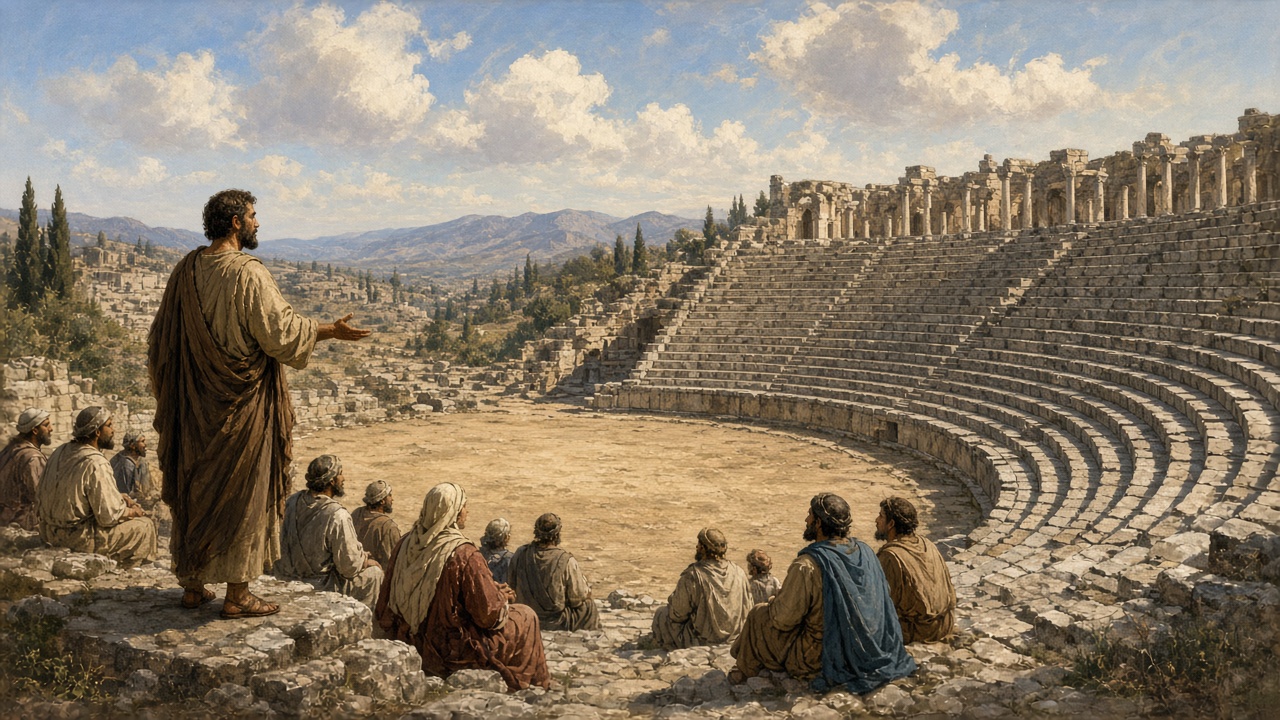
- Cuando este capítulo pregunta qué se ganó al luchar con fieras en Éfeso, nombra una ciudad que el Easton's Bible Dictionary llama capital del Asia proconsular, conocida por un teatro a cielo abierto —el más grande del mundo, capaz de albergar a 50.000 espectadores— donde se presentaban luchas de fieras y de hombres contra fieras.Fuentes: Ephesus · el propio texto bíblico
- El Easton's Bible Dictionary explica que Adán, palabra babilónica que significa rojo y el nombre común de hombre en hebreo y en asirio, fue el primer hombre, formado del polvo de la tierra, y por eso recibió ese nombre. Este capítulo retoma esa imagen: la muerte vino por medio de un hombre, el primer hombre era del polvo, y el último Adán es espíritu vivificante.Fuentes: Adam · el propio texto bíblico
- El Easton's Bible Dictionary (1897) identifica al Jacobo a quien Cristo se apareció después de la resurrección, como registra este capítulo, como hermano o pariente cercano de Jesús, también llamado Jacobo el Menor, y dice que después encabezó la iglesia en Jerusalén.Fuentes: James (Brother of Jesus) · el propio texto bíblico
Notas escritas con ayuda de IA a partir de fuentes abiertas (Theographic Bible Metadata, CC BY-SA 4.0; Easton’s Bible Dictionary, dominio público) y revisadas antes de publicarse.
Lugares de este capítulo
- Ephesus · 37.939, 27.341 · versículo 32
Solo aparecen lugares identificados con alta confianza (90 % o más según las fuentes académicas reunidas por OpenBible). Mapa de la época: DARE (Digital Atlas of the Roman Empire), CC BY 4.0; mapa actual: © colaboradores de OpenStreetMap; lugares: OpenBible.info (CC BY 4.0).
Créditos y licencia de esta traducción
Biblica® Kiugo Gĩtheru Kĩa Ngai Kĩhingũre Gikuyu: Biblica® Kiugo Gĩtheru Kĩa Ngai Kĩhingũre (Bible) of Kenya copyright © 2013 Biblica, Inc. Language: Kikuyu (Gikuyu) Contributor: Biblica, Inc. Wĩra ũyũ ũheanĩtwo na ũndũ wa rũtha rwa biacara rwa Creative Commons Attribution-ShareAlike 4.0 International License (CC BY-SA). Ũngĩenda kuona kobĩ ya rũtha rũrũ rwa biacara, rora rũrenda-inĩ rwa: http://creativecommons.org/licenses/by-sa/4.0, kana ũtũme marũa kũrĩ: Creative Commons, PO Box 1866, Mountain View, CA 94042, USA. Biblica® nĩ mũhũri wa biacara wandĩkithĩtio nĩ Biblica, Inc., kũhũthĩra mũhũri wa biacara wa Biblica® kũbataraga marũa ma gwĩtĩkĩrio kuuma kũrĩ Biblica, Inc. Kuumana na rũtha rwa biacara rwa CC BY-SA, no ũkobie kana ũtambie wĩra ũyũ ũtarĩ mũgarũre, ĩndĩ ndũkagarũre rũri rwa biacara rwa Biblica®. Ũngĩgarũra kana ũkobie wĩra ũyũ, na tondũ wa ũguo ũtuĩke nĩ wĩra mwerũ uumanĩte na ũcio-rĩ, no nginya weheria mũhũri wa biacara wa Biblica®. Wĩra-inĩ ũcio mwerũ no nginya wonanie nĩ maũndũ marĩkũ ũgarũrĩte, na ũtarĩrie wĩra-inĩ ũcio ta ũũ: “Wĩra wa kĩhumo warĩ wa Biblica, Inc. na ũheanĩtwo tũhũ ng’enda-inĩ cia www.biblica.com na open.bible.” Kĩmenyitha kia Mwene-wĩra no nginya kĩandĩkwo iratathi rĩa kĩongo kĩa wĩra kana rĩa ũhoro wa Mwene-wĩra ta ũũ: Biblica® Kiugo Gĩtheru Kĩa Ngai Kĩhingũre™ Kĩmenyithia kĩa Mwene-wĩra © 2013 nĩ Biblica, Inc. Biblica® Open Kikuyu Holy Word of God™ Copyright © 2013 by Biblica, Inc. “Biblica” nĩ mũhũri wa biacara wandĩkithĩtio wabici-inĩ ya United States Patent and Trademark Office nĩ Biblica, Inc. Ũhũthĩrĩtwo na rũtha. “Biblica” is a trademark registered in the United States Patent and Trademark Office by Biblica, Inc. Used with permission. No nginya wĩtĩkĩrie wĩra ũcio mwerũ ũgarũrĩte ũheanwo na ũndũ wa rũtha rwa biacara rũu rwa CC BY-SA. Ũngĩenda kũmenyithia Biblica, Inc. ũhoro wĩgiĩ ũtaũri waku wa wĩra ũyũ-rĩ, twandĩkĩre rũrenda-inĩ rwa: https://open.bible/contact-us. This work is made available under the Creative Commons Attribution-ShareAlike 4.0 International License (CC BY-SA). To view a copy of this license, visit http://creativecommons.org/licenses/by-sa/4.0 or send a letter to Creative Commons, PO Box 1866, Mountain View, CA 94042, USA. Biblica® is a trademark registered by Biblica, Inc., and use of the Biblica® trademark requires the written permission of Biblica, Inc. Under the terms of the CC BY-SA license, you may copy and redistribute this unmodified work as long as you keep the Biblica® trademark intact. If you modify a copy or translate this work, thereby creating a derivative work, you must remove the Biblica® trademark. On the derivative work, you must indicate what changes you have made and attribute the work as follows: “The original work by Biblica, Inc. is available for free at www.biblica.com and open.bible.” Notice of copyright must appear on the title or copyright page of the work as follows: Biblica® Kiugo Gĩtheru Kĩa Ngai Kĩhingũre™ Kĩmenyithia kĩa Mwene-wĩra © 2013 nĩ Biblica, Inc. Biblica® Open Kikuyu Holy Word of God™ Copyright © 2013 by Biblica, Inc. “Biblica” nĩ mũhũri wa biacara wandĩkithĩtio wabici-inĩ ya United States Patent and Trademark Office nĩ Biblica, Inc. Ũhũthĩrĩtwo na rũtha. “Biblica” is a trademark registered in the United States Patent and Trademark Office by Biblica, Inc. Used with permission. You must also make your derivative work available under the same license (CC BY-SA). If you would like to notify Biblica, Inc. regarding your translation of this work, please contact us at https://open.bible/contact-us. This translation is made available to you under the terms of the Creative Commons Attribution Share-Alike license 4.0. You have permission to share and redistribute this Bible translation in any format and to make reasonable revisions and adaptations of this translation, provided that: You include the above copyright and source information. If you make any changes to the text, you must indicate that you did so in a way that makes it clear that the original licensor is not necessarily endorsing your changes. If you redistribute this text, you must distribute your contributions under the same license as the original. Pictures included with Scriptures and other documents on this site are licensed just for use with those Scriptures and documents. For other uses, please contact the respective copyright owners. Note that in addition to the rules above, revising and adapting God's Word involves a great responsibility to be true to God's Word. See Revelation 22:18-19. 2025-05-07
Fuente: http://ebible.org/kik/ · eBible.org