Mateo 8
Nhandejáry Nhe'ẽ · Toca un versículo para ver sus referencias cruzadas.
Hesu ombogwera ijai aipa va'e-pe
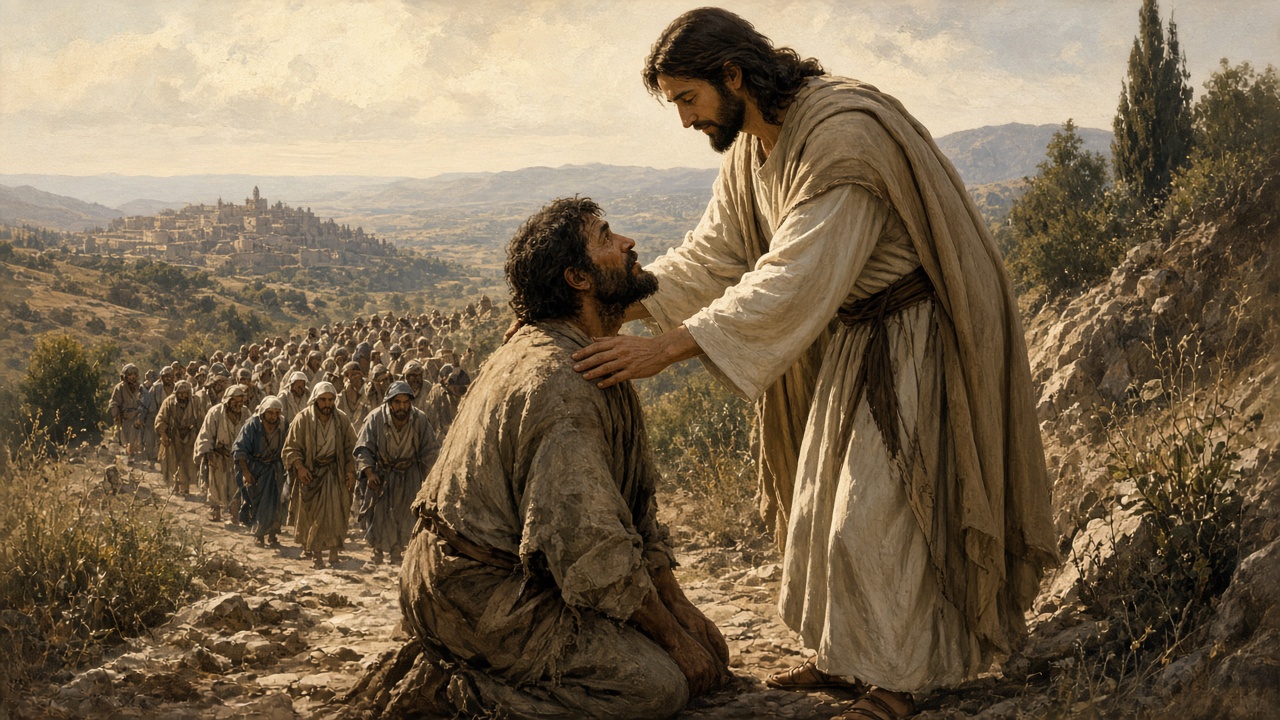
1Ha upéi katu Hesu ogwejy jevy ou-vy upe yvyatyrusu ári-gwi. Ogwejy rire heta ijaty jaty va'e kente kwéry omoirũ íxupe oje'ói-vy hikwái. 2Upe jave ogwahẽ ou-vy iha-py mba'asy vai ogwereko va'e ijai aipa va'e. Gwetypy'ã-rehe onhesũ omboete-vy hovagwy-py:
—Nhane mbogwerahaty voi nde, xe Járy. Xe-vy pa xe mbogwera ave arã nde? he'i Hesu-pe.
3Ha'e oipyso opo omoĩ hese:
—Orombogwera-ta voi katu nde-vy, he'i íxupe. —Xe nhe'ẽ-py tane potĩ katu, he'i hasy va'e-pe.
Upe-ma ramo opa-ma ojei íxugwi ijai aikwe. Okwera porã-ma.
4Upéi he'i Hesu:
—Ejeapysaka katu xe nhe'ẽ-rehe. Ani eremombe'u avave-pe orombogwera-ma hagwe, he'i hasy va'ekwe-pe Hesu. —Tereho katu pa'i oĩ ha-py ejehexa uka-vy. Ehexa uka íxupe erekweramaha. Eme'ẽ íxupe upe myamyrĩ “Nhame'ẽ katu” he'i va'ekwe. Upéixa ramo, “Okwera-ma. Onhemopotĩ jevy-ma” he'i va'erã nde-rehe, atýra-py ne mombe'u-vy, he'i íxupe Hesu.
Hesu ombogwera capitão, soldado kwéry ruvixa rembigwái-pe
5Ha upéi katu ogwahẽ oho-vy Hesu Cafarnaum tetã-my. Upe-py oike rire ogwahẽ ou-vy iha-py capitão, soldado kwéry ruvixa va'e:
6—Xe pytygwõ katu, Xe Járy Hesu, he'i. —Xe rembigwái oime koty-py. Nopu'ãvéi-ma, hajy jeapa-gwi ndoryrýiry. Hasy ete voi oĩ-vy, he'i íxupe soldado ruvixa.
7—Aipo ramo, aha-ta nde róga-py ambogwera hagwã íxupe, he'i soldado ruvixa-pe.
8—Nde, nde tuvixa mba'e-gwi, mba'éixa ereike-ta ereho-vy xe róga gwy-py? he'i omboete-vy íxupe. —Erenhembohekomirĩve-ta para'e ereike ereho-vy. Tuvixave e'ỹ va'e-rami joty ereike-ta upe-py. Aipo ramo ne nhe'ẽ-py rei embogwera katu xe rembigwái-pe, he'i. —“Tokwera” ere ramo, okwera va'erã. A-gwi rei ne nhe'ẽ-py mante okwera va'erã xe rembigwái hasy va'e, he'i Hesu-pe. |src="CN01702B.TIF" size="col" copy="© 1978 David C. Cook Publishing Co." ref="MAT 8.8"
9—Oĩ xe-rehe omanda va'e. Inhe'ẽ ajapo va'e. Xe pogwy-py ave oĩ soldado xe amanda hese va'e. Kóa-pe, “Tereho katu” ha'e ramo, oho ave arã voi. Ha upéa-pe, “Eju katu” ha'e ramo, ou ave arã voi. Xe rembigwái-pe, “Ejapo katu xe nhe'ẽ” ha'e ramo, ojapo ave arã voi. Upéixa ave ne nhe'ẽ-py rei nde pu'aka nipo ra'e mba'asy-rehe erembogwera hagwã xe rembigwái-pe, he'i íxupe upe soldado ruvixa.
10Upéa nhe'ẽ rendu-vy “Mba'éixa ojerovia tee xe-rehe” he'i Hesu opondera-vy hese.
—Ojerovia tee voi xe-rehe upe va'e, he'i kente kwéry-pe hapykwéri ogwa'ẽ va'e-pe. —Amombe'u-ta peẽ-my anhetegwa, he'i. —Oĩ Israel remiarirõre judeu kwéry xe-rehe ojerovia va'e. Ha ko va'e soldado ruvixa judeu e'ỹ ramo jepe, ojerovia teeve joty xe-rehe, he'i. 11—Ha'e-ta peẽ-my. Heta mombyrygwa ogwahẽ va'erã oho-vy Nhandejáry nhande ruvixa ramo oiko haty-py. Heta kwarahy resẽ gwigwa oho va'erã jekarugwasu haty-py. Heta ka'aru gwigwa oho va'erã ave. Ogwapy va'erã okaru-vy Abraão ndive, Isaque ndive, Jacó ndive ave. 12Ha judeu kwéry va'e Nhandejáry re'ýi va'e oho va'erãgwe katu nogwahẽ mo'ãi va'erã upe-py. Omosẽ va'erã íxupe imondo-vy pytũ kwa-py. Upe-py ojahe'o va'erã. Hasẽ va'erã onhemboasy-gwi. Nhandejáry-rehe onhemoyrõ-gwi, onhemohãingyry ngyrýu va'erã oiko-vy, he'i judeu kwéry-rehe.
13Upéi he'i upe soldado ruvixa-pe:
—Tereho jevy katu nde róga-py. Xe reroviaha-rami, toiko katu nde-vy, he'i.
Upe-ma ramo okwera-ma hembigwái.
Entéro hasy va'e-pe gwive ombogwera Hesu
14Ha upéi katu Hesu oho Pedro róga-py. Ogwahẽ ramo upe-py ohexa Pedro raixo. Onheno ra'e oĩ-vy. Hasy ete voi heteraku-gwi. 15Omboja opo ipo-rehe. Opa-ma íxugwi heterakukwe. Opu'ã-ma Hesu remi'urã-rehe onhangareko-vy.
16Ka'aru ete-ma ojereru iha-py heta anháy ojepota hese va'e. Onhe'ẽ-py rei omosẽ mosẽ anháy imondo-vy. Entéro hasy va'e-pe gwive ombogwera-ma. 17Upéa rehegwa ojapo Hesu, upéixa hembiapo yma gware he'i hagwe-rami oiko hagwã ãy. Yma Nhandejáry nhe'ẽ-py omombe'u va'ety Isaías remimoĩgwe kwatia-rehe a-rami:
“Nhande kwéry nhande rasy ramo, omboyke-ma opaixagwa mba'asy heraha-vy nhandéhegwi”.
Yma he'i hagwe-rami, ãy oiko-ma.
“Xe oromoirũ-ta, xe Járy” he'i
18Ha upéi katu heta kente onhemboaty Hesu-rehe. Ohexa ramo heta onhemboaty hese, he'i gwemimbo'e kwéry-pe:
—Jahasa katu y rovái, he'i.
19Ne'írã vyteri onhemboyru jave kanóa-py, ou ohogwaitĩ-vy íxupe peteĩ judeu rekombo'ehaty:
—Xe oromoirũ-ta, porombo'eháry, he'i Hesu-pe. —Mamo ereho ha-rupi oromoirũ-ta, he'i íxupe.
20Hesu he'i jevy íxupe:
—Mykurẽ, yvykwa oĩ íxupe hógarã. Gwyra, oĩ ave íxupe haityrã. Ha xe ae katu Nhande Ryke'y tee va'e, ndaipóri xe-vy xe renagwã atongea-vy xe apyta hagwã, he'i. —Xe moirũse joty pa nde? he'i pe tekombo'ehaty-pe.
21Upéi outro peteĩ hemimbo'e va'e he'i Hesu-pe:
—Xe oromoirũ va'erã, xe Járy, he'i. —Aha'arõ ranhe-ta xe ru omano ramo ajaty hagwã, he'i íxupe.
22—Nahániry. Ãy voi aipota xe moirũ, he'i íxupe. —Xe moirũse e'ỹ va'e ae taimandu'a ranhe katu omano va'ekwe ojaty hagwã-rehe, he'i upe gwemimbo'e-pe.
“Ekirirĩ katu” he'i y-pe
23Upéi onhemboyru-ma kanóa-py Hesu. Hemimbo'e kwéry onhemboyru ave indive. 24Upe jave ou yvytugwasu marány. Ho'a yugwarusu-rehe omomýi hagwã yugwarusu. Upe-ma ramo omopu'ã pu'ã y-pe, ojaho'i ho'i kanóa-pe y. Ha Hesu ae katu oke joty oĩ-vy. 25Ha hemimbo'e kwéry oho omombáy íxupe:
—Ore resende katu, ore Járy, he'i. —Nhanheapymi-tama nhande, he'i Hesu-pe hikwái.
26—Mbava'e-gwi tipo pende py'amirĩ, he'i íxupe kwéry. —Ndapejerovia teéiry ra'e xe-rehe, he'i íxupe kwéry.
Upéi opu'ã onhe'ẽ-py omokirirĩ hagwã. He'i yvytugwasu-pe, y opu'ã va'e-pe ave
—Ekirirĩ katu, he'i ipoxy va'e-pe.
Upe-ma ramo ohopa-ma yvytu. Opytu'u jevy y. Okirirĩ porãmba jevy-ma y. 27Ha'e kwéry opondera voi hese:
—Mba'eixagwa heko va'e po, he'i opondera-vy hese. —Yvytugwasu jepe, y opu'ã pu'ã va'ekwe jepe ohendu inhe'ẽ, he'i Hesu-rehe hikwái.
Mokõi anháy rerekoha
28Upéi ogwahẽ-ma oho-vy y rovái. Gadara yvy-py ogwahẽ. Upe-py ogwahẽ-ma ramo, ou ohogwaitĩ-vy íxupe mokõi anháy rerekoha va'e. Ijyta-gwi osẽ ou-vy. Heko poxy eterei va'e. Upéa-gwi ohasase va'e oikupe'o íxupe ohasa hagwã. Ndikatúi ohasa ijypy-rupi. 29Onhe'ẽ hatã hatã Hesu-pe ombojevyse-vy mo'ã:
—Nde ko Nhandejáry ra'y. Ma'erã ereju ko'a-py, he'i Hesu-pe ombojevyse-vy mo'ã. —Ne'írã vyteri ore moingo asyha áry. Ma'erã ereju? he'i. —Ore moingo asyha áry-py ae ereju va'erã mo'ã, he'i Hesu-pe. —Ãy katu ani ereju ore moingo asy-vy, he'i íxupe.
30Mombyry-gwi ohexa heta kure okaru jave. 31Upéa-gwi ojerure rure íxupe:
—Ore mosẽ-ta ramo, ore mondo katu kure kwéry-pe. Ore mondo katu ipy'a kwéry-py, he'i anháy kwéry Hesu-pe.
32—Tapeho, he'i íxupe kwéry.
Inhe'ẽ-rupi osẽ oho-vy oike kure kwéry py'a-py. Ha kure kwéry katu oriparapa oje'ói-vy. Yugwarusu-py ogwejy oje'ói-vy. Hi'apỹ ogwejy oje'ói-vy. Ho'a onheapymi oje'ói-vy y-py. 33Ha kure nhangarekoha oripara oje'ói-vy. Atygwasu-py oho omombe'u-vy. Anháy rerekohare-pe ojehu va'ekwe gwive omombe'u. 34Upe ramo atygwasu pygwa Hesu rogwaitĩ-vy osẽ ogwa'ẽ-vy. Ohexa-ma ramo Hesu-pe, ombojevyse íxupe:
—Ekwa jevy katu ore yvy-gwi, he'i Hesu-pe ojapura-gwi hikwái.
¿Sabías que…?
Curaciones, fe y el mar
- Capernaum, la ciudad a la que Jesús entra en este capítulo, era una ciudad de Galilea que no se menciona en el Antiguo Testamento. El Easton's Bible Dictionary (1897) dice que llegó a ser “su propia ciudad” después de que dejó Nazaret, e incluye la súplica del centurión y la curación en la casa de Pedro entre los hechos situados allí.Fuentes: Capernaum · el propio texto bíblico
- Jesús dice que muchos vendrán del oriente y del occidente para compartir el banquete con Abraham, Isaac y Jacob en el reino de los cielos. El Easton's Bible Dictionary (1897) presenta a Abraham como hijo de Taré y heredero de las promesas, a Isaac como el único hijo de Abraham con Sara, y a Jacob —también llamado Israel— como el hijo gemelo menor de Isaac y Rebeca.Fuentes: el propio texto bíblico · Abraham · Isaac · Jacob (Israel)
- Mateo presenta las curaciones de aquella noche como cumplimiento de lo dicho por medio del profeta Isaías: “Él tomó nuestras dolencias y cargó con nuestras enfermedades.” El Easton's Bible Dictionary (1897) identifica a Isaías como hijo de Amoz, que profetizó durante los reinados de Uzías, Jotam, Acaz y Ezequías.Fuentes: el propio texto bíblico · Isaiah
Notas escritas con ayuda de IA a partir de fuentes abiertas (Theographic Bible Metadata, CC BY-SA 4.0; Easton’s Bible Dictionary, dominio público) y revisadas antes de publicarse.
Lugares de este capítulo
- Gadara · Hoy: Umm Qais · 32.656, 35.679 · versículo 28
Solo aparecen lugares identificados con alta confianza (90 % o más según las fuentes académicas reunidas por OpenBible). Mapa de la época: DARE (Digital Atlas of the Roman Empire), CC BY 4.0; mapa actual: © colaboradores de OpenStreetMap; lugares: OpenBible.info (CC BY 4.0).
Créditos y licencia de esta traducción
Nhandejáry Nhe'ẽ
New Testament in Kaiwá (BR:kgk:Kaiwá)
copyright © 2006 Wycliffe Bible Translators, Inc.
Language: Kaiwá
Translation by: Wycliffe Bible Translators, Inc.
Copyright Information
© 2006, Wycliffe Bible Translators, Inc. All rights reserved.
This translation text is made available to you under the
terms of the Creative Commons License: Attribution-Noncommercial-No Derivative Works.
( http://creativecommons.org/licenses/by-nc-nd/3.0/ )
In addition, you have permission to port the text to different file formats, as long as you
do not change any of the text or punctuation of the Bible.
You may share, copy, distribute, transmit, and extract portions
or quotations from this work, provided that you include the above copyright
information:
You must give Attribution to the work.
You do not sell this work for a profit.
You do not make any derivative works that change any of the actual words or punctuation of the Scriptures.
Permissions beyond the scope of this license may be
available if you contact
us with your request.
The New Testament
in Kaiwá
© 2006, Wycliffe Bible Translators, Inc. All rights reserved.
This translation is made available to you under the terms of the
Creative Commons Attribution-Noncommercial-No Derivatives license 4.0.
You may share and redistribute this Bible translation or extracts from it in any format, provided that:
You include the above copyright and source information.
You do not sell this work for a profit.
You do not change any of the words or punctuation of the Scriptures.
Pictures included with Scriptures and other documents on this site are licensed just for use with those Scriptures and documents.
For other uses, please contact the respective copyright owners.
2014-04-27
Fuente: http://ebible.org/kgkNT/ · eBible.org