Mateo 2
Nhandejáry Nhe'ẽ · Toca un versículo para ver sus referencias cruzadas.
Kwarahy resẽ-gwi ogwahẽ ou-vy hi'arandu eterei va'e
1Ha upéi katu Herodes mburuvixagwasu ramo oiko jave, oiko-ma Hesu. Belém tetã-my, Judéia yvy-py oiko-ma. Upe jave ogwahẽ-ma ou-vy Jerusalém tetã-my mombyrygwa hi'arandu eterei va'e. Mombyry-gwi kwarahy resẽ-gwi ou ra'e:
2—Kipy tipo oime mitã'i judeu kwéry ruvixagwasurã oiko va'ekwe? he'i oporandu-vy. —Pe mitã'i oikomaha kwaa ukaha va'e jasytata ojeupi oho-vy ramo kwarahy resẽ-my, orohexa-ma va'ekwe. Upéa-gwi mitã'i-pe oroju oromboete-vy, he'i Jerusalém tetã mygwa-pe.
3Judeu ruvixarã rerakwã ohendu-ma ramo judeu ruvixagwasu Herodes, onhemondýi voi. Ndaipy'agwapyvéi-ma voi upéa oikwaa ramo. Entéro Jerusalém tetã mygwa gwive onhemondyipa hikwái. Ndaipy'agwapyvéiry oikwaa ramo upéa hikwái. 4Upéa-gwi Herodes ohenói ou hagwã pa'i ruvixa kwéry gwive judeu rekombo'ehaty kwéry ndive:
—Mamo-py po oiko va'erã upe Nhandejáry rembiporavo Cristo? Kipy tipo hekwagwã? Mbava'e tipo he'i va'ekwe yma gware kwatia nhe'ẽ? he'i oporandu-vy íxupe kwéry.
5—Belém tetã-my, Judéia yvy-py oiko-ta, he'i. —Nhandejáry nhe'ẽ-py omombe'u va'ety remimoĩgwe kwatia-rehe he'i a-rami:
6“Ha'e-ta Belém tetã, Judéia yvy pygwa-rehe. Tetã'i jepe tuvixave va'e-rami joty. Upe-gwi oiko va'erã mburuvixagwasu. Gwymba-rehe onhangarekoha-rami, onhangareko va'erã Israel kwéry xe re'ýi kwéry-rehe”
he'i Nhandejáry kwatia nhe'ẽ. Upéa-gwi upe Nhandejáry rembiporavo oiko-ta Belém-py, he'i Herodes-pe hikwái.
7Upe ramo Herodes ohenói ou hagwã upe hi'arandu va'e kwéry. Omoha'e anho ohenói-vy oporandu hagwã upe jasytata-rehe:
—Araka'e pyhare po ojehexa uka ra'e peẽ-my jasytata? he'i oporandu-vy íxupe kwéry.
8Oikwaa-ma ramo omondo Belém-py:
—Tapeho pejohu peve peheka íxupe, he'i. —Mamo pa oime pehexa porã. Petopa-ma ramo íxupe, peju jevy kuri pemombe'u xe-vy aikwaa hagwã xe ave aha hagwã ahexa íxupe, aha hagwã xe ave amboete íxupe, he'i mo'ã upe hi'arandu va'e-pe.
9Ohendu-ma ramo mburuvixa nhe'ẽ, oje'ói hikwái oheka-vy. Upéi upe jasytata ojeupi ypy jave kwarahy resẽ-my ohexa va'ekwe oho henonde-rupi. Upéi mitã'i oimeha ári opyta yvate-py. 10Ohexa ramo, ovy'a eterei.
—Iporã ete katu. Jahexa jevy-ma jasytata, he'i herovy'a-vy.
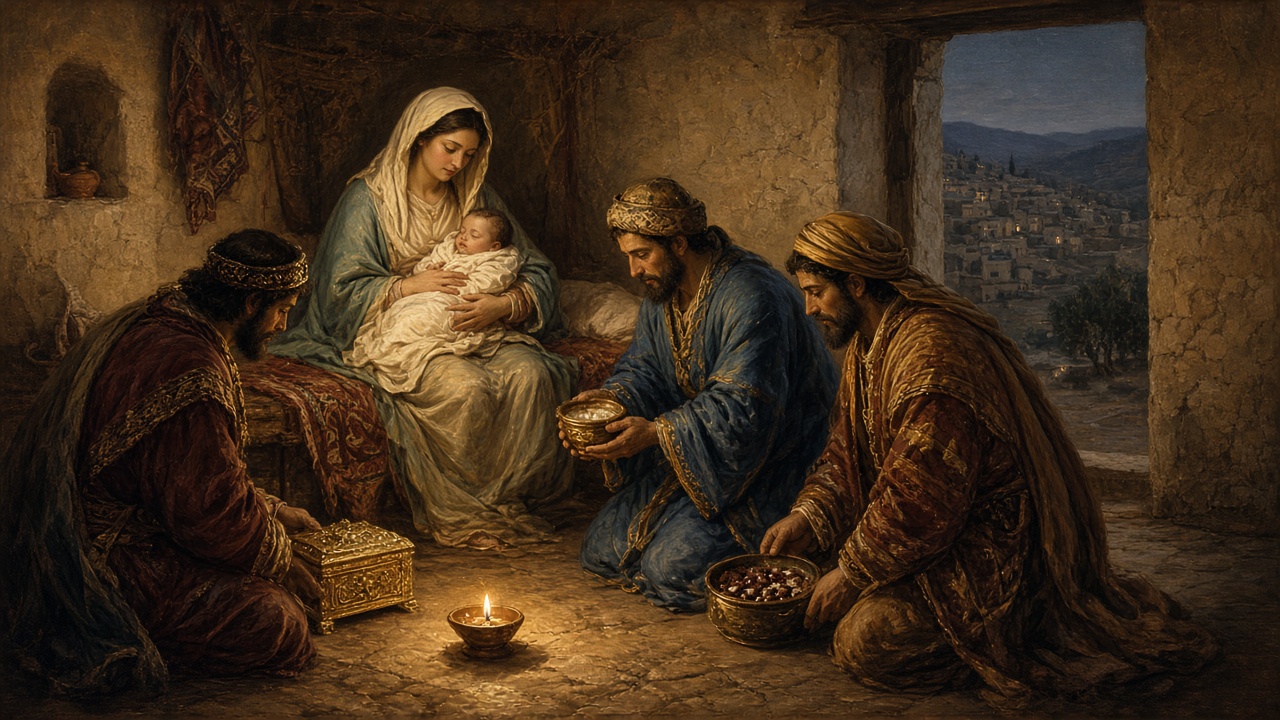
11Upéi ogwahẽ oho-vy óga-py. Upe-py ohexa mitã'i-pe isy Maria ndive oiko ramo. Gwetypy'ã-rehe onhesũ imboete-vy íxupe. Omomba'egwasu íxupe hikwái. Upéi oipe'a imba'e ryru-gwi. Omboete eterei-vy, ome'ẽ rei mitã-pe ouro hepy va'e. Ome'ẽ íxupe hyakwã porã va'e, incenso héry va'e. Ome'ẽ ave íxupe hyakwã porã va'e mirra héry va'e ave. 12Pyhare ogwahẽ ou-vy Nhandejáry rembigwái yváy gwigwa. He'i:
—Aníke peho jevy mburuvixa róga-rupi, he'i hi'arandu va'e-pe.
Ike-py omombe'u íxupe. Upéa-gwi oikupe'o pe'o oje'ói-vy hikwái gwe'ýi ha-py.
Ogwerokanhy heraha-vy mitã'i Egito-py
13Oho rire oje'ói-vy upe hi'arandu va'e, pyhare ojehexa uka ou-vy Nhandejáry rembigwái yváy gwigwa. José oke jave, ojehexa uka íxupe:
—Epu'ã katu, he'i, —eraha isy ndive mitã'i. Erokanhy heraha-vy mitã'i Egito yvy-py. Epyta ranhe upe-py eiko-vy. Xe ha'e ramo ae, ereju jevy va'erã, he'i íxupe. —Mburuvixa Herodes katu oheka uka-ta íxupe ojuka uka hagwã. Upéa-gwi epyta upe-py, he'i íxupe Nhandejáry rembigwái.
14Upe-ma ramo opu'ã pyhare ogwerokanhy heroje'ói-vy. Ogweraha isy ndive mitã'i. Oho Egito yvy-py. 15Upe-py opyta mitã'i ndive. Herodes omano ra'arõ-vy opyta Egito-py. Yma ete Nhandejáry nhe'ẽ-py omombe'u va'ety remimoĩgwe kwatia-rehe he'i a-rami:
“Ahenói-ma xe ra'y-pe Egito yvy-gwi ou hagwã”
he'i upe Nhandejáry rembiporavo Cristo-rehe. Ipokatu voi Nhandejáry nhe'ẽ. Upéa-gwi yma gware he'i hagwe-rami, ãy oiko-ma.
Ojejuka mitã kwimba'e
16Ha upéi katu ndouvéi-ma Herodes renda-py pe hi'arandu va'e. Oikupe'o-ma ra'e oho-vy íxupe.
“Xe mbotavy rei ra'e” he'i ojéupe Herodes. Upéa ombopoxy eterei-ma íxupe, ojéupe nomombe'úiry-gwi. Upéa-gwi omondo Hesu oiko hagwe-py. Mitã'i gwive he'i ojuka ukapa hagwã. Belém tetã mygwa ijerekwe rehegwa ave he'i ojuka ukapa hagwã mitã kwimba'e-pe gwive. Mokõi ro'y ogwereko va'e, ne'írã omboty vyteri mokõi ro'y va'e-pe gwive he'i ojuka ukapa hagwã. Pe hi'arandu va'e omombe'u ha-rupi rei íxupe, he'i ojuka ukapa hagwã. 17Yma Nhandejáry nhe'ẽ-py omombe'u va'ety Jeremias remimoĩgwe kwatia-rehe a-rami he'i:
“Omemby ohapirõ va'e nhahendu-ma tetã héry va'e Ramá-py. Raquel remiarirõre voi upe va'e ohapirõ omemby kwéry. Ojahe'o ramo omemby kwéry-rehe nhahendu-ma voi. Ndoikovéi-magwi omemby nohenduséiry voi ombopy'agwapyharã mo'ã nhe'ẽ”
he'i va'ekwe imemby ojejuka va'ekwe-rehe. Upéixa yma he'i hagwe-rami, ãy oiko-ma Belém tetã-my.
Ogweru jevy-ma mitã'i Egito yvy-gwi
19Ha upéi katu omano Herodes. Omano rire, ojehexa uka jevy José-pe Nhandejáry rembigwái yváy gwigwa. Egito-py vyteri oime ramo, ikéra-py ojehexa uka jevy íxupe:
20—Omano-ma mitã-rehe ija'e'ỹ va'ekwe. Ãy ereraha jevy jepe arã upe-py. Ijukaseharãgwe omano-ma. Epu'ã katu, he'i —eraha jevy mitã isy ndive. Ereiko hagwe-py tereho jevy. Israel kwéry yvy-py tereho, he'i José-pe.
21Upe-ma ramo opu'ã oje'ói-vy. Mitã ogweraha isy ndive jevy gwetã-my. Israel kwéry yvy-py oho. 22Ha upéi katu:
—Ãy Herodes ra'yre Arquelau oiko jevy mburuvixagwasu ramo Judéia yvy-py, he'i José-pe omombe'u-vy.
Upéixa-gwi ikyhyje oho hagwã ta'yre manda ha-py. Pyhare ojehexa uka jevy íxupe ou-vy Nhandejáry rembigwái yváy pygwa. José oke jave, ojehexa uka íxupe:
—Ani ereho teĩ upe-py, he'i íxupe.
Upéixa-gwi ndohóiry oyvy-py. Galiléia yvy-py ae ha'e oho.
23Upe-py oho opyta Nazaré tetã-my. Yma Nhandejáry nhe'ẽ-py omombe'u va'ety remimoĩgwe kwatia-rehe he'i a-rami:
“He'i va'erã íxupe Nazaré pygwa”
he'i upe Nhandejáry rembiporavo Cristo-rehe. Ipokatu voi Nhandejáry nhe'ẽ. Upéa-gwi yma he'i hagwe-rami, ãy oiko-ma.
¿Sabías que…?
Magos, Herodes y Nazaret
- El rey Herodes de este capítulo es Herodes el Grande. Su hijo Arquelao, habido con Malthace, una mujer samaritana, heredó la tercera parte del reino: Idumea, Judea y Samaria. Hasta pocos días antes de la muerte de Herodes, otro hijo, Antipas, había sido nombrado sucesor, pero en sus últimos momentos Herodes nombró a Arquelao; por temor a él, José se apartó de Judea y se retiró a Galilea.Fuentes: Archelaus · el propio texto bíblico
- Mateo relaciona la muerte de los niños en Belén con palabras pronunciadas por el profeta Jeremías: una voz en Ramá, Raquel llorando por sus hijos. Raquel, una de las esposas de Jacob, murió al dar a luz a Benjamín y fue sepultada junto al camino de Efrata, es decir, Belén, justo al norte de la ciudad. Su sepulcro es objeto de gran veneración entre los judíos.Fuentes: el propio texto bíblico · Rachel · Bethlehem
- Belén, en la región montañosa de Judá, se llamaba antes Efrata y también era conocida como la ciudad de David; bajo los romanos quedaba en Judea, la más meridional de las tres divisiones de Palestina. José y María fueron en cambio a Nazaret, en Galilea, su hogar, un pueblo que no se menciona en el Antiguo Testamento. En general se supone que el nombre Nazaret proviene del hebreo netser, un renuevo o brote, aunque algunos lo relacionan con una palabra que significa guardar o vigilar.Fuentes: Bethlehem · Judea · Nazareth · el propio texto bíblico
Notas escritas con ayuda de IA a partir de fuentes abiertas (Theographic Bible Metadata, CC BY-SA 4.0; Easton’s Bible Dictionary, dominio público) y revisadas antes de publicarse.
Lugares de este capítulo
- Bethlehem · 31.704, 35.208 · versículos 1, 5, 6, 8, 9, 16
- East · Hoy: region around Amman · 31.955, 35.934 · versículos 1, 2, 9
- Jerusalem · 31.777, 35.234 · versículos 1, 3
- Judea · Hoy: Judea 1 · 31.777, 35.234 · versículos 1, 5, 22
- Egypt · 30.129, 31.308 · versículos 13, 14, 15, 19
- Galilee · 32.760, 35.527 · versículo 22
- Nazareth · 32.702, 35.298 · versículo 23
Solo aparecen lugares identificados con alta confianza (90 % o más según las fuentes académicas reunidas por OpenBible). Mapa de la época: DARE (Digital Atlas of the Roman Empire), CC BY 4.0; mapa actual: © colaboradores de OpenStreetMap; lugares: OpenBible.info (CC BY 4.0).
Créditos y licencia de esta traducción
Nhandejáry Nhe'ẽ
New Testament in Kaiwá (BR:kgk:Kaiwá)
copyright © 2006 Wycliffe Bible Translators, Inc.
Language: Kaiwá
Translation by: Wycliffe Bible Translators, Inc.
Copyright Information
© 2006, Wycliffe Bible Translators, Inc. All rights reserved.
This translation text is made available to you under the
terms of the Creative Commons License: Attribution-Noncommercial-No Derivative Works.
( http://creativecommons.org/licenses/by-nc-nd/3.0/ )
In addition, you have permission to port the text to different file formats, as long as you
do not change any of the text or punctuation of the Bible.
You may share, copy, distribute, transmit, and extract portions
or quotations from this work, provided that you include the above copyright
information:
You must give Attribution to the work.
You do not sell this work for a profit.
You do not make any derivative works that change any of the actual words or punctuation of the Scriptures.
Permissions beyond the scope of this license may be
available if you contact
us with your request.
The New Testament
in Kaiwá
© 2006, Wycliffe Bible Translators, Inc. All rights reserved.
This translation is made available to you under the terms of the
Creative Commons Attribution-Noncommercial-No Derivatives license 4.0.
You may share and redistribute this Bible translation or extracts from it in any format, provided that:
You include the above copyright and source information.
You do not sell this work for a profit.
You do not change any of the words or punctuation of the Scriptures.
Pictures included with Scriptures and other documents on this site are licensed just for use with those Scriptures and documents.
For other uses, please contact the respective copyright owners.
2014-04-27
Fuente: http://ebible.org/kgkNT/ · eBible.org