Juan 17
Nhandejáry Nhe'ẽ · Toca un versículo para ver sus referencias cruzadas.
“Xe irũ-rehe ajerure-ma nde-vy” he'i Nhandejáry-pe Hesu gwemimbo'e-rehe
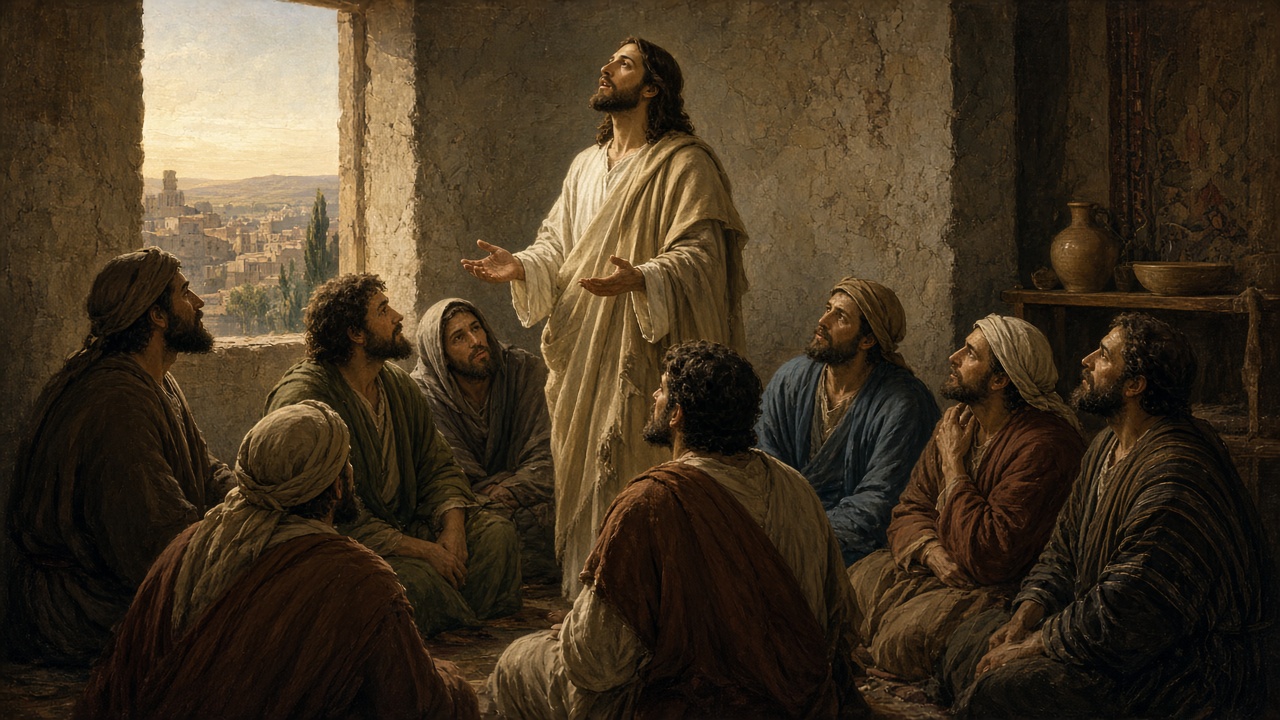
1Upéa he'i rire, hovayva Hesu ombojeupi onhe'ẽ Nhandejáry-pe:
—Ogwahẽ-ma ou-vy xe aha hagwã óra, xe Ru, he'i íxupe. —Nde ra'y voi xe, he'i Gwu-pe. —Xe reko porãha ehexa uka katu ahexa uka hagwã nde reko porãha. 2Yma va'ekwe nde katu xe moingo entéro yvypóry gwive jaryrã, xe amoingove hagwã ne rembiporavo va'e gwive ne ndive oiko hagwã opa e'ỹ reheve. 3Ha xe remimoingove katu ohexa kwaa porã nde-rehe nde rekoha. Ne anho Tupã tee voi. Ne ramigwa ndaipóri. Ha xe ne remimbou voi. Xe rekoha ohexa kwaa porã ave xe-rehe xe remimoingove. Upéa-gwi ehexa uka katu xe reko porãha. 4Yvypóry-pe ahexa uka-ma nde reko porãha. Ereme'ẽ va'ekwe xe rembiaporã gwive ajapo-ma katu. 5Ko yvy oiko e'ỹ mboyve xe tuvixa mba'e-ma aiko ne ndive va'ekwe. Ko'ánga ne ndive aiko hagwe-rami, xe moingo jevy katu, xe Ru. Xe mbotuvixa mba'e jevy katu.
6—Yvypóry pa'ũ-gwi ereiporavo va'ekwe xe irũrã ereme'ẽ hagwã xe-vy. Íxupe aikwaa uka-ma nde rekoha. Ne rembiporavo nde re'ýi voi. Upéi ereme'ẽ va'ekwe xe-vy xe re'yirã. Ne nhe'ẽ ohendu hikwái. 7Ko'ánga katu, “Nhandejáry remime'ẽgwe voi íxupe nipo ra'e” he'i ereme'ẽ va'ekwe-rehe xe-vy. 8Xe-vy ne remimombe'u amombe'u íxupe. Ha xe remimombe'u katu ohendu voi hikwái. “Nhandejáry-gwi ou nipo ra'e Hesu. Ombou nipo ra'e íxupe Nhandejáry” he'i nhande-rehe hikwái.
9—Ha teko rei-rehe katu ndajerure mo'ãi nde-vy. Xe-vy ne remime'ẽgwe-rehe ae ajerure-ta nde-vy. Nde re'ýi voi. Upéa-gwi ajerure-ta nde-vy hese. 10Xe areko va'e gwive ne mba'e ave. Ha nde erereko va'e gwive xe mba'e ave. Ha xe remimbo'e katu xe-vy ne remime'ẽgwe xe irũrã ohexa uka-ma xe reko porã teeha. 11Ãy katu aha-ta xe nde ereiko ha-py. Ndaiko mo'ãvéi-ma ko yvy ári. Ha xe remimbo'e katu oiko joty va'erã ko yvy ári. Nde reko marangatu voi, xe Ru. Ne nhe'ẽ-rupi aikwaa uka-ma kuri íxupe kwéry nde rekoha. Ãy nde réry-py enhangareko porã katu hese ijoja meme oiko-vy hagwã. Peteĩxa nhande, nhande jojaha-rami, aipota ijoja ave onhondive hikwái. 12Hendive xe aime jave ko yvy ári, anhangareko hese aiko-vy nde réry-py, ahexa uka íxupe va'ekwe-py. Anhangareko porã hese aiko-vy. Avave ndaxe rejái oho-vy. Peteĩ va'e mo'ã xe reja kuri oho-vy. Xe irũ tee e'ỹ va'e upéa anhaygwasu rembieraha. Yma hekorã omoĩ va'ekwe kwatia-rehe. Upéa-gwi hembihaikwe-rami naxe moirũvéi-ma ãy.
13—Ko'ánga aheja-tama ko yvy aha-vy nde ereiko ha-py. Ha aime jave katu kóa xe nhe'ẽ amombe'u íxupe kwéry ovy'a hagwã. Xe avy'aha-rami aipota ovy'apa hikwái. 14Ne nhe'ẽ amombe'u-ma kuri íxupe ha teko rei katu ndaija'éi-ma hese. Teko rei reko-rupi aiko e'ỹha-rami, xe irũ ave ndoikovéi-ma heko-rupi. Upéa-gwi ndaija'evéi-ma hese teko rei. 15“Eipe'a katu íxupe heraha-vy ko yvy-gwi” nda'e mo'ãi nde-vy. Ha'e-ta ae, “Eresende katu íxupe. Anháy reko e'ỹ-rupi oiko hagwã eresende katu” ha'e-ta ae nde-vy hese kwéry. 16Teko rei reko-rupi xe aiko e'ỹha-rami xe irũ ave ndoikovéi-ma heko-rupi. 17Teko rei reko-rupi ndoikovéi-gwi, ipotĩ-magwi eheja katu toiko ne irũ tee ramo. Anhetegwa tee va'e ne nhe'ẽ. Ne nhe'ẽ rendu ramo emoingo katu ne irũ tee ramo. 18Yvypóry kwéry-pe amombe'u hagwã xe mbou va'ekwe. Upéixa ete, “Tapeho opa-rupi xe mombe'u-vy” ha'e kuri xe irũ-pe. 19Ãy apena hese-gwi, napenavéi-ma xéjehe. Hekovia ae amano hagwã-rami aĩ. Nde-vy anheme'ẽ-ta ne irũ tee ramo oiko hagwã xe irũ. |src="CN01699B.TIF" size="span" copy="© 1978 David C. Cook Publishing Co." ref="JHN 17.19"
20—Xe irũ-rehe ajerure-ma nde-vy. Ha ko'ánga katu xe irũ nhe'ẽ renduharã-rehe ave ajerure-ta ave. Inhe'ẽ rendu-gwi ojerovia-ma va'erã xe-rehe. 21Xe-rehe ojerovia va'erã-rehe ajerure-ta nde-vy peteĩxa ijoja tee hagwã xe-rehe ojerovia va'e gwive. Nde ko xe moirũha-rami, xe Ru, xe oromoirũha-rami ave, aipota peteĩxa nhane moirũ hikwái, “Nhandejáry remimbou voi nipo ra'e Hesu” he'i hagwã xe-rehe yvypóry. 22Nde rekoha erehexa uka xe-vy va'ekwe-rami, ahexa uka ave kuri íxupe xe rekoha peteĩxa ijoja tee hagwã oiko-vy. Nhande nhande jojaha-rami aipota ijoja ave hikwái. 23Peteĩxa amoirũ íxupe. Peteĩxa ave xe moirũ nde. Upéixa jaiko ha'e kwéry ijoja porã tee hagwã. Ijoja porã tee ramo, “Nhandejáry remimbou voi nipo ra'e Hesu” aipota he'i va'erã xe-rehe teko rei. Aipota he'i va'erã, “Hesu-pe ohayhuha-rami Nhandejáry, Nhandejáry reroviaha ave hembiayhu voi nipo ra'e” he'i va'erã.
24—Ãy, xe Ru, ko va'e xe-vy ne remime'ẽgwe voi xe irũrã. Xe aiko ha-rupi, aipota xe moirũ ave. Ndoikói výteri ramo ko yvy xe rayhu va'ekwe ereiko-vy. Upéa-gwi xe momba'egwasu va'ekwe xe rereko-vy. Ãy aipota xe moirũ xe momba'egwasuha ohexa hagwã hikwái. 25Nde ko erejejavy e'ỹ va'e, xe Ru. Teko rei katu nde kwaa e'ỹha voi. Xe ko ae nde kwaaha voi. Ha xe irũ katu oikwaa-ma nde xe mbouhare. 26Aikwaa uka va'ekwe íxupe nde rekoha aiko-vy. Ãy aikwaa uka jevy-ta aiko-vy, xe rayhuha-rami ereiko-vy, ojohayhu porãve rãve hagwã ave. Peteĩxa amoirũse ave íxupe kwéry, he'i Nhandejáry-pe onhe'ẽ ombojeupi-vy.
¿Sabías que…?
Juan 17: ha llegado la hora
- La oración comienza cuando Jesús, después de haber dicho estas cosas, alza los ojos al cielo y dice que ha llegado la hora. Se asocia con el Discurso del Aposento Alto, indicado como un día, y con la Semana Santa, indicada como ocho días.Fuentes: el propio texto bíblico · Upper Room Discourse · Holy Week
- Aquí la vida eterna es conocer al único Dios verdadero y a Jesucristo, a quien el Padre envió. Jesús también habla de la gloria que tenía con el Padre antes de que existiera el mundo y del amor del Padre por él antes de la fundación del mundo.Fuentes: el propio texto bíblico
- Ora por quienes el Padre le dio del mundo, los que han guardado la palabra, y también por quienes creerán por medio del mensaje de ellos, pidiendo que sean uno. No pide que sean sacados del mundo, sino que sean guardados del maligno y santificados por la verdad, que identifica como la palabra del Padre.Fuentes: el propio texto bíblico
Notas escritas con ayuda de IA a partir de fuentes abiertas (Theographic Bible Metadata, CC BY-SA 4.0; Easton’s Bible Dictionary, dominio público) y revisadas antes de publicarse.
Créditos y licencia de esta traducción
Nhandejáry Nhe'ẽ
New Testament in Kaiwá (BR:kgk:Kaiwá)
copyright © 2006 Wycliffe Bible Translators, Inc.
Language: Kaiwá
Translation by: Wycliffe Bible Translators, Inc.
Copyright Information
© 2006, Wycliffe Bible Translators, Inc. All rights reserved.
This translation text is made available to you under the
terms of the Creative Commons License: Attribution-Noncommercial-No Derivative Works.
( http://creativecommons.org/licenses/by-nc-nd/3.0/ )
In addition, you have permission to port the text to different file formats, as long as you
do not change any of the text or punctuation of the Bible.
You may share, copy, distribute, transmit, and extract portions
or quotations from this work, provided that you include the above copyright
information:
You must give Attribution to the work.
You do not sell this work for a profit.
You do not make any derivative works that change any of the actual words or punctuation of the Scriptures.
Permissions beyond the scope of this license may be
available if you contact
us with your request.
The New Testament
in Kaiwá
© 2006, Wycliffe Bible Translators, Inc. All rights reserved.
This translation is made available to you under the terms of the
Creative Commons Attribution-Noncommercial-No Derivatives license 4.0.
You may share and redistribute this Bible translation or extracts from it in any format, provided that:
You include the above copyright and source information.
You do not sell this work for a profit.
You do not change any of the words or punctuation of the Scriptures.
Pictures included with Scriptures and other documents on this site are licensed just for use with those Scriptures and documents.
For other uses, please contact the respective copyright owners.
2014-04-27
Fuente: http://ebible.org/kgkNT/ · eBible.org