Juan 10
Nhandejáry Nhe'ẽ · Toca un versículo para ver sus referencias cruzadas.
Arandu rehegwa nhe'ẽ omombe'u Hesu ovexa rehegwa nhe'ẽ-rami
1Ha upéi katu he'i jevy upe pygwa-pe Hesu:
—Amombe'u-ta peẽ-my anhetegwa va'e. Jaike ramo xikéro-py ovexa oĩ ha-my, okẽ-rupi jaike va'e. Ha imondaháry oporosakeahaty va'e ave katu okẽ-rupi ndoikéiry. Ojeupi ae ohasa xikéro ári-rupi oike hagwã ovexa oĩ ha-my, he'i. 2—Ha okẽ-rupi oike va'e katu ovexa rerekwa voi, he'i. 3—Ogwahẽ ou-vy ramo, imbotyhaty járy onhokendavo íxupe. Upéi ohenói gwymba. Peteĩ teĩ héry-py ohenói. Ohenói ramo, ohendu inhe'ẽ hymba. Upéi oka-py ogweraha. 4Ogwenohẽ rire gwymba gwive, oho henonde-rupi. Oikwaa inhe'ẽ. Upéa-gwi oho hupive hikwái, he'i. 5—Ha herekwa e'ỹ va'e-pe katu nomoirũséi voi. Ndohoséi hupive. Herekwa e'ỹ va'e nhe'ẽ ndoikwaái voi. Upéa-gwi okanhy oje'ói-vy íxugwi, he'i upe pygwa-pe Hesu.
6Arandu rehegwa nhe'ẽ omombe'u íxupe kwéry ovexa rehegwa nhe'ẽ-rami. Ha henduha katu mbava'e-rehe po he'ise Hesu ndoikwaái voi hikwái.
“Pe herekwa heko porã tee va'e xe-rehe voi he'i” he'i Hesu
7Upéixa ramo he'i jevy íxupe kwéry Hesu:
—Amombe'u-ta peẽ-my anhetegwa va'e. Ovexa rokẽ he'ise xe-rehe. 8Xe renonde-py ou va'ekwe-rehe gwive he'ise imondaháry oporosakeahaty ave. Ha nohendúiry íxupe ovexa. Xe nhe'ẽ renduha-pe he'ise ovexa. 9Okẽ, ha'e ramo xéjehe voínte ha'e. Okẽ-rupi oike va'e gwive xe-rehe ojerovia va'e aresende va'erã íxupe. Ndaikyhyjéi va'erã oike ike-vy. Ikyhyje e'ỹ reheve osẽ osẽ va'erã. Oĩ hese onhangareko va'e. Oheka va'erã ho'u va'erã, he'i gwĩ hese ojerovia va'e-rehe. 10—Ha imondaháry katu nopenái ovexa-rehe. Omonda hagwã mante íxupe ou va'e. Ijukapyrã voi ovexa. Ohundi hagwã mante íxupe ou. Ha xe katu aju va'ekwe amoingove hagwã ovexa-pe. Amoingove porãve rãve va'erã íxupe, he'i.
11—Herekwa heko porã tee va'e gwymba ndive ojejuka uka hagwãixa opyta. Pe herekwa heko porã tee va'e xe-rehe voi he'i, he'i. 12—Hembigwái ae katu ogana hagwã mante omba'apo va'e ndaha'éi herekwa tee. Ijáry e'ỹ voi upéa. Upe va'e nopenái mymba-rehe. Ogana hagwã mante omba'apo. Upéa-gwi ogwahẽ ou ramo jagwarete, nonhangareko porãi hymba-rehe. Oripara mante íxugwi. Upe-ma ramo oipyhy mymba-pe jagwarete omosarambipa hagwã.
14Pe ovexa rerekwa hekoha porã tee va'e, ha'e ramo, xéjehe voínte ha'e. Xe Ru rekoha aikwaapa voi. Xe kwaa ave xe Ru. Upéixa ete aikwaa xe rymba. Ha xe rymba xe kwaa ave. Xe rymba rekovía ajejuka ukase va'erã voi. Naxe rakate'ỹiry xe rekove-rehe xe rymba aresende hagwã, he'i. 16—Mombyry mbyry oĩ va'e xe rymba xe areko va'e ave. Ndaha'éi a pygwa, ko xikéro pygwa. Mombyrygwa-pe ajererovia uka va'erã. Xe nhe'ẽ ohendu va'erã. Henda henda-rupi peteĩxa oiko va'erã. Peteĩ mante oĩ va'erã herekwa.
17Xe rymba rekovía ajejuka uka va'erã voi, xe aikove jevy hagwã. Upéa-gwi xe rayhu voi xe Ru. 18Xe rekove-rehe ipu'akave va'e ndaipóri. Xe jukase-gwi mante naxe jukái va'erã avave. Xe nhe'ẽ-rupi mante xe juka va'erã. Xe nhe'ẽ-py joty ajejuka uka va'erã. Xe nhe'ẽ-py joty aikove jevy va'erã. Upe va'e ajapo hagwã he'i va'ekwe xe-vy xe Ru omanda-vy, he'i judeu kwéry-pe Hesu.
19Upe va'e nhe'ẽ ohendu ramo, omombe'u joavy avy judeu kwéry:
20—Ojepota-ma ra'e hese anháy, he'i. —Itavy voi. Ma'erã po pehenduse inhe'ẽ? he'i hese heta oĩ va'e.
21Outro kwéry he'i:
—Anháy ojepota hese va'e nonhe'ẽi ha'e-rami. Anháy rerekoha ndikatúi ombohesa jevy hesapyso e'ỹ va'e-pe, he'i ojóupe hese.
“Erenhemonhandejáry ra'anga anga rei ereiko-vy” he'i mo'ã Hesu-pe
22Ha upéi katu oiko-ma Jerusalém tetã-my judeu kwéry arete. Nhandejáry róga kakwaa nhamoatyrõmba hagwe áry arete héry va'e. Upe ramo ro'y eterei voi. 23Ha Hesu katu ogwata oiko-vy Nhandejáry róga kakwaa-py. Ogapy onhemboty e'ỹ va'e gwy-py, Salomão onhehenói va'e gwy-py ogwata oiko-vy. 24Upe-ma ramo ogwahẽ ou-vy judeu ruvixa kwéry. Ogwata jave Hesu, ogweroajere íxupe hikwái:
—Are gwive ko'ánga ete peve orojapura eremombe'u hagwã ore-vy kiva'e tipo nde oroikwaa porã hagwã. Emombe'u porã katu ore-vy, he'i. —Nde tipo Cristo voi ore remiha'arõ va'e? he'i oporandu-vy íxupe hikwái.
25Upéi Hesu he'i íxupe kwéry:
—Xe jehegwigwa nhe'ẽ amombe'u kuri peẽ-my. Ha ndaperoviái voi xe nhe'ẽ. Xe Ru réry-py xe rembiapo porã va'e. Pende rexapyrã-rupi xe rembiapo. Upe va'e pehexa ramo, ma'erã peje xe-rehe, “Hesu nipo ndaha'éi Cristo ra'e” peje kuri xe-rehe, he'i. 26—Xe rymba kwéry e'ỹ va'e-rami peiko va'e xe-vy. Xe re'ýi e'ỹ va'e peẽ. Upéa-gwi ndaperoviáiry xe nhe'ẽ. 27Xe rymba kwéry xe nhe'ẽ renduha va'e voi. Peteĩ teĩ va'e-pe aikwaa. Xe rupive oje'ói va'erã. 28Xe rymba gwive amoingove va'e Nhandejáry ndive opa e'ỹ reheve opyta hagwã. Mombyry oréhegwi noĩry va'erã. Xe po pyte-py xe rembiereko meme voi. Ha ndikatúi ogweraha avave xe po pyte-gwi. 29Upéa xe Ru remimonhangareko uka xe-vy ime'ẽ-vy. Ha'eixagwa ndaipóri. Ipo pyte-py xe Ru rembiereko voi. Ha ndikatúi ogweraha avave ipo pyte-gwi, he'i. 30—Xe xe Ru ave peteĩxa, he'i judeu ruvixa kwéry-pe.
31Upéa he'i-ma ramo, ojapi hagwã íxupe, ita oipyhy hikwái. Ojukase íxupe mo'ã hikwái.
32Ha Hesu he'i:
—Pene pa'ũ-rupi heta xe rembiapo porã. Xe Ru nhe'ẽ-py ahexa uka peẽ-my xe ajapo porãha. Kiva'eixagwa-rehe po xe api apise peẽ? he'i judeu ruvixa kwéry-pe.
33—Ndorojapi mo'ãi ne rembiapo porã-rehe. Nhandejáry-rehe erenhe'ẽ rei hagwe-rehe ae orojapi-ta. Teko rei jepe erenhemonhandejáry ra'anga anga rei ereiko-vy. Upéa-rehe orojapise, he'i mo'ã íxupe judeu ruvixa kwéry.
34Upe-ma ramo omombe'u judeu ruvixa kwéry-pe Nhandejáry nhe'ẽ:
—Nhandejáry kwatia nhe'ẽ, pehendu va'e he'i no'ã-rami:
“Tupã kwéry voi peẽ, ha'e-ma peẽ-my”
he'i Nhandejáry. 35Ha Nhandejáry nhe'ẽ anhetegwa tee va'e he'i meme. Upéa jaikwaa voi. Pejeapysaka katu xe nhe'ẽ-rehe. Gwĩ inhe'ẽ renduha-pe tupã kwéry-py ohenói va'ekwe Nhandejáry. 36Xe katu Nhandejáry rembiporavo ko yvy-py hemimbou voi xe. Ha, Nhandejáry ra'y voi xe, ha'e ramo xéjehe, ndapejohu porãi va'erã voi xe nhe'ẽ. Teko rei-pe tupã kwéry-py ohenói rei va'ekwe Nhandejáry. Aipo ramo, ma'erã po, “Erenhe'ẽ rei rei ereiko-vy Nhandejáry-rehe” peje joty xe-vy, “Nhandejáry ra'y voi xe, ere ramo”. Ma'erã aipo peje joty xe-vy? he'i. 37—Xe Ru rembiapo ajapo e'ỹ ramo, ani xe rerovia teĩ peẽ, he'i. 38—Ha hembiapo voi katu ajapo ramo, xe rerovia katu peẽ. Ha naxe reroviái ramo jepe peẽ, pejerovia joty katu xe rembiapo porã-rehe. Aipo ramo peikwaa porã-ma arã voi ore rekoha peiko-vy. Peteĩxa xe moirũ xe Ru oiko-vy. Ha xe katu amoirũ peteĩxa xe Ru aiko-vy. Upe va'e peikwaa porã arã, he'i judeu kwéry-pe.
39Upéa he'i-gwi, oipyhyse jevy mo'ã íxupe hikwái. Ha judeu kwéry ndaipu'akái hese oipyhy hagwã. Osẽ oho-vy íxugwi kwéry.
40Ha upéi katu oho jevy Jordão ysyry rovái. João Batista oporomongarai hagwe-py oho. Upe-py opyta. 41Oiko jave upe-py, heta ou oheka-vy:
—Jahexa e'ỹ va'e ndojapói va'ekwe João. Ha Hesu-rehe hemimombe'u gwive anhetegwa nipo ra'e, he'i João-rehe hikwái. 42Upéa-gwi upe-py heta oĩ ojerovia-ma va'e Hesu-rehe hikwái.
¿Sabías que…?
El Buen Pastor
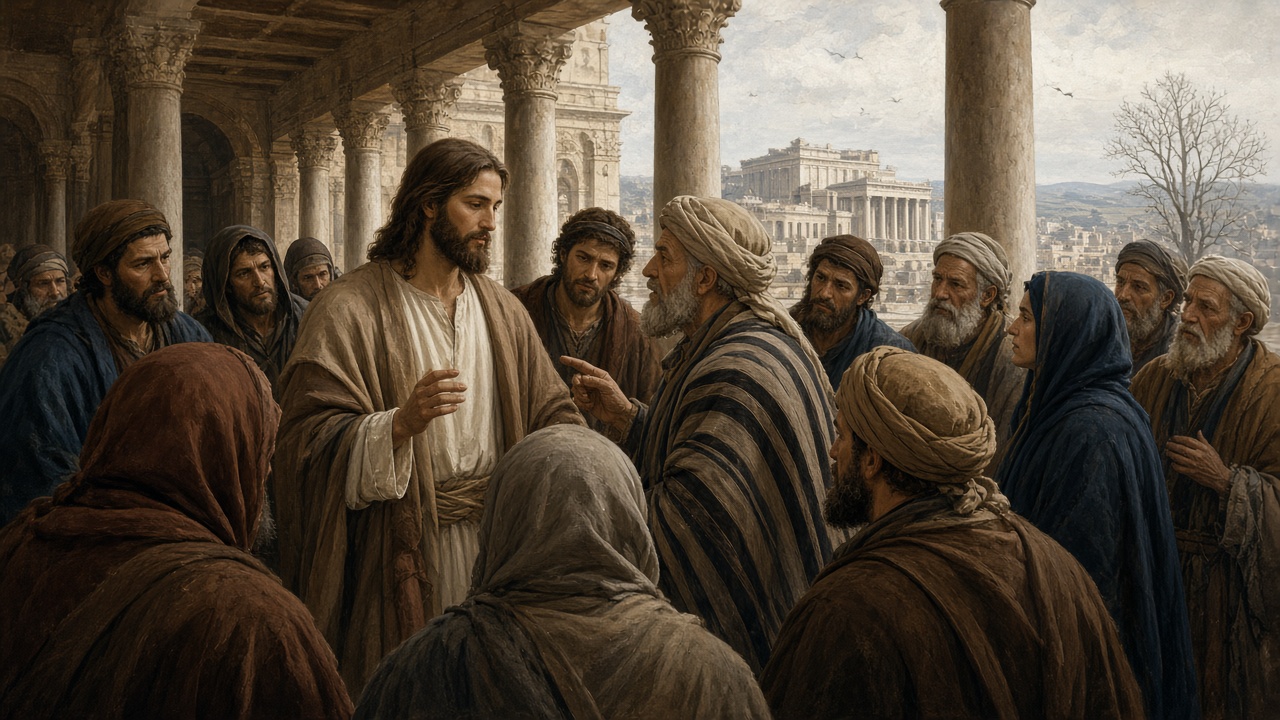
- En la Fiesta de la Dedicación, en Jerusalén, era invierno, y Jesús caminaba por los atrios del templo, en el Pórtico de Salomón. El nombre Jerusalén, en forma dual, significa "posesión de la paz" o "fundación de la paz"; esa forma probablemente se refiere a los montes Sión y Moriah o, como algunos suponen, a la ciudad alta y la ciudad baja. El nombre hebreo de Salomón, Shelomoh, significa "pacífico".Fuentes: el propio texto bíblico · Jerusalem · Solomon
- Una cronología de los episodios evangélicos sitúa la enseñanza del Buen Pastor en el año 29 d.C. y un tiempo de enseñanza y curación, de Perea a Jerusalén, en el año 30 d.C.Fuentes: The Good Shepherd Teaching · Teaching and Healing in Perea to Jerusalem
- Jesús volvió entonces al otro lado del Jordán, al lugar donde Juan había comenzado a bautizar, y muchas personas allí creyeron en él. Juan era de linaje sacerdotal: su padre, Zacarías, era sacerdote del turno de Abías, y su madre, Elisabet, era de las hijas de Aarón. Su nacimiento, seis meses antes que el de Jesús, fue anunciado por un ángel; quienes acudían decían que Juan nunca hizo ninguna señal, pero que todo lo que había dicho acerca de Jesús era verdad.Fuentes: el propio texto bíblico · John the Baptist
Notas escritas con ayuda de IA a partir de fuentes abiertas (Theographic Bible Metadata, CC BY-SA 4.0; Easton’s Bible Dictionary, dominio público) y revisadas antes de publicarse.
Lugares de este capítulo
- Jerusalem · 31.777, 35.234 · versículo 22
- Solomon’s Portico · Hoy: in Jerusalem · 31.777, 35.234 · versículo 23
- Jordan · Hoy: Jordan River · 31.761, 35.558 · versículo 40
Solo aparecen lugares identificados con alta confianza (90 % o más según las fuentes académicas reunidas por OpenBible). Mapa de la época: DARE (Digital Atlas of the Roman Empire), CC BY 4.0; mapa actual: © colaboradores de OpenStreetMap; lugares: OpenBible.info (CC BY 4.0).
Créditos y licencia de esta traducción
Nhandejáry Nhe'ẽ
New Testament in Kaiwá (BR:kgk:Kaiwá)
copyright © 2006 Wycliffe Bible Translators, Inc.
Language: Kaiwá
Translation by: Wycliffe Bible Translators, Inc.
Copyright Information
© 2006, Wycliffe Bible Translators, Inc. All rights reserved.
This translation text is made available to you under the
terms of the Creative Commons License: Attribution-Noncommercial-No Derivative Works.
( http://creativecommons.org/licenses/by-nc-nd/3.0/ )
In addition, you have permission to port the text to different file formats, as long as you
do not change any of the text or punctuation of the Bible.
You may share, copy, distribute, transmit, and extract portions
or quotations from this work, provided that you include the above copyright
information:
You must give Attribution to the work.
You do not sell this work for a profit.
You do not make any derivative works that change any of the actual words or punctuation of the Scriptures.
Permissions beyond the scope of this license may be
available if you contact
us with your request.
The New Testament
in Kaiwá
© 2006, Wycliffe Bible Translators, Inc. All rights reserved.
This translation is made available to you under the terms of the
Creative Commons Attribution-Noncommercial-No Derivatives license 4.0.
You may share and redistribute this Bible translation or extracts from it in any format, provided that:
You include the above copyright and source information.
You do not sell this work for a profit.
You do not change any of the words or punctuation of the Scriptures.
Pictures included with Scriptures and other documents on this site are licensed just for use with those Scriptures and documents.
For other uses, please contact the respective copyright owners.
2014-04-27
Fuente: http://ebible.org/kgkNT/ · eBible.org