Hechos 6
Nhandejáry Nhe'ẽ · Toca un versículo para ver sus referencias cruzadas.
Oiporavo sete kwimba'e-pe Hesu remimondo pytygwõharã
1Upe ramo onhembohetave tave oho-vy Hesu rehegwa nhe'ẽ renduha. Ha iko'ẽ ko'ẽmba ome'ẽ me'ẽ oiko-vy tembirekokwe-pe hemi'urã. Ha grego nhe'ẽ-py onhe'ẽ va'e ima'eandu-gwi he'i ojóupe:
—Nhande-vy mixĩ ome'ẽ. Upéa-pe, hebreu nhe'ẽ-py onhe'ẽ va'e-pe katu hetave ome'ẽ, he'i. —Ome'ẽ joavy avypa ime'ẽ-vy, he'i ojóupe ndojohu porãi-gwi.
2Upe-ma ramo gwĩ doze hemimondo kwéry va'e ohenói uka ojogweroatypa hagwã Hesu nhe'ẽ renduha gwive. He'i íxupe kwéry:
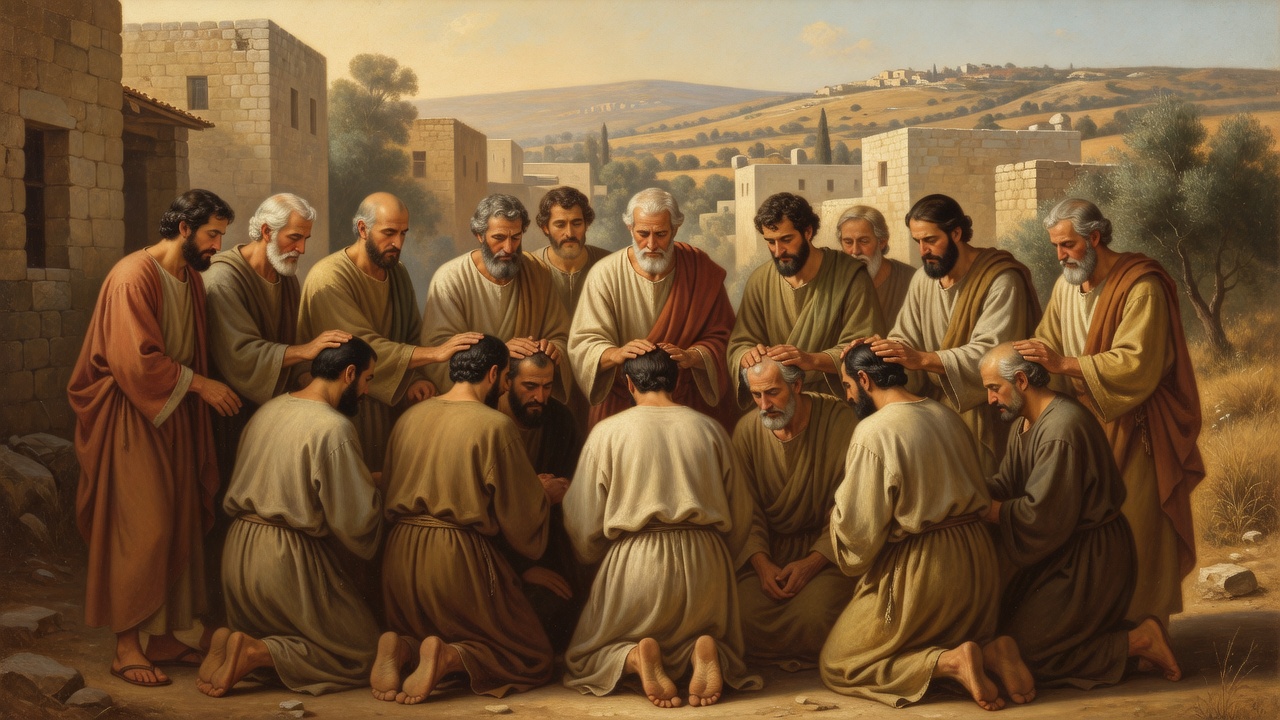
—Gwĩ ome'ẽ me'ẽ va'e tembirekokwe-pe hemi'urã, ome'ẽ joavy avypa nipo ra'e ime'ẽ-vy, he'i. —Ha ore katu oromboja'o ja'o ramo ime'ẽ-vy hemi'urã, ndikatuvéi-ma arã oromombe'u Nhandejáry nhe'ẽ. Naiporãi va'erã kóixa. 3Upéa-gwi, ore re'ýi kwéry, peiporavo katu sete kwimba'e. Ore nhe'ẽ-py onhangareko hagwã ome'ẽ va'e-rehe peiporavo nome'ẽ joavy avyvéi hagwã. Nhe'ẽ Marangatu tee va'e ipy'a omohynyhẽ va'e íxupe, hi'arandu porã va'e, nhane mandu'a porã hese va'e, upéa rehegwa peiporavo katu. 4Ha ore katu oromondo meme-ta Nhandejáry-pe ore nhe'ẽ. Hesu rehegwa nhe'ẽ oromombe'u meme-ta. Gwĩ va'e apo-vy nore ate'ỹiry. Ndaijái outro tembiapo ore-vy orojapo va'erã, he'i íxupe kwéry Hesu remimondo.
5Ha ojohu porã joa inhe'ẽ ijaty va'e gwive. Upe ramo oiporavo peteĩ kwimba'e-pe hikwái, Hesu-rehe ojerovia tee va'e, Nhe'ẽ Marangatu tee va'e ipy'a omohynyhẽ va'e íxupe, héry va'e Estêvão. Upéi oiporavove ave seis kwimba'e, héry va'e Filipe, Prócoro, Nicanor, Timão, Pármenas, Nicolau ave. Nicolau Antioquia pygwa judeu e'ỹ va'e upe va'e. Ne'írã vyteri ojerovia ramo Hesu-rehe, judeu kwéry reko-rupi oiko va'ekwe. 6Upéa sete va'e oiporavo onhangareko hagwã ome'ẽ va'e-rehe. Oiporavo rire, ogweru henda-py Hesu remimondo renda-py. Upéi hemimondo ombojeupi Nhandejáry-pe onhe'ẽ, inhakã akã-rehe omoĩ opo, inhe'ẽ-py ome'ẽ me'ẽ porã hagwã tembirekokwe-pe hemi'urã.
7Mombyryve ryve ogweraha imombe'u-vy Nhandejáry nhe'ẽ. Onhembohetave tave oho-vy Hesu nhe'ẽ renduha, Jerusalém tetã mygwa. Ha pa'i kwéry, Hesu nhe'ẽ apoha, heta eterei oĩ.
Judeu ruvixa kwéry ndaija'éi Estêvão-rehe
8Ha Estêvão katu, imbaraete inhe'ẽ, opa va'e rembiayhu. Kente kwéry pa'ũ-my hembiapo porã hexapyrã-rupi. 9Oĩ ave hese ija'e'ỹ va'e, judeu porahéi haty-gwi ou va'e. Upe-py ojeporahéi haty-py oĩ Cireneu tetã mygwa, oĩ Alexandria tetã mygwa, oĩ Cilícia yvy pygwa, oĩ Ásia yvy pygwa ave. Upe-py ojogweroaty va'e gwive héry Liberto kwéry. Upéi ogwahẽ ou-vy Estêvão renda-py onhe'ẽ mbojevy hagwã íxupe hikwái. 10Ha ndikatúi onhe'ẽ mbojevy íxupe arandu rehegwa omombe'u-gwi, Nhe'ẽ Marangatu tee va'e oipy'a mohynyhẽ-gwi íxupe.
11Upéi oho jevy nhemi ha-py opaga hagwã ijapu japu va'erã-pe Estêvão-rehe. Ome'ẽ íxupe inhe'ẽrã. Upe ramo:
—Orohendu voi Estêvão-pe onhe'ẽ vai vai ramo Moisés-rehe. Nhandejáry-rehe onhe'ẽ vai vai ramo orohendu ave, he'i mo'ã hese enterove va'e-pe.
12Upéixa he'i ramo, ombopoxy enterove va'e-pe gwive. Judeu ruvixa kwéry, judeu rekombo'ehaty-pe ave ombopoxypa. Upéa-gwi oupa jevy henda-py oipyhy hagwã íxupe. Mburuvixa kwéry ojogweroaty haty-py oipyhy heraha-vy. 13Ha gwĩ ijapu hese va'erã-pe ohenói ogwahẽ hagwã. Ogwahẽ ramo, he'i ijapu apu-vy hese:
—Upe va'e onhe'ẽ vai vai meme va'e voi ko va'e Nhandejáry róga kakwaa marangatu-rehe. Moisés amyrĩ remimombe'ukwe jajapo va'erã-rehe onhe'ẽ vai. 14“Upe Hesu Nazaré pygwa omohãimba-ta ko va'e Nhandejáry róga kakwaa. Ohekoviarõ-ta nhande reko Moisés remimombe'ukwe” he'i Estêvão, he'i omombe'u ijapu va'e. —Ore henduháry voi, he'i mo'ã hese ijapu-vy.
15Ha ojogweroaty va'e gwive ohexa katu katu íxupe. Oma'ẽ Estêvão rova-rehe oma'ẽ:
—Hendypa voi hova ra'e, he'i ojóupe. —Ojogwa ete Nhandejáry rembigwái rova-pe, he'i ojóupe judeu ruvixa kwéry.
¿Sabías que…?
La Elección de los Siete y el Juicio de Esteban
- Surgieron tensiones entre los judíos de habla griega y los hebraicos por la distribución diaria de alimentos a las viudas, lo que llevó a los apóstoles a designar a siete hombres respetados para esta tarea. Notablemente, los siete nombrados—incluyendo a Nicolás, un prosélito de Antioquía—llevaban nombres griegos.Fuentes: el propio texto bíblico · Nicolas
- Judíos de distintas regiones del mundo romano contaban con sus propias sinagogas en Jerusalén, como la Sinagoga de los Libertos y reuniones para personas de Cirene, Alejandría, Cilicia y la provincia de Asia. Miembros de estos grupos regionales fueron los primeros en debatir formalmente con Esteban sobre sus enseñanzas.Fuentes: el propio texto bíblico · Cilicia · Asia
- Cuando los opositores no pudieron refutar los argumentos de Esteban, lo llevaron ante el Sanedrín acusándolo de hablar contra el templo y la ley de Moisés. Mientras los miembros del concilio lo observaban durante estas acusaciones, vieron que su rostro parecía el de un ángel.Fuentes: el propio texto bíblico · Stephen
Notas escritas con ayuda de IA a partir de fuentes abiertas (Theographic Bible Metadata, CC BY-SA 4.0; Easton’s Bible Dictionary, dominio público) y revisadas antes de publicarse.
Lugares de este capítulo
- Antioch · Hoy: Antioch on the Orontes · 36.227, 36.172 · versículo 5
- Jerusalem · 31.777, 35.234 · versículo 7
- Alexandria · 31.183, 29.896 · versículo 9
- Asia · 38.400, 28.300 · versículo 9
- Cilicia · 36.913, 34.892 · versículo 9
- Cyrene · 32.821, 21.851 · versículo 9
- Nazareth · 32.702, 35.298 · versículo 14
Solo aparecen lugares identificados con alta confianza (90 % o más según las fuentes académicas reunidas por OpenBible). Mapa de la época: DARE (Digital Atlas of the Roman Empire), CC BY 4.0; mapa actual: © colaboradores de OpenStreetMap; lugares: OpenBible.info (CC BY 4.0).
Créditos y licencia de esta traducción
Nhandejáry Nhe'ẽ
New Testament in Kaiwá (BR:kgk:Kaiwá)
copyright © 2006 Wycliffe Bible Translators, Inc.
Language: Kaiwá
Translation by: Wycliffe Bible Translators, Inc.
Copyright Information
© 2006, Wycliffe Bible Translators, Inc. All rights reserved.
This translation text is made available to you under the
terms of the Creative Commons License: Attribution-Noncommercial-No Derivative Works.
( http://creativecommons.org/licenses/by-nc-nd/3.0/ )
In addition, you have permission to port the text to different file formats, as long as you
do not change any of the text or punctuation of the Bible.
You may share, copy, distribute, transmit, and extract portions
or quotations from this work, provided that you include the above copyright
information:
You must give Attribution to the work.
You do not sell this work for a profit.
You do not make any derivative works that change any of the actual words or punctuation of the Scriptures.
Permissions beyond the scope of this license may be
available if you contact
us with your request.
The New Testament
in Kaiwá
© 2006, Wycliffe Bible Translators, Inc. All rights reserved.
This translation is made available to you under the terms of the
Creative Commons Attribution-Noncommercial-No Derivatives license 4.0.
You may share and redistribute this Bible translation or extracts from it in any format, provided that:
You include the above copyright and source information.
You do not sell this work for a profit.
You do not change any of the words or punctuation of the Scriptures.
Pictures included with Scriptures and other documents on this site are licensed just for use with those Scriptures and documents.
For other uses, please contact the respective copyright owners.
2014-04-27
Fuente: http://ebible.org/kgkNT/ · eBible.org