Gálatas 2
Noquen hihbaan joi · Toca un versículo para ver sus referencias cruzadas.
Jahuen hahbe raantibo
1Catorce bari jano nichish tah hen Jerusalen janin caribiniqui. Bernabé rihbi ta hehbetan canishqui, Tito rihbi. 2Jano cahue noquen Hihbaan jaah tah hen caniqui. Nocoxon tah hen hean yohihi joi siri jato nincamaniqui, judiomabo hean yohipahoni joi siri jenquetsahpa hin hihxon janohahbo yohiquin. ¿Yanca tee tee hen jain? Jaamajaquin hean coshicahinxon yohipahonihquin hihxon tah hen jaton xenibo sca hahme rihbi yohinihqui. 3Hehbetan Tito cahi bi ta jaton nahua hihqui bi judiocahinax noquen honantiyapahue hahyamacannishqui. 4Moisesnin yohini quescajati ta jaiqui, Papan jihuetahbo janon tah non jato honantijati jai hih quesabo jai bi tah non jeen hahyamaniqui, ni pishcabi. Jaa quesabo ta noquen huetsabohicamahax hihcoxon noque quexenishqui, hahan honanti yamahiquin hihxon. Non tah non jato yohinihqui: Criston jihuetahbo janoxon tah non Moises nincati pishinyamahi, Cristo qui hinamehxon jaa huesti sca nincaquin, hahquin. 5Criston joi coin huetsajayamahahbo hihxon tah non jato honantijati jeen hahyamaniqui. Criston joi siriya res man banenon, huetsa joi mato yohiyamahahbo.
6Jerusalen janinhahbaan ta noque mahuinyamahiqui, hapo quescapahboxon bi. Papan jisí ta jatihibi jascapah rahsi qui. Hea nincaxon ta jahua hashoan yohiti pishinyamahiya Jasca tah qui hahxon, hean haxemahi joi qui jahuabi hashoan tsamanyamacannishqui. 7Jahua hashoan yohiti yohiyamacanquin. Judiobo yohinica Pedro hihnon quescajaribiquin Judiomabo yohinica hea hihnon Papan noque caisni jisxon, Man haxemahi quescajaquin haxemanahue hahcanquin. 8Judiobo nincamaquin sirijanoxon ta Pedroyaxon noquen Hihbaan jato nincamahiqui. Jascajaquin rihbi ta judiomabo nincamanoxon heyaxon judiomabo nincamahiqui.
9Hea rihbi Criston raanti joni hihqui jisxon ta Jacobo, Pedro, Juan, jaabo rahsi hapo quescapahboxon, Jascanonbonahue, judiomabo yohitannahue, noquen non judiobo yohinon hahcannishqui. Noque jascajaxon ta noque jomaquin sca hehbetan Bernabé jaton hahbe teenicabo copi noque mehuetannishqui. 10Jerusalen janinha yomanahtaibo non shinanbehnoyamanon ta noque yohicannishqui, jaa res. Noquen rihbi tah non yanapanti queenxon jascajati yohinihqui.
Pablonen Pedro ponteni
11Jaa pecaho ta Antioquía janin Pedro jonishqui. Jan janoxon jaamajahiya tah hen ponte res yohinihqui caibaan nincanonbi. 12Jacobo janinhax huetsa hahbe judiobo nocorihyamahiya ta judiomabo noquen huetsabo betanbi Pedronen pinishqui. Nocoscaiboya ta judiobo hahqui yohuanmis hihxon jato piquihnyama sca janishqui, huetsa shinan hahcajaquin. 13Texe judiobo rihbi ta hahbetanbi huetsapahcahinnishqui, jaton nahua betan pitimahicamahi. Bernabé rihbi jascari, shinan cahcoya sca. 14Cahcotax ponteyamascaibo jisxon tah hen jatihibichin nincanon Pedro yohinihqui: Mia tah min judio hihquish bi judio quescayamahi jihuetai. Judio quescapahmaxon ¿jahua copi sca min judiomabo judionon jato yohihin?
Jascapah rahsi queyoyamanox manatai
15Rabebi tah non judio qui. Noquen papabo cahen nincayosma nahuabo hihyamanish. 16Moisesnin yohini quescabijaquin hahxon bi cah non jascaquin noquen hohcha potatimahi, Papan noque siri jisnon. Jesus Cristo qui hinamehxon non nincacoinaiya pari ta Papan noque siri jisiqui. Jaa copi tah non non rabebi hinamehniqui, jaan noquen hohcha sohuahiya Papan noque siri jisnon, Moisesnin joi nincacoinax jihuexon tah non hohcha potatimabiresai, tsoanbi. Judioxon bi tah non rabexonbi honanai.
17Cristo huestichin ta noque hohcha sohuati hahtipahiqui, Papan noque siri jisnon. Judiomabo hohchayahpa hihqui quesca rihbi tah non hohchayahpabo qui, noque rihbi. ¿Jaa copi non Criston ta noque hohchamahiqui non hihtihin? Hihyamabiresi rahan. 18¿Non jeneni joi non bihtihin? Joi siri jenenihxon pari, nincati joi copi. 19Moisesnin joi ta noquen nincati joima sca qui. Jaa joi nincaqui jaxon tah hen hea hohchayahpa hihqui hen honannihqui. Hahqui mahuatah quescaxon tah hen jaa nincayamascai. Noquen Papa Dios qui sca tah hen jihuetai. 20Cristo betanbi tah hen mahuanihqui. Hen queenai quescayama sca tah hen jai. Cristo queenai quescascai, hahbetanbi jihueti. Papan baque nincacoini tah hen jihuescai, jan hehon shinanax hea copi hinamehni honanax tah hen nincacoini jihuescai. 21Noquen hohcha copi Cristo mahuani ta hani shinan qui. Papan noque hahxonai jahuama quescapi tah hen jayamahi. Moisesnin yohini quescajaquin hahxon noquen hohcha potati non hahtipahiya cahen Cristo yanca res mahuatan.
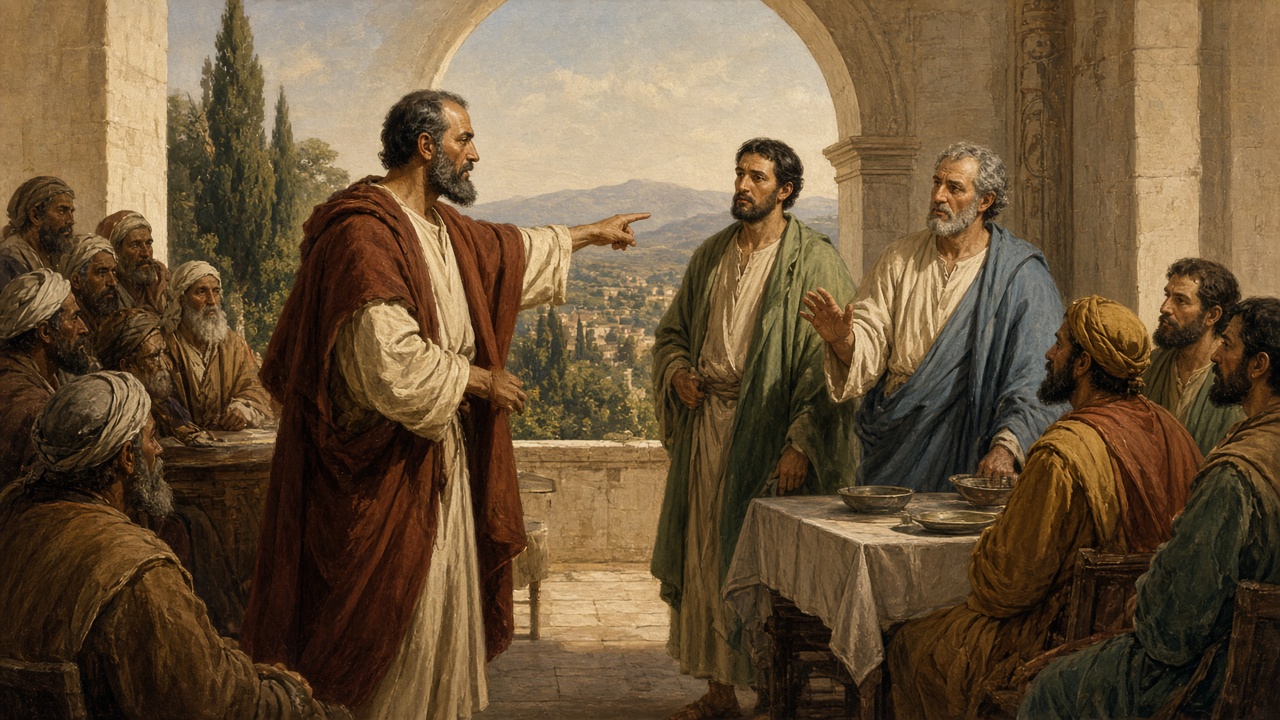
¿Sabías que…?
Gentiles, comunión y un enfrentamiento en Antioquía
- Tito fue con Pablo y Bernabé a Jerusalén. El Easton's Bible Dictionary (1897) dice que parece haber sido gentil y que su nombre no aparece en Hechos. Pablo escribe que Tito, aunque era griego, no fue obligado a circuncidarse.Fuentes: Titus · el propio texto bíblico
- El enfrentamiento posterior tuvo lugar en Antioquía de Siria, a orillas del Orontes, a unas trescientas millas al norte de Jerusalén. La ciudad ocupaba el tercer lugar entre las ciudades del Imperio romano, después de Roma y Alejandría, y fue allí donde a los creyentes se les llamó cristianos por primera vez.Fuentes: Antioch (Syria) · el propio texto bíblico
- El Easton's Bible Dictionary (1897) describe a Santiago, nombrado con Cefas y Juan como uno de los pilares, como cabeza de la iglesia en Jerusalén, donde presidió el concilio sobre los gentiles. Pablo dice que, antes de que llegaran ciertos hombres de parte de Santiago, Cefas solía comer con los gentiles, pero luego se apartó por temor al grupo de la circuncisión.Fuentes: James (Brother of Jesus) · el propio texto bíblico
Notas escritas con ayuda de IA a partir de fuentes abiertas (Theographic Bible Metadata, CC BY-SA 4.0; Easton’s Bible Dictionary, dominio público) y revisadas antes de publicarse.
Lugares de este capítulo
- Jerusalem · 31.777, 35.234 · versículo 1
- Antioch · Hoy: Antioch on the Orontes · 36.227, 36.172 · versículo 11
Solo aparecen lugares identificados con alta confianza (90 % o más según las fuentes académicas reunidas por OpenBible). Mapa de la época: DARE (Digital Atlas of the Roman Empire), CC BY 4.0; mapa actual: © colaboradores de OpenStreetMap; lugares: OpenBible.info (CC BY 4.0).
Créditos y licencia de esta traducción
Noquen hihbaan joi
New Testament in Capanahua (PE:kaq:Capanahua)
copyright © 2008 Wycliffe Bible Translators, Inc.
Language: Capanahua
Translation by: Wycliffe Bible Translators, Inc.
Capanahua [kaq], Peru
Copyright Information
© 2008, Bible League International. All rights reserved.
This translation text is made available to you under the
terms of the Creative Commons License: Attribution-Noncommercial-No Derivative Works.
( http://creativecommons.org/licenses/by-nc-nd/3.0/ )
In addition, you have permission to port the text to different file formats, as long as you
do not change any of the text or punctuation of the Bible.
You may share, copy, distribute, transmit, and extract portions
or quotations from this work, provided that you include the above copyright
information:
You must give Attribution to the work.
You do not sell this work for a profit.
You do not make any derivative works that change any of the actual words or punctuation of the Scriptures.
Permissions beyond the scope of this license may be
available if you contact
us with your request.
The New Testament
in Capanahua
© 2008, Wycliffe Bible Translators, Inc. All rights reserved.
This translation is made available to you under the terms of the
Creative Commons Attribution-Noncommercial-No Derivatives license 4.0.
You may share and redistribute this Bible translation or extracts from it in any format, provided that:
You include the above copyright and source information.
You do not sell this work for a profit.
You do not change any of the words or punctuation of the Scriptures.
Pictures included with Scriptures and other documents on this site are licensed just for use with those Scriptures and documents.
For other uses, please contact the respective copyright owners.
2014-04-22
Fuente: http://ebible.org/kaqNT/ · eBible.org