Apocalipsis 7
Janji Bible · Toca un versículo para ver sus referencias cruzadas.
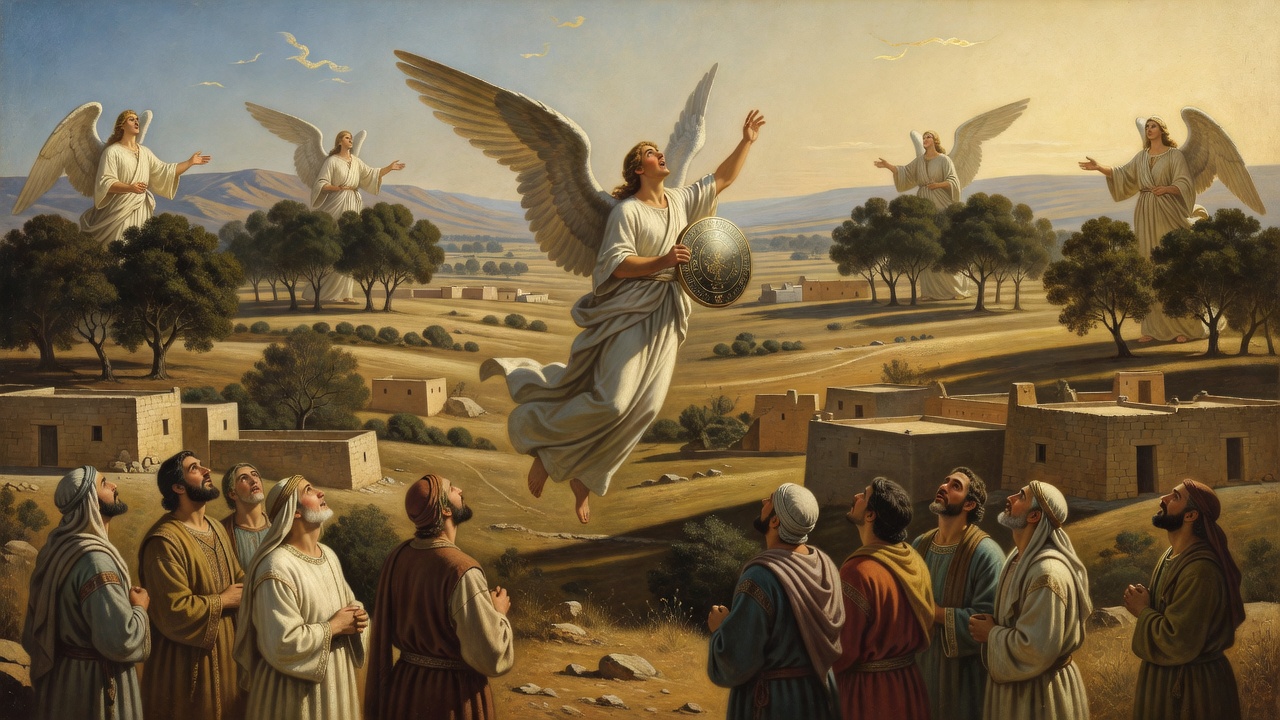
1Sa awuza anime in iri ibe ikadura ka Asere ana wa nazi wa turi ati kira ti nazi ti unē, wa inta mapebu ma nazi gagang barki kati upebu u hurse unē, asesere uraba udang, nan kondi uya utiti. 2In dusa in iri bi be bikadura ka Asere ma eze uwatu naza desa ma zin ini binani ya Asere uvengize, matiti in ni myiran ni dandang sa ibe ikadura ka Asere wa nazi sa a nyawe nikara nu nya unē nirere nan uraba udang. 3''Kati i nya unē ni rere, nan uraba udang, nan matiti sede ta wuna ibinani asesere itini arere Asere aru.'' 4In kunna ugbardang adesa a wuwe ibinani wa biki anu madubu akuri akuri ukirau ina kuri anazi in ana nazi (144,00), an desa wuna we ibinani kondi ni ya nilem nanu isarala. 5Akuri akirau in ana rē (12,000) sa a wu we ibinani anyimo nilem ni Yahuza, ukirau in ana rē me anyimo nilem Ra'u baini, manu kirau in anarē anyimo nilem Gad. 6Madubu ukirau in mani marē anilem ni ashiru, madubu ukirau in mana marē anilem ni naffali, madubu ukirau in mana marē anilem ni manasa. 7Madubu ukirau in mani marē anilem ni saminu, madubu ukirau in mani marē anilem in Lawi, madubu ukirauin mani marē ani lem ni Isa aka. 8Madubu ukirau in mani marē anilem ni Zabaluna, madubu ukirau in mani marē anilem Isifu, madubu ukirau in mani marē anilem Bilyaminu auwe ibinani. 9Sa aka abaga amadubu, akuri a iri nigora ni dandang sa ada abasa ba a kondi ni ya lem, anu in ti lem tuwe wa turi ana je ukpanku nan aje avana ubi zara wa inta tirunga ti rum nan mava mama dabino atari tiweme. 10Wazi uni tisa in ni kara, ''ubura wa cukuno Asere aru sa ma ciki ukpanku, nan vana ubi zara!'' 11Vat ibe ika dura ka Asere keti ukpanko me wa kuri wa keti ananu nan ma mum mu vengeze ma nazi magino me, wa toti in tipuru adizi nan muhenu muweme aje ukpanku me, wa nonzo asere. 12Wa zin unu gusa, ''i cukuno anime ninonzo uruso, ankoi, tinanu, ubari nan ni kara ni cukuno ahira Asere sarki ibinani ca icukuno anime.'' 13Unu inde anyimo ananu me ma wuzi u iko, ''aka veni wa ziginome, sa wa sosi ti runga ti rum, wa suro abani?'' 14Ba in gunme, ''una aje am'' ''urusa'' sa magun in mi, anu aginome wewani wa suro ani rere ni dandang. Wa kpico ti runga wa kurzo tini ti rum anyimo maye ma vana ubi zara. 15Barki imumu igino ini, wa ra aje ukpanku wa Asere, wa zime in nonzo uwui nan niye anyimo udenge Asere. Desa ma ciki asesere ukpanku madi cukuno udak aseseri awe. 16Wada kuri wa kunna ikomo ba, nani nuwe nimei, uwui uda dara weba, nan upunsi unu inde uwe. 17Barki vana ubi zara sa ma rā ati ukpanku me madi cukuno unu tarsa in we, madi tarsi in we uhana ahira ususo umei mu vengize, Asere adi visi vat maje aweme.
¿Sabías que…?
Las tribus selladas y la gran multitud
- Apocalipsis 7 presenta el número de los sellados como 144,000, doce mil de cada una de las tribus de Israel nombradas en el capítulo. Israel era otro nombre de Jacob, el segundo de los hijos gemelos de Isaac y Rebeca; el Easton's Bible Dictionary (1897) explica el nombre de Jacob como alguien que sigue los talones de otro, o un suplantador.Fuentes: el propio texto bíblico · Jacob (Israel)
- Aunque Rubén era el hijo mayor de Jacob y Lea, la lista de los sellados comienza con Judá y luego nombra a Rubén. La lista incluye también tanto a José como a Manasés; Manasés era el hijo mayor de José, y Jacob lo adoptó a él y a su hermano Efraín como hijos propios.Fuentes: el propio texto bíblico · Reuben · Manasseh (son of Joseph)
- Después del sellado, la visión muestra una multitud demasiado grande para contarse, de toda nación, tribu, pueblo y lengua, de pie ante el trono y el Cordero, con vestiduras blancas y ramas de palma en las manos. Uno de los ancianos dice que han salido de la gran tribulación y han lavado sus vestiduras, dejándolas blancas en la sangre del Cordero.Fuentes: el propio texto bíblico
Notas escritas con ayuda de IA a partir de fuentes abiertas (Theographic Bible Metadata, CC BY-SA 4.0; Easton’s Bible Dictionary, dominio público) y revisadas antes de publicarse.
Créditos y licencia de esta traducción
Janji Bible
The New Testament in the Janji language of Nigeria
copyright © 2020 Door 43 International Mission Community
Language: Ajanji (Janji)
Translation by: Door 43 International Mission Community
Contributor: Chrispher Ishaya, Daduhus Timothy Danjuma, Danjuma Alfred H, Ishaku B. Kubgak, Timothy Danjuma
This translation is made available to you under the terms of the
Creative Commons Attribution Share-Alike license 4.0.
You have permission to share and redistribute this Bible translation in any format and to make reasonable revisions and adaptations of this translation, provided that:
You include the above copyright and source information.
If you make any changes to the text, you must indicate that you did so in a way that makes it clear that the original licensor is not necessarily endorsing your changes.
If you redistribute this text, you must distribute your contributions under the same license as the original.
Pictures included with Scriptures and other documents on this site are licensed just for use with those Scriptures and documents.
For other uses, please contact the respective copyright owners.
Note that in addition to the rules above, revising and adapting God's Word involves a great responsibility to be true to God's Word. See Revelation 22:18-19.
2024-05-01
Fuente: http://ebible.org/jni/ · eBible.org