Hechos 24
Nuevo Testamento yin̈ abxubal · Toca un versículo para ver sus referencias cruzadas.
Yet yoc ebnaj Israel akꞌocꞌule yin̈ naj Pablo sata naj gobernador Félix
1Howebxa tzꞌayic yapni naj Pablo yul con̈ob Cesarea, yapnipaxo naj Ananías, yahawil yeco yin̈ ebnaj sacerdote, yeb huntekꞌan ebnaj iswiꞌehal yeco yin̈ ebnaj Israel, yeb xin huneꞌ naj licenciado, Tértulo isbi. Haꞌ ebnaj tiꞌ xin apni yin̈ sat naj gobernador akꞌocꞌule yin̈ naj Pablo. 2Hayet yilaxti naj, istzabnico naj Tértulo tuꞌ yoc akꞌocꞌule yin̈ naj Pablo tet naj gobernador Félix hacaꞌ tiꞌ:
—Yuchꞌandios tawet mam gobernador, hawu yuxin ay akꞌancꞌulal coxolan̈. Caw xin sunil tzet chawatxꞌe caw cꞌul yu caw ay hanabal. 3Caw yeli sunil bay chijabehan̈ hacꞌulal yeb xin sunil iscꞌulal tzettaj chawatxꞌe mam Félix, caw yuchꞌandios tawet yin̈ sunil. 4Yaj yu machi caw chiwilojan hatiempo, caw chinkꞌanan tawet ta chawabe tzet chiwalan hunepoj. 5Huneꞌ naj tiꞌ, caw yeli caw chꞌetlicano naj jin̈an̈ yuto caw sunil bay chꞌecꞌ naj akꞌocꞌule tet anma, ayco naj ispohnito ebnaj Israel. Caw xin iswiꞌehal yeco naj yin̈ huneꞌ majan ebnaj ayco yinta huneꞌ naj ah Nazaret. 6Yebpaxo yetato naj yatut Comam Dios; yuto yicto naj huntekꞌan ebnaj mach Israelo yul yatut Comam, yuxin cotzabayojan̈ naj yun̈e yay nino isyaꞌtajil yiban̈ naj hacaꞌ yalni coleyan̈.
7Yaj xin yaco isba naj comandante Lisias xol, istzicnilo naj naj Pablo tiꞌ jetan̈. 8Yalni naj tato ebnaj kꞌann̈e yin̈ naj tiꞌ, tawet chihul ebnaj yalaꞌ. Hach caw ach xin chisje hakꞌamben tet naj, cat xin hawohtan̈enilo tato caw yel chijalan̈, ẍi naj Tértulo tuꞌ.
9Haꞌ hun ebnaj Israel tzujan yinta naj Tértulo chihalni tato caw yel sunil huntekꞌan tuꞌ.
Yet iscolni isba naj Pablo yin̈ sat naj gobernador Félix
10Lahwi tuꞌ xin, yakꞌni naj gobernador tuꞌ yechel tet naj Pablo yun̈e istzotel naj, yalni naj Pablo tuꞌ hacaꞌ tiꞌ:
—Mam gobernador, caw chintzalahan chincolni inbahan yin̈ hasat, yuto caw wohtajan tato hach tiꞌ caw payxa cachoc yahawil yin̈ txꞌotxꞌ Israel tiꞌ. 11Yaj caw chisje hakꞌambeniloj ta caw yel tzet chiwaltiꞌan; caw cablahon̈ebixto tzꞌayic wapnihan yul con̈ob Jerusalén winoyo inbahan tet Comam Dios. 12Yaj machi hunu mac chiyu yalni ta inteyele inbahan yeb hunu maca nitam wijbanan hunu mac yin̈ howal yul yatut Comam Dios, maca yulajla capilla maca yul con̈ob. 13Huntekꞌan ebnaj tiꞌ matzet tzꞌaj yakꞌbaln̈e ebnaj tato caw yeli inmulan huntekꞌan chisbalcan ebnaj win̈tiꞌan.
14Yaj chiwalan, to ayinicojan inyijenan tzet chiyal isDiosal jichmaman̈, hacaꞌticꞌa yalni huneꞌ acꞌ cuybanile, haꞌ xin chiyal ebnaj tiꞌ tato nan yehi. Chiwapaxaytojan yul wanmahan sunil ley akꞌbilcano tet jichmaman̈ naj Moisés, yeb sunil tzet tzꞌibn̈ebilcanayo yu ebnaj ischejab Comam Dios yet payat. 15Caw xin chicawxi wanmahan yin̈ Comam Dios hacaꞌticꞌa ebnaj tiꞌ, yin̈ tato chiitzitzbican̈ anma camom, anma cꞌul yeb xin anma txꞌojpaxoj. 16Yu ton huneꞌ tuꞌ, yuxin caw ayn̈eticꞌaco yin̈ innabalan inwatxꞌenan iscꞌulal yul sat Comam Dios yeb yul sat anma.
17Lahwi hayeb habil wecꞌan yulaj con̈ob xin, inmeltzotojan yul incon̈oban yun̈e incolwahan yin̈ anma mebaꞌ yeb xin wakꞌnipaxojan wofrendahan tet Comam Dios. 18Haꞌ huntekꞌan tiꞌ lan̈an inwatxꞌenan yet yapni huntekꞌan ebnaj Israel ay yul ismajul Asia yul yatut Comam tuꞌ yet lahwi insajn̈encano inbahan tet Comam hacaꞌ yalni coleyan̈. Haywan̈n̈e ebnaj ayicto yul yatut Comam tuꞌ, caw xin machi nichꞌano howal jakꞌan̈. 19Haꞌ xin ebnaj ah Asia tuꞌ, yilal yul bey tiꞌ yalno tzet inmulan, tato yeli ayticꞌa tzet chiyaco ebnaj inmulojan. 20Taca mach xin, yalab ebnaj aycꞌo tiꞌ tzet hunu inmulan wacojan yet wocan yin̈ sat ebnaj iswiꞌehal yeco yin̈ lahtiꞌ xol ebnaj Israel. 21Macato yu walan yin̈ caw ip xol ebnaj hacaꞌ tiꞌ: “Tinan̈ chexoc heyilaꞌ tzet chinelicojan yuto chiwaytojan yul wanmahan tato chiitzitzbican̈ anma camomxa,” ẍi naj Pablo tuꞌ.
22Wal naj Félix tuꞌ xin, caw xaticꞌa yabe naj cuybanile yet Comam Jesucristo, yuxin hayet yaben naj tzet yal naj Pablo tuꞌ, yalni naj:
—Hato yet chihul naj comandante Lisias, catto wabenojan tzet caw ye huneꞌ hehowal tiꞌ, ẍi naj.
23Yalni naj Félix tuꞌ tet naj capitán hacaꞌ tiꞌ:
—Wal istan̈elax naj Pablo tiꞌ, yaj tato ay yamigo naj chul tuclenoj cat yakꞌni hunu tzet ye tuꞌ tet naj, caw machojab tzet chawala, ẍi naj.
Yal naj Pablo Istzotiꞌ Comam Dios tet naj gobernador Félix
24Lahwi hayeb tzꞌayic xin, yapni naj Félix yeb yixal, haꞌ ton ix Drusila, ix tuꞌ xin ah Israel ix. Yawtenpaxo naj naj Pablo, yoc naj yabeno tzet chute yalni naj Pablo tuꞌ yin̈ tzet chiyu janico janma yin̈ Comam Jesucristo. 25Yaj hayet yalni naj Pablo tato caw tohol chijute cobeybal, yeb xin cocachni coba cowatxꞌen istxꞌojal, yeb yet yalnipaxo naj yin̈ isyaꞌtajil chiyati Comam Dios yin̈ islahobal tzꞌayic, isxiwcan̈ naj Félix tuꞌ, yalni naj hacaꞌ tiꞌ:
—Asiꞌ tinan̈, haxa yet caw matzet chiwuhan cat cachwawtenojan, ẍi naj.
26Wal naj Félix tuꞌ xin, yechma naj yalten naj Pablo hanicꞌo melyu tet naj yin̈ ewantaj, cat isbejtzon naj naj Pablo tuꞌ yalni. Yu ton huneꞌ tuꞌ yuxin caw nawn̈e chiyawten naj naj Pablo tuꞌ, cat istzotel naj tet naj. 27Elto cab habil hacn̈eticꞌa tuꞌ chiyute naj, lahwi tuꞌ xin yel naj Félix tuꞌ yin̈ gobernadoral, yoccano naj Porcio Festo selelo naj, yaj yun̈e iscan naj Félix tuꞌ cꞌulal yul sat anma Israel, yuxin cancano naj naj Pablo yul preso yu naj.
¿Sabías que…?
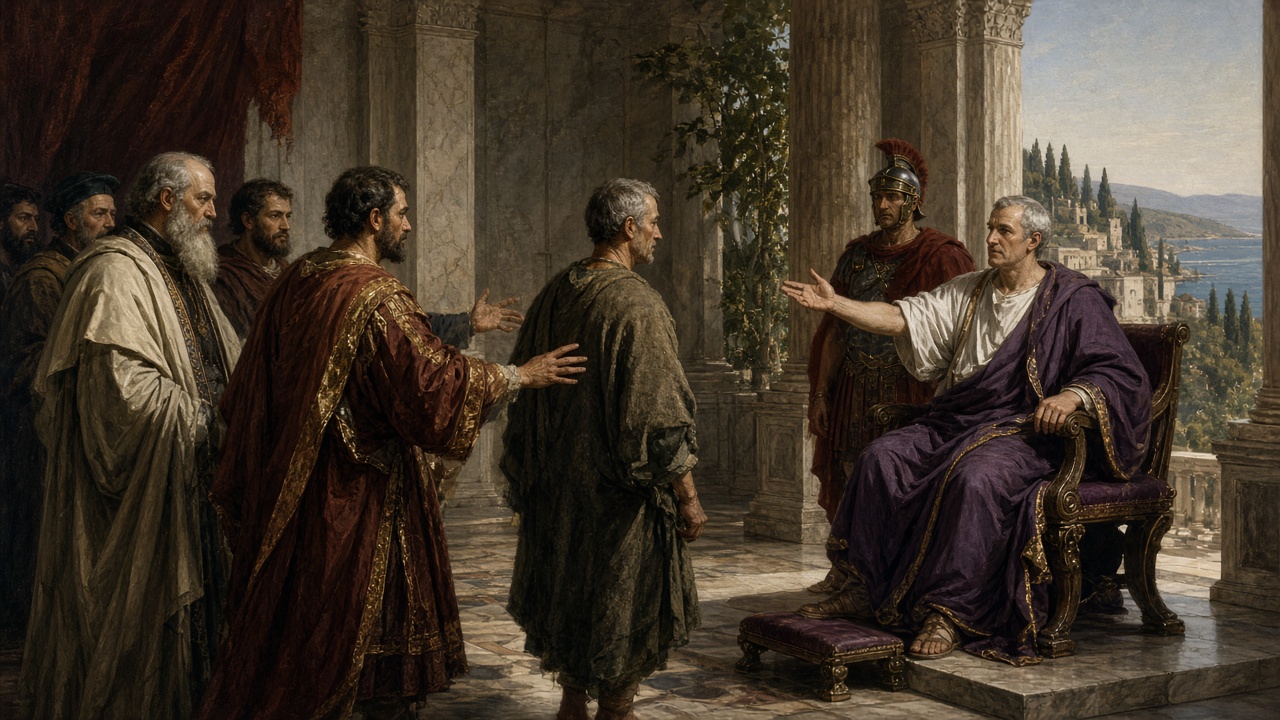
Pablo ante Félix
- El sumo sacerdote Ananías bajó con algunos ancianos y un abogado llamado Tértulo, a quien el Diccionario Bíblico de Easton describe como un abogado romano empleado por los judíos para exponer su causa contra Pablo ante Félix. Tértulo elogió al gobernador y luego dijo que Pablo era una peste que provocaba disensión entre los judíos por todo el mundo, cabecilla de la secta de los nazarenos y un hombre que había intentado profanar el templo. El diccionario relaciona ese elogio inicial con la limpieza que Félix hizo del país, al expulsar a bandidos e impostores.Fuentes: el propio texto bíblico · Tertullus · Felix
- Félix, que estaba bien informado acerca del Camino, aplazó la audiencia y mantuvo a Pablo bajo guarda, aunque le permitió cierta libertad y dejó que sus amigos atendieran sus necesidades. El relato dice que esperaba que Pablo le ofreciera un soborno y por eso lo mandaba llamar con frecuencia; el Diccionario Bíblico de Easton también afirma que al parecer esperaba un soborno y, por ello, tuvo varias entrevistas con él. Después de dos años lo sucedió Porcio Festo —el Diccionario Bíblico de Easton (1897) fecha ese nombramiento en el año 60 d. C.— y, queriendo hacer un favor a los judíos, Félix dejó a Pablo en prisión.Fuentes: el propio texto bíblico · Felix · Portius Festus
- Unos días después, Félix regresó con su esposa Drusila, que era judía, y escuchó a Pablo hablar de la fe en Cristo Jesús y de la justicia, el dominio propio y el juicio venidero; Félix se asustó y lo despidió. El Diccionario Bíblico de Easton (1897) identifica a Drusila como la tercera y la más joven hija de Herodes Agripa I y dice que Félix la indujo a dejar a su esposo, Azizus, rey de Emesa. La misma entrada dice que ella y su hijo perecieron en la erupción del monte Vesubio en el año 79 d. C.Fuentes: el propio texto bíblico · Drusilla
Notas escritas con ayuda de IA a partir de fuentes abiertas (Theographic Bible Metadata, CC BY-SA 4.0; Easton’s Bible Dictionary, dominio público) y revisadas antes de publicarse.
Lugares de este capítulo
- Caesarea · Hoy: Caesarea Maritima · 32.500, 34.892 · versículo 1
- Jerusalem · 31.777, 35.234 · versículos 11, 17
- Asia · 38.400, 28.300 · versículo 18
Solo aparecen lugares identificados con alta confianza (90 % o más según las fuentes académicas reunidas por OpenBible). Mapa de la época: DARE (Digital Atlas of the Roman Empire), CC BY 4.0; mapa actual: © colaboradores de OpenStreetMap; lugares: OpenBible.info (CC BY 4.0).
Créditos y licencia de esta traducción
Nuevo Testamento yin̈ abxubal
New Testament in Jakalteko Eastern; jac (GT:jac:Jakalteko)
copyright © 1997 Wycliffe Bible Translators, Inc.
Language: Jakalteko
Translation by: Wycliffe Bible Translators, Inc.
Copyright Information
© 1997, Wycliffe Bible Translators, Inc. All rights reserved.
This translation text is made available to you under the
terms of the Creative Commons License: Attribution-Noncommercial-No Derivative Works.
( http://creativecommons.org/licenses/by-nc-nd/3.0/ )
In addition, you have permission to port the text to different file formats, as long as you
do not change any of the text or punctuation of the Bible.
You may share, copy, distribute, transmit, and extract portions
or quotations from this work, provided that you include the above copyright
information:
You must give Attribution to the work.
You do not sell this work for a profit.
You do not make any derivative works that change any of the actual words or punctuation of the Scriptures.
Permissions beyond the scope of this license may be
available if you contact
us with your request.
The New Testament
in Jakalteko
© 1997, Wycliffe Bible Translators, Inc. All rights reserved.
This translation is made available to you under the terms of the
Creative Commons Attribution-Noncommercial-No Derivatives license 4.0.
You may share and redistribute this Bible translation or extracts from it in any format, provided that:
You include the above copyright and source information.
You do not sell this work for a profit.
You do not change any of the words or punctuation of the Scriptures.
Pictures included with Scriptures and other documents on this site are licensed just for use with those Scriptures and documents.
For other uses, please contact the respective copyright owners.
2016-05-05
Fuente: http://ebible.org/jacNT/ · eBible.org