Salmos 124
Alkitab Yang Terbuka · Toca un versículo para ver sus referencias cruzadas.
TUHAN di Pihak Kita
1Nyanyian Ziarah Daud
“Seandainya TUHAN tidak di pihak kita,”
biarlah sekarang Israel berkata,
2“Seandainya TUHAN tidak di pihak kita
ketika orang-orang bangkit melawan kita,
3mereka sudah menelan kita hidup-hidup
saat amarah mereka menyala-nyala terhadap kita;
4air sudah menghanyutkan kita,
arus-arus melanda atas kita.
5Kemudian, amukan air,
sudah menenggelamkan kita.”
6Pujilah TUHAN, yang tidak menyerahkan kita
sebagai mangsa bagi gigi-gigi mereka.
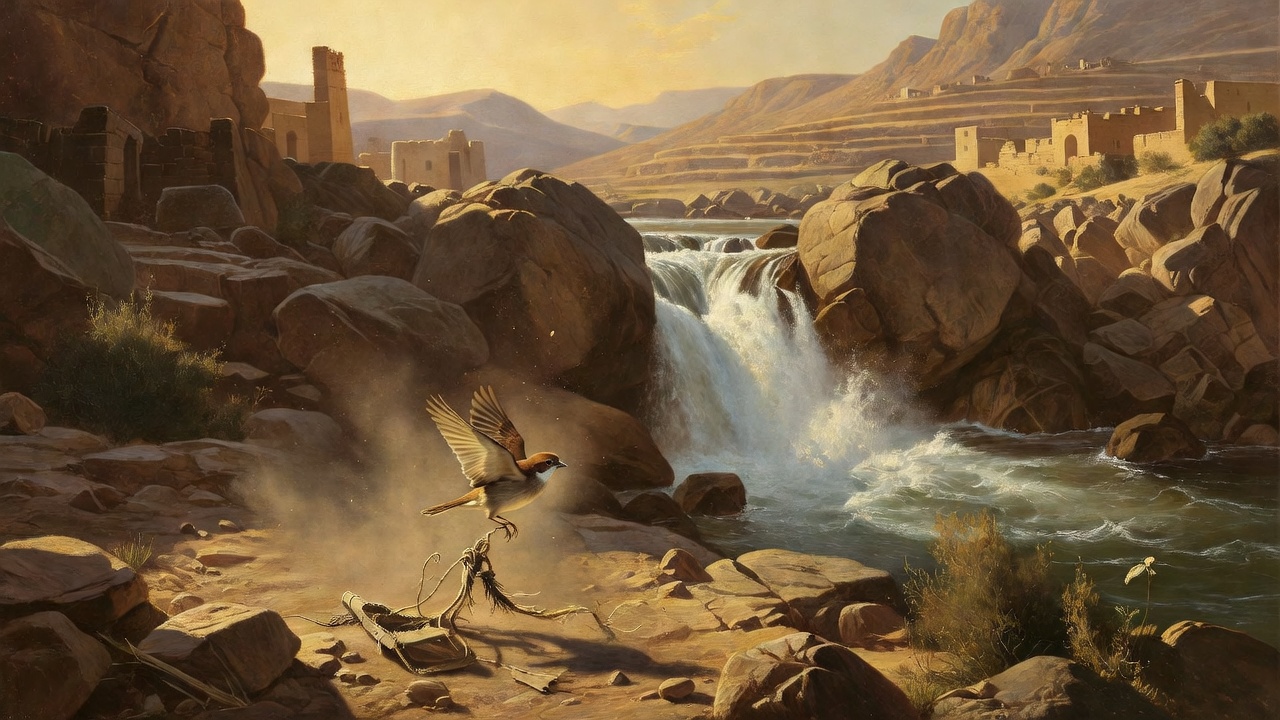
7Jiwa kita telah terluput seperti burung
yang lepas dari jebakan perangkap burung.
Jebakan itu rusak, dan kita terluput.
8Pertolongan kita adalah di dalam nama TUHAN,
yang menjadikan langit dan bumi!
¿Sabías que…?
Cántico de Liberación de Israel
- El encabezado del Salmo 124 lo define como un cántico de las subidas atribuido a David. Funciona como un himno comunitario de gratitud que invita a Israel a proclamar en conjunto que sobrevivió al asalto de sus adversarios únicamente porque el Señor estuvo de su lado.Fuentes: el propio texto bíblico
- El poema describe el peligro enfrentado por la comunidad mediante intensas metáforas de la naturaleza, comparando a los enemigos con fieras listas para devorarlos con sus dientes y con torrentes y aguas embravecidas que amenazaban con arrastrarlos.Fuentes: el propio texto bíblico
- El salmo concluye su reflexión sobre la liberación con la figura de un ave que escapa de la trampa rota de un cazador, afirmando que el auxilio de la comunidad reside en el nombre del Señor, Creador del cielo y de la tierra.Fuentes: el propio texto bíblico
Notas escritas con ayuda de IA a partir de fuentes abiertas (Theographic Bible Metadata, CC BY-SA 4.0; Easton’s Bible Dictionary, dominio público) y revisadas antes de publicarse.
Lugares de este capítulo
- Jerusalem · 31.777, 35.234 · versículo 1
Solo aparecen lugares identificados con alta confianza (90 % o más según las fuentes académicas reunidas por OpenBible). Mapa de la época: DARE (Digital Atlas of the Roman Empire), CC BY 4.0; mapa actual: © colaboradores de OpenStreetMap; lugares: OpenBible.info (CC BY 4.0).
Créditos y licencia de esta traducción
Alkitab Yang Terbuka
The Holy Bible in Indonesian, Alkitab Yang Terbuka (AYT) translation
copyright © 2011-2024 YLSA-AYT
Language: bahasa Indonesia (Indonesian)
AYT (Alkitab Yang Terbuka)
AYT is Alkitab Yang Terbuka, PB (2010,..-2024) and PL (2014,...2024).
AYT - text is Copyrighted, YLSA-AYT 2011,2024© -- this is to preserve and protect the quality of the Text.
Suggestions, Comments, Changes, Corrections are encouraged, and can be submitted to YLSA-AYT.
AYT - usage (non-commercial) is CopyLefted, 2011 -- this is to allow free usage/distribution of the text
AYT - derivatives (form, format, media, tools, resources) is CC, YLSA-AYT 2011(cc) -- we encourage you to use the AYT in creative ways, and to share the results. Creative Commons(CC) type is Credit(BY), Non-Commercial(NC), Shareable(SA)
AYT - translation license is freely given, 2011-2024 -- information and/or reporting is appreciated, but not required.
AYT permissions are managed by YLSA.
AYT (and Alkitab Yang Terbuka) name are Trademarks associated with the AYT Bible, and AYT ecosystem/tools.
URL: AYT: https://ayt.co
YLSA : https://ylsa.org
Email : [email protected]
This translation is made available to you under the terms of the
Creative Commons Attribution-No Derivatives license 4.0.
You may share, redistribute, or adapt this Bible translation or extracts from it in any format, provided that:
You include the above copyright and source information.
You do not use this work for commercial purposes.
Pictures included with Scriptures and other documents on this site are licensed just for use with those Scriptures and documents.
For other uses, please contact the respective copyright owners.
2024-07-26
Fuente: http://ebible.org/indayt/ · eBible.org