Apocalipsis 7
Tẹsitamenti Ikne n'Ọnu Ikwere · Toca un versículo para ver sus referencias cruzadas.
Be karụ 144,000 ele badnụ // akara
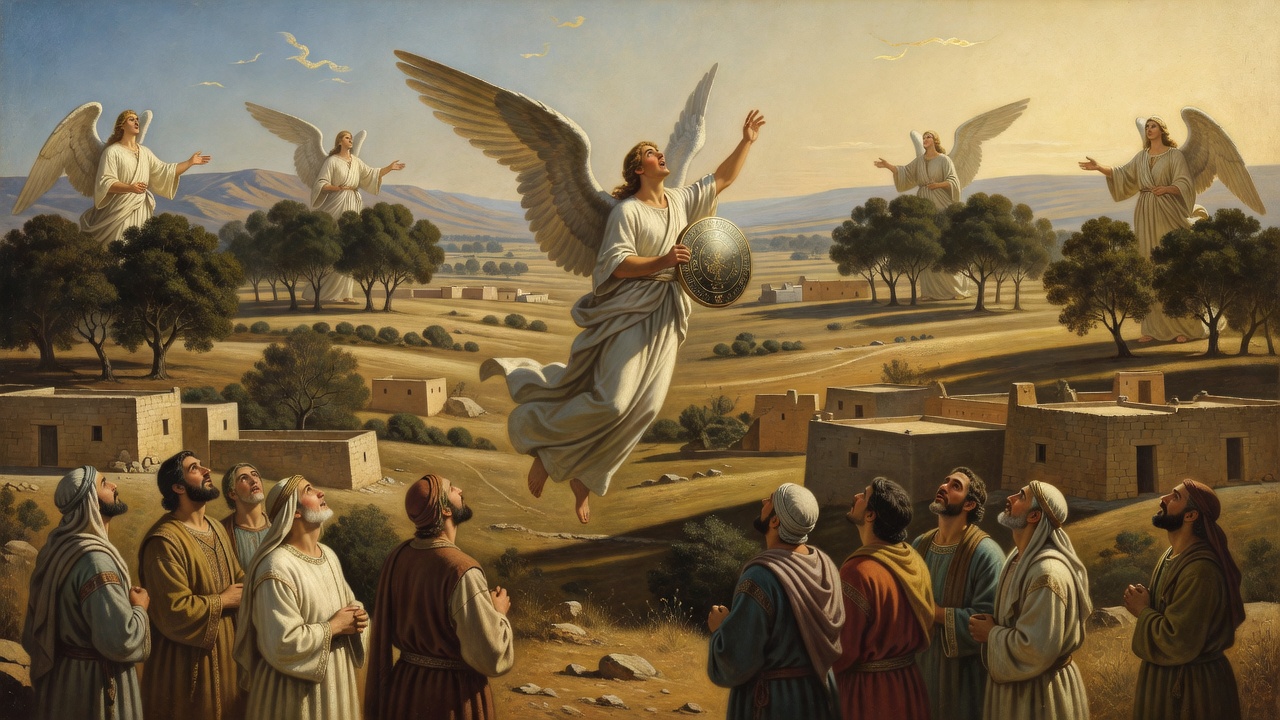
1Nga nhne ka whemernu, m whnụrnu m enine izi ẹno gwuzo nụ ngeri ẹno ke ọwa, knernụ ruwhere k'ọwa n'aka, ma ruwhere gharụ o whe n'ọwa, ma n'osimini mọbu n'olu isisi ọbula. 2M whnụrnu m enine izi berere hi n'ọbosi ẹhnam nọowhuya, o ji akara Chiokike ke zị bụdnu n'aka a, o ji okne nkọli naakanụ ele enine izi ẹno wam Chiokike nyernu rikne o lulu ọwa nụ osimini, 3kaa, “Anụ lúlu ọwa, mọbu osimini, mọbu isisi, tem a ka ele izi Chiokike akara n'egedege ruwhnu be.” 4M nụrnu m ọnu ọgwnugwnu ele be karụ akara n'egedege ruwhnu be, be bụ otu riwhu nụ nri ẹno nụ pokwu ẹno, hite nụ kpakara ẹbnurnu Izirẹli. 5Be bụ hite nụ ẹbnurnu Juda, nri nụ pokwu lawụru, ẹbnurnu Rubẹni, nri nụ pokwu lawụru, ẹbnurnu Gadị, nri nụ pokwu lawụru, 6hite nụ ẹbnurnu Asa, nri nụ pokwu lawụru, ẹbnurnu Nafịtali, nri nụ pokwu lawụru, ẹbnurnu Manase, nri nụ pokwu lawụru, 7hite nụ ẹbnurnu Simiọni, nri nụ pokwu lawụru, ẹbnurnu Livaị, nri nụ pokwu lawụru, ẹbnurnu Ịsaka, nri nụ pokwu lawụru, 8hite nụ ẹbnurnu Zebụloni, nri nụ pokwu lawụru, ẹbnurnu Josefu, nri nụ pokwu lawụru, ẹbnurnu Bẹnjamini, nri nụ pokwu lawụru.
Igbudu ele badnụ wam
9Nga nhne ka mekworu, m le anya whnụ igbudu badnụ ọ zá nye nwernu rikne gwnụli ọnu. Be hi nụ kpakara mba nụ ẹbnurnu, nụ ẹli, nụ ikwu-ọnu va, be gwuzoru nụ ruwhnu ngadna eze nụ nụ ruwhnu Nnwọ Atnụrnu wam, be wo awura abọchna, be ji masị igwugwu bụkwu n'aka be. 10Be ji okne nkọli naakaa,
“Ọznohia aị hi n'aka Chiokike,
nye dazị nụ ngadna eze,
ya nụ Nnwọ Atnụrnu.”
11Kpakara ele enine izi gwuzo gba ngadna eze wam gburugburu nụ ele okno badnụ wam nụ nhne ẹno wam zị bụdnu, dna kpute ruwhnu n'ẹli nụ ruwhnu ngadna eze wam, kpọnu Chiokike risi ẹli. 12Be kaa,
“Amịm! Ngọzi nụ igwugwu
nụ akọniche, nụ ọtu mmamma nụ ọson'anya
nụ rikne nụ iknernema
zịnu Chiokike dụ ọkwnukokwnu.
Amịm.”
13Otu nye okno badnụ sịkwa m, “Ele ka wogwu iwo awura abọchna be bụ ele ke ele? Ndaa hne be hi va?”
14M sa a, “Nda-aị-kwu, m máam, jị magwụ.”
Ọ kanụ m, “Ele ka bụ ele hiri n'okne mmekpẹhni wam whụya, be snụrnu iwo be, mee be zịri rịchna nụ rime ọvnarna Nnwọ Atnụrnu wam. 15Kam kpayarụ,
be jiri gwuzoru nụ ruwhnu ngadna eze Chiokike,
be jeekpenu a iwhnehnie nụ abalị nụ rime Ọro Nsọ a.
Nye wam dazị nụ ngadna eze jaagbasa ọro-ẹka a, be wuru nụ rime a.
16Wiri jọ́ogwnu be berere,
akpịri jọ́okpo be bẹkwnu berere,
ẹhnam jọ́omu kwno be berere,
whụruwhuru ẹhni jéeme kwno be berere.
17Kwnornu nụ Nnwọ Atnụrnu nye ke zị n'esilawụru ngadna eze wam jọobu nye nọoznu be lele atnụrnu.
O joodu be zne nụ risi mini ke bụdnu,
Chiokike jookwnosnama anya-mini ẹkwna n'anya be.”
¿Sabías que…?
Las tribus selladas y la gran multitud
- Apocalipsis 7 presenta el número de los sellados como 144,000, doce mil de cada una de las tribus de Israel nombradas en el capítulo. Israel era otro nombre de Jacob, el segundo de los hijos gemelos de Isaac y Rebeca; el Easton's Bible Dictionary (1897) explica el nombre de Jacob como alguien que sigue los talones de otro, o un suplantador.Fuentes: el propio texto bíblico · Jacob (Israel)
- Aunque Rubén era el hijo mayor de Jacob y Lea, la lista de los sellados comienza con Judá y luego nombra a Rubén. La lista incluye también tanto a José como a Manasés; Manasés era el hijo mayor de José, y Jacob lo adoptó a él y a su hermano Efraín como hijos propios.Fuentes: el propio texto bíblico · Reuben · Manasseh (son of Joseph)
- Después del sellado, la visión muestra una multitud demasiado grande para contarse, de toda nación, tribu, pueblo y lengua, de pie ante el trono y el Cordero, con vestiduras blancas y ramas de palma en las manos. Uno de los ancianos dice que han salido de la gran tribulación y han lavado sus vestiduras, dejándolas blancas en la sangre del Cordero.Fuentes: el propio texto bíblico
Notas escritas con ayuda de IA a partir de fuentes abiertas (Theographic Bible Metadata, CC BY-SA 4.0; Easton’s Bible Dictionary, dominio público) y revisadas antes de publicarse.
Créditos y licencia de esta traducción
Tẹsitamenti Ikne n'Ọnu Ikwere
New Testament in Ikwere
copyright © 2010 Wycliffe
Language: Ikwere
Translation by: Wycliffe
Ikwerre – (ikw) Nigeria
The Iwerre language of Nigeria can also be spelled Ikwere and Ikwerri. This language is spoken primarily by the Ikwerre people who live in the Rivers State of Nigeria and is one of the many ethnic groups in the Niger Delta. There were more than 23,000 speakers of this language in 1973. There is also a considerable local interest in literacy and grammar.
Copyright Information
© 2010, The Nigeria Bible Translation Trust. All rights reserved.
This translation text is made available to you under the
terms of the Creative Commons License: Attribution-Noncommercial-No Derivative Works.
( http://creativecommons.org/licenses/by-nc-nd/3.0/ )
In addition, you have permission to port the text to different file formats, as long as you
do not change any of the text or punctuation of the Bible.
You may share, copy, distribute, transmit, and extract portions
or quotations from this work, provided that you include the above copyright
information:
You must give Attribution to the work.
You do not sell this work for a profit.
You do not make any derivative works that change any of the actual words or punctuation of the Scriptures.
Permissions beyond the scope of this license may be
available if you contact
us with your request.
Printed book ISBN 9789789076369
New
The New Testament
in Ikwere
© 2010, The Nigeria Bible Translation Trust. All rights reserved.
This translation is made available to you under the terms of the
Creative Commons Attribution-Noncommercial-No Derivatives license 4.0.
You may share and redistribute this Bible translation or extracts from it in any format, provided that:
You include the above copyright and source information.
You do not sell this work for a profit.
You do not change any of the words or punctuation of the Scriptures.
Pictures included with Scriptures and other documents on this site are licensed just for use with those Scriptures and documents.
For other uses, please contact the respective copyright owners.
2019-08-09
Fuente: http://ebible.org/ikwNT/ · eBible.org