Mateo 8
Tẹsitamenti Ikne n'Ọnu Ikwere · Toca un versículo para ver sus referencias cruzadas.
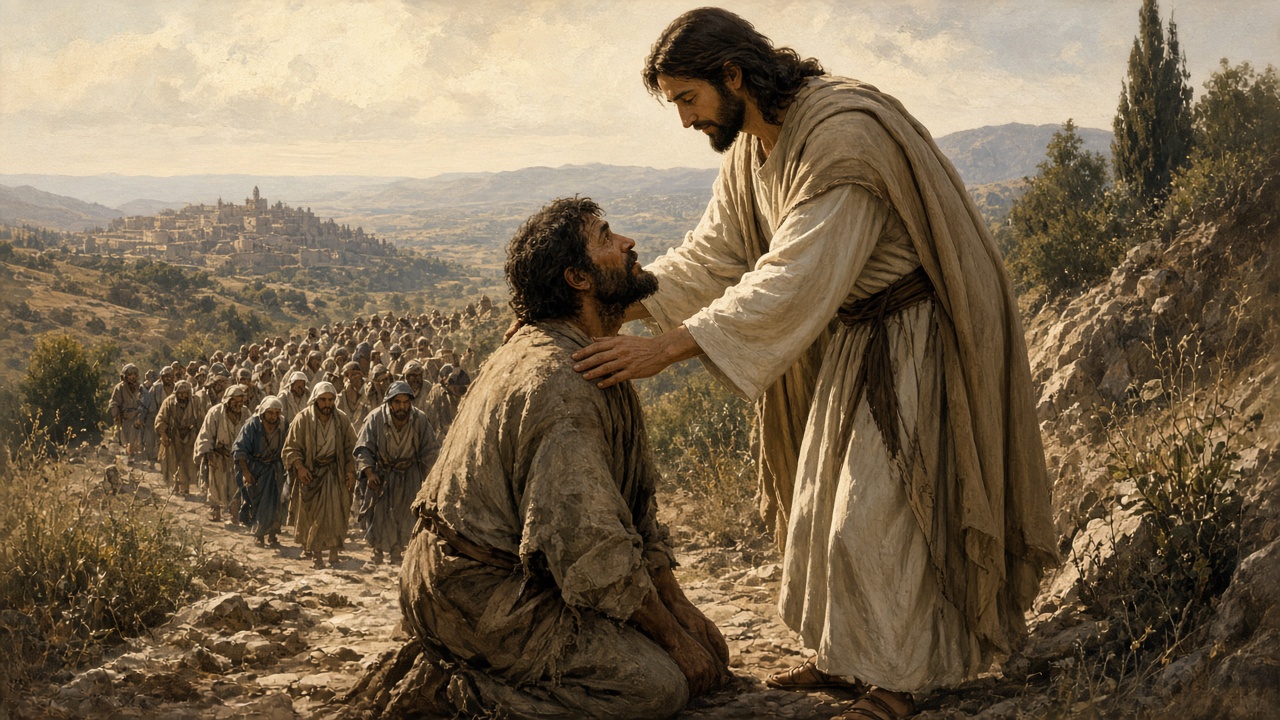
Jizọsi gwọru nye nchnịchna
1Nga Jizọsi hiri n'olu rugwu hiedna, igbudu ele badnụ snornu a. 2Otu nye naarịa nchnịchna vakwnusiri a, gbunu a mpnerne ọchi, kaa, “Nyenwe aị, ọ bụru nụ i pioru, i nwernu rikne mee m, m zịri rịchna.”
3Jizọsi dọsnima aka kpatụ a, kaa, “M pioru m, zịri rịchna.” Ngangam, nchnịchna wam whọgaru n'ẹhni a. 4Jizọsi kanụ a, “Ọ zá nye ọbula ị kanụ, kọvu la, gweru ẹhni gesi nye ọkwa arịohna, gweru masị nhne Mozizi nyernu n'iwu kwa arịohna ma ọ bụru nhne akebne nyee be.”
Jizọsi gwọru nnwọ izi // nye risi ọgwnu
5Nga Jizọsi bnanyarnụ Kapanọm, otu nye nẹechi otu riwhu ele ọgwnu vakwnusiri a, rịo a, 6kaa, “Nyenwe aị, nnwọ izi m dnanyịgwu n'ọro, otu ngeri ẹhni a nwụrnu ọnwu, ọ zị n'igbugbu k'agịda.”
7Jizọsi kanụ a, “M jaava, gwọ a.”
8Nye wam nẹechi otu riwhu ele ọgwnu kanụ a, “Nyenwe aị, m dụ́ge m nụ nye ị jaabnanya ọro a, kọvu kwu ọka kpọi, ị jọogwo nnwọ izi m. 9Kwnornu nụ m bụ m nye zị nụ mkpururu ọchichi ele kakwo m, m nwernu m ele ọgwnu zị nụ mkpururu m, me kanụ nye ka, ‘Zne,’ o zne, m kanụ nye berere, ‘Vaa,’ ọ vaa, m kanụ nnwọ izi m, ‘Mee ka,’ o mee a.”
10Nga Jizọsi nụrnu ọka ka, o duru a ẹhni, ọ kanụ ele sno a n'aznụ, “N'ezi, me kanụ anụ, m whnụ́lele m ọkwnata ovu hna kpa, ma nụ ovu nye Izirẹli. 11Me kanụ anụ nụ agịda badnụ jeehi n'ọbosi ẹhnam nụ ọdidna ẹhnam va, snornu Ebereham, nụ Aziki, nụ Jekọpu, dazịri ẹli n'ẹli-eze Chiokike, 12kọvu nụ be jaachịbna ele kwesiri ọ bna n'ẹli-eze Chiokike nụ rime ọchichiri, hne be jaazị naakwna ẹkwna, naata rụkwnurnu-ize.”
13Jizọsi kanụ nye wam nẹechi otu riwhu ele ọgwnu, “La, be menu ị lele kpa i kweru.” Ẹhni bụru nnwọ izi a ọma ngangam.
Jizọsi gwọru ele nrịria
14Nga Jizọsi bnarnụ ọro Pita, ọ whnụrnu nne nnwerne a hne ọ dnanyị n'ọkpata naarịa ẹhni orne bẹkwnu. 15Ọ nwụgwuru a aka, ẹhni orne bẹkwnu wam sịgbasi a, o lizọ, bete neeznenu be izi.
16N'ogbednachi, be kwuyanụ a agịda ele rẹnwu ọjo nwụgwu, ọ ji ikwu-ọnu chịhala ele rẹnwu ọjo, gwọ kpakara ele naarịa nrịria. 17Ọ gwọru be, ma nhne Azaya nye ọwhnurninya kwuru mezu, kaa,
“Ya n'iwhuru a vumernu kpakara ẹhni igbugbu aị,
vuru masị nrịria aị zị ọdo n'ọdo.”
Nhne o joowhu // ele sno Jizọsi
18Nga Jizọsi whnụrnu agịda ele badnụ gbarụ a gburugburu, ọ kanụ ele sno apna a ma be whe aznụ osimini kịyari. 19Otu nye zni iwu ele Ju vakwnusiri a, kanụ a, “Nye-zni-nhne, m joosno i, penupe ọbula i neezne.”
20Jizọsi kanụ a, “Edu nwernu mkpewu hne be dnanyị, ọnunu oligwe nwernu alịkwu hne be zukwa inwe, kọvu Nnwọ ke Badnụ nwée hne ọ jaabịta risi a.”
21Nye ke berere n'esilawụru ele sno apna a, kanụ a, “Nyenwe aị, kweru m me beru ọsno lite nda m.”
22Kọvu Jizọsi kanụ a, “Sno m, gharụ ele nwụrnu ọnwu ma be lite ele nwụrnu ọnwu ibne be.”
Jizọsi bigbọru // ruwhere osimini
23Nga Jizọsi bnarnụ nụ rime ọgbo, ele sno apna a sno a. 24Ngangam, okne ruwhere beteru ewhe n'olu osimini, ke mernu mini nọowubna nụ rime ọgbo, kọvu Jizọsi n'iwhuru a neezni anyarna. 25Ele sno apna a vakwnusiri a, kpatnenya a, kanụ a, “Nyenwe aị, dọhia aị, a noowhu.”
26Ọ kanụ be, “Kịni mernu anụ nọotu ogwnu, anụ ele ọkwnata ovu matị?” O lizọ, bigbọ ruwhere osimini, ọhna dna bii.
27O du kpa be hna ẹhni, be naakaa, “Nye ka bụ ọdo badnụ kịni? Ruwhere nụ okne osimini noobnotenu a nsnị.”
Jizọsi gwọru // ele rukna lawụru
28Nga ọ varụ n'aka osimini kịyari n'ẹli ele Gadara, ele rukna lawụru ele rẹnwu ọjo nwụgwu, ele hi nụ hne be li iznu whụya, ele ruwhnu be tụ ogwnu, ke kpayarụ ọ zá nye neewhe n'apna wam. 29Be siwama okokoba, kaa, “Aị nụ jị nwekọgwu kịni, Jizọsi, jị Nnwọ Chiokike? Ị varụ ma i ta aị awhnụwhnu hne ige aị yóoduge?”
30Agịda ezni zị hne zị́la ikere naata wiri. 31Rẹnwu ọjo wam rịasno a, kaa, “Ọ bụru nụ ị chịhala aị, zizne aị ma a bna nụ rime ezni ele ka.”
32Ọ kanụ be, “Anụ zne.” Be whụya, zne bna n'agịda ezni wam, kpakara agịda ezni wam gbadnarnụ nụ ngwulangwu dnabna nụ rime osimini, rinwụ nụ rime mini. 33Ele nọoznu be gbawhu, bna n'ẹli-ọhna wam tnụsi nhne be whnụrnu, nụ nhne mernu ele wam rẹnwu ọjo nwụgwu. 34Kpakara ele ẹli wam whụya kwnusi Jizọsi. Nga be whnụrnu a, be rịasno Jizọsi ọ whọga n'ẹli be.
¿Sabías que…?
Curaciones, fe y el mar
- Capernaum, la ciudad a la que Jesús entra en este capítulo, era una ciudad de Galilea que no se menciona en el Antiguo Testamento. El Easton's Bible Dictionary (1897) dice que llegó a ser “su propia ciudad” después de que dejó Nazaret, e incluye la súplica del centurión y la curación en la casa de Pedro entre los hechos situados allí.Fuentes: Capernaum · el propio texto bíblico
- Jesús dice que muchos vendrán del oriente y del occidente para compartir el banquete con Abraham, Isaac y Jacob en el reino de los cielos. El Easton's Bible Dictionary (1897) presenta a Abraham como hijo de Taré y heredero de las promesas, a Isaac como el único hijo de Abraham con Sara, y a Jacob —también llamado Israel— como el hijo gemelo menor de Isaac y Rebeca.Fuentes: el propio texto bíblico · Abraham · Isaac · Jacob (Israel)
- Mateo presenta las curaciones de aquella noche como cumplimiento de lo dicho por medio del profeta Isaías: “Él tomó nuestras dolencias y cargó con nuestras enfermedades.” El Easton's Bible Dictionary (1897) identifica a Isaías como hijo de Amoz, que profetizó durante los reinados de Uzías, Jotam, Acaz y Ezequías.Fuentes: el propio texto bíblico · Isaiah
Notas escritas con ayuda de IA a partir de fuentes abiertas (Theographic Bible Metadata, CC BY-SA 4.0; Easton’s Bible Dictionary, dominio público) y revisadas antes de publicarse.
Lugares de este capítulo
- Gadara · Hoy: Umm Qais · 32.656, 35.679 · versículo 28
Solo aparecen lugares identificados con alta confianza (90 % o más según las fuentes académicas reunidas por OpenBible). Mapa de la época: DARE (Digital Atlas of the Roman Empire), CC BY 4.0; mapa actual: © colaboradores de OpenStreetMap; lugares: OpenBible.info (CC BY 4.0).
Créditos y licencia de esta traducción
Tẹsitamenti Ikne n'Ọnu Ikwere
New Testament in Ikwere
copyright © 2010 Wycliffe
Language: Ikwere
Translation by: Wycliffe
Ikwerre – (ikw) Nigeria
The Iwerre language of Nigeria can also be spelled Ikwere and Ikwerri. This language is spoken primarily by the Ikwerre people who live in the Rivers State of Nigeria and is one of the many ethnic groups in the Niger Delta. There were more than 23,000 speakers of this language in 1973. There is also a considerable local interest in literacy and grammar.
Copyright Information
© 2010, The Nigeria Bible Translation Trust. All rights reserved.
This translation text is made available to you under the
terms of the Creative Commons License: Attribution-Noncommercial-No Derivative Works.
( http://creativecommons.org/licenses/by-nc-nd/3.0/ )
In addition, you have permission to port the text to different file formats, as long as you
do not change any of the text or punctuation of the Bible.
You may share, copy, distribute, transmit, and extract portions
or quotations from this work, provided that you include the above copyright
information:
You must give Attribution to the work.
You do not sell this work for a profit.
You do not make any derivative works that change any of the actual words or punctuation of the Scriptures.
Permissions beyond the scope of this license may be
available if you contact
us with your request.
Printed book ISBN 9789789076369
New
The New Testament
in Ikwere
© 2010, The Nigeria Bible Translation Trust. All rights reserved.
This translation is made available to you under the terms of the
Creative Commons Attribution-Noncommercial-No Derivatives license 4.0.
You may share and redistribute this Bible translation or extracts from it in any format, provided that:
You include the above copyright and source information.
You do not sell this work for a profit.
You do not change any of the words or punctuation of the Scriptures.
Pictures included with Scriptures and other documents on this site are licensed just for use with those Scriptures and documents.
For other uses, please contact the respective copyright owners.
2019-08-09
Fuente: http://ebible.org/ikwNT/ · eBible.org