Hechos 19
Tẹsitamenti Ikne n'Ọnu Ikwere · Toca un versículo para ver sus referencias cruzadas.
Pọlu nụ rime Efesọsi
1Kpa Apọlosi zị nụ Kọrinti, Pọlu gawheru nụ rime ẹli vadu Efesọsi. Ọ whnụrnu agwna ele sno apna Jizọsi pịi. 2Ọ sịkwa be, “Anụ nahịala Enine Nsọ kpa anụ kweruru?”
Be kaa, “A nụ́na rịa rịa ma ọ zị nhne be nookwu Enine Nsọ.”
3Pọlu sịkwa be, “Nda kpa be wụru anụ mini?”
Be kaa, “Hite n'ọwuwu mini Jọni.”
4Pọlu kaa, “Jọni wụru ele tụhnasnarnu nụ nhne ọjo be mini, ọ kanụ ele Izirẹli be kweru nụ nye naava n'aznụ a, nye wam bụ Jizọsi.” 5Nga be nụrnu a, be wụ be mini nụ rẹwhna Nyenwe aị Jizọsi. 6Pọlu tụkwasi be aka nụ risi, Enine Nsọ dnakwasị be, be kwu ọka nụ riro ikne, kwusa izi ọma Chiokike. 7Be hna lele ele nri ele rukna lawụru.
8Pọlu zne n'ọro ọgbako ele Ju, ẹnwa ẹto ya nụ be nọodogbuta, o jiri anya rikne kwu ọka gbalị ọ kanụ ele Ju nhne gbasịri ẹli-eze Chiokike. 9Kọvu agwna be mernu risi rikne, be kwéle o kweru, be kwu ọka ọjo megidne apna Nyenwe aị nụ ruwhnu agịda ele badnụ. Pọlu gharụ be, kwuru ele sno apna Jizọsi, ya nụ be nookwurita ọka kpakara ọbochi n'ọro ọmumu ọkwukwo Taịranosi. 10Be mernu nhne ka awha lawụru ke mernu kpakara ele wu n'ẹli Esia nụrnu ikwu-ọnu Nyenwe aị, ma ele Ju nụ ele bụ́o ele Ju.
11Chiokike rnụrnu ẹrnu elekema zị n'ichne hite n'aka Pọlu. 12Hite n'ẹhni a be neegwepiya wepe nụ nkịti nhne gweznenu ele nrịria zị ọdo n'ọdo ji, be gwọ be, rẹnwu ọjo hi n'ẹhni be whọga.
13Agwna ele Ju ele naagagharị nẹechihala rẹnwu ọjo pio o ji rẹwhna Jizọsi mee kpam. Be kanụ rẹnwu ọjo, “M neenye i iwu nụ rẹwhna Jizọsi nye Pọlu nọokpo okwo a.” 14Rụmu rukna ẹsau otu nye Ju, nye risi arịohna rẹwhna a bụ Sịkeva, mernu kpa. 15Kọvu rẹnwu ọjo wam kanụ be, “M maam Jizọsi, m maam Pọlu, kọvu anụ bụ ele kele?” 16Nwerukna wam rẹnwu ọjo wam wu nụ rime a bna be, megbu kpakara be, mekasi be ẹhni. Be hi nụ rime ọro wam vuru ọru, gbarụ ẹto gbawhu.
17Kpakara ele Ju nụ ele bụ́o ele Ju wu nụ Efesọsi nụrnu nhne ka, ogwnu tụ kpakara be. Be sọbisinu rẹwhna Nyenwe aị Jizọsi k'agịda. 18Agịda ele kweru ekwe varụ kwuhịa nhne be mernu nụ ruwhnu ele badnụ. 19Agịda ele amusu vuyarụ kpakara ọkwukwo be, kpọ be bẹkwnu nụ ruwhnu ele badnụ. Be gwnụkota ọnu ahịa be, pokwu mkpụru ịwai siliva isne. 20Kpam ikwu-ọnu Chiokike gbasarụ, ji iknernema gwuzosi rikne.
21Nga nhne ka mekworu, Pọlu kpebi ọ gawhe Masidonia nụ Akaya zne Jerusẹlem. Ọ kaa, “Me znekwo, m jeezne Rom.” 22O zizne ele neeyinu a aka izi, Timoti nụ Erasịtosi, zne Masidonia. Ọ dazịri ige matị n'ẹli Esia.
Ẹli ghara ghara n'Efesọsi
23Okne ẹli ghara ghara dnarnụ n'Efesọsi kwnornu n'apna Nyenwe aị. 24Otu nye nọokpu siliva, nye rẹwhna a bụ Demetirisi, nye nọokpu ọro igbudu Dịana, chi ele Efesọsi, nye mernu ele ẹrnu a nwe mbnarna k'agịda. 25O sukwukọta ele ẹrnu a nụ kpakara ele nụ ya nwernu otu aka ẹrnu, ọ kanụ be, “Anụ magwụ nụ a neenwehịa agịda ịwai hite n'ẹrnu aị. 26Anụ nọowhnu, nọonu nhne badnụ ka be kwu Pọlu neeme. Ọ karụ nụ chi be jiri aka kpu bụ́o chi rịa rịa. O mernu agịda ele badnụ kweru ọka a, nụ hna n'Efesọsi ma nụ kpakara ẹli Esia. 27Ọ bụ́o nụ ẹrnu aị joowhu daị, kọvu ogwnu nọotu aị nụ ọro okne chi aị Dịana jọoburu nhne etekne, igwugwu a whu, bụ chi ke kpakara ele Esia nụ kpakara ọwa nọokponu risi ẹli.”
28Nga agịda ele badnụ wam nụrnu a, ọnuma jihịa be mkpọma, be bete neesi okokoba, “Dịana ele Efesọsi bụ dikne.” 29Mkpakpọ wam gbasa kpakara ẹli-ọhna. Agịda ele badnụ wam nwudne Gayọsi nụ Arịsitakosi, ele rukna Masidonia be nụ Pọlu sno neezne izi, pnụrnu be zne ọgbakoro ẹli-ọhna. 30Pọlu pioru ma o zne nụ ruwhnu ele badnụ wam, kọvu ele kweru ekwe kwéle a. 31Agwna ele nẹechi ẹchi ele enyi Pọlu zi izi, naarịasno a, o gésikọ ẹhni a n'ọgbakoro.
32Kọvu nụ mkpakpọ zị nụ rime ọro ọgbako wam, agwna badnụ neesi otu nhne, ele berere neesi nhne berere, ele kakwo n'esilawụru be máa nhne be kwnornu gbakọ. 33Agwna be kaa nụ Alẹkizanda bụ nye risi mkpakpọ wam, ele Ju gwuzote a nụ ruwhnu ọhna. Alẹkizanda whenu be aka ma o nwernu rikne kwu ọka, ma ọ gọhoru ọnu nụ ruwhnu ele badnụ.
34Kọvu nga be mahịaru nụ ọ bụ nye Ju, be si okokoba n'otu ọnu lele awa lawụru, kaa, “Dịana ele Efesọsi bụ dikne.” 35N'ipne-aznụ, nye gba ọkwukwo ẹli-ọhna mee be dazịri bii, ọ kaa, “Ele rukna Efesọsi, ele badnụ magwụ nụ ẹli Efesọsi bịtaru ọro Dịana nụ igbudu a ke hiri n'olu dna. 36Badnụ nwée rikne gọnahoru nhne ka. Anụ dazịri bii, anụ mée nhne bụ́o ọma. 37Anụ kwuyaru ele rukna ka hna, ọ bụ n'ezi nụ be znúge buznu n'ọro Dịana, mọbu kparị chi aị. 38Ọ bụru nụ Demetirisi nụ ele ẹrnu a noobno nye ọbula nhne, ọbochi ikpe zị, ele risi ikpe zịmako, be kpe ẹhni be ikpe nụ ruwhnu ele ikpe. 39Ọ zị nhne berere anụ pioru, be jookwu a n'ọro ọgbako ikpe lele kpa iwu kwuru. 40Kwnornu nụ ogwnu nọotu aị nụ be jaakaa nụ a mernu mkpakpọ nụ nhne mernu tna. A nwée rikne kọwali risi mkpakpọ ka mọbu kaa nhne vuyarụ a.” 41Nga o kwukworu kpa, ọ gbasa ọgbako wam.
¿Sabías que…?
Pablo, el Camino y Artemisa en Éfeso
- Éfeso era la capital del Asia proconsular, la provincia romana que abarcaba la parte occidental de Asia Menor, y en tiempos romanos llevaba el título de primera y más grande metrópoli de Asia. La ciudad se distinguía por el templo de Artemisa, a quien los romanos llamaban Diana, construido fuera de las murallas y contado entre las siete maravillas del mundo antiguo. En el centro había una imagen antigua de la diosa, de la que se decía que había caído del cielo.Fuentes: Ephesus · Diana · Asia
- Demetrio, un platero de Éfeso, hacía santuarios de plata de Artemisa, modelos del templo o de la estatua de la diosa, que se vendían con facilidad a los visitantes llegados de toda Asia Menor. Hechos dice que ese oficio era la fuente de prosperidad de los artesanos y que Demetrio les advirtió del peligro para el negocio y para el honor del templo de Artemisa, la diosa que, según él, era adorada en toda la provincia de Asia y en el mundo entero.Fuentes: Demetrius · el propio texto bíblico
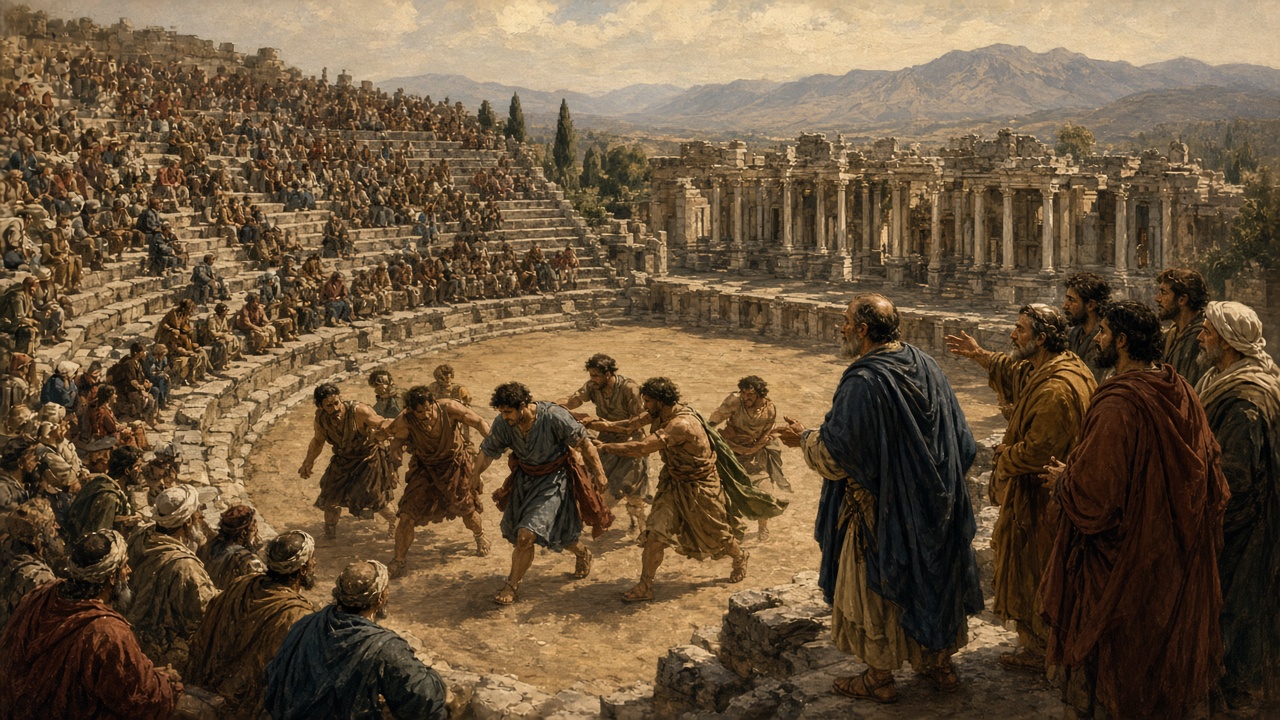
- La multitud se lanzó al teatro de Éfeso, que el Diccionario Bíblico de Easton (1897) describe como el más grande del mundo, a cielo abierto y capaz de albergar a 50.000 espectadores. Amigos de Pablo entre los jefes de Asia, ciudadanos ricos elegidos cada año para presidir los juegos y las fiestas religiosas de sus ciudades, le rogaron que no entrara. El secretario de la ciudad recordó entonces a la asamblea que Éfeso era guardiana del templo de la gran Artemisa y de su imagen, de la que se decía que había caído del cielo.Fuentes: Ephesus · Asia · el propio texto bíblico
Notas escritas con ayuda de IA a partir de fuentes abiertas (Theographic Bible Metadata, CC BY-SA 4.0; Easton’s Bible Dictionary, dominio público) y revisadas antes de publicarse.
Lugares de este capítulo
- Corinth · 37.906, 22.879 · versículo 1
- Ephesus · 37.939, 27.341 · versículos 1, 17, 23, 26, 35
- Asia · 38.400, 28.300 · versículos 10, 22, 26, 27, 31
- Achaia · 38.720, 22.540 · versículo 21
- Jerusalem · 31.777, 35.234 · versículo 21
- Macedonia · 41.600, 22.540 · versículos 21, 22, 29
- Rome · 41.892, 12.485 · versículos 21, 40
Solo aparecen lugares identificados con alta confianza (90 % o más según las fuentes académicas reunidas por OpenBible). Mapa de la época: DARE (Digital Atlas of the Roman Empire), CC BY 4.0; mapa actual: © colaboradores de OpenStreetMap; lugares: OpenBible.info (CC BY 4.0).
Créditos y licencia de esta traducción
Tẹsitamenti Ikne n'Ọnu Ikwere
New Testament in Ikwere
copyright © 2010 Wycliffe
Language: Ikwere
Translation by: Wycliffe
Ikwerre – (ikw) Nigeria
The Iwerre language of Nigeria can also be spelled Ikwere and Ikwerri. This language is spoken primarily by the Ikwerre people who live in the Rivers State of Nigeria and is one of the many ethnic groups in the Niger Delta. There were more than 23,000 speakers of this language in 1973. There is also a considerable local interest in literacy and grammar.
Copyright Information
© 2010, The Nigeria Bible Translation Trust. All rights reserved.
This translation text is made available to you under the
terms of the Creative Commons License: Attribution-Noncommercial-No Derivative Works.
( http://creativecommons.org/licenses/by-nc-nd/3.0/ )
In addition, you have permission to port the text to different file formats, as long as you
do not change any of the text or punctuation of the Bible.
You may share, copy, distribute, transmit, and extract portions
or quotations from this work, provided that you include the above copyright
information:
You must give Attribution to the work.
You do not sell this work for a profit.
You do not make any derivative works that change any of the actual words or punctuation of the Scriptures.
Permissions beyond the scope of this license may be
available if you contact
us with your request.
Printed book ISBN 9789789076369
New
The New Testament
in Ikwere
© 2010, The Nigeria Bible Translation Trust. All rights reserved.
This translation is made available to you under the terms of the
Creative Commons Attribution-Noncommercial-No Derivatives license 4.0.
You may share and redistribute this Bible translation or extracts from it in any format, provided that:
You include the above copyright and source information.
You do not sell this work for a profit.
You do not change any of the words or punctuation of the Scriptures.
Pictures included with Scriptures and other documents on this site are licensed just for use with those Scriptures and documents.
For other uses, please contact the respective copyright owners.
2019-08-09
Fuente: http://ebible.org/ikwNT/ · eBible.org