Hechos 24
Elu Ọhụn: Ẹkụkwọ-Nsọ (Azụụn Ọhụn rịn'a) · Toca un versículo para ver sus referencias cruzadas.
Ikpe Hụn Rị Ẹgbata Ndị-Ju Lẹ Pọlụ
1Hụn mẹ ẹ akp'ọhịn isẹn, Ananayasị wụ onyẹ-isi nchụ-ẹjan lẹ ndị hụ imẹ Ndị-isi lẹzi ọka-iwu w'a kpọ Tetulọsị nọ bịa ọgwa Gọvanọ. Wẹ nọ kpe Pọlụ ẹka Gọvanọ. 2Ya wẹ nọ kpọpụha Pọlụ. Tetulọsị nọ kinmẹ ihiẹn wẹ rị e kpe n'ẹ, sị,
“Onyẹ ikpẹn ile rịnị, ọkịkị ị e wẹhẹgụọ nị ẹnyi udọn kete-ele-mgbe; iroro-ọma y'a tụ e dọnzimẹgụọ nị ndị alịnị ihiẹn. 3Ogẹn ile lẹ ụzọ ile kẹ ẹfọ gi a sụọkẹnmẹ ẹnyi ụsụọ makẹ ihiẹn ndịnị. 4Kanị achọnị m nị m rikẹ i ogẹn, m rị a rịọ nwan n'i mẹ ọhụnma gọnzi ẹnyi ntịn kẹ i dọn e mẹ mbụ, ni m be oku nke-nke.
5Ẹnyi a hụngụọ a nị okẹnnyẹni e yesọnmẹ nsọngbu ọda-ọda. Ọ ghasọnmẹ, e se isusu ebe ọwụlẹ ndị Ju rị enu ụwa ile. Ọ wụzịkwọ onyẹ ohu imẹ ndị-ndu itu Onyẹ-Nazarẹtị ahụn. 6O te rịzị a chọdẹ n'o mẹrụ Ụlọ-nsọ, ya ẹnyi nọ nwụndọn ẹ. [Nkẹ ẹnyi e te gi Iwu ẹnyi kin ẹ ikpe, 7kanị onyẹ-isi-agha kanị wụ Laịsịasị nọ gi ikẹn bịa d'a napụ ẹnyi 'ya, sị ndị ikpe ẹ bịa d'e kunrun i.] 8Ị jụ a ajụjụ, 'yụ lẹ enwẹn i k'a saẹka marịnkwama ihiẹn ile ẹnyi rị e ku nị ya k'o mẹ.”
9Ndị Ju nọ kwadọn Tẹtulọsị, sị nị ihiẹn ndịnị ile wụ ezioku.
Pọlụ E Kinrin Ọnụ A Ihun Fẹlisi
10Ogẹn Gọvanọ gi fe ẹka gi sị Pọlụ ya ku nwan, ya Pọlụ nọ sị, “A marịngụọ m n'o mẹọlẹ ahụa ole-lẹ-ole ị wụ ọka-ikpe alịnị; ya wụ, ẹfọ rị a sụọ m ụsụọ ikinrin ọnụ m ebe ị rị. 11Ị k'a saẹka chọpụha n'ọ karịnị akp'ọhịn mmẹbụọ kete m'e jẹnlẹ Jerusalẹm d'e fe ofufe. 12O nwọnni onyẹ ọwụlẹ wẹ hụn mmẹ lẹ ịya rị a dọ ndọndọ imẹ Ụlọ-nsọ; o nwọnni ndị wẹ hụn m rị a kpasu—kẹ imẹ ụnọ-ofufe kẹ imẹ obodo hụ ile. 13Asakọ wẹ ẹka ghọsị nị ihiẹn wẹ rị nwan e ku nị 'ya kẹ m mẹ wụ ezioku. 14Kanị m k'a saẹka gwa ị nị ihiẹn ohuni wụ ezioku: Ụzọ hụ wẹ rị e ye eje-ẹfan kẹ m gha e fe Osolobuẹ ndị nẹdi ẹnyi kanị; m kweyeni ihiẹn ile wẹ de imẹ Iwu Mozizi lẹ hụn wẹ de imẹ ẹkụkwọ ndị-amụma. 15M nwọn olil'ẹnya imẹ Osolobuẹ—olil'ẹnya ohu hụ hụn ndịnị lẹ enwẹn wẹ nwọn imẹ Osolobuẹ: nị kẹ ndị ezi-omumẹ kẹ ndị njọ jẹnkọ d'a gha ọnwụn lihi. 16Ufiri ẹ kẹ m gi a nwan ikẹn m ogẹn ile, igi hụn a nị obi m rị ọchan ebe Osolobuẹ lẹ ịhịan rị.”
17“O tegụọ m bịademẹ Jerusalẹm; ya m nọzị nwan bịa nị m ye ndị nke m ihiẹn ndị w'e gi yeni ndị igbẹnnyẹ ẹka, lẹni m hụn ụzọ chụ-ẹjan. 18Ịya kẹ m rị nwan kẹ wẹ hụn m imẹ Ụlọ-nsọ: o mẹ nke omẹnalị idọn-nsọ, a rịgụọlẹ m ụchan ogẹn wẹ gi hụn m; o nwọnni igunrun mmẹ lẹ wẹ wị; o nwọnzikwọnị isusu rịnị. 19Kanị o te nwọnghọ ndị Ju gha Azụụn Eshịa bịa rị ebẹhụ, k'o furu nwan wẹ lẹ enwẹn wẹ bịa ebeni d'e ku ọnụ wẹ id'ẹnya ị, omẹni o nwọn ihiẹn wẹ sị nị 'ya kẹ m mẹ! 20Mọbụ ya jụdẹle ndịnị rị ebeni kẹ elee eje-ihiẹn kẹ wẹ hụn nị ya kẹ m mẹ ogẹn m wuzo ihun Ọgwa Ndị-isi Nkịkwama, 21mmanị ihiẹn ohuni m yi oro ku kẹ m wuzo ihun wẹ: ‘Ụnụ rị e kinkwọ m ikpe tannị makẹni m kweri nị ndị nwụnnị jẹnkọ d'e lihi!’ ”
22Kanị Gọvanọ wụ Fẹlisi, hụn marịnchanrịngụụ banyeni Ụzọ-Jesu, nọ bu ikpe hụ si ihun, sị wẹ, “Ụnụ jẹnkọ d'e cheri nị onyẹ-isi-agha kanị wụ Laịsịasị bịa m kebe han nị ụnụ eṅẹn.” 23Ọ nọ sị onyẹ-isi agha hụn a kị ndị agha ọgụn-isẹn ya hụn a nị wẹ kwọndọn Pọlụ, ka wẹ e yen'ẹ efe ẹkẹrẹ, a nị ndị ọwụ a a bịa d'a hụn a, e ye ẹ ihiẹn rị a mkpa.
Pọlụ A Gwa Gọvanọ lẹ Nwunyẹ Ẹ Oku-Chuku
24O mẹpụ akp'ọhịn ole, Fẹlisi lẹ nwunyẹ ẹ wụ Drusila nọ bịa. Drusila wụ onyẹ Ju.
Fẹlisi nọ zi wẹ kpọ Pọlụ. Wẹ nọ gọnmẹ ẹ ntịn k'ọ rị a gwa wẹ oku ikweri ni Kraịstị wụ Jizọsị. 25K'o dọn rị e ku oku ezigbo obibi Chuku chọ lẹ ikwọndọn-enwẹn-ịhịan lẹ Okinkin-ikpe lalanị, egun nọ tụma Fẹlisi. Ọ nọ sị, “Ị k'e jẹnmẹgụụ, m nwọn efe a kpọzị m'ị.” 26Ọ hụzị a tụ ẹnya nị Pọlụ jẹnkọ d'e ye ẹ egho; ọ hụ e gi ufiri ẹ e zisọnmẹ wẹ d'a kpọ Pọlụ mbụ-lẹ-ẹbụọ, e sọn ẹ e ku oku. 27Ahụa ẹbụọ a ghafegụụ, Pọshịọsị wụ Fẹstọsị nọ hẹnrin Gọvanọ, nọkin ẹnya Fẹlisi. Makẹni Fẹlisi chọkọ nị ndị Ju ku n'ẹ ọhụnma, ya ọ nọ la Pọlụ tọ imẹ ngan.
¿Sabías que…?
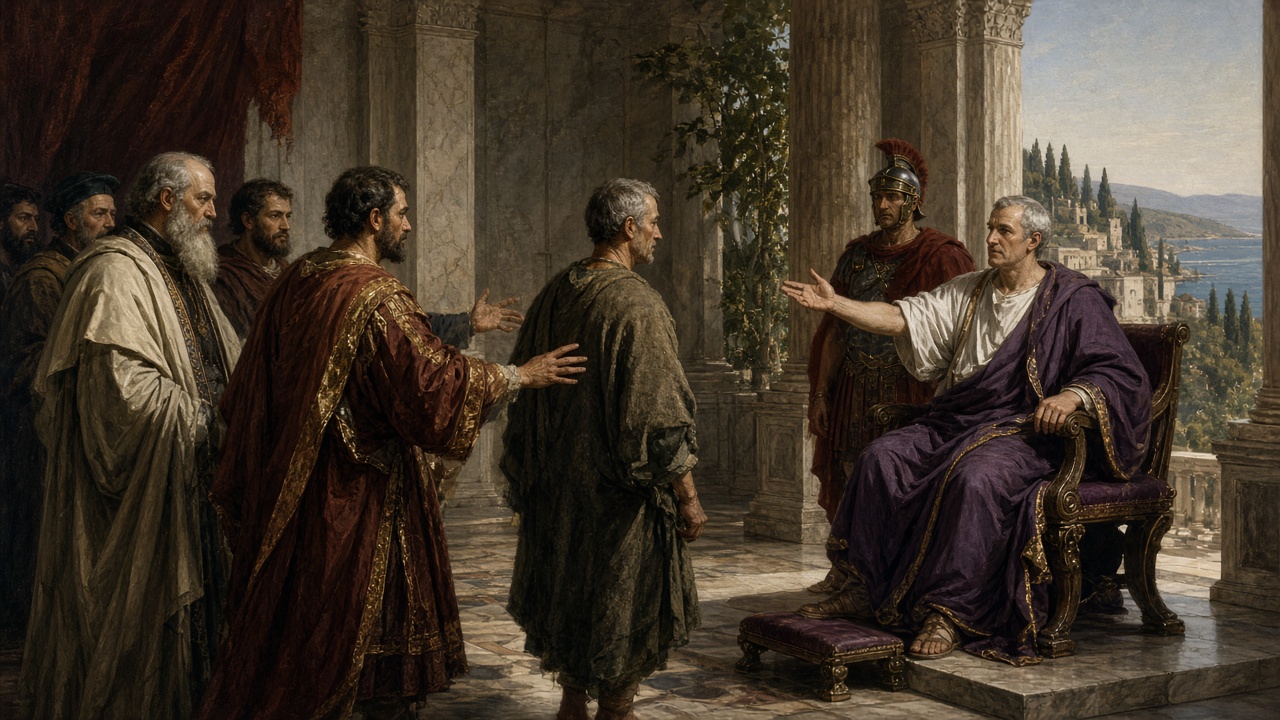
Pablo ante Félix
- El sumo sacerdote Ananías bajó con algunos ancianos y un abogado llamado Tértulo, a quien el Diccionario Bíblico de Easton describe como un abogado romano empleado por los judíos para exponer su causa contra Pablo ante Félix. Tértulo elogió al gobernador y luego dijo que Pablo era una peste que provocaba disensión entre los judíos por todo el mundo, cabecilla de la secta de los nazarenos y un hombre que había intentado profanar el templo. El diccionario relaciona ese elogio inicial con la limpieza que Félix hizo del país, al expulsar a bandidos e impostores.Fuentes: el propio texto bíblico · Tertullus · Felix
- Félix, que estaba bien informado acerca del Camino, aplazó la audiencia y mantuvo a Pablo bajo guarda, aunque le permitió cierta libertad y dejó que sus amigos atendieran sus necesidades. El relato dice que esperaba que Pablo le ofreciera un soborno y por eso lo mandaba llamar con frecuencia; el Diccionario Bíblico de Easton también afirma que al parecer esperaba un soborno y, por ello, tuvo varias entrevistas con él. Después de dos años lo sucedió Porcio Festo —el Diccionario Bíblico de Easton (1897) fecha ese nombramiento en el año 60 d. C.— y, queriendo hacer un favor a los judíos, Félix dejó a Pablo en prisión.Fuentes: el propio texto bíblico · Felix · Portius Festus
- Unos días después, Félix regresó con su esposa Drusila, que era judía, y escuchó a Pablo hablar de la fe en Cristo Jesús y de la justicia, el dominio propio y el juicio venidero; Félix se asustó y lo despidió. El Diccionario Bíblico de Easton (1897) identifica a Drusila como la tercera y la más joven hija de Herodes Agripa I y dice que Félix la indujo a dejar a su esposo, Azizus, rey de Emesa. La misma entrada dice que ella y su hijo perecieron en la erupción del monte Vesubio en el año 79 d. C.Fuentes: el propio texto bíblico · Drusilla
Notas escritas con ayuda de IA a partir de fuentes abiertas (Theographic Bible Metadata, CC BY-SA 4.0; Easton’s Bible Dictionary, dominio público) y revisadas antes de publicarse.
Lugares de este capítulo
- Caesarea · Hoy: Caesarea Maritima · 32.500, 34.892 · versículo 1
- Jerusalem · 31.777, 35.234 · versículos 11, 17
- Asia · 38.400, 28.300 · versículo 18
Solo aparecen lugares identificados con alta confianza (90 % o más según las fuentes académicas reunidas por OpenBible). Mapa de la época: DARE (Digital Atlas of the Roman Empire), CC BY 4.0; mapa actual: © colaboradores de OpenStreetMap; lugares: OpenBible.info (CC BY 4.0).
Créditos y licencia de esta traducción
Elu Ọhụn: Ẹkụkwọ-Nsọ (Azụụn Ọhụn rịn'a)
Revision of New Testament in Ika
copyright © 2010 Wycliffe
Language: Ika
Translation by: Wycliffe
Ika (ikk) Nigeria
In Nigeria the word Ika is not only the name of the Ika
people, but is also used to designate a local government area in the Akwa Ibom
State. The Ika people are a sub group of the Igbo people. It is interesting to note
that Ika is the name of a town in Croatia is one of the eight Annang local
government areas of the local government areas in Akwa Ibom State. An alternative
name for the Ika people is Ika-Annang. There appears to be another dialect of Ika
that is spoken in Delta State of Nigeria.
Copyright Information
© 2010, Wycliffe. All rights reserved.
This translation text is made available to you under the terms of the Creative
Commons License: Attribution-Noncommercial-No Derivative Works. ( http://creativecommons.org/licenses/by-nc-nd/3.0/ ) In addition, you have
permission to port the text to different file formats, as long as you do not change
any of the text or punctuation of the Bible.
You may share, copy, distribute, transmit, and extract portions or quotations from
this work, provided that you include the above copyright information:
You must give Attribution to the work.
You do not sell this work for a profit.
You do not make any derivative works that change any of the actual words or
punctuation of the Scriptures.
Permissions beyond the scope of this license may be available if you contact us
with your request.
Printed book ISBN 9789789037056
Revision
The New Testament
in Ika
© 2010, Wycliffe. All rights
reserved.
This translation is made available to you under the terms of the
Creative Commons Attribution-Noncommercial-No Derivatives license 4.0.
You may share and redistribute this Bible translation or extracts from it in any format, provided that:
You include the above copyright and source information.
You do not sell this work for a profit.
You do not change any of the words or punctuation of the Scriptures.
Pictures included with Scriptures and other documents on this site are licensed just for use with those Scriptures and documents.
For other uses, please contact the respective copyright owners.
2019-08-09
Fuente: http://ebible.org/ikkNT/ · eBible.org