Hechos 20
Elu Ọhụn: Ẹkụkwọ-Nsọ (Azụụn Ọhụn rịn'a) · Toca un versículo para ver sus referencias cruzadas.
Pọlụ E Jẹn Masẹdonia Lẹ Alị Grisi D'e Zi Oziọma
1Ogẹn isusu hụ gi kụsịgụụ, Pọlụ nọ zi ozi kpọkikomẹ ndị e sọn Ụzọ-Jesu; ọ gbagụụ wẹ umẹ, sịgụụ wẹ nọdị ọhụnma, ọ nọ la wẹ tọ si Masẹdonia. 2Ogẹn o gi ghagbarịgụụ azụụn hụ ile, kugụụ ihiẹn bu ọda o gi gba ndị kwerini rịsọnmẹ ebẹhụ umẹ, ọ nọ pụha alị Grisi; 3ọ nọ nọdị ebẹhụ ifọn ẹtọ. Ogẹn o gi nwan chọ n'o gi ụgbọ-mirin lakin Azụụn Siria hụn Jerusalẹm rị imẹ ẹ, ogẹn hụ hụra kẹ ndị Ju gi ri n'ẹ ngo, ọ nọ gwẹrụ sị n'ọ ghashi Masẹdonia lakin ya wụ Siria. 4Ịya lẹ ndịnị wẹ wị: Sọpata nwa Paịrọsị, onyẹ Bẹrịa; Arịstakọsị lẹ Sekọndusu, ndị Tẹsalonika; Gayọsị onyẹ obodo Dẹbe; lẹ Timoti; lẹzi ndị Eshia wụ Taịkịkọsị lẹ Trofimọsị. 5Ndịnị wẹ nọ bu ụzọ jẹnmẹ Trasị d'e cheri ẹnyi. 6Ogẹn Mmẹmmẹ Brẹdi Nwọnlẹni Yisti a ghafegụụ, ẹnyi nwẹn nọ gi ụgbọ-mirin gha Filipi buni, hụn m'ẹ akp'ọhịn isẹn, ẹnyi nọ kunrun wẹ imẹ obodo Trasị; ẹnyi nọ nọdị ebẹhụ izu-ụka.
Pọlụ E Jẹnzi Trasị
7O ru ụhụọhịn ibuzọ imẹ izu-ụka (ya wụ nwan ụhụọnhịn-ụka), ogẹn ẹnyi gi nọgbama nị ẹnyi ri Oriri-nsọ, Pọlụ nọ gwama wẹ oku; ebe o mẹ ni eki fọnhụ, ọ lama, ọ nọ kusọnmẹ ya wụ oku d'e ru imẹ abalị. 8Wẹ dọnmẹsọnmẹ ukpẹ bu ọda imẹ mmughẹ hụ rị elu hụn ẹnyi nọ zu. 9Okorọbịa ohu w'a kpọ Yutikọsị nọdị alị enu windo. Ogẹn Pọlụ gi kuberi oku, ezigbo ụran nọ tụma Yutikọsị; ụran hụ nọ buru ẹ, ọ nọ gha windo ụlọ hụ mẹ wẹ ẹtọ imẹ elu, dan. Ogẹn wẹ gi bịa d'e weli ẹ, a hụn w'a n'ọ nwụnhụngụọ. 10Pọlụ nọ hidan, ọ nọ hunụa, fiedọn Yutikọsị, sị, “Atụlẹ ni egun, nị ọ hụ ndụn.” 11Ya Pọlụ nọ shi ibe elu hụ ẹnyi nọ e zu. Ogẹn o gi bebegụụ brẹdi Oriri-nsọ, kegụụ a, ẹnyi e rigụụ, ọ nọ kusọnmẹzi, eki e we fọn, ọ nọ jẹnmẹ. 12Wẹ nwẹn nọ weri nwata-okẹnnyẹ hụ lẹ ndụn lama, obi nọ rụchanrịn wẹ alị.
A Gha Wẹ Trasị Si Miletusu
13Ẹnyi nwẹn nọ banye ụgbọ-mirin jẹnmẹgụụ obodo Asọsị, ebe Pọlụ jẹnkọ d'a nọ banye ni ẹnyi imẹ ụgbọ-mirin hụ. Ẹnịna kẹ Pọlụ sị nị ẹnyi mẹ ẹ—makẹni ọ chọ n'ọ gha akpakalị. …gi ụgbọ-mirin hụ shi Mitaịlẹni|src="lb00217b.jpg" size="col" loc="ACT 20" copy="Horace Knowles; The British & Foreign Bible Society" ref="20.14" 14Mgbe o gi kunrun ẹnyi imẹ Asọsị, ẹnyi lẹ ịya nọ wịrị gi ụgbọ-mirin hụ si Mitaịlini. 15Ẹnyi nọ gi ụgbọ-mirin gha ebẹhụ pụ, eki e fọn, ẹnyi nọ ru nchetarị ihun obodo Kịọsị; eki e fọnzi, ẹnyi nọ ru obodo Samọsị; eki e fọnzi, ẹnyi nọ ru Miletusu— 16makẹni Pọlụ a kwademẹgụọ nị ẹlẹ o k'a banye Ẹfẹsọsị, amamgbe ọ gha e bie imẹ Eshịa—ọ rị a hụhụ n'ọ kẹrẹ n'a ru Jerusalẹm ụhụọhịn Mmẹmmẹ-Pẹntikosu—omẹni ọ rị nfe.
Oku Pọlụ Gwa Ndị-isi Ụka Rị Ẹfẹsọsị
17Pọlụ nọ gha Miletusu zi wẹ d'a kpọ ndị-isi ụka Ẹfẹsọsị bịa d'e kunrun ẹ. 18Ogẹn wẹ gi bịa, ọ nọ sị wẹ, “Ụnụ lẹ enwẹn ọnụ a marịnghọ kẹ m dọn bi ogẹn ahụn ile m gi rị imẹ igunrun ọnụ—ghakwọrị ụhụọhịn ibuzọ m zọ ụkụ ye imẹ Eshịa; 19kẹ m dọn welụachanrịn enwẹn m anị, gi ẹnya-mirin fe Di-nwọnni-ẹnyi, e dingbuchanrịn nsọngbu ile bịanị nị m makẹ ngo ndị Ju risọnmẹ ni m. 20O nwọnni ihiẹn ọwụlẹ m marịn k'e yeni ụnụ ẹka, e seri m isi; alatọnị m ikuzi ọnụ id'ẹnya ịhịan ile lẹ ụlọ-ụlọ, 21a gwa kẹ ndị Ju kẹ ndị wụlẹni ndị Ju oku irogharị buru Osolobuẹ lẹ ikwerini Di-nwọnni-ẹnyi wụ Jesu.
22Kanị, m jẹnkọ nwan Jerusalẹm nọkẹ onyẹ Mmọn-nsọ tụ eriri ye olu sekpụnkọ; a marịn m ihiẹn k'e kunrun ni m ebẹhụ. 23Ihiẹn m marịnhụ wụ nị imẹ obodo ọwụlẹ, Mmọn-nsọ rị a gwa m nị ngan lẹ nsọngbu rị e che m. 24Kanị o nwọnni ihiẹn m kpọ ndụn m, sụkpan nị m gbagụụ ọsọ Osolobuẹ sị ẹnyi gba, rụngụụ ọrụn Di-nwọnni-ẹnyi wụ Jesu buche m ẹka—ọrụn izisọnmẹ oziọma banyeni ọhụnma Osolobuẹ mẹ.
25A marịnghọ m nwan nị o nwọnni onyẹ ọwụlẹ imẹ ụnụ ile m nọ imẹ igunrun wẹ zisọnmẹ ozi Alị-eze hụn jẹnkọ d'a hụnzị nị m.
26M rị nwan a gwa ụnụ n'o nwọnni onyẹ ọwụlẹ imẹ ụnụ ẹdeke ẹ rị m isi. 27Makẹni, a gwachanrịngụọ m ọnụ ihiẹn ile wụ uche Osolobuẹ, esekinni m enwẹn m azụụn. 28Ya wụ, lefụ nị nwan enwẹn ọnụ lẹ igunrun atụnrụn hụn Mmọn-nsọ buche ụnụ ẹka ẹnya. O tumẹgụọ ụnụ ndị-ndu kẹni ụnụ du ụka Osolobuẹ, hụn Osolobuẹ gi ẹdeke Nwa a nwẹhẹn. 29A marịnghọ m nị m pụgụụ, eje-ẹwọrọ k'a bịa imẹ ụnụ d'e ripụ igunrun atụnrụn hụ. 30Ndị hụ imẹ ọnụ jẹnkọ d'a rụkpọmadẹ ezioku kẹni wẹ gi ẹ dọrị ndị e sọn Ụzọ-Jizọsị. 31Ya wụ, mụnrụn nị ẹnya; nyanhan nị nị ezuni m ikẹn ọrọgbọ ahụa ẹtọ, kẹ uhinhin kẹ efinnaị, ebe m rị e gi ẹnya-mirin a dọ onyẹ ọwụlẹ ẹka-ntịn.
32M rị nwan e we ụnụ e che ẹka Osolobuẹ lẹ ozi banyeni ọhụnma a, ozi ẹ hụn k'a s'ẹka mẹ ụnụ sue imẹ okukwe rịkẹ ụlọ wẹ n'a rụnshi elu—mẹ ụnụ rị ndị k'e nwẹhẹn ihiẹn wẹ k'e ye ndị ile wẹ dọn nsọ.
33O nwẹni onyẹ ọwụlẹ egho ẹ mọbụ goru ẹ mọbụ ẹkwa a na m ẹnya. 34Ụnụ lẹ enwẹn ọnụ a marịnghọ nị m gi ẹka m lụrụ ihiẹn mmẹ lẹ ndị mmẹ lẹ wị gi bi. 35E gigụọ m ihiẹnni ile ghọsị ọnụ ihiẹn ụnụ e leri, n'o furu ni ẹnyi gi ịrụn ẹrịra e yeni ndị zelẹni lẹ ndị igbẹnnyẹ ẹka, a nyanhan oku Di-nwọnni-ẹnyi wụ Jesu lẹ enwẹn ẹ ku, sị, ‘Iyeni ka ngọzi e wẹhẹ karị ịnarịnnị.’ ”
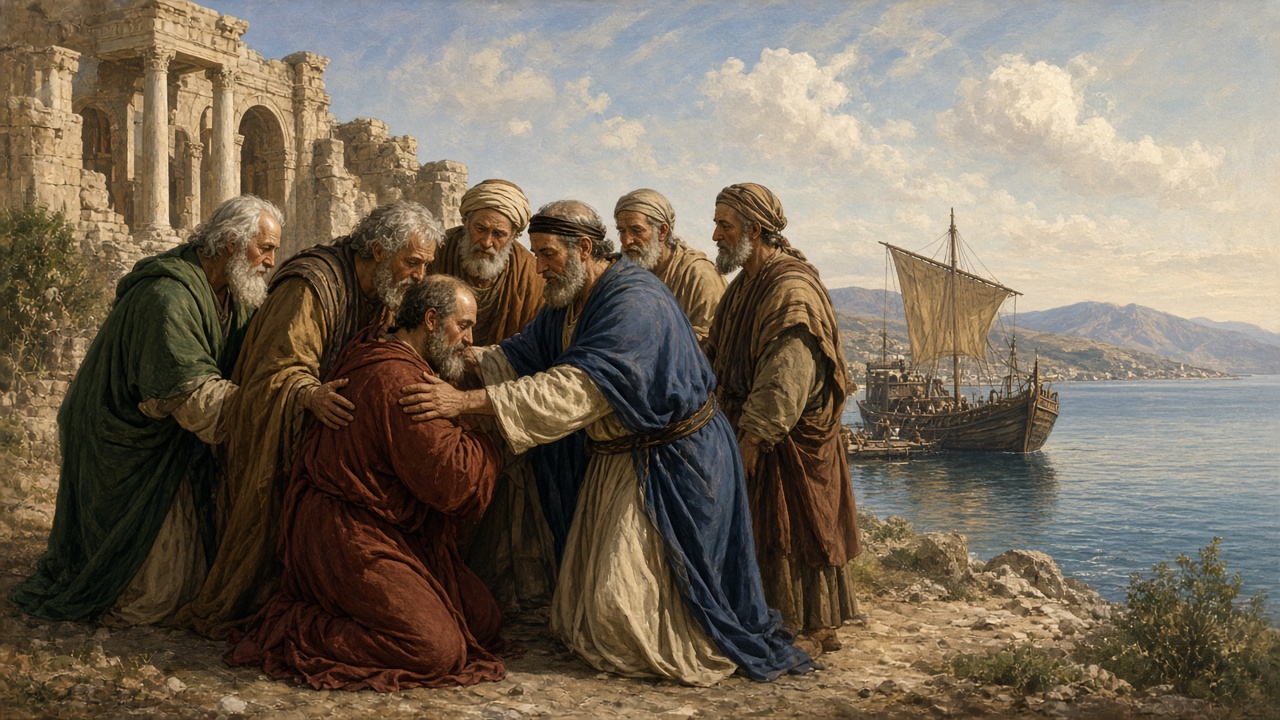
36Ogẹn Pọlụ gi kugụụ, ya lẹ wẹ nọ sekpu alị, ọ nọ mẹ ekpere. 37Wẹ ile hụ a kwan ẹkwan, a kwanshi elu, e fiedọn Pọlụ, e su ẹ ọnụ. 38Ihiẹn kachanrịn wẹ a fụ wụ nị ọ sị nị a hụnkọzị w'a; ya wẹ nọ du e d'e ru ebe ụgbọ-mirin rị.
¿Sabías que…?
Despedida camino a Jerusalén
- Al salir de Troas, Pablo envió a sus compañeros por delante en el barco y caminó hasta Assos por el camino romano. Assos era un puerto de la Asia proconsular, en Misia, en la costa norte del golfo de Adramitio; el trayecto a pie era de unas 20 millas, el de mar de unas 30, y la isla de Lesbos quedaba a unas 7 millas de la costa.Fuentes: el propio texto bíblico · Assos
- Pablo pasó de largo frente a Éfeso para no demorarse en la provincia de Asia —la provincia romana del oeste de Asia Menor, cuya capital era Éfeso—, porque esperaba, si era posible, llegar a Jerusalén para el día de Pentecostés. Se detuvo en Mileto, un puerto y la antigua capital de Jonia, a unas 36 millas al sur de Éfeso, y mandó llamar a los ancianos de la iglesia de Éfeso.Fuentes: el propio texto bíblico · Asia · Miletus
- Siete hombres viajaban con él: Sópater de Berea, Aristarco y Segundo de Tesalónica, Gayo de Derbe, Timoteo, y Tíquico y Trófimo de Asia. Aristarco, de Tesalónica, más tarde compartió el encarcelamiento de Pablo en Roma, y Trófimo, efesio, lo acompañó en esta parte del viaje y estuvo con él en Jerusalén.Fuentes: el propio texto bíblico · Aristarchus · Trophimus
Notas escritas con ayuda de IA a partir de fuentes abiertas (Theographic Bible Metadata, CC BY-SA 4.0; Easton’s Bible Dictionary, dominio público) y revisadas antes de publicarse.
Lugares de este capítulo
- Macedonia · 41.600, 22.540 · versículos 1, 3, 6
- Greece · 37.972, 23.727 · versículo 2
- Syria · Hoy: Syria 2 · 33.511, 36.306 · versículo 3
- Asia · 38.400, 28.300 · versículos 4, 16, 18
- Berea · Hoy: Veria · 40.518, 22.200 · versículo 4
- Thessalonica · Hoy: Thessaloniki · 40.638, 22.946 · versículo 4
- Troas · Hoy: Alexandria Troas · 39.752, 26.159 · versículos 5, 6
- Philippi · 41.012, 24.285 · versículo 6
- Assos · 39.491, 26.337 · versículos 13, 14
- Mitylene · Hoy: ancient theater at Mitylene · 39.110, 26.547 · versículo 14
- Chios · 38.373, 26.137 · versículo 15
- Miletus · 37.531, 27.276 · versículos 15, 17
- Samos · 37.750, 26.833 · versículo 15
- Trogyllium · Hoy: Cape Mycale · 37.659, 27.003 · versículo 15
- Ephesus · 37.939, 27.341 · versículos 16, 17
- Jerusalem · 31.777, 35.234 · versículos 16, 22
Solo aparecen lugares identificados con alta confianza (90 % o más según las fuentes académicas reunidas por OpenBible). Mapa de la época: DARE (Digital Atlas of the Roman Empire), CC BY 4.0; mapa actual: © colaboradores de OpenStreetMap; lugares: OpenBible.info (CC BY 4.0).
Créditos y licencia de esta traducción
Elu Ọhụn: Ẹkụkwọ-Nsọ (Azụụn Ọhụn rịn'a)
Revision of New Testament in Ika
copyright © 2010 Wycliffe
Language: Ika
Translation by: Wycliffe
Ika (ikk) Nigeria
In Nigeria the word Ika is not only the name of the Ika
people, but is also used to designate a local government area in the Akwa Ibom
State. The Ika people are a sub group of the Igbo people. It is interesting to note
that Ika is the name of a town in Croatia is one of the eight Annang local
government areas of the local government areas in Akwa Ibom State. An alternative
name for the Ika people is Ika-Annang. There appears to be another dialect of Ika
that is spoken in Delta State of Nigeria.
Copyright Information
© 2010, Wycliffe. All rights reserved.
This translation text is made available to you under the terms of the Creative
Commons License: Attribution-Noncommercial-No Derivative Works. ( http://creativecommons.org/licenses/by-nc-nd/3.0/ ) In addition, you have
permission to port the text to different file formats, as long as you do not change
any of the text or punctuation of the Bible.
You may share, copy, distribute, transmit, and extract portions or quotations from
this work, provided that you include the above copyright information:
You must give Attribution to the work.
You do not sell this work for a profit.
You do not make any derivative works that change any of the actual words or
punctuation of the Scriptures.
Permissions beyond the scope of this license may be available if you contact us
with your request.
Printed book ISBN 9789789037056
Revision
The New Testament
in Ika
© 2010, Wycliffe. All rights
reserved.
This translation is made available to you under the terms of the
Creative Commons Attribution-Noncommercial-No Derivatives license 4.0.
You may share and redistribute this Bible translation or extracts from it in any format, provided that:
You include the above copyright and source information.
You do not sell this work for a profit.
You do not change any of the words or punctuation of the Scriptures.
Pictures included with Scriptures and other documents on this site are licensed just for use with those Scriptures and documents.
For other uses, please contact the respective copyright owners.
2019-08-09
Fuente: http://ebible.org/ikkNT/ · eBible.org