Isaías 5
Biblica® Baịbụlụ Nsọ nʼIgbo Ndị Ugbu a nke dịrị onye ọbụla ịgụ · Toca un versículo para ver sus referencias cruzadas.
Abụ banyere ubi vaịnị a gbara ogige
1Aga m abụ abụ nye onye m hụrụ nʼanya,
abụ banyere ubi vaịnị ya.
Onye m hụrụ nʼanya nwere ubi ya
nʼelu ugwu nta nke bụ ezi ala.
2O gwuzere ya, wepụsịa okwute niile dị nʼime ya,
werekwa mkpụrụ vaịnị mara mma kụọ nʼime ya.
O wuru ụlọ nche nʼetiti ya,
sitekwa na nkume wapụtakwa ebe ịzọcha mmanya.
Emesịa, ọ nọdụrụ chere oge owuwe ihe ubi.
Mgbe oge ahụ ruru, ọ chọpụtara na nʼọnọdụ mkpụrụ vaịnị mara mma, ọ bụ ndị jọrọ njọ mịrị.
3“Ugbu a, ndị ikom Jerusalem na Juda, unu anụla ihe mere.
Kpebienụ ikpe a dị nʼetiti mụ na ubi vaịnị m.
4Olee ihe ọzọ m gaara emere ya
karịa ihe m mere?
Gịnị mere ubi vaịnị m ji mịara m mkpụrụ jọrọ njọ
nʼọnọdụ mkpụrụ na-atọ ụtọ?
5Ugbu a, lee,
ihe m na-aga ime ubi vaịnị m a.
Aga m ewepụ ihe mgbochi a gbara ya,
hapụ ya ka ọ ghọọ ebe anụ ụlọ na-ata nri.
Aga m etida mgbidi ya
hapụ ya ka ọ bụrụ ebe a na-azọtọ ụkwụ.
6Agaghị m akwachakwa ya ọzọ.
Agakwaghị m egwuru ya ala,
aga m ahapụ ya ka ogwu na uke too nʼime ya.
Aga m enyekwa igwe ojii iwu
ka mmiri ghara izokwasị ya ọzọ.”
7Ubi vaịnị nke Onyenwe anyị, Onye pụrụ ime ihe niile,
bụ mba Izrel
na ndị Juda,
ha bụ vaịnị ahụ nke nʼatọ obi ya ụtọ.
Ma o lere anya ikpe ziri ezi, ma ihe ọ hụrụ bụ iwusi ọbara.
O lere anya ezi omume, ma ihe ọ nụrụ bụ mkpu akwa ndị a na-emegbu emegbu.
Ahụhụ na ikpe ọmụma
8Ahụhụ dịrị unu ndị na-azụkọta ala
ma ndị ọzọ ahụghị ebe ha ga-ebi,
unu ndị na-ewu ụlọ na-ewukwasị ụlọ nʼala buru ibu,
ime ka ọ bụrụ naanị unu bi nʼụwa.
9Ma Onyenwe anyị, Onye pụrụ ime ihe niile ekwuola ihe banyere unu, na ọnọdụ unu. Eji m ntị m abụọ nụ mgbe ọ na-asị,
“Nʼezie, ọtụtụ ụlọ mara mma ga-atọgbọrọ nʼefu,
ụlọ ukwu mara mma ndị nwe ha agaghị anọkwa.
10Ubi vaịnị ahụ a ga-eji ehi abụọ kọọ ụbọchị iri ga-ewepụta naanị ihe nwere ike iru galọọnụ mmanya isii,
ma ọka a kọrọ, nke ruru akpa ọka atọ ga-amịpụta ihe ruru otu akpa nʼọkara.”
11Ahụhụ ga-adịrị unu niile ndị na-ebili nʼisi ụtụtụ
ịgbaso mmanya.
Ndị na-amụgide anya abalị
tutu ruo mgbe ha ṅụbigara mmanya oke.
12Unu na-eji ụbọ akwara dị iche iche na une,
na ihe iti egwu na opi, na mmanya na-eme onwe unu obi ụtọ nʼoge mmemme oriri unu,
ma unu na-elelị Onyenwe anyị anya;
unu adịghịkwa asọpụrụ akaọrụ ya.
13Nʼihi ya, ndị m ga-eje biri na mba ọzọ,
nʼihi amaghị ihe;
ndị ọkwa ha dị elu ga-anwụ nʼihi agụụ,
ndị mmadụ efu ga-abụ ndị akpịrị ga-akpọ nkụ nʼihi agụụ mmiri.
14Nʼihi ya, ala mmụọ na-eme ka ọchịchọ ya saa mbara,
ọ na-asaghebigakwa ọnụ ya oke;
ndị ukwu na ndị nta bi nʼime ala a ka ọ ga-elo,
tinyere ndị na-emebiga mkpọtụ oke, na ndị na-egwuribiga egwu ọṅụ oke.
15Nʼụbọchị ahụ, a ga-eweda nʼala ndị dị elu,
na ndị dị ala,
ndị mpako ka a ga-eweda nʼala.
16Ma Onyenwe anyị, Onye pụrụ ime ihe niile, nwee ọnọdụ dịkarịsịrị elu, nʼihi ikpe ikpe ziri ezi ya,
Chineke onye dị nsọ na-egosikwa onwe ya na ọ dị nsọ site nʼezi omume ya.
17Mgbe ahụ, ụmụ atụrụ ga-akpa nri ha dị ka ọ bụ nʼọzara ka ha nọ,
ehi na anụ ụlọ ga-akpa nri ha nʼụlọ ndị ọgaranya niile e tikpọrọ etikpọ.
18Ahụhụ ga-adịrị ndị ji aghụghọ na-adọkpụgharị mmehie ha;
ahụhụ dịkwara ndị na-adọkpụgharị ajọ omume ha dịka ụdọ eji adọkpụgharị ụgbọala.
19Nye ndị ahụ na-asị “Ka Chineke mee ngwa;
ya rụọ ọrụ ya ọsịịsọ,
ka anyị hụ ya.
Atụmatụ nke Onye nsọ nke Izrel,
ka ọ bịaruo nso, ka ọ pụta ìhè,
ka anyị nwe ike mara ihe o zubere.”
20Ahụhụ dịrị ndị na-akpọ ihe ọjọọ ezi ihe
ndị na-akpọkwa ezi ihe ihe ọjọọ,
ndị na-etinye ọchịchịrị nʼọnọdụ ìhè
na ìhè nʼọnọdụ ọchịchịrị
ndị na-etinye ihe dị ilu nʼọnọdụ ihe ụtọ,
na ihe ụtọ nʼọnọdụ ihe ilu.
21Ahụhụ ga-adịrị ndị maara ihe nʼanya nke onwe ha,
ndị na-elekwa onwe ha anya na ha bụ ndị nwere nghọta.
22Ahụhụ ga-adịrị ndị bụ dike nʼịṅụ mmanya,
na ndị bụkwa dimkpa nʼịgwakọta mmanya,
23ndị na-asị onye ikpe maara nʼikpe amaghị ya nʼihi ịnata ngarị,
ma wezuga ikpe ziri ezi site nʼebe onye aka ya dị ọcha nọ.
24Nʼihi ya, dịka ire ọkụ si erechapụ ahịhịa ọka,
na dịka ahịhịa kpọrọ nkụ si ada nʼime ọkụ na-enwu enwu,
otu a ka mgbọrọgwụ ha ga-ere ure
okoko ha ka ikuku ga-ebufu dịka uzuzu;
nʼihi na ha ajụla iwu niile Onyenwe anyị, Onye pụrụ ime ihe niile nyere,
lelịakwa okwu nke Onye nsọ Izrel.
25Nʼihi nke a, iwe Onyenwe anyị dị ọkụ megide ndị ya;
o setịpụrụ aka ya na-etitu ha nʼala.
Ugwu niile ga-ama jijiji,
ozu ndị ahụ dịka ihe na-abaghị uru nʼokporoụzọ niile.
Ma nʼagbanyeghị ihe ndị a niile, iwe ya alaghachibeghị azụ,
aka ya ka setịpụkwara esetipụ.
26Ọ ga-eweli ọkọlọtọ nye mba niile dị nʼebe dị anya,
ọ na-akpọkọta ndị niile nọ na nsọtụ ụwa.
Ma lee, ka ha na-abịa,
ha na-eme ngwa bịa ọsịịsọ.
27Ọ dịghị onye na-ada mba, ọ dịkwaghị onye nʼasụ ngọngọ nʼime ha,
ọ dịghị onye nʼatụ oru ụra maọbụ rahụ ụra,
ọ dịghị ihe ike nʼukwu ha nke tọpụrụ atọpụ
ọ dịghị ihe ikechi akpụkpọụkwụ nke dọbiri adọbi.
28Àkụ ha niile dị nkọ,
ekweela ụta ha niile,
ụkwụ ịnyịnya dị ka nkume ọkụ,
ụkwụ ụgbọ agha ha dị ka oke ifufe.
29Ha na-ebigbọ dịka ọdụm,
ha na-ebigbọkwa dịka ụmụ ọdụm;
ha na-asụ mgbe ha wụkwasịrị nʼelu ihe ndọgbu.
Ha na-ejide ndị m, kpụrụ ha laa, ọ dịkwaghị onye nnapụta ha nwere.
30Nʼụbọchị ahụ, ha ga-ebigbọ nʼelu ya
dịka mbigbọ nke oke osimiri.
A sịkwa na mmadụ elegide ala ahụ anya,
ọ ga-ahụ na ọchịchịrị na ihe mgbu,
ọ bụladị anyanwụ ka igwe ojii ga-eme ka ọ gbaa ọchịchịrị.
¿Sabías que…?
El cántico de la viña y los seis ayes
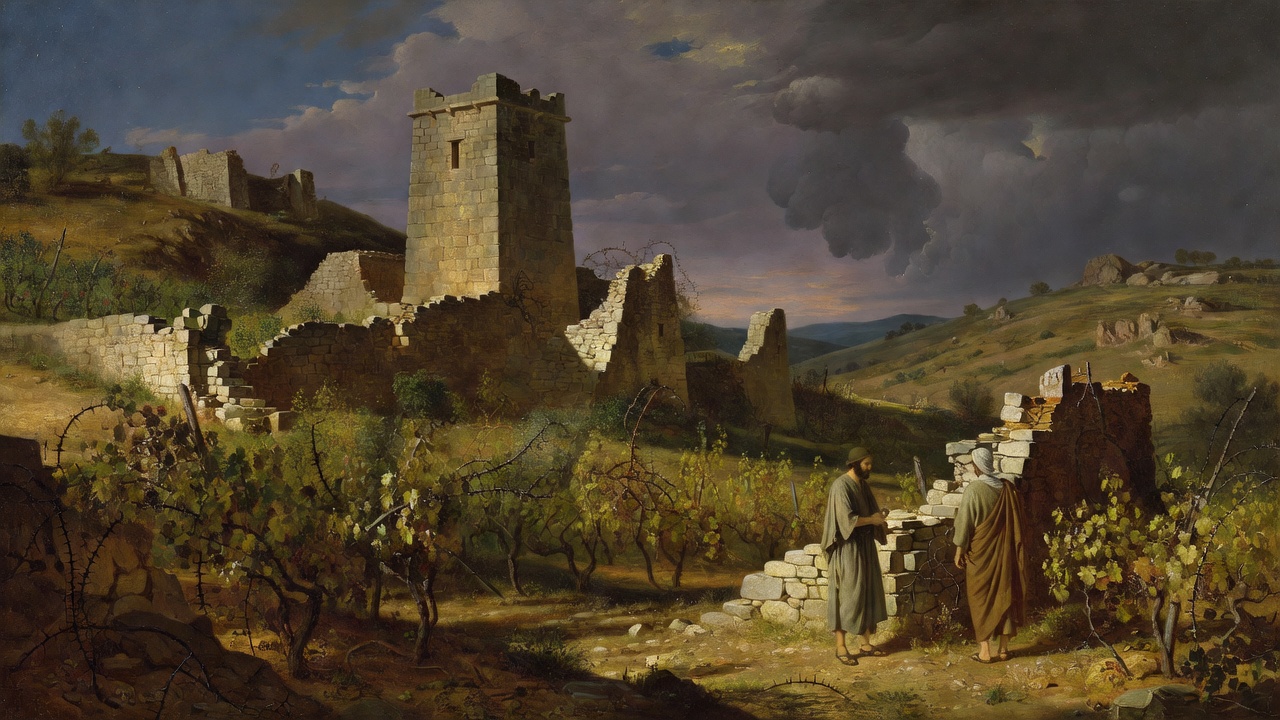
- El cántico que abre Isaías 5 describe el meticuloso trabajo de la viticultura en la antigua Judea: despedregar laderas fértiles, levantar una torre de vigilancia de piedra, excavar un lagar en la roca y plantar cepas escogidas protegidas por un vallado y un muro. El poema se convierte en una parábola judicial donde la viña representa a la casa de Israel y a los hombres de Judá, de quienes se esperaba justicia en lugar de derramamiento de sangre.Fuentes: el propio texto bíblico
- El capítulo presenta una serie de seis ayes proféticos que denuncian abusos sociales y morales específicos en Judá. Entre ellos destacan los terratenientes que acumulaban propiedades juntando casa a casa y campo a campo, los jueces que aceptaban sobornos para absolver a culpables privando de justicia al inocente, y los gobernantes entregados a banquetes mientras desoían la instrucción divina.Fuentes: el propio texto bíblico
- El ministerio profético de Isaías en Jerusalén se dirigió al pueblo de Judá durante un prolongado período que comenzó a mediados del siglo VIII a.C. El capítulo concluye advirtiendo que el Señor daría una señal a ejércitos extranjeros distantes y disciplinados, equipados con carros, arcos y veloces caballos, para ejecutar juicio sobre la tierra.Fuentes: Jerusalem · Prophecies of Isaiah · el propio texto bíblico
Notas escritas con ayuda de IA a partir de fuentes abiertas (Theographic Bible Metadata, CC BY-SA 4.0; Easton’s Bible Dictionary, dominio público) y revisadas antes de publicarse.
Lugares de este capítulo
Solo aparecen lugares identificados con alta confianza (90 % o más según las fuentes académicas reunidas por OpenBible). Mapa de la época: DARE (Digital Atlas of the Roman Empire), CC BY 4.0; mapa actual: © colaboradores de OpenStreetMap; lugares: OpenBible.info (CC BY 4.0).
Créditos y licencia de esta traducción
Biblica® Baịbụlụ Nsọ nʼIgbo Ndị Ugbu a nke dịrị onye ọbụla ịgụ The Holy Bible in the Igbo language of Nigeria: Biblica® Baịbụlụ Nsọ nʼIgbo Ndị Ugbu a nke dịrị onye ọbụla ịgụ copyright © 2020 Biblica, Inc. Language: Igbo Contributor: Biblica, Inc. This work is made available under the Creative Commons Attribution-ShareAlike 4.0 International License (CC BY-SA). To view a copy of this license, visit http://creativecommons.org/licenses/by-sa/4.0 or send a letter to Creative Commons, PO Box 1866, Mountain View, CA 94042, USA. Biblica® is a trademark registered by Biblica, Inc., and use of the Biblica® trademark requires the written permission of Biblica, Inc. Under the terms of the CC BY-SA license, you may copy and redistribute this unmodified work as long as you keep the Biblica® trademark intact. If you modify a copy or translate this work, thereby creating a derivative work, you must remove the Biblica® trademark. On the derivative work, you must indicate what changes you have made and attribute the work as follows: “The original work by Biblica, Inc. is available for free at www.biblica.com and open.bible.” Notice of copyright must appear on the title or copyright page of the work as follows: Biblica® Baịbụlụ Nsọ nʼIgbo Ndị Ugbu a nke dịrị onye ọbụla ịgụ Ndị Biblica, Inc. degharịrị ya nʼafọ © 1980, 1988, 2019, 2020 Biblica® Open Igbo Contemporary Bible™ Copyright © 1980, 1988, 2019, 2020 by Biblica, Inc. “Biblica” bụ akara e ji mara ụlọ ọrụ a, nke edebanyere dịka iwu si kwado nʼụlọ ọrụ dị nʼobodo United States, ebe a na-enye akara a na ikike maka azụm ahịa ndị Biblica, Inc. Ọ bụ ha ka e nyere ikike idenye ya. “Biblica” is a trademark registered in the United States Patent and Trademark Office by Biblica, Inc. Used with permission. You must also make your derivative work available under the same license (CC BY-SA). If you would like to notify Biblica, Inc. regarding your translation of this work, please contact us at https://open.bible/contact-us. This translation is made available to you under the terms of the Creative Commons Attribution Share-Alike license 4.0. You have permission to share and redistribute this Bible translation in any format and to make reasonable revisions and adaptations of this translation, provided that: You include the above copyright and source information. If you make any changes to the text, you must indicate that you did so in a way that makes it clear that the original licensor is not necessarily endorsing your changes. If you redistribute this text, you must distribute your contributions under the same license as the original. Pictures included with Scriptures and other documents on this site are licensed just for use with those Scriptures and documents. For other uses, please contact the respective copyright owners. Note that in addition to the rules above, revising and adapting God's Word involves a great responsibility to be true to God's Word. See Revelation 22:18-19. 2023-04-12
Fuente: http://ebible.org/ibo/ · eBible.org