2 Crónicas 8
Biblica® Baịbụlụ Nsọ nʼIgbo Ndị Ugbu a nke dịrị onye ọbụla ịgụ · Toca un versículo para ver sus referencias cruzadas.
Ọrụ ndị ọzọ Solomọn rụrụ
1Nʼọgwụgwụ iri afọ abụọ, mgbe Solomọn ji wuo ụlọnsọ Onyenwe anyị na ụlọeze nke ya onwe ya, 2Solomọn wugharịrị obodo ndị ahụ Hiram nyere ya, mee ka ndị Izrel biri nʼime ha. 3Solomọn gara Hamat-Zoba, merie ha. 4O wuru obodo Tadmọ nke dị nʼọzara na ọtụtụ obodo nchịkọba ihe na Hamat. 5O wugharịkwara obodo Bet-Horon nke dị nʼelu elu, wuokwa Ndịda Bet-Horon ka ọ ghọọ obodo e wusiri ike nke nwere mgbidi, ibo ọnụ ụzọ ama na mkpọrọ e ji kpọchie ha. 6O wukwara obodo Baalat na obodo niile nke ebe ịchịkọba ihe, na obodo niile ebe idebe ụgbọ agha na ịnyịnya ya niile. O wuru ihe ọbụla gụrụ obi ya agụụ iwu na Jerusalem, Lebanọn na nʼoke ala ahụ niile ọ na-achị.
7Ndị niile fọdụrụ ndụ nʼetiti ndị Het, ndị Amọrait, ndị Periz, ndị Hiv na Jebus (ndị a abụghị ndị Izrel), 8ndị ụmụ ụmụ ha fọdụrụ nʼala ahụ, ndị ahụ ndị Izrel na-ebibighị, ndị a ka Solomọn mere ndị ọrụ mmanye na ndị ohu, nke a bụkwa ọnọdụ ha ruo taa. 9Ma Solomọn emeghị ka onye Izrel ọbụla bụrụ ohu, maka ọrụ ya, kama ha bụ ndị ikom agha, ndịisi ndị ọchịagha ya, ndịisi ụgbọ agha na ndị na-agba ịnyịnya agha ya. 10Ha bụkwa ndịisi ozi nke eze Solomọn, narị ndị ikom abụọ na iri ise bụ ndịisi na-elekọta ndị mmadụ.
11Solomọn kpọpụtara ada Fero site nʼobodo Devid, gaa nʼụlọeze nke o wuuru ya, nʼihi na ọ sịrị, “Nwunye m agaghị ebi nʼụlọeze Devid, bụ eze Izrel, nʼihi na ebe ọbụla igbe ọgbụgba ndụ Onyenwe anyị banyere abụrụla ebe dị nsọ.”
12Emesịa, Solomọn chụrụ aja nsure ọkụ nye Onyenwe anyị, nʼelu ebe ịchụ aja Onyenwe anyị, nke o wuru nʼihu mpụta ọnụ ụlọ ụlọnsọ ukwu ahụ, 13ọbụladị dịka iwu metụtara aja e kwesiri ịchụ kwa ụbọchị si dị, bụ nke Mosis nyere nʼiwu. Aja ndị a bụ maka Ụbọchị Izuike, Ọnwa Ọhụrụ na ụdị mmemme atọ a na-eme nʼafọ, ndị bụ mmemme achịcha ekoghị eko, mmemme izu ụka asaa na mmemme ụlọ Ikwu. 14O sitere nʼusoro ije ozi nke Devid, họpụtara otu ndị nchụaja ọrụ dị iche iche ha na-arụ ụbọchị niile. O nyekwara ndị Livayị ọrụ idu nʼotuto a na-enye Chineke na inyere ndị nchụaja aka ime ihe ụbọchị ọbụla nʼụbọchị ya. Kenyekwa ndị na-eche ọnụ ụzọ ụlọnsọ ahụ niile nche oke ọrụ ha nʼotu nʼotu, nʼihi na nke a bụ ihe Devid, onye nke Chineke nyere nʼiwu. 15Ha ewezugaghị onwe ha nʼiso iwu niile eze nyere ndị nchụaja maọbụ ndị Livayị banyere ihe ọbụla na ihe gbasakwara ụlọakụ niile.
16A rụzuru ọrụ niile Solomọn zubere ịrụ, site nʼụbọchị a tọrọ ntọala ụlọnsọ ukwu Onyenwe anyị tutu ruo mgbe ewuchara ya. Ya mere, e wuchara ụlọnsọ ukwu Onyenwe anyị.
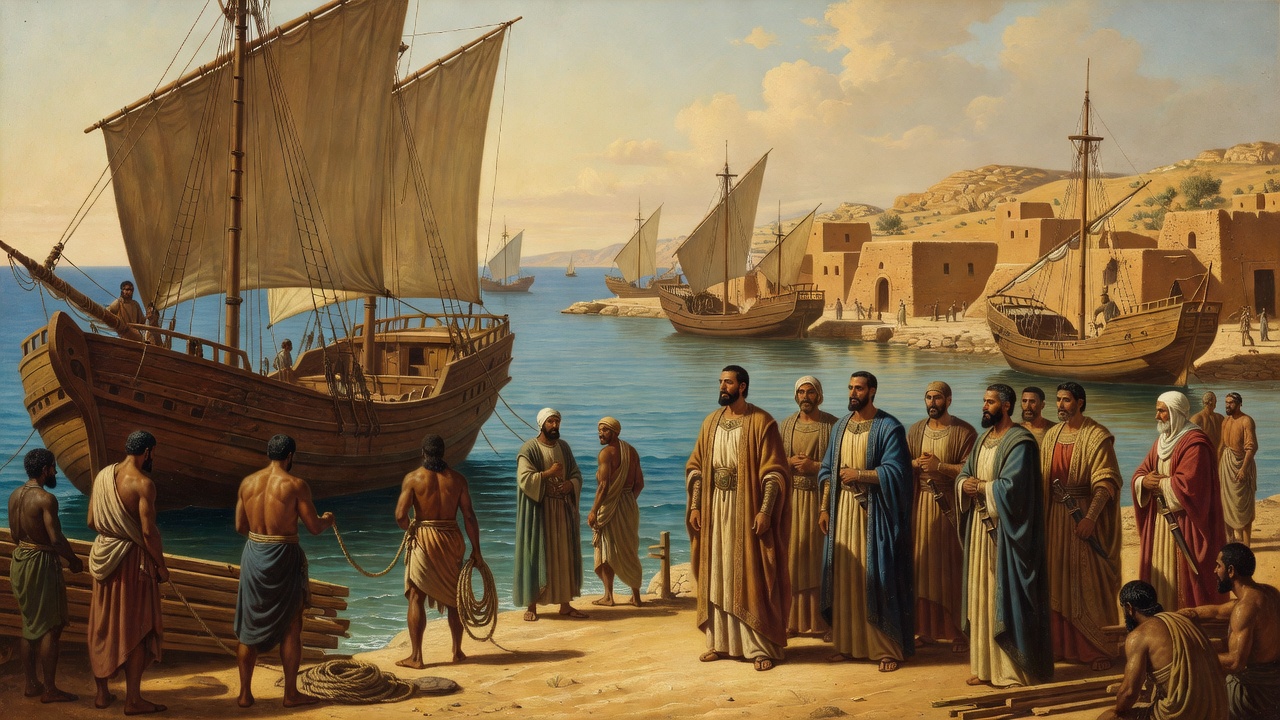
17Mgbe ahụ, Solomọn gara Eziọn Geba na Elat nke dị nʼọnụ osimiri, nʼala Edọm. 18Hiram zigaara ya ọtụtụ ụgbọ mmiri nke ndị ikom ya na-anya ụgbọ mmiri na-edu, bụ ndị maara ihe banyere ime njem nʼosimiri nke ọma. Ndị a, ha na ndị ikom Solomọn nyaara ụgbọ gaa Ọfịa site nʼebe ahụ bulatara eze Solomọn, ọlaedo ịdị arọ ya ruru puku kilogram iri na ise na narị atọ.
¿Sabías que…?
Las construcciones y la administración de Salomón
- Salomón fortificó lugares estratégicos en su reino, incluidos Bet-horón la de arriba y Bet-horón la de abajo para proteger el paso de Jerusalén a la llanura costera, además de Tadmor (más tarde conocida como Palmira) en el desierto sirio.Fuentes: el propio texto bíblico · Beth-horon · Tadmor
- Salomón trasladó a su esposa, la hija de Faraón, de la Ciudad de David a un palacio propio, afirmando que cualquier lugar donde hubiera estado el arca del Señor era sagrado.Fuentes: el propio texto bíblico · Daughter of Pharaoh
- En alianza con el rey Hiram de Tiro, marineros experimentados navegaron desde Ezión-géber y Elat, en la costa de Edom, junto con los siervos de Salomón hacia Ofir, trayendo de regreso 450 talentos de oro.Fuentes: el propio texto bíblico · Hiram
Notas escritas con ayuda de IA a partir de fuentes abiertas (Theographic Bible Metadata, CC BY-SA 4.0; Easton’s Bible Dictionary, dominio público) y revisadas antes de publicarse.
Lugares de este capítulo
- Hamath · Hoy: Hama · 35.136, 36.750 · versículo 4
- Tadmor · Hoy: Palmyra · 34.547, 38.274 · versículo 4
- Lower Beth-horon · Hoy: Beit Ur al Tahta · 31.895, 35.084 · versículo 5
- Upper Beth-horon · Hoy: Beit Ur al Fauqa · 31.886, 35.114 · versículo 5
- Jerusalem · 31.777, 35.234 · versículo 6
- Lebanon · 33.540, 35.584 · versículo 6
- City of David · 31.774, 35.236 · versículo 11
- Edom · 30.746, 35.604 · versículo 17
- Red Sea · Hoy: Gulf of Aqaba · 28.750, 34.750 · versículo 17
Solo aparecen lugares identificados con alta confianza (90 % o más según las fuentes académicas reunidas por OpenBible). Mapa de la época: DARE (Digital Atlas of the Roman Empire), CC BY 4.0; mapa actual: © colaboradores de OpenStreetMap; lugares: OpenBible.info (CC BY 4.0).
Créditos y licencia de esta traducción
Biblica® Baịbụlụ Nsọ nʼIgbo Ndị Ugbu a nke dịrị onye ọbụla ịgụ The Holy Bible in the Igbo language of Nigeria: Biblica® Baịbụlụ Nsọ nʼIgbo Ndị Ugbu a nke dịrị onye ọbụla ịgụ copyright © 2020 Biblica, Inc. Language: Igbo Contributor: Biblica, Inc. This work is made available under the Creative Commons Attribution-ShareAlike 4.0 International License (CC BY-SA). To view a copy of this license, visit http://creativecommons.org/licenses/by-sa/4.0 or send a letter to Creative Commons, PO Box 1866, Mountain View, CA 94042, USA. Biblica® is a trademark registered by Biblica, Inc., and use of the Biblica® trademark requires the written permission of Biblica, Inc. Under the terms of the CC BY-SA license, you may copy and redistribute this unmodified work as long as you keep the Biblica® trademark intact. If you modify a copy or translate this work, thereby creating a derivative work, you must remove the Biblica® trademark. On the derivative work, you must indicate what changes you have made and attribute the work as follows: “The original work by Biblica, Inc. is available for free at www.biblica.com and open.bible.” Notice of copyright must appear on the title or copyright page of the work as follows: Biblica® Baịbụlụ Nsọ nʼIgbo Ndị Ugbu a nke dịrị onye ọbụla ịgụ Ndị Biblica, Inc. degharịrị ya nʼafọ © 1980, 1988, 2019, 2020 Biblica® Open Igbo Contemporary Bible™ Copyright © 1980, 1988, 2019, 2020 by Biblica, Inc. “Biblica” bụ akara e ji mara ụlọ ọrụ a, nke edebanyere dịka iwu si kwado nʼụlọ ọrụ dị nʼobodo United States, ebe a na-enye akara a na ikike maka azụm ahịa ndị Biblica, Inc. Ọ bụ ha ka e nyere ikike idenye ya. “Biblica” is a trademark registered in the United States Patent and Trademark Office by Biblica, Inc. Used with permission. You must also make your derivative work available under the same license (CC BY-SA). If you would like to notify Biblica, Inc. regarding your translation of this work, please contact us at https://open.bible/contact-us. This translation is made available to you under the terms of the Creative Commons Attribution Share-Alike license 4.0. You have permission to share and redistribute this Bible translation in any format and to make reasonable revisions and adaptations of this translation, provided that: You include the above copyright and source information. If you make any changes to the text, you must indicate that you did so in a way that makes it clear that the original licensor is not necessarily endorsing your changes. If you redistribute this text, you must distribute your contributions under the same license as the original. Pictures included with Scriptures and other documents on this site are licensed just for use with those Scriptures and documents. For other uses, please contact the respective copyright owners. Note that in addition to the rules above, revising and adapting God's Word involves a great responsibility to be true to God's Word. See Revelation 22:18-19. 2023-04-12
Fuente: http://ebible.org/ibo/ · eBible.org