Cantares 2
Habo nalolene bi gahenge lo winigo ogo · Toca un versículo para ver sus referencias cruzadas.
1I̱ Sarono dindi ira teha palawaya minana anda haragobi bedo.
I̱ hari bu karuha dindi ulini ngaruha palawaya dedagobi bedogoni.
Igirime iba gana lenego ogo
2Datani anihe bu karu dombeneha palawaya hagadagua
i̱ lawini biago ibu wali dege dombeneha bayale birarua.
Wandarime iba gana lenego ogo
3Ira dege dombeneha ira lini bayale daga mbira hagadagua
i̱naga yamali biago ibu agali dege dombeneha biatago nahe kagoni.
Ni tandagabi darangi i̱ ira ogoni teneha gumba birulene hameore ledo.
Ira ogoninaga lini bayale dedago do narogola i̱naga ne harigaha dendeore biagane.
4Ibunaga anda heagoha tomo timbuni dawa wiagoria ibugua i̱ haru piya.
Tomo nagane anda biagoha labolabo bayaleorerume yári bidagonaga turu haradagua
ibugua i̱ gubaliniore hayagonaga turuho kogoni.
5I̱ lawini i̱na ibu gubaliniore kogola i̱naga kuni gedaore halu hongo naharuago
aiore ira linirubi gerebi lini do gembe binirubi i̱ hongo helonaga nabehe bedo.
6I̱ lawini biagome ibunaga gi lehagome i̱naga mahayagi yani halu
ibunaga gi tigagome i̱naga tinginini yani haya.
7Yarusaleme waliru-o tígua nogo gabua mini dia karu mitangi bialu
mbira nabuleore lalu i̱hondo bi lo widaba.
Mbirale ogoni iyanagago tígua iya mo mogola howa
gubalini holene mo dala hangu hangu nahalimu. I̱ Sarono dindi ira teha palawaya minana anda haragobi bedo.|src="Lear 030.tif" size="1" ref="(2.1)"
Iba gana mende
Wandarime iba gana lenego ogo
8I̱ lawini i̱ bedoria ibaruane hale ko.
Ibu amura hari bare wiagohayagi howa
pogola edene bima gerai lalu ibaruane hale ko.
9Ibu gerai lalu biango dudu aleme dai lagadagua lalu
nogo bulumaga wangabe daliaheme dai lagadagua lalubi ibarua.
Abale ibalu anda mandaha íbu kago hendedo.
Íbu howa ibu windoha handa anda haragoni.
10Handa anda howa ibugua i̱hondo bi langiragoni.
Igirime iba gana lalu ladai binigo ogo
I̱naga lawini gubalini-o tagira íbu.
Yamali-o iya haru áyu mbaliya tagira íbu.
11Iba dalu to hayago dalunaga gi nahabe.
12Áyu ogoni dindi bibahendeha palawaya dame kago
ai iba gana lolenengida.
Ega bedarume turu halu bi taratara lagalaga biarua.
13Ira poge ale karume lini dalu ibirarua.
Pu kuabu tara tara irabuha karume lini dagadaga biaruago
ai palawaya uruninaga nga baya taraoreda.
I̱naga lawini gubalini-o tagira íbu.
Baya-o iya mbaliya tagira mbaibu.
14Í̠ andaga tamuha ega emenerume ibuni andaga ege kaba ngagoha bira do hagadagua bira do haridago.
Ainde í̠naga dengui baya hondoabago hondoliya tagira ibalu
í̠naga bi baya tara laruegobi hale holiya tagira íbu.
15Biango dudu emene bu karuni minu yani hadaba.
Iyanaga gerebi mabu gamaha anda ibuwa palawaya bayale dedaru mo ko holigo abale minadaba.
Wandarime iba gana lenego ogo
16I̱naga yamali ogoni ibu i̱ agalini kagola i̱ nde ibu one bedogoni.
Ibugua ibunaga nogo memeru palawaya bayale bu karu dombeneha tani nelo haru pu haga.
17Ibugua nogo meme biaru handayaho kane dege ni anda pialu dagare bulebira.
Hari bare hombene bu ngaruha nogo gabua mini diame gerai lalu ibagadagua
i̱ lawini-o í̠ abaleore ibabelo hameledo.
¿Sabías que…?
La Primavera y el Despertar del Amor
- Sarón era una fértil llanura costera que se extendía entre el mar Mediterráneo y las colinas al oeste de Jerusalén, célebre por su belleza y vegetación, lo que dio origen a metáforas como la rosa de Sarón.Fuentes: Saron · el propio texto bíblico
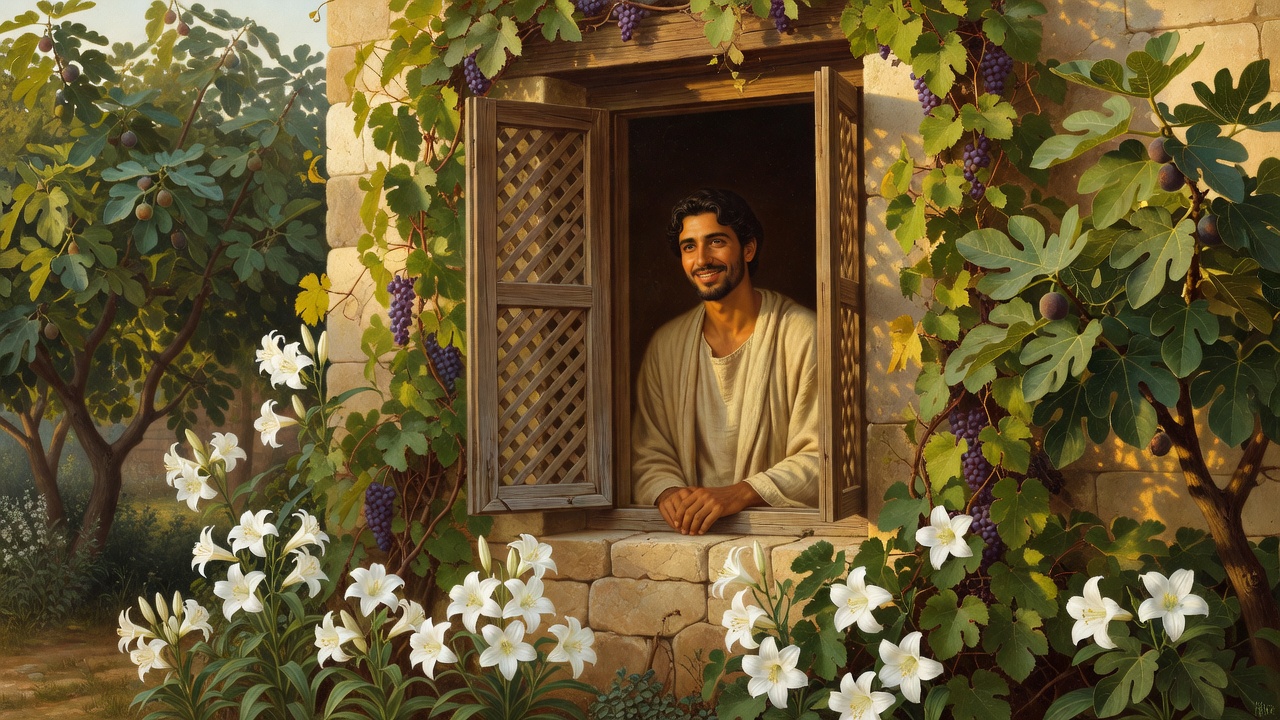
- El poema describe la llegada de la primavera mediante señales campestres, tales como el cese de las lluvias invernales, el arrullo de las tórtolas, los higos que maduran y las viñas en flor que debían cuidarse de los zorros.Fuentes: el propio texto bíblico
- La mujer apela repetidamente a las hijas de Jerusalén, formulando sus advertencias sobre el amor a través de figuras de la fauna silvestre, como gacelas y ciervas del campo.Fuentes: Jerusalem · el propio texto bíblico
Notas escritas con ayuda de IA a partir de fuentes abiertas (Theographic Bible Metadata, CC BY-SA 4.0; Easton’s Bible Dictionary, dominio público) y revisadas antes de publicarse.
Lugares de este capítulo
Solo aparecen lugares identificados con alta confianza (90 % o más según las fuentes académicas reunidas por OpenBible). Mapa de la época: DARE (Digital Atlas of the Roman Empire), CC BY 4.0; mapa actual: © colaboradores de OpenStreetMap; lugares: OpenBible.info (CC BY 4.0).
Créditos y licencia de esta traducción
Habo nalolene bi gahenge lo winigo ogo
The Holy Bible with Deuterocanon in the Huli Language of Papua New Guinea
Buk Baibel long tokples Huli long Niugini
Copyright © 1983, 1991, 2002 Bible Society of Papua New Guinea
℗ Faith Comes by Hearing
Language: Huli
Translation by: Bible Society of Papua New Guinea
This translation is made available to you under the terms of the
Creative Commons Attribution-Noncommercial-No Derivatives license 4.0.
You may share and redistribute this Bible translation or extracts from it in any format, provided that:
You include the above copyright and source information.
You do not sell this work for a profit.
You do not change any of the words or punctuation of the Scriptures.
Pictures included with Scriptures and other documents on this site are licensed just for use with those Scriptures and documents.
For other uses, please contact the respective copyright owners.
2014-12-11
Fuente: http://png.bible/hui/ · eBible.org