Salmos 129
Habo nalolene bi gahenge lo winigo ogo · Toca un versículo para ver sus referencias cruzadas.
Isaraelealirume waitigi bu hearu mo ko helonaga Anduane Homogohondo bi lenego ogo
1Isaraelealiru-o bambaore howa tí waitigirume pigane hemingi howa
mo ko hama ibalu haabo henego te langibe.
2I̱na í̠hondo langialu lalu,
I̱ daliahe dege hewangi
waitigime mo ko hama ibalu haabo henego áyu kogoni.
Tigua ani binigoyu i̱ bope nahe kogoni.
3Tigua i̱ pu payini tibume minu bayagola
i̱naga tingini erembiraha poda gaibu baga biya.
I̱naga tingini bayago dere tibu bene wiadagua luni biagimbu bigi bialu
iba ganarua ale pupe haga biya.
4Tigua ani biyagoyu Anduane Homogo ibu tigabiore kagome
i̱ biamogo bialu waitigi biarunaga garabaya biabe ale bialu haga ndo
i̱ golope hene ko, lalu langerogoni.
5Waitigirume Saiono handabe manga haga bu karu
tini daluha bo taliadai bimi̱ya hamelo ko.
6Tiore anda dangini gondo anda ho hagadagua hayagua bayaleda.
Mbiralime gondo ogoni dugu wanahe kaore minalu abale gau laga.
7Gondo anda dangini anda hene ogoni
mbiralime gandu lowa mo kabubu yalu napiaga ndobe.
8Wali agali kaware bolangua halu porarume tihondo ogodagua lalu,
Anduane Homogohanda tí mo bayale helo.
Iname nde Anduane Homogonaga minini howa tí mo bayale helo hameledama, lalu nalolebira ndobe.
¿Sabías que…?
Perseverancia en la Aflicción y el Destino de los Enemigos de Sión
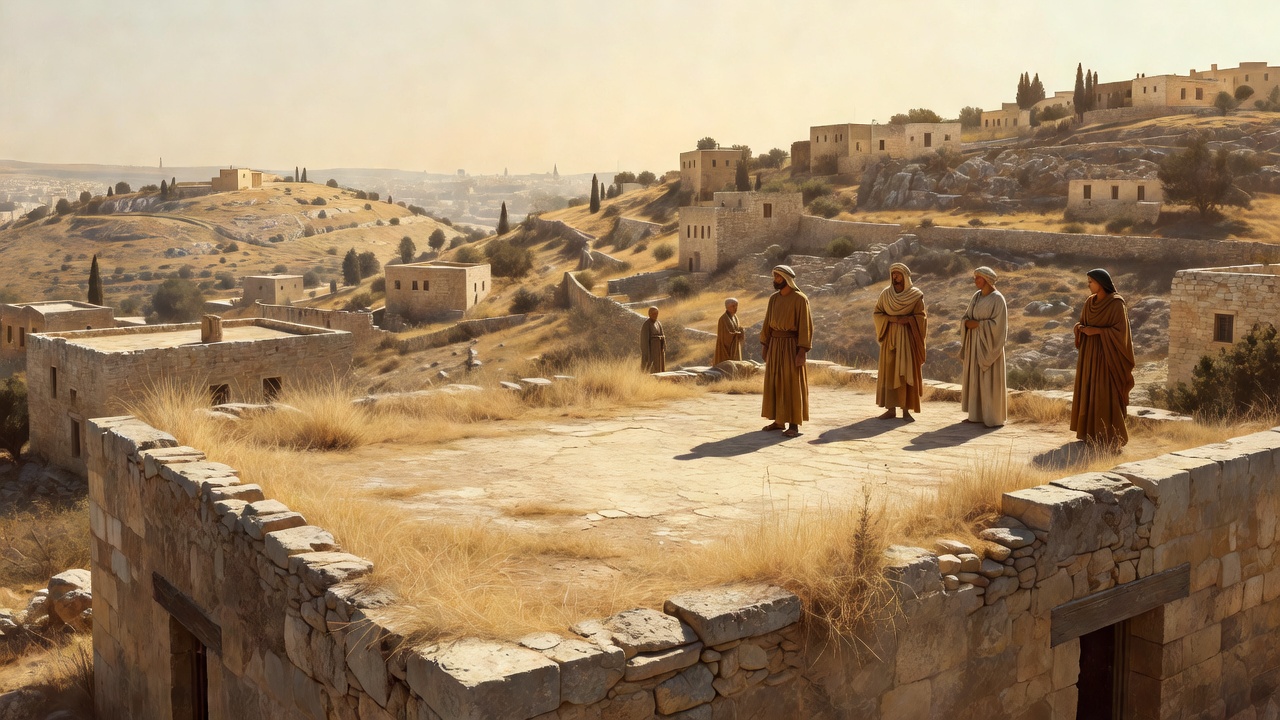
- La imagen de la hierba en los tejados refleja la arquitectura antigua, donde los techos planos se cubrían con tierra apisonada. Las semillas brotaban tras las lluvias, pero debido a la escasa profundidad del suelo y al sol directo, la hierba se secaba antes de crecer o ser cosechada.Fuentes: el propio texto bíblico
- La bendición descrita en el versículo 8 alude a una costumbre del antiguo Israel, en la que los transeúntes saludaban y bendecían a los segadores que trabajaban en los campos de cultivo.Fuentes: el propio texto bíblico
- Sión era la colina de Jerusalén donde el rey David edificó su fortaleza, y en la poesía bíblica representa la morada de Dios y a Su pueblo.Fuentes: el propio texto bíblico · Zion
Notas escritas con ayuda de IA a partir de fuentes abiertas (Theographic Bible Metadata, CC BY-SA 4.0; Easton’s Bible Dictionary, dominio público) y revisadas antes de publicarse.
Lugares de este capítulo
Solo aparecen lugares identificados con alta confianza (90 % o más según las fuentes académicas reunidas por OpenBible). Mapa de la época: DARE (Digital Atlas of the Roman Empire), CC BY 4.0; mapa actual: © colaboradores de OpenStreetMap; lugares: OpenBible.info (CC BY 4.0).
Créditos y licencia de esta traducción
Habo nalolene bi gahenge lo winigo ogo
The Holy Bible with Deuterocanon in the Huli Language of Papua New Guinea
Buk Baibel long tokples Huli long Niugini
Copyright © 1983, 1991, 2002 Bible Society of Papua New Guinea
℗ Faith Comes by Hearing
Language: Huli
Translation by: Bible Society of Papua New Guinea
This translation is made available to you under the terms of the
Creative Commons Attribution-Noncommercial-No Derivatives license 4.0.
You may share and redistribute this Bible translation or extracts from it in any format, provided that:
You include the above copyright and source information.
You do not sell this work for a profit.
You do not change any of the words or punctuation of the Scriptures.
Pictures included with Scriptures and other documents on this site are licensed just for use with those Scriptures and documents.
For other uses, please contact the respective copyright owners.
2014-12-11
Fuente: http://png.bible/hui/ · eBible.org