Mateo 9
Hset Hadròeh · Toca un versículo para ver sus referencias cruzadas.
Broq brêh ka mangai pen
1Chuaq Jesus loh taboang wìh hlài pah tau diac raxìq, haq hlài dèh ta plài. 2I wì tòng aràng ka haq moeq ngai pen kùi ta dra drah. Chuaq Jesus hnoq wì aih i manoh lùi, Haq doe ka mangai pen: “Ùh dùh yùq dèh kon, yiniq lui kon khoe jah caqnaih.” 3Jò aih, i toq ƀiaq ngai ma hnài ranenh oe ta aih, wì haq hèm ta manoh: Mangai kô capoch joq loq hanhèq. 4Yàng Chuaq Jesus loq ka manoh wì haq hèm cleq, haq hi doe rameh: “Hagleq ta manoh pì majah hèm qmèq qmang aih? 5Baiq nà bàu kô: moeq aih doe “Dìq ka yiniq lui kon khoe caqnaih, tàng ùh meh doe drah yòng cadiang lam beq, maleq ma yeo hlàu ka tapoch? 6Mahaq au waq ka pì loq Kon Mangai oe ta crŏng taneh kô i cwìang đòeq caqnaih yiniq lui”. Khoe aih, Chuaq Jesus thê mangai pen: “Yòng beq, xùi da ìh dra drah qmat hlài ta hnem.” 7Mangai pen padinh yòng hlài dèh ta hnem. 8Dìq ka phù cròng hnoq kan halac aih, mangai leq mangai meh crè đeh hra, rai manè apôi Boc Plình khoe am ka kon mangai cwìang itai qmang aih.
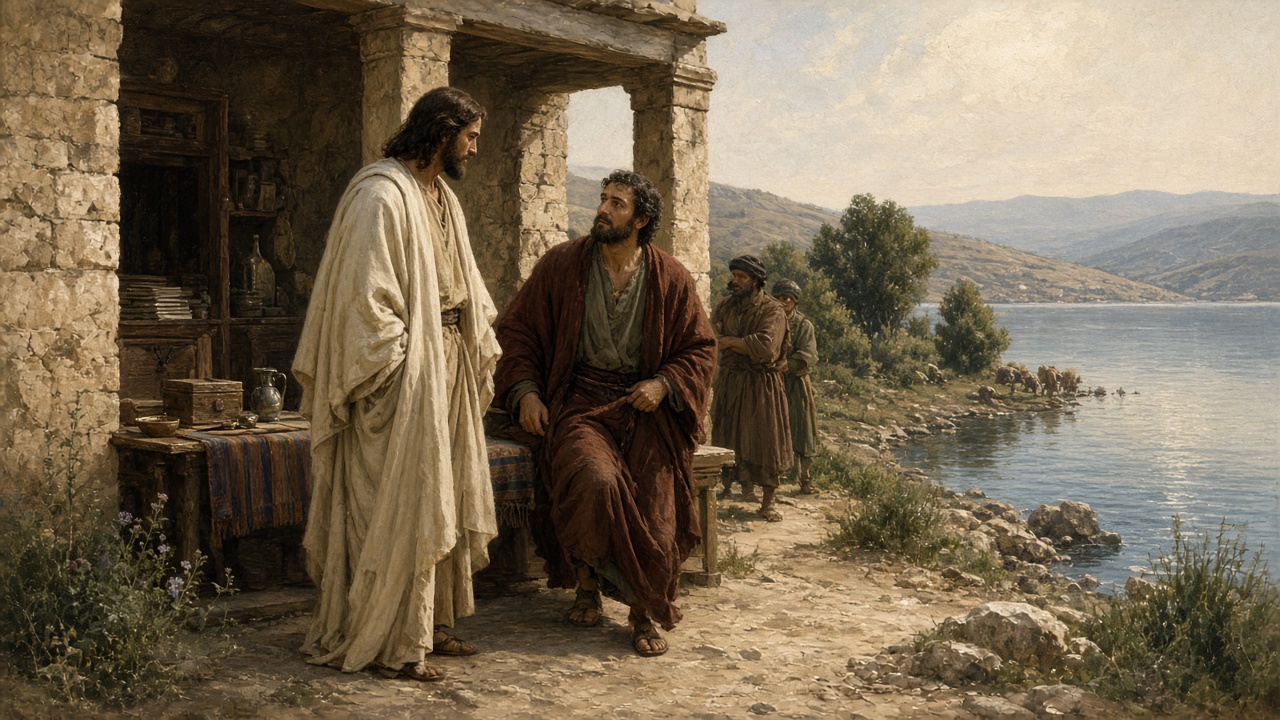
9Jò Jesus lam khoe ka nòe aih, Haq hnoq moeq ngai yiniq haq Mathio qnang hangui tanòe hnem yŏc thèq, Chuaq Jesus creo ka haq: “Drah lam tiaq au”, haq aih padinh yòng, lam tiaq Chuaq Jesus.
10Yàng jò wì qnang hangui acaq ta hnim Mathio, i bàc ngai yŏc thèq xam ƀài mangai ùh wìa trùh acaq moeq qmang ti Chuaq Jesus xam ƀài mangai tiaq hŏc haq. 11mangai Pharisi hnoq qmang aih, wì haq capoch ka ƀài tiaq hŏc Chuaq Jesus: Hagleq mangai hnài da pì qmat majah hangui acaq pajùm ti ƀài mangai yŏc thèq xam ti ƀài mangai ùh wìa? 12Chuaq Jesus tàng bàu aih, haq doe ka vì: “Mangai tadêh ma i waq mangai broq jreo, mangai ùh hrŏc ma waq ka mangai broq jreo. 13Lam beq, rai boq ngan bàu kô anoe cleq: Au enh kan loq waq, au ùh ngèh trùh ramènh tadreo. Majah qmang aih, au trùh ta kô ùh xài đòeq creo ka ƀài mangai taq atoq mahaq đòeq creo ka mangai i yiniq lui.”
14Jò aih, ƀài mangai tiaq hŏc Jon lam chaq Chuaq Jesus, wì bòch: Hagleq nhèn xam ƀài mangai Pharisi apàm ka acaq, yàng da ƀài mangai ma tiaq hŏc Ìh aih ùh dùh apàm ka acaq? 15Chuaq Jesus padreo bàu: “Jò cla kon ŏng oe raq oe mòeq qmang ti wì bua haq lam acaq yiniang, wì aih mangò qmang leq ma wìa? Mahaq trùh hì leq wì hi qnung đac cla kon ŏng, jò aih èh bua haq ma apàm ka acaq. 16Ùh i ka cabô yŏc ahyah neo đòeq clep tanòe eo kùn, tàng joq broq qmang aih haqnech maneo aih èh haq tadùng hyah hloe ka blah eo, nòe hyah aih yeo qmèq tam. 17Hadai qmang aih, ùh i mangai leq yŏc alac neo ùc ta abôq akia dùnh, tàng broq qmang aih, abôq aih padah, alac aih ta-ùc, abôq aih hi raliang. Mahaq alac neo wì ùc ta abôq akia neo, aih èh ma hi jah wèq dìq baiq.
Kon cadrì Jairu xam mangai craq cadrì dahrôq mahim
18Jò Chuaq Jesus qnang tapoch qmang aih, i moeq ngai wèq hnem tagop qyoh cadiang mùt, hacùn cràng enh ngèa ka Chuaq Jesus rai anoe: Kon cadrì au neo pat, au canòm đeh ka Ìh trùh, yŏc tì bèq chac haq, aih èh haq jah rìh hlài. 19Chuaq Jesus hi yòng lam, ƀài mangai tiaq hŏc hadailam ti haq aih.
20Hanoh jò aih diq, i moeq ngai gucadrì, haq loh ka dahrôq mahim khoe jah mòeq jàt baiq hanam, thia haten enh rù bèq haqmai eo Chuaq Jesus. 21Majah qmang aih, haq xan hèm yôt đeh ta manoh: Tàng joq au jah bèq đeh toq haqmai eo haq raq, au loq đeh jah brêh. 22Chuaq Jesus wìh hlài, hnoq gucadrì aih, Haq doe: “Ùh dùh yùq, toq cajap manoh oq! Manoh lùi da kon khoe broq kon jah brêh”, mangai cadrì aih jah brêh hloe jò aih raq.
23Jò Chuaq Jesus trùh hnim mangai wèq hnim tagop, hnoq ƀài mangai hlui taliaq, hnoq wì broq ma tagruàng. 24Haq doe ka wì: “Pì loh enh gùng beq, kon cadrì qyoh kô ùh i cachìt, haq qnang kùi”. Tàng bàu aih wì do halê ka Haq. 25Jò wì aih khoe loh dìq enh gùng, Chuaq Jesus thia carùp tì kon qyoh aih haq hi yòng hangui. 26Bìac kô, jàp cròng aih hìa đeh hra.
Broq brêh ka mangai ùh xau, mangai làu
27Chuaq Jesus loh enh aih, i baiq ngai ùh xau tiaq haq rai creo: Kon bùa Dawit! Ha-och ka ma diq. 28Jò khoe mùt ta hnim, wa aih trùh, Chuaq Jesus bòch wa haq: “Chôp lùi au jah broq am ka chôp trong chôp ma ngèh kô qmòh?” Wa aih padreo bàu: Joq ma lùi Ìh broq jah. 29Chuaq Jesus bèq mat wa aih rai doe: “Tiaq manoh chôp khoe lùi, chôp jah qmang aih.” 30Mat wa haq jah xau hoq hlài. Chuaq Jesus yŏc bàu panhet wa haq: “Ngan oq, chôp ùh dùh dôq cabô loq bìac kô!” 31Mahaq, loh bu khoe enh hnim, wa anoe yiniq Haq jàp jìa tagùng aih.
32Jò qnang loh enh aih, wì aràng ka Chuaq Jesus moeq ngai làu i kiac oe ta chac haq. 33Jò Chuaq Jesus khoe drùh qnoh kiac, mangai aih jah tapoch. Ƀài phù cròng hamàih đeh hra wì ta anoe ka da bau: Qnhòq lah hnoq yiniq qmang kô tanòe Isorali. 34Mahaq da mangai Pharisi doe: Haq qmat yŏc cwìang enh cla craq kan kiac đòeq drùh kiac.
35Chuaq Jesus lam rìm gùng, rìm plài, hnài roc hnim tagop qyoh, anoe ka wì loq bàu lem diac Boc plình, rai broq brêh bàc ngai yinìq, ùh hrŏc. 36Jò Chuaq Jesus hnoq ƀài mangai bàc, ta manoh haq ha-och ka wì, majah qmang aih, wì nanxa, prah priang, tìah ka trìu ùh i ka mangai ban. 37Haq doe ka ƀài mangai tiaq hŏc rameh: Qmau kô bàc, mangai gat aih toq biaq, 38Qmang aih, drah creo ka Cla craq qmau qnoh tam bình gat loh ta ruàng haq.
¿Sabías que…?
Misericordia, curación y vino nuevo
- Mateo, hijo de Alfeo, era publicano, es decir, recaudador de impuestos, en Cafarnaúm. Jesús, al subir desde la orilla del lago, pasó por el puesto de impuestos donde Mateo estaba sentado y le dijo: “Sígueme”. Antes se lo conocía como Leví; ese mismo día ofreció un gran banquete, descrito como una despedida, a Jesús, a los discípulos y, probablemente, a muchos de sus antiguos compañeros.Fuentes: Matthew · el propio texto bíblico
- Quienes preguntan por qué ellos y los fariseos ayunan tan a menudo, mientras los discípulos de Jesús no ayunan, son discípulos de Juan el Bautista. A Juan se lo llama el precursor; era de linaje sacerdotal, su padre Zacarías sacerdote del turno de Abías y su madre Elisabet una de las hijas de Aarón.Fuentes: John the Baptist · el propio texto bíblico
- Una cronología sitúa la curación del paralítico, el llamado de Mateo, la pregunta sobre el ayuno y la parábola de los odres en el año 28 d. C.Fuentes: Healing the Man with Palsy · Jesus Calls Matthew · Fasting Question · Parable of the Winseskins
Notas escritas con ayuda de IA a partir de fuentes abiertas (Theographic Bible Metadata, CC BY-SA 4.0; Easton’s Bible Dictionary, dominio público) y revisadas antes de publicarse.
Lugares de este capítulo
- Sea of Galilee · 32.819, 35.590 · versículo 1
Solo aparecen lugares identificados con alta confianza (90 % o más según las fuentes académicas reunidas por OpenBible). Mapa de la época: DARE (Digital Atlas of the Roman Empire), CC BY 4.0; mapa actual: © colaboradores de OpenStreetMap; lugares: OpenBible.info (CC BY 4.0).
Créditos y licencia de esta traducción
Hset Hadròeh
The New Testament in the Hre language of Vietnam, translated by Baq Thi
Copyright © 2024 Baq Thi
Language: (Hre)
This translation is made available to you under the terms of the
Creative Commons Attribution Share-Alike license 4.0.
You have permission to share and redistribute this Bible translation in any format and to make reasonable revisions and adaptations of this translation, provided that:
You include the above copyright and source information.
If you make any changes to the text, you must indicate that you did so in a way that makes it clear that the original licensor is not necessarily endorsing your changes.
If you redistribute this text, you must distribute your contributions under the same license as the original.
Pictures included with Scriptures and other documents on this site are licensed just for use with those Scriptures and documents.
For other uses, please contact the respective copyright owners.
Note that in addition to the rules above, revising and adapting God's Word involves a great responsibility to be true to God's Word. See Revelation 22:18-19.
2026-07-18
Fuente: http://ebible.org/hrebt/ · eBible.org