Génesis 29
Hset Hadròeh · Toca un versículo para ver sus referencias cruzadas.
Jacôp yŏc kon da Laƀan broq mai …
1Khoe aih, Jacôp hi lam hòm, èh haq trùh gùng ƀài mangai rìh ƀè mat mahì toc. 2Haq ngan hnoq mòeq toq diac adràm oe taqne đùng ruàng, ten aih i mòeq calùh trìu qnang kùi padài, majah qmang aih kô raq nòe wì am trìu ôq diac. Hmo ma padit ngah adràm kàn raya. 3Ƀài calùh trìu tagop dìq ta aih, khoe èh wì hi cadro qnoh hmo enh ngah diac jìang aih, am ƀài calùh trìu ôq diac khoe aih cadro hlài hmo ajang teo dùnh, gùp hlài ngah diac jìang.
4Jacôp bòch ƀài mangai ban trìu “Wì oh daq! pì oe taleq kô? Wì aih tèu: Nhèn trùh enh Charan. 5Haq bòch: Pì oh daq aloq ka Laƀan kon calô da Nacô loq ùh? wì doe: nhèn loq. 6Jacôp bòch tam: Haq aih i tadêh đeh loq ùh? Wì doe: Haq aih xôq tadêh, hatau Rachên kon cadrì haq qnang trùh deh ti ƀài calùh trìu. 7Jacôp doe: Hacô! trŏc oe sroeh qnhòq xài jò tiaq ahlài ƀài calùh trìu; qmang aih pi daq am ƀài trìu ôq diac beq khoe aih hi caqnaih haq lam acaq hòm. 8Wì tèu “Nhèn ùh jah broq qmang aih; ep gòm ƀài calùh trìu trùh tagop ma tôm dŏng òeq. jò aih èh men cadro hmo enh ngah diac jìang hu am bài trìu ôq diac.
9Jò haq oe raq capoch tuàng ti wì a, ih Rachên tiaq ƀài trìu baq haq khoe trùh, majah qmang aih haq aih la mangai ban trìu. 10Jò bu hnoq Rachên, kon adrùh Laƀan, dùch rađeh, aih haq hi thia ka haten cadro hmo loh khoe ka ngah diac jìang, am ƀài trìu da Laƀan dùch rađeh ôq diac. 11Khoe aih Jacôp hìp Rachên, èh hi hmoe cadêh; 12Èh hi doe ka Rachên loq đeh kô kon da Rêƀêca oh daq ka baq haq. Rachên cadàu hlài anoe deh ka baq loq. 13Bu tàng doe Jacôp kon calô da oh cadrì rađeh, aih Laƀan cadàu loh trùh enh ngèa haq, rai cwat rai hìp, khoe aih akhen mùt dèh tahnim. Jacôp taqmon hlài rìm yiniq ma khoe trùh. 14Laƀan doe: Mon kô joq mahim jan au. Khoe aih Jacôp oe dèh ti dùch mòeq khê.
15Khoe aih Laƀan doe “Mon kô aih hadròng da dùch, ma wìa patìh dech ka dùch qmòh? Bac baha toq leq doe ka dùch loq. 16Jò aih, Laƀan i baiq ngai kon adrùh, mangai ma daq yiniq haq Lê-a, mangai ma oh yiniq haq Rachên. 17Mat da Lê-a ùh nèn, yàng Rachên aih chac haq hi alàng alaiq, hadrò pàt lem lình. 18Jacôp xa-och ka Rachên, dài haq majah doe: Taiq Rachên kon ùch ìh, au patìh ka ìh tapèh hanam. 19Laban tèu: Dùch am haq yŏc mon aih ma hnau đòeq haq yŏc mangai qnoeq; oe tacô ti dùch. 20Qmang aih taiq Rachên, Jacôp ep patìh tapèh hanam. Mahaq xa-och ka Rachên, haq ngan tapèh hanam budàng baiq piq hì.
21Atìq ka aih Jacôp doe ka Laƀan: Jò ma pajaq ka au khoe dìq. Aleq manòeq kô dùch jao da au mai beq, au hu thia deh ti haq. 22Laƀan akhen ka wì plài, padon qnoh yiniang; 23trùh di xèq, yŏc Lê-a kon cadrì da haq am ka Jacôp, khoe aih Jacôp hi thia ti haq 24Laƀan thê Xinƀa aih la mangai hapŏng cadrì tiaq patìh ka Lê-a, kon cadrì haq. 25Trùh sroq atìq, men loq aih la Lê-a, Jacôp doe ka Laƀan: Ìh khoe broq ka au cleq qmang kô? Ma ùh xài taiq Rachên au majah patìh ka hnim ìh qmòh? Gleq ìh majah qnùt au?. 26“Laƀan doe: Xài noe haq gùng kô, ùh jah am mangai ùch yŏc ŏng adroe, mangai daq atìq. 27Drah acaq oe ti haq qmat jah mòeq tuàn beq, khoe au hi am hloe mangai ma tau; mahaq mangai ma tau aih mon ep patìh tam ka dùch tapèh hanam hòm. 28Jacôp broq tiaq bàu aih, acaq oe ti Lê-a jah mòeq tuàn, Laƀan hi am Rachên kon cadrì haq yŏc Jacôp. 29rai thê Ƀila mangai hapŏng tiaq patìh ka Rachên kon dadeh.
30Jacôp xan thia deh ti Rachên, ha-och deh ka haq ùh hnau ka Lê-a. Qmang aih, Jacôp patìh tam ka hnim Laban tapèh hanam hòm.
Lê-a ha-uang ka Jacôp pôn toq kon calô …
31Chuaq Jêhowa hnoq Jacôp git đac ka Lê-a, hi am haq jah ha-uang; yàng Rachên aih loh ka xon. 32Lê-a hadràp, ha-uang mòeq ngai kon calô, yiniq dèh ka kon la Ruƀên, majah qmang aih haq doe “Chuaq Jêhowa khoe hnoq kan xalep au; manòeq kô ŏng hi loq waq deh ka au. 33Haq hadràp hòm èh ha-uang mòeq ngai kon calô, haq yiniq deh kon la Simê-ôn, haq doe: Chuaq Jêhowa i tàng loq wì git ka au, dài majah am tam ka au mangai kô. 34Haq hadràp hòm ha-uang tam mòeq toq kon calô, haq doe: yàng kô èh ŏng pi taclah ka au, majaq qmang aih au khoe ha-uang ka haq piq ngai kon calô, aih ìq haq majah yiniq deh ka kon la Lêwi. 35Haq hadràp hòm, ha-uang mòeq ngai kon calô, haq doe: Yàng kô au manè apôi Chuaq Jêhowa; taiq qmang aih haq majah yiniq dèh ka kon aih la Jiuđa, khoe aih haq pi hadràp hòm.
¿Sabías que…?
Los matrimonios de Jacob en Harán
- Jacob huyó a Harán, donde vivía su tío Labán, en la tierra de la gente del oriente. La ciudad, también llamada ciudad de Nacor e identificada con Harran, estaba junto al Belik, afluente del Éufrates, unas setenta millas arriba de la unión del Belik con ese río, en la Alta Mesopotamia. Labán era hijo de Betuel y nieto de Nacor, hermano de Abraham; la hermana de Labán, Rebeca, era la esposa de Isaac.Fuentes: Haran · Laban · Nahor (brother of Abraham) · el propio texto bíblico
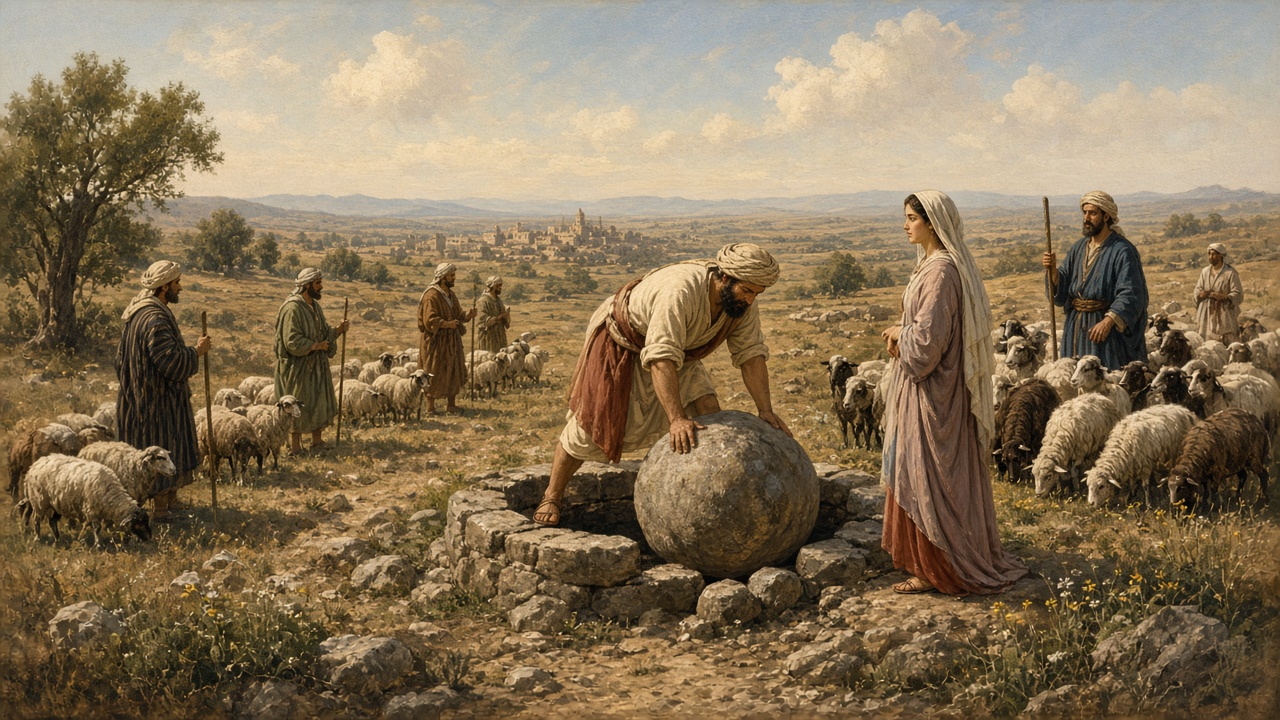
- El pozo estaba cerrado por una gran piedra, que los pastores apartaban solo después de que se habían reunido todos los rebaños, y luego volvían a colocar en su lugar. Raquel, cuyo nombre se da como “oveja”, era pastora y traía las ovejas de su padre; Jacob, que también había vivido como pastor, apartó la piedra y dio de beber al rebaño de su tío.Fuentes: Rachel · Jacob (Israel) · el propio texto bíblico
- Lea, la hermana mayor, es llamada “cansada”, y se la describe como de ojos débiles, o tiernos; Raquel, la menor, era bien formada y hermosa. Jacob sirvió siete años por Raquel, pero en el banquete de la noche Labán le dio a Lea, diciendo que allí no era costumbre entregar en matrimonio a la hija menor antes que a la mayor, y luego le dio a Raquel por otros siete años: catorce en total. Los primeros hijos de Lea fueron Rubén, cuyo nombre se da como “He aquí un hijo”, y después Simeón, Leví y Judá; al nombrarlos, habló de que el SEÑOR veía su aflicción, de que oía que ella no era amada, de que su esposo se apegaría a ella y de su alabanza al SEÑOR.Fuentes: Leah · Rachel · Reuben · el propio texto bíblico
Notas escritas con ayuda de IA a partir de fuentes abiertas (Theographic Bible Metadata, CC BY-SA 4.0; Easton’s Bible Dictionary, dominio público) y revisadas antes de publicarse.
Lugares de este capítulo
- East · Hoy: region around Amman · 31.955, 35.934 · versículo 1
- Haran · Hoy: Harran · 36.864, 39.033 · versículo 4
Solo aparecen lugares identificados con alta confianza (90 % o más según las fuentes académicas reunidas por OpenBible). Mapa de la época: DARE (Digital Atlas of the Roman Empire), CC BY 4.0; mapa actual: © colaboradores de OpenStreetMap; lugares: OpenBible.info (CC BY 4.0).
Créditos y licencia de esta traducción
Hset Hadròeh
The New Testament in the Hre language of Vietnam, translated by Baq Thi
Copyright © 2024 Baq Thi
Language: (Hre)
This translation is made available to you under the terms of the
Creative Commons Attribution Share-Alike license 4.0.
You have permission to share and redistribute this Bible translation in any format and to make reasonable revisions and adaptations of this translation, provided that:
You include the above copyright and source information.
If you make any changes to the text, you must indicate that you did so in a way that makes it clear that the original licensor is not necessarily endorsing your changes.
If you redistribute this text, you must distribute your contributions under the same license as the original.
Pictures included with Scriptures and other documents on this site are licensed just for use with those Scriptures and documents.
For other uses, please contact the respective copyright owners.
Note that in addition to the rules above, revising and adapting God's Word involves a great responsibility to be true to God's Word. See Revelation 22:18-19.
2026-07-18
Fuente: http://ebible.org/hrebt/ · eBible.org