Génesis 18
Hset Hadròeh · Toca un versículo para ver sus referencias cruzadas.
Bình plình trùh hmàih ka Apraham.
1Chuaq Jêhowa loh ti Apraham tanòe xèm long rayai da Mamrê, jò haq qnang haqngui ajang qmang traiq jò trŏc tôq dahì. 2Apraham qngoc ngan hnoq piq ngai oe ajang ngèa rađeh. Jò bu hnoq, patep ajang trong qmang haq tùh loh enh ngèa wì piq ngai aih, bla op rađeh ta haqneq, 3rai doe: Waiq Chuaq, tàng joq au jah xôq ramot enh ngèa Chuaq, joq au cali calo đeh qnàng, pì apaq lam hloe mahaq padòh mùt ta hnim hapŏng Chuaq. 4Dôq wì qnoh toq xit diac qnheo jènh pì rai padài ajang yàp long kô. 5Đòeq au qnoh mòeq calep ƀênh dôq pì acaq ka dràng cliac, khoe aih pì hi lam, xài aih raq pì majah thia ajang hnim mangai hapŏng pì kô. Wì aih doe: Broq beq, broq troeq bàu ìh ma khoe doe
6Khoe aih Araham drah mùt ta traiq thiaq ajang Sara haq doe: Drah rênh yŏc piq cađap dàc ma habùat jràu malem, khoe aih broq ƀênh. 7khoe aih haq drah cadàu trùh yŏc diac sùa pajòq, diac tôh ƀo maneo xam ƀo ma khoe pai; don qnoh enh ngèa ka wì aih. Wì aih hi acaq
9Wì aih bòch Apraham: Sara mai ìh taleq? haq tèu: hatau haq oe ta traiq. 10Mòeq ngai ta wì aih doe: Hanam èh wop jò kô, au wìh hlài tacô ti ìh, jò aih èh Sara mai ìh jah i mòeq toq kon. Sara oe jang qmang traiq enh rù ka wì aih, tàng ƀài bàu kô.
11Jò aih Apraham xam Sara dìq baiq khoe craq, hanam khoe bàc; Sara pi oe i cleq tìah ka gucadrì qnoeq. 12Sara do atùng ta manoh: Craq qmang ka au kô hlàu cleq ka oe jah kan lem bùi aih qmòh? Èh craq da au hanoh khoe craq!. 13Chuaq Jêhowa creo bòch Apraham: Gleq Sara majah do rai doe: Ajoq au khoe craq qmang kô dua oe jah ha-uang qmòh? 14i ka yiniq cleq Jêhowa ma broq ùh jah? Trùh jò ma khoe pajaq, ta mòeq hanam hòm, au wìh hlài ti ìh, èh Sara khoe i kon. 15Pàng crè pi cajaq dài Sara majah hangah: Au i do đeh taleq! Mahaq Haq doe: Joq qnàng ìh i do.
Apraham waiq dang am ka mangai ta Sôđom …
16Dìq ka wì aih yòng hulam, tangìa ta Sôđom. Apraham hadai đìh wì aih lam.
17Jêhowa doe: Laiq au ma cadoc ka Apraham yiniq cleq đeh ma padon broq qmòh? 18Majah qmang aih Apraham kô èh jah wìa mòeq diac kàn rai dêh raya; rìm diac ta crŏng taneh kô dìq canòm ka haq đòeq hujah xôq ramot. 19Au khoe ràih haq đòeq hu hnài ƀài kon hloe xam hnim haq wèq tiaq trong da Jêhowa, broq ƀài yiniq taq atoq hnhoh jang; aih èh Jêhowa hi broq đòeq xìt dèh bàu khoe tèu am ka Apraham. 20Chuaq Jêhowa doe: Bàu creo dang ta Sôđom ta Gômro joq khoe hrình hran, yiniq lui da wì gùng aih joq khoe gau. 21Au enh loh đòeq ngan, đòeq hnoq wì haq acaq oe ajoq tìah ka bàu ma creo dang trùh ta au loq ùh; tàng joq aih èh au jah loq.
22Èh, wì hi loh enh aih, lam ngèa ta Sôđom mahaq dua Apraham oe raq yòng enh ngeà ka Chuaq Jêhowa. 23Araham thia haten rai anoe: Chuaq Ìh jêh đac mangai taq atoq hloe ti mangai dù qmòh? 24Broq braiq ta plài loq i padam jàt ngai taq atoq, Chuaq dua jêh dŏng wì qmòh? Ma ùh xài ìh caqnaih ka plài aih taiq padam jàt ngai taq atoq oe ta plài aih qmòh? 25Wìa ka Chuaq broq qmang aih, jêh đac hloe mangai taq atoq pajùm ti mangai ngang dù; loh ka mangai taq toq budàng mangai dù. Ùh! Chuaq ùh jò leq broq qmang aih. Mangai ma hadrah dìq dŏng crŏng taneh, wìa ka ùh broq kan taq atoq? 26Chuaq Jêhowa tèu: Tàng au chaq jah padam jàt ngai taq atoq ta Sôđôm, taiq kan ha-och ka toq aih ngai au hi caqnaih dŏng dìq ka plài. 27Apraham doe hòm: Hiloq ka au kô loh enh taneh blo mahaq dua kàn clèm hu anoe ka Chuaq. 28Ta padam jàt ngai taq atoq aih troq capòch đac padam ngai, aih èh taiq padam ngai ma capòch aih Chuaq jêh dŏng mòeq plài qmòh Haq tèu bàu: Tàng au chaq jah pôn jàt padam ngai, au ùh jêh plài aih.
29Apraham dua cachian: Beq ta plài aih, i pôn jàt ngai taq atoq raq, aih èh qmang leq?; Haq doe: Taiq kan loq waq ka pôn jàt ngai aih, au ùh palùng plài. 30Apraham doe hòm: Au cali calo ka ìh, ìh apaq nòeh, aih èh au hu anoe: Broq braiq ta plài aih i piq jàt ngai raq, aih èh qmang leq? Haq doe: Tàng joq au chaq hnoq piq jàt ngai, aih èh au pi jêh đac hòm. 31Apram doe hòm: Au kô dua kàn clèm hu anoe ka ìh: Tàng joq i baiq jàt ngai raq aih èh qmang leq? Haq doe: Taiq kan ha-och ka baiq jàt ngai aih, au ùh palùng plài aih. 32Apraham doe hòm: Ìh apaq nòeh dôq au anoe tam mòeq yàng kô hòm: Tàng ta plài aih i padam ngai raq, aih ìh hèm qmang leq? Haq doe: Au dua pi jêh đac plài aih taiq kan ha-och ka padam ngai aih.
33Jò Chuaq Jêhowa khoe hêq ka capoch tuàng ti Apraham, aih Haq hi tŏc ta trŏc, Apraham hlài dèh ta traiq.
¿Sabías que…?
Visitantes en Mamre y un ruego por Sodoma
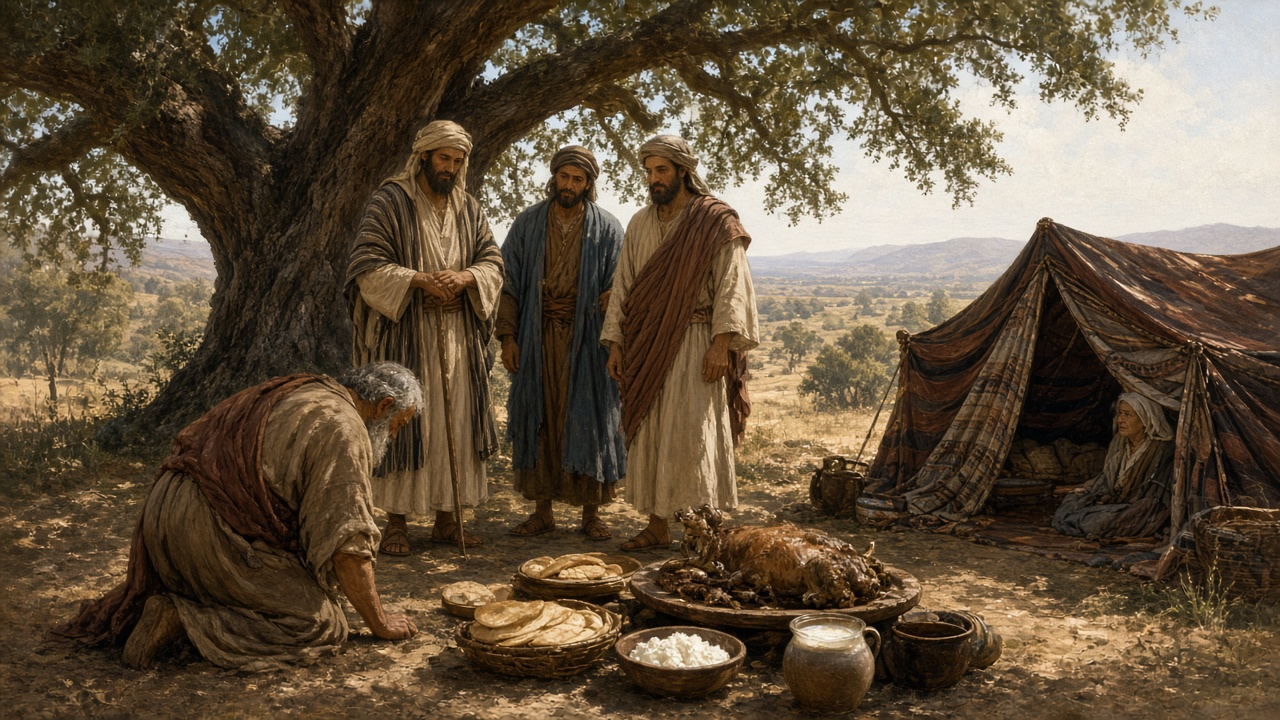
- En Génesis 18, el Señor apareció a Abraham junto a las encinas de Mamre, en el calor del día, mientras Abraham estaba sentado a la entrada de su tienda. Mamre era un jefe amorreo en alianza con Abraham. Abraham corrió al encuentro de tres hombres, se inclinó hasta el suelo, les ofreció agua para los pies y descanso bajo el árbol, y luego puso delante de ellos pan, un becerro tierno y escogido, cuajada y leche.Fuentes: el propio texto bíblico · Mamre
- Sara, la esposa de Abraham, recibe en el Diccionario Bíblico de Easton (1897) el sentido de “Princesa”; el diccionario dice que ese nombre le fue dado cuando se anunció que ella sería la madre del hijo prometido. En Génesis 18, el Señor dijo que volvería dentro de aproximadamente un año y que Sara tendría un hijo, aunque ambos ya eran ancianos y ella había pasado la edad de tener hijos. Ella se rio para sí y, por miedo, negó haber reído.Fuentes: Sarah · el propio texto bíblico
- Sodoma, una ciudad en el valle de Sidim, y Gomorra, una de las cinco ciudades de esa llanura, se mencionan juntas en Génesis 18 por el gran clamor contra su pecado grave. El Diccionario Bíblico de Easton (1897) dice que las ciudades de esa llanura probablemente estaban cerca unas de otras, hacia el extremo norte de lo que hoy es el mar Muerto, y explica Sodoma y Gomorra como “Quema; la amurallada” y “Sumersión”. Dos de los hombres se dirigieron hacia Sodoma, mientras Abraham se quedó y pidió al Señor que perdonara la ciudad por causa de los justos, bajando el número de cincuenta a diez.Fuentes: Sodom · Gomorrah · el propio texto bíblico
Notas escritas con ayuda de IA a partir de fuentes abiertas (Theographic Bible Metadata, CC BY-SA 4.0; Easton’s Bible Dictionary, dominio público) y revisadas antes de publicarse.
Créditos y licencia de esta traducción
Hset Hadròeh
The New Testament in the Hre language of Vietnam, translated by Baq Thi
Copyright © 2024 Baq Thi
Language: (Hre)
This translation is made available to you under the terms of the
Creative Commons Attribution Share-Alike license 4.0.
You have permission to share and redistribute this Bible translation in any format and to make reasonable revisions and adaptations of this translation, provided that:
You include the above copyright and source information.
If you make any changes to the text, you must indicate that you did so in a way that makes it clear that the original licensor is not necessarily endorsing your changes.
If you redistribute this text, you must distribute your contributions under the same license as the original.
Pictures included with Scriptures and other documents on this site are licensed just for use with those Scriptures and documents.
For other uses, please contact the respective copyright owners.
Note that in addition to the rules above, revising and adapting God's Word involves a great responsibility to be true to God's Word. See Revelation 22:18-19.
2026-07-18
Fuente: http://ebible.org/hrebt/ · eBible.org