Hechos 27
Hset Hadròeh · Toca un versículo para ver sus referencias cruzadas.
Phaulô lam boang trùh ta Rôma
1Jò khoe hatình, nhèn ep lam trong diac raxìq đòeq trùh ta diac Itali, wì hi jao Phaulô xam ƀài mangai oe tù maqnoeq hòm ka mòeq ngai cwan lình yiniq haq Juliut, aih cla craq lình wèq bùa kàn. 2Nhèn tŏc mòeq toq boang trùh enh Atramit padon lam bàc tình ti kênh diac raxìq Asi, loh lam enh aih i Aritac mangai Maxêđoan oe ta Têsalônica lam ti nhèn. 3Hì atìq nhèn trùh ta Siđôn, Juliut aih mangai lem manoh, haq am Phaulô lam hmàih dèh ƀài bua, dôq wì aih jah taqmroq palauq ka Phaulô ƀài dahwèq haq ma qnang nan. 4Enh aih, nhèn lam tiaq haqmai pleo Chipro, majah qmang aih glàm cayeo tàt qngèa. 5Jò nhèn lam khoe catech diac raxìq Silisi xam Bamphili, nhèn trùh ta Mira oe ta Lysi. 6Ta aih, cwan lình hnoq mòeq toq boang enh Alecxantri lam pagat gùng Itali, haq am nhèn tŏc boang aih. 7Boang cadàu adia, bàc hì men trùh ta Conit. Cayêu dêh hrìn boang ùh jah mùt tago, nhèn ep lam ti haqmai pleo Coret, tangèa ka Samôn. 8Lam qmòe caxa roc haqmai diac qmang aih. Nhèn men trùh mòeq nòe wì creo dèh “Wình boang lem”, haten ka Lasê.
9Bàc hì boang cadàu glàm kan yat (khoe dìq ka jò apàm ka acaq), Phaulô pariaq bài mangai taboang, 10haq doe: “Oh daq! Au hnoq bèn lam boang yàng kô glàm kan yat, ùh xài hnhung toq ka hang ka boang mahaq yat hloe trùh cla. 11Mahaq mangai cwan lình lùi bàu mangai wèq boang ùh hnau ka bàu Phaulô. 12Ta aih ùh lem ka boang achàt oe clech ka ralìm, bàc ngai wiang hatình ep loh ma khoe enh aih, hèm dèh ran trùh ta Phênit oe ta aih clech ka ralìm, aih nòe achàt boang da pleo Corêt, nòe kô i baiq trong boang hu mùt mòeq aih ta ngèa pah qma mahì loh, mòeq aih pah qngeo mahì clìh.
Glàm bahùt
13Jò cayêu enh apah qma mahì loh bu hlui, wì hèm dèh jah trùh tanòe wì ma enh lam, wì drah dèch glêh boang, lam tiaq haqmai pleo Corêt. 14Atìq ka aih toq biaq, i kan cayeo bahùt dêh, yiniq cayeo Aquilôn rapàt cadêh tŏc ta pleo. 15Bahùt hlui boang talùi ka hangai, ùh hlàt tablêq ka cayeo nhèn hi mac maiq ka cayêu qnung. 16Cayêu qnung boang trùh ta mòeq toq pleo qyoh yiniq haq Clođa, xalep haraya men jah dèch boang qyoh atŏc ta boang kàn. 17Jò khoe jah dèch atŏc, nhèn yŏc kaxi griaq tap dan caqnam haq ka cajap. Khoe aih yùq boang loq hlac nòe braih Siroto, nhèn hi caqnìh glêh boang ta diac, khoe aih dôq daiq cayeo tàih boang taleq tameh. 18Trùh hi da èh, bahùt dêh mòeq jaq, wì khwênh caqnìh ƀài hang ta diac rasìq. 19Trùh hì piq, tì kŏng cla nhèn caqnìh ƀài hang ta diac. 20Bàc hì qmang aih ùh i ka mat mahì, ùh i ka halŏng, bahùt ùh dùh ka rangep, nhèn loh ka pi i cabô ma oe ùac ka jah rìh.
21Wì ùh acaq khoe dùnh, Phaulô yòng enh ngèa wì aih, haq doe: “Dìq ka oh daq, adroe nèh tàng pì waq tamàng bàu au, apaq loh enh Corêt, aih bèn khoe ùh hìaq glàm kan habo qmang kô. 22Mahaq manòeq kô au anoe dôq pì ùh hìaq yùq, majah qmang aih dìq ka pì ùh i cabô cachìt, toq boang ko èh ma hnhung. 23Mang ìq, mòeq bình plình da Boc plình au ma patìh i loh doe ka au: 24Phaulô apaq yùq! ìh ep yòng enh ngèa Sêsa, hacô Boc Plình khoe am ka ìh kan rìh da ƀài mangai ma lam ti ìh. 25Qmang aih, dìq capì cajap manoh oq, majah qmang aih au i kan lùi Boc Plình, kô èh rìm yiniq wop tìah ka bàu haq khoe anoe”; 26bèn jah tŏc tapleo leq qnhòq qnì.
27Khoe mòeq jàt pôn mang, boang nhèn oe raq hìu lìq làn ta diac raxìq Ađri-atic, trùh qne mang, wì xoh đeh khoe ten trùh tago. 28Wì caqnìh mòeq hadrang caxi đòeq nhro ngan, hnoq jrùq oe jah baiq jàt plaih, hangai tam toq biaq, wì caqnìh hòm hnoq jrùq bu mòeq jàt padam plaih. 29Jò aih yùq boang loq glàm hmo, enh cloh boang wì caqnìh pôn toq glêh mem loh ta diac, khoe aih toq waiq ka trŏc drah qngah. 30Mahaq, ta boang i mangai enh cadàu claih toq ka rađeh, wì haq enh caqnìh boang qyoh patìah đeh lam ngan glêh mem enh ngèa boang, 31Phaulô doe ka cwan craq lình: “Tàng joq bài mangai qmat ùh oe taboang, dìq ka pì ùh i mangai leq jah rìh. 32Ƀài lình kat cađac caxi grap boang qyoh dôq haq clìh tadiac. 33Jò oe gòm trŏc qngah, Phaulô pariaq wì acaq. Haq doe: “Hì kô khoe mòeq jàt pôn hì pì toq ngèh gòm ùh dùh i acaq toq xit cleq. 34Manòeq au pariaq pì drah acaq, broq qmang aih dôq pì i padren, majah qmang aih dìq ka pì ùh i mòeq ngai leq ma hnhung mòeq hadrang xàc gàu. 35Anoe qmang aih hi khoe, haq yŏc ƀênh, manè apôi Boc plình èh hi goh hu acaq. 36Qmang aih, mangai leq mangai meh jah kan alòng, wì hi paran dabau acaq. 37Dìq ka nhèn ma oe ta boang jah baiq hrinh tapèh jàt tadràu ngai. 38Jò khoe panàc dìq jaq, wì caqnìh dŏng dahwèq acaq ta diac dôq boang pi hìaq trap.
39Jò trŏc hi qngah, wì ùh canau ka rađeh oe ta taneh leq, mahaq hnoq wình i braih ta kênh, wì hatình ka dabau tàng jah chaq trong qmùt boang ta aih. 40Qmang aih wì hi kat caqnìh đac caxi kàt boang tadiac raxìq, lêh caxi wì ma kàt long loeq boang, hi khoe ka aih caqnìh bai boang dôq cayeo hlui boang tŏc tago. 41Mahaq boang cadàu glàm ataq nòe diac ma daxrùp, boang hi hlac, mùh haq hatàp ta braih pi jah tadroq, diac lai laq dêh tep ta cloh boang padah padech dŏng. 42Ƀài lình enh jêh đac dŏng mangai tù, majah qmang aih yùq i mangai ma loq glài èh wì loq claih. 43Mahaq mangai cla cwan lình, enh wèq Phaulô, dài haq majah tàt đac trong aih. Haq thê dìq ka mangai leq loq glài aih chônh hadrùc ta diac hu glài mùt tago, 44mangai ma qnoeq aih capùng ka capiac long ban, ka hanech boang. Qmang aih rìm ngai jah tŏc tago ka catèm.
¿Sabías que…?
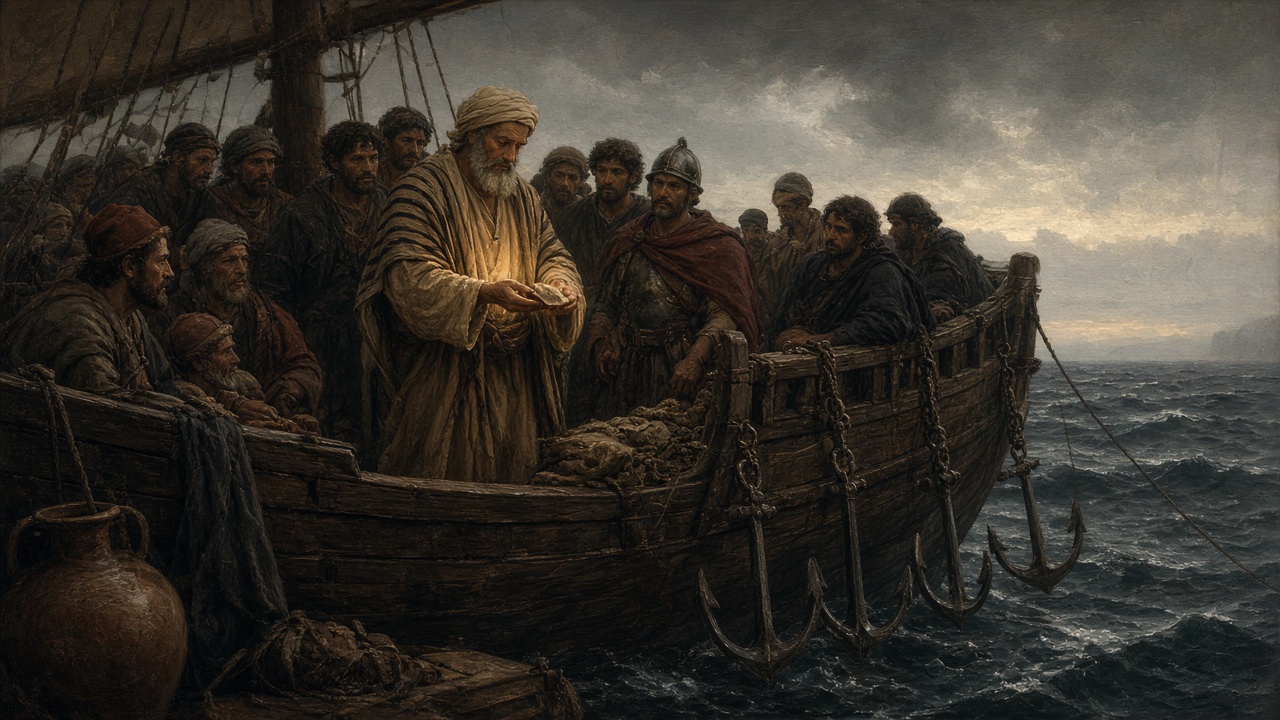
Tormenta y naufragio camino a Roma
- Pablo y los demás prisioneros no navegaron directo a Italia. En Cesarea abordaron un barco de Adramitio, ciudad de la costa de Misia, en Asia Menor, con rumbo a puertos a lo largo de la costa de Asia, nombre que el Easton's Bible Dictionary entiende en este versículo probablemente como Asia Menor, y ese barco los llevó solo hasta Mira, en Licia. Allí el centurión los hizo subir a un barco alejandrino que navegaba hacia Italia; el diccionario señala que era raro que un barco zarpara de cualquier puerto de Palestina directo a Italia.Fuentes: Adramyttium · Asia · el propio texto bíblico
- Los prisioneros fueron entregados a Julio, centurión del Regimiento Imperial. El Easton's Bible Dictionary lo identifica como centurión de la cohorte Augusta, o de la guardia personal del emperador, y describe el trato cortés que tuvo con Pablo. En Sidón, a unas veinticinco millas al norte de Tiro, le permitió visitar a sus amigos y recibir atención; más tarde impidió el plan de los soldados de matar a los prisioneros, para que se salvara la vida de Pablo.Fuentes: Julius · Sidon · el propio texto bíblico
- Después de Gnido, el barco avanzó a lo largo de Creta, una de las islas más grandes del Mediterráneo, de unas 140 millas de largo y 35 de ancho, que Pablo visitó en este viaje a Roma. El relato dice que el viaje ya se había vuelto peligroso porque era después del Ayuno, y que Buenos Puertos no era adecuado para invernar. Una cronología fecha el inicio del viaje a Roma en el año 56 d.C. y el naufragio en la tormenta en el 57 d.C.Fuentes: Crete · Journey to Rome begins · Paul is shipwrecked by a storm · el propio texto bíblico
Notas escritas con ayuda de IA a partir de fuentes abiertas (Theographic Bible Metadata, CC BY-SA 4.0; Easton’s Bible Dictionary, dominio público) y revisadas antes de publicarse.
Lugares de este capítulo
- Italy · 41.892, 12.485 · versículos 1, 6
- Adramyttium · Hoy: Oren · 39.501, 26.933 · versículo 2
- Asia · 38.400, 28.300 · versículo 2
- Thessalonica · Hoy: Thessaloniki · 40.638, 22.946 · versículo 2
- Sidon · Hoy: Sandikli archaeological site in Sidon · 33.561, 35.372 · versículo 3
- Cyprus · 35.000, 33.000 · versículo 4
- Cilicia · 36.913, 34.892 · versículo 5
- Lycia · 36.733, 29.900 · versículo 5
- Myra · 36.259, 29.985 · versículo 5
- Pamphylia · 37.000, 31.000 · versículo 5
- Alexandria · 31.183, 29.896 · versículo 6
- Cnidus · 36.686, 27.375 · versículo 7
- Crete · 35.310, 24.893 · versículos 7, 8, 12, 13, 14, 21
- Salmone · Hoy: Cape Sideros · 35.316, 26.312 · versículo 7
- Fair Havens · Hoy: Kaloi Limenes · 34.930, 24.800 · versículos 8, 12
- Lasea · Hoy: Lasaea · 34.941, 24.811 · versículo 8
- Cauda · Hoy: Gavdos · 34.833, 24.083 · versículo 16
- Syrtis · Hoy: Sidra · 31.500, 18.000 · versículo 17
- Adriatic Sea · Hoy: Adriatic and Ionian Seas · 38.000, 19.000 · versículo 27
Solo aparecen lugares identificados con alta confianza (90 % o más según las fuentes académicas reunidas por OpenBible). Mapa de la época: DARE (Digital Atlas of the Roman Empire), CC BY 4.0; mapa actual: © colaboradores de OpenStreetMap; lugares: OpenBible.info (CC BY 4.0).
Créditos y licencia de esta traducción
Hset Hadròeh
The New Testament in the Hre language of Vietnam, translated by Baq Thi
Copyright © 2024 Baq Thi
Language: (Hre)
This translation is made available to you under the terms of the
Creative Commons Attribution Share-Alike license 4.0.
You have permission to share and redistribute this Bible translation in any format and to make reasonable revisions and adaptations of this translation, provided that:
You include the above copyright and source information.
If you make any changes to the text, you must indicate that you did so in a way that makes it clear that the original licensor is not necessarily endorsing your changes.
If you redistribute this text, you must distribute your contributions under the same license as the original.
Pictures included with Scriptures and other documents on this site are licensed just for use with those Scriptures and documents.
For other uses, please contact the respective copyright owners.
Note that in addition to the rules above, revising and adapting God's Word involves a great responsibility to be true to God's Word. See Revelation 22:18-19.
2026-07-18
Fuente: http://ebible.org/hrebt/ · eBible.org