Hechos 16
Hset Hadròeh · Toca un versículo para ver sus referencias cruzadas.
Phaulô qnong Timothê tiaqThi Tv 2:7
1Phaulô lam trùh ta Đetbo xam Litro. Ta aih i mòeq ngai tiaq hŏc yiniq haq Timothê, miq haq aih mangai Juđa khoe lùi, baq haq aih mangai Gorec. 2Oh daq oe ta Litro xam Ycôni dìq capoch lem ka haq. 3Phaulô enh qnong haq tiaq, mahaq mangai Juđa oe ta aih dìq loq baq da Timothê aih mangai Gorec, aih ìq Phaulô majah broq ramènh kat akia ka Timothê. 4Wì thia phôq leq, wì toq ti tanap oh daq ep wèq tiaq ranenh mangai tiaq cla xam ƀài gucraq ta Jêrusalem khoe paqnoh. 5Qmang aih, ƀài Tagop hadròeh jah cajap manoh lùi, mangai tiaq rai èh rai bàc.
6Khoe aih, lam catech trong gùng Phirigi xam taneh gùng Galati, majah qmang aih Yiang Hadròeh khoe ùh lòh wì haq lam anoe Bàu lem ta cròng Asi. 7Ten trùh gùng Misi, wa padon mùt tagùng Bithini, mahaq Yiang Hadròeh da Jesus ùh am, 8wa drah lam khoe ka gùng Misi, èh wa loh ta Trô-ach,
9Jò damang, Phaulô hnoq kan mahno, i mòeq ngai Maxêđoan yòng eh ngèa rađeh, cali calo ka haq rameh: “Drah trùh ta Maxêđoan hu dèch nhèn diq.” 10Atìq ka Phaulô hnoq kan mahno aih, nhèn hi drah lam padon lam ta Maxêđoan, majah qmang aih nhèn loq Boc Plình khoe creo ka nhèn lam anoe Bàu lem ta aih.
11Qmang aih, enhTrô-ach nhèn tŏc bong pajang trùh ta Samôtra, hì atìq nhèn trùh ta Napôli; 12enh aih, nhèn trùh ta Philip, gùng aih khoe jah diac Roma, aih phôq basèm da tình Masêđoan. Nhèn oe ta aih toq biaq hì. 13Trùh hì sabat, nhèn loh enh gùng ka phôq, lam roc kênh cròng diac, nhèn hèm dèh wì tagop dabau ta aih đòeq hu waiq khàn, nhèn hi hangui, khoe aih hi ta hatuàng ti ƀài mangai cadrì oe ta aih. 14I mòeq ngai ta aih tamàng bàu nhèn, yiniq haq Lyđi, mangai gùng Thia-tiro, haq aih mangai padro bai gòh. Haq aih mangai loq iu yùq ka Boc Plình. Chuaq pèh manoh, haq dìq jaq tamàng bàu Phaulô. 15Jò haq xam dìq ka hnim haq khoe jah broq ƀaptem, haq doe: “Tàng joq pì khoe doe au kô mangai dìq manoh ka Chuaq, aih pì ep mùt oe padài ta hnim au”; khoe aih haq hi àu pachùh waq qmòe ka jah.
Wì rùp clêh Phaulo sam Sila
16I mòeq hì, nhèn lam waiq khàn, glàm mòeq ngai hapŏng cadrì i kiac Phitôn mùt oe enh dalam ka haq, haq loh ka loq blàih blŏng, broq ka cla craq haq jah ƀac jènh haraya. 17Haq ti tiaq Phaulô xam dìq ka nhèn, rai cachech cadêh rameh: Ƀài wì kô, aih dìq hapŏng Boc plình haqnhèq, anoe am ka pì trong jah dèch claih. 18Bàc hì haq broq qmang aih, Phaulô loh ka mahèu, haq hwi doe ka kiac: “Au canòm ka yiniq Chuaq Jesus Christ thê gè loh enh gùng ka mangai cadrì kô.” Kiac loh qmòe jò aih raq. 19Mahaq cla craq da mangai gucadrì aih, wì hnoq đeh pi oe jah bac jèn enh mangai hapŏng aih, wì rùp Phaulô xam Sila, hua wa trùh tanòe broq bìac, enh ngèa ƀài mangai cwan, 20khoe èh aràng wa ta cwan haqnhèq hòm, wì doe: Wa kô dìq mangai Juđa, broq ka gùng bèn loh dŏng ka manhài. 21Hnài toq trong bèn ùh khòh tamàng yŏc, ùh khòh broq tiaq, majah qmang aih bèn kô mangai Rôma. 22Ƀài mangai ta aih hanoh wiang yòng tablêq ka wa, jò cwan haqnhèq khoe thê hich da wa haq eo, haq hi thê wì tong wa aih. 23Jò wì tong wa khoe bàc, wì hi lam clêh wa, rai tanap ka cwan wèq hnim clêh aih ep ngan wa ja cajoq. 24Jah bàu aih, cwan aih hi clêh wa haq ta cadrong clam rai clang da wa jènh.
25Qnah ta qne mang, Phaulô xam Sila qnang waiq khàn, calêu manè apôi Boc Plình, ƀài mangai wì ma clêh ta aih hadai tàng dŏng. 26Ùh xài oq, taneh loh ka ralàng kàn, xàn hnim ma clêh wì haq loh ka dalàc, adrình hloe mòeq yàng ƀài qmŏc qmang tapèh dŏng, ƀài caxi datoeq clìh dìq haqneq. 27Mangai wèq hnim clêh rarì cadrat, hnoq qmŏc qmang khoe tapèch dŏng, haq hèm ta manoh ƀài wì cadàu khoe dìq, haq hroe qnoh deh chang hu pàc đac rađeh. 28Mahaq Phaulô creo cadêh: “Apaq broq cleq ti haƀo ka rađeh, nhèn oe dìq tacô.” 29Mangai wèq hnim clêh drah creo ka wì qnoh đen, haq rai tùh rai crè, hacùn cràng ajang jènh Phaulô xam Sila. 30Khoe aih, haq qnoh wa loh enh gùng rai bòch: Wì craq! au ep broq cleq men jah dèch? 31Wa padreo bàu: “Drah lùi Chuaq Jesus, aih èh ìh xam dìq ka hnim ìh hi jah dèch.” 32Wa hi hnài ka haq xam rìm mngai ta hnim haq trong Boc plình, 33Mang aih, hloe jò aih raq mangai wèq hnim clêh qnoh wa aih, qnheo da wa habau, khoe aih xam cla haq xam mangai oe ta hnim haq dìq jah broq ƀaptem. 34Khoe aih, akhen ka wa hlài deh ta hnim, padon qnoh ka wa acaq, cla haq xam dìq ka mangai ta hnim lem bùi ka rađeh jò wì khoe jah tiaq trong Boc Plình.
35Trùh qngah, cwan enh qnhèq thê lình lam anoe ka mangai wèq hnim clêh rameh: Drah caqnaih wa beq. 36Haq aih anoe ka Phaulô: Ƀài cwan enh qnhèq khoe thê au caqnaih chôp lam, chôp loh beq, lam ma catèm haq oq. 37Mahaq Phaulô doe ka mangai lình: “Nhèn kô mangai diac Rôma, qnhòq loq ma i yiniq lui cleq, wì khoe blai ma qne mangai đùng đam, khoe aih clêh ma ta hnim cadrong, manòeq kô aih wì haq caqnaih atùng ma qmòh? Qmang aih ùh jah. Cla ƀài cwan ep lam jang kô hu caqnaih ma, xài qmang aih ma troq.” 38Ƀài cwan enh qnhèq tàng lình anoe hlài qmang aih, loq ka wa haq aih mangai Rôma, wì haq yùq pi cajaq. 39Wì lam alìa èh hi caqnaih wa, rai cali calo dôq wa loh khoe gùng wì haq. 40Jò khoe jah caqnaih, wa lam ta hnim Liđy, hmàih ra pariaq, khoe aih wa men lam.
¿Sabías que…?
De Listra a Filipos
- En Listra, Pablo encontró a Timoteo, un discípulo de quien hablaban bien los hermanos de Listra e Iconio, hijo de una judía creyente y de un padre griego. Queriendo llevarlo como compañero, Pablo lo circuncidó a causa de los judíos de allí, que sabían que su padre era griego. El diccionario bíblico de Easton (1897) dice que Timoteo probablemente vivía en Listra y parece haberse convertido en la visita anterior de Pablo.Fuentes: el propio texto bíblico · Timotheus
- Después de que se les impidió hablar en la provincia de Asia, Pablo y sus compañeros viajaron por Frigia y Galacia. En la frontera de Misia no se les permitió entrar en Bitinia, así que bajaron a Troas, el puerto principal de Misia, en la costa noroeste de Asia Menor, ciudad que recibió su nombre de la antigua Troya, a unas cuatro millas al norte. Allí, una visión nocturna de un hombre de Macedonia que pedía ayuda los llevó a navegar hacia esa provincia romana al norte de Grecia.Fuentes: el propio texto bíblico · Mysia · Troas · Macedonia
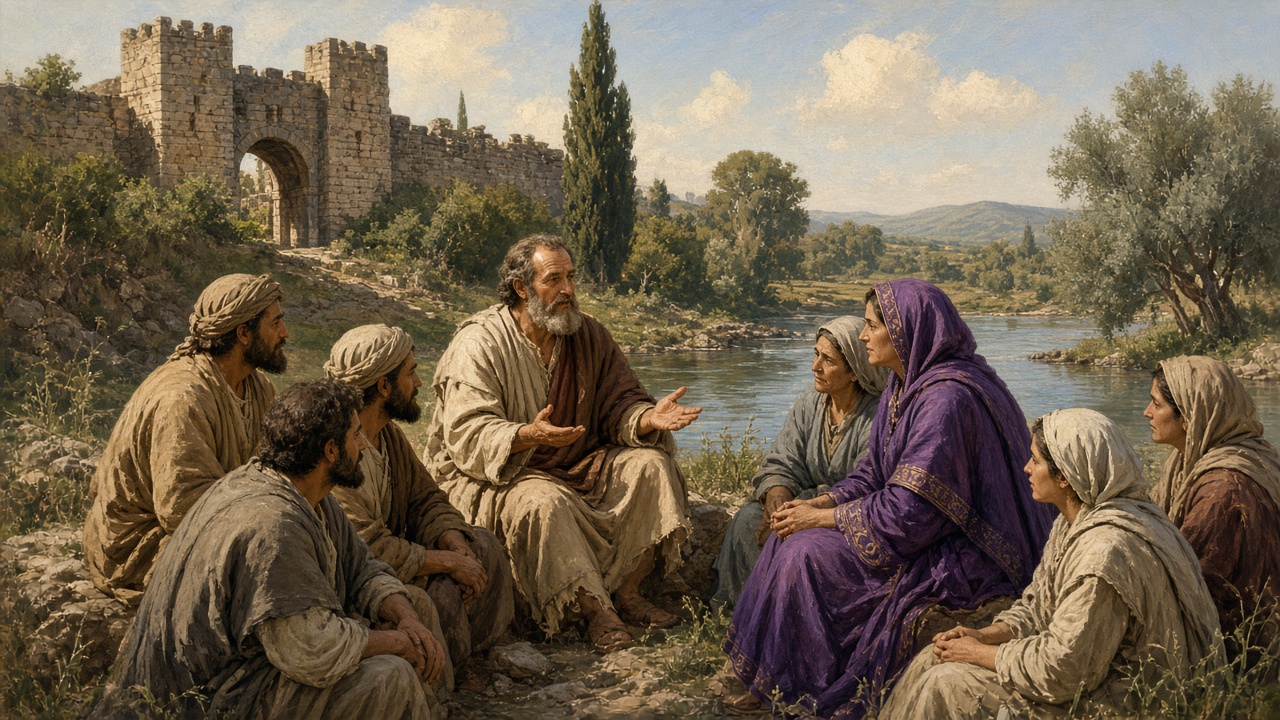
- En la colonia romana de Filipos, Pablo y sus compañeros encontraron, junto al río y fuera de la puerta de la ciudad, un lugar donde era costumbre orar, y allí se habían reunido unas mujeres. Entre ellas estaba Lidia, comerciante de telas de púrpura, de Tiatira, y adoradora de Dios; después de que ella y los de su casa fueron bautizados, convenció a los viajeros de quedarse en su casa. El diccionario bíblico de Easton (1897) la describe como una prosélita de considerable riqueza y como la primera persona en Europa que abrazó el cristianismo.Fuentes: el propio texto bíblico · Lydia
Notas escritas con ayuda de IA a partir de fuentes abiertas (Theographic Bible Metadata, CC BY-SA 4.0; Easton’s Bible Dictionary, dominio público) y revisadas antes de publicarse.
Lugares de este capítulo
- Lystra · Hoy: Tel Lystra · 37.602, 32.338 · versículos 1, 2
- Iconium · Hoy: Konya · 37.872, 32.492 · versículo 2
- Jerusalem · 31.777, 35.234 · versículo 4
- Asia · 38.400, 28.300 · versículo 6
- Galatia · 39.267, 32.983 · versículo 6
- Phrygia · 39.000, 31.000 · versículo 6
- Bithynia · 40.500, 31.000 · versículo 7
- Mysia · 40.000, 28.500 · versículos 7, 8
- Troas · Hoy: Alexandria Troas · 39.752, 26.159 · versículos 8, 11
- Greece · 37.972, 23.727 · versículo 9
- Macedonia · 41.600, 22.540 · versículos 9, 10, 12
- Neapolis · Hoy: Kavala · 40.935, 24.415 · versículo 11
- Samothrace · Hoy: Samothraki · 40.450, 25.583 · versículo 11
- Philippi · 41.012, 24.285 · versículo 12
- Thyatira · Hoy: Akhisar · 38.920, 27.837 · versículo 14
Solo aparecen lugares identificados con alta confianza (90 % o más según las fuentes académicas reunidas por OpenBible). Mapa de la época: DARE (Digital Atlas of the Roman Empire), CC BY 4.0; mapa actual: © colaboradores de OpenStreetMap; lugares: OpenBible.info (CC BY 4.0).
Créditos y licencia de esta traducción
Hset Hadròeh
The New Testament in the Hre language of Vietnam, translated by Baq Thi
Copyright © 2024 Baq Thi
Language: (Hre)
This translation is made available to you under the terms of the
Creative Commons Attribution Share-Alike license 4.0.
You have permission to share and redistribute this Bible translation in any format and to make reasonable revisions and adaptations of this translation, provided that:
You include the above copyright and source information.
If you make any changes to the text, you must indicate that you did so in a way that makes it clear that the original licensor is not necessarily endorsing your changes.
If you redistribute this text, you must distribute your contributions under the same license as the original.
Pictures included with Scriptures and other documents on this site are licensed just for use with those Scriptures and documents.
For other uses, please contact the respective copyright owners.
Note that in addition to the rules above, revising and adapting God's Word involves a great responsibility to be true to God's Word. See Revelation 22:18-19.
2026-07-18
Fuente: http://ebible.org/hrebt/ · eBible.org