1 Corintios 10
Hset Hadròeh · Toca un versículo para ver sus referencias cruzadas.
Ngan dua enh Isorali
1Majah qmang aih, au ùh enh dôq ka oh daq ùh qnì kan cadraq bèn dìq khoe oe enh qneq ka yùc, dìq ka wì khoe lam pagat ka diac raxìq, 2đòeq Môise broq ƀaptem ka wì haq enh dalam ka yùc xam enh qneq ka diac raxìq. 3dìq ka wì khoe acaq dahwèq yiang, 4rai ôq diac yiang, majah qmang aih wì haq ôq enh nòe hmo yiang ma tiaq wì haq, hmo aih aih raq Christ. 5Mahaq taqne wì haq ja ka mangai ùh lem manoh Boc Plình, dài bàc ngai wì haq majah khoe tacro cachìt tanòe braih kàn. 6Ƀòe yiniq kô khoe loh qmang aih, đòeq broq dua hu hnài bèn, dôq bèn ùh hìaq ònh tiaq trong dù qmang ka wì aih khoe broq. 7Èh hadai pi dùh kùh waiq radua qmù kiac qmang ka wì aih hòm, tìah ka bàu khoe achìh: “Wì haqngui acaq ôq, khoe aih padinh yòng pagôq racaih”. 8Bèn apaq ti taqnong tango qmang ka wì aih ma khoe broq, taiq aih raq mòeq hì majah i baiq jàt piq mùan mangai cachìt. 9Bèn hadai apaq qnhro Christ qmang ka wì ma khoe qnhro, taiq aih raq wì haq majah cachìt ka bìh kap. 10Èh hadai apaq mamùc tìah ka wì khoe mamùc, taiq aih raq wì haq majah ep cachìt enh tì kŏng ƀình plình palùng.
11Ƀài yiniq kô khoe loh ka wì qmang aih đòeq broq dua am ka bèn, khoe achìh hlài đòeq hu pariaq bèn aih ƀài mangai ma rìh ta ƀài qnhòng atìq pulùch 12Qmang aih, cabô loq xoh rađeh kô yòng cajap, rabiaq haq oq loq tacro. 13Ƀài kan padô qnùt trùh ka oh daq, ùh i ka yiniq leq ma yi dôch ka padren kon mangai. Boc Plình ùh tablòq manoh, haq ùh dôq ka oh daq glàm kan padô qnùt yeo loe ka padren oh daq, mahaq ta kan padô aih haq pèch trong ka oh daq hu jah loh, đòeq oh daq hlàt dràng.
14Qmang aih oh daq da au, drah wia ka hangai trong kùh waiq radua qmù. 15Au anoe ka oh daq aih au anoe ka ƀài mangai i manoh rabiaq, pì boq bàu au anoe kô: 16Chrŏng xôq ramot bèn manè apôi kô ma ùh xài khoe pajùm ti mahim da Christ qmòh? Bênh bèn ma goh kô aih ma ùh joq pajùm ka chac da Christ qmòh? 17Majah qmang aih dìq deh mòeq toq bênh raq, dài bèn yac ka bàc ngai dua mòeq chac raq majah qmang aih bèn dìq pajùm ta mòeq toq bênh raq. 18Ngan mangai Isorali beq! Ƀài mangai acaq jam tadreo aih ma ùh alùh pajùm ti prang tadreo qmòh? 19Au anoe qmang aih au anoe cleq? Dahwèq ma dèch tadreo am ka qmù kiac aih i loh ranenh cleq, radua qmù kiac aih i loh cleq ùh? 20Blinh ka ùh, mahaq dahwèq mangai enh gùng tadreo aih wì tadreo ka kiac chŏc, ma xài wì tadreo ka Boc Plình. Qmang aih au ùh enh oh daq wiang taqmùt ti kiac chŏc. 21Oh daq ùh jah ôq doe chrŏng da Chuaq khoe aih ôq doe chrŏng da kan kiac, oh daq ùh jah acaq pajùm aniang ti Chuaq rai pajùm aniang ti kan kiac. 22Ahìaq bèn enh broq ka Chuaq tarènh? Bèn ma yeo dêh ka haq?
23Pì doe “Rìm yiniq au dìq khòh broq”, mahaq ùh xài rìm yiniq dìq i lòeq; “Rìm yiniq au diq khòh broq”, mahaq ùh xài rìm yiniq dìq broq dua lem. 24Apaq i cabô hèm jah toq ka rađeh, mahaq mangai leq mangai meh hadai ep hèm ka mangai qnoeq diq. 25Rìm dahwèq atech tanoe tech jam, dìq khòh rot acaq dŏng, apaq tàng đeh yùq ta manoh đòeq bòch dèh; 26majah qmang aih, crŏng taneh kô xam rìm yiniq ta aih dìq da Chuaq. 27Tàng loq i mangai ùh lùi akhen ka oh daq, oh daq enh lam, aih yac ka wì padon qnoh cleq, oh daq acaq cameh, apaq tàng đeh yùq ta manoh đòeq hu bòch dèh. 28Mahaq tàng i mangai doe ka oh daq: “Ma kô khoe tadreo”, aih apaq acaq, đòeq lem ka manoh cla oh daq xam mangai ma khoe doe ka oh daq: 29Au ùh anoe trùh manoh oh daq, mahaq anoe trùh manoh mangai tau. Wìa ka trong au loq đeh khòh broq mahaq dôq ka manoh mangai qnoeq ep hadrah ataq? 30Tàng khoe manè apôi au men acaq, aih ji laiq dàng mòeq nà acaq au ma dôq ka wì qnoeq cwò ka rađeh? 31Qmang aih, oh daq yac ka acaq, yac ka ôq, yac ka broq cleq, dìq broq đòeq Boc Plình jah ranhòm. 32Apaq roh ka cabô kan catoeh, yac ka mangai Juđa, mangai Gorec, yac ka Tagop Hadròeh da Boc Plình; 33drah qmang ka au kô, àu broq rìm trong dôq jah lem ka manoh bàc ngai, ùh chaq trong lem toq ka cla rađeh mahaq chaq trong lem am ka mangai qnoeq, đòeq wì haq hadai jah dèch.
¿Sabías que…?
Advertencias del desierto y la mesa del Señor
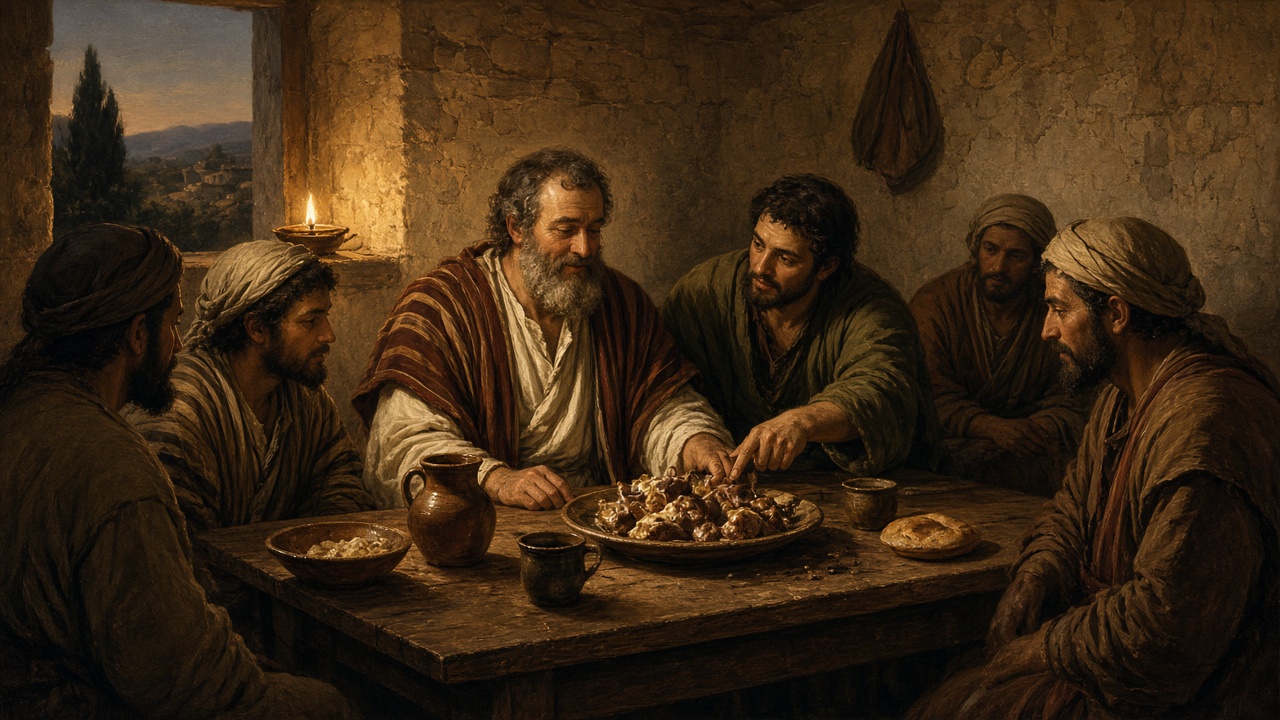
- Pablo dice que no quiere que los corintios ignoren que los antepasados estuvieron todos bajo la nube y pasaron todos por el mar, y que fueron bautizados en Moisés en la nube y en el mar. Todos comieron el mismo alimento espiritual y bebieron la misma bebida espiritual de la roca espiritual que los acompañaba, y él afirma que esa roca era Cristo.Fuentes: el propio texto bíblico
- Pablo dice que Dios no se agradó de la mayoría de ellos, pues fueron derribados en el desierto. Menciona la idolatría, la inmoralidad sexual en la que veintitrés mil murieron en un solo día, el poner a prueba a Cristo, que trajo muerte por serpientes, y las quejas, castigadas por el ángel destructor, y llama a esos hechos ejemplos escritos como advertencias.Fuentes: el propio texto bíblico
- Llama a la copa de bendición y al pan que se parte una participación en la sangre y el cuerpo de Cristo, y afirma que los sacrificios de los paganos se ofrecen a los demonios, no a Dios, de modo que las dos mesas no pueden compartirse. Lo que se vende en el mercado de carne puede comerse sin plantear cuestiones de conciencia, pues "Del Señor es la tierra y su plenitud", pero si alguien dice que fue ofrecido a los ídolos, conviene rechazarlo por la conciencia de esa persona.Fuentes: el propio texto bíblico
Notas escritas con ayuda de IA a partir de fuentes abiertas (Theographic Bible Metadata, CC BY-SA 4.0; Easton’s Bible Dictionary, dominio público) y revisadas antes de publicarse.
Créditos y licencia de esta traducción
Hset Hadròeh
The New Testament in the Hre language of Vietnam, translated by Baq Thi
Copyright © 2024 Baq Thi
Language: (Hre)
This translation is made available to you under the terms of the
Creative Commons Attribution Share-Alike license 4.0.
You have permission to share and redistribute this Bible translation in any format and to make reasonable revisions and adaptations of this translation, provided that:
You include the above copyright and source information.
If you make any changes to the text, you must indicate that you did so in a way that makes it clear that the original licensor is not necessarily endorsing your changes.
If you redistribute this text, you must distribute your contributions under the same license as the original.
Pictures included with Scriptures and other documents on this site are licensed just for use with those Scriptures and documents.
For other uses, please contact the respective copyright owners.
Note that in addition to the rules above, revising and adapting God's Word involves a great responsibility to be true to God's Word. See Revelation 22:18-19.
2026-07-18
Fuente: http://ebible.org/hrebt/ · eBible.org