Juan 4
God Lavayiyat Aṅ Puhuvasiwni · Toca un versículo para ver sus referencias cruzadas.
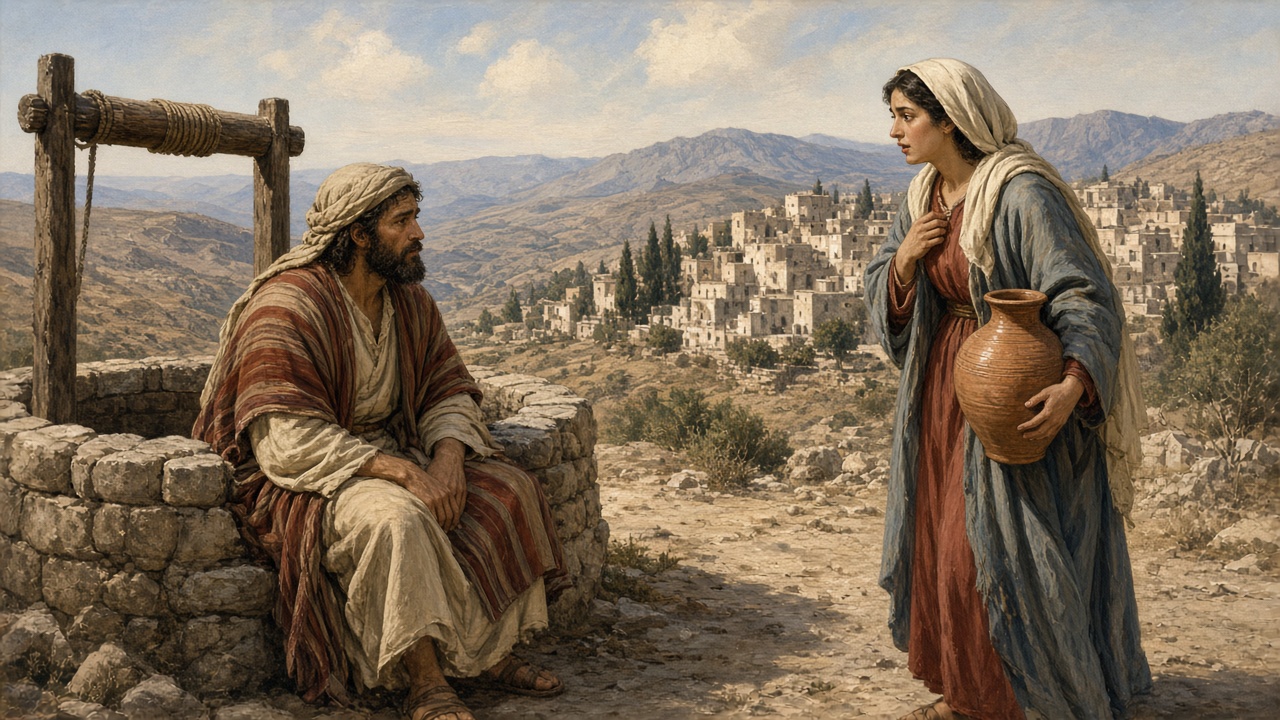
Jesus and the Woman of Samaria
1Noqw ima Pharisee‐sinom nanaptaqw, yaw Jesus John epnihqe wūhaqnihqamuy sinotak̇aṅw, pumuy kūyit akw tuvoylalawu. 2Pay as pi Jesus qa nāp sinmuy kūyit akw tuvoylalawu, pay put aw nánatuwnayaqam pantsatsk̇a. 3Noqw yaw pumuy yan nanaptaqat Jesus navotqe, Judea‐tutskwat mātapt, pu Galilee‐tutskwat aqw’a. 4Noqw pas pam kurs hin qa Samaria‐tutskwat aṅni. 5Nihqe ōviy pam Samariat ep kitsókit Sycar yan mātsiwhqat aw pitu, ura Jacob tiy Joseph hihsaq tutskwat máqahqat áhayhpnihqat aw’i. 6Noqw Jacob nöṅanvatñiat pep’e. Noqw Jesus waynumqe māṅuiwk̇aṅw, patñive qatuptu tāwanasavehaqamo (tāwa navaysikishaqam aṅhqe qöniwmaq’ö) 7Noqw hak Samariat ep wuhti kuytoqe ep pitu, noqw Jesus put aw paṅqawu: Okiw nuy kuynaa. 8(Put aw nánatuwnayaqam kīmihaqami tunöstuiwisa.) 9Noqw pahsat pu Samariat ep wuhti put aw paṅqawu: Ya hintaqw ōviy um Jew‐sinonik̇aṅw inumi kuyhtuviṅlawu, susmataqpi nuy Samariat ep wuhtiniqö’? Ima Jew‐sinom pi Samariat‐sinmuy amumum qa hintsatsk̇aqw ōviy’o. 10Noqw Jesus lavayhtiqe put aw paṅqawu: As um God kuwahtipuyat mātsi’te’, pu hak ūmi kuyhtuviṅtaqat hákiynihqat tuwi’tani. Nen um put aw tūviṅtaqw, soon pam uṅ kūyit taytaqat qa máqani. 11Noqw wuhti put aw paṅqawu: Meh, tāqa, noqw pi um hihta akw kuyniqey ṅastaa, noqw patñi hinurs hötsi. Noqw um put kūyit taytaqat háqamnihqe ōviy’o? 12Ya um itanay Jacob epnihqe hak pas pávani? Pam pi ura itamuy pay hísathaqam it patñit maqa; nihqe ura nāp put aṅqw hīhiko, pu tímatu, pu pokmatu. 13Jesus lavayhtiqe put aw paṅqawu: It pāhut aṅqw hikwqa pay piw pānaqmokmantani. 14Nīk̇aṅw ason nu’ hakiy kūyit maqaqw, put aṅqw hikwqa soon hisat pānaqmokni; noqw nu’ hakiy kūyit maqaqw, pam kūyi hakiy ahsonve pāhut yamamataqat antani, nen qatsit qaso’taqat aaniwnani. 15Noqw wuhti put aw paṅqawu: Meh, tāqa, himu as um nuy it kūyit maqaqw, nu pāpu qa pānaqmokni, piw qa aṅqw kuytomantani. 16Noqw Jesus put aw paṅqawu: Yupa uhpuwsuṅway wiktoo, noqw uma aṅqwni. 17Noqw wuhti lavayhtiqe put aw paṅqawu: Nu ṅasta puwsuṅway’ta. Noqw Jesus aw paṅqawu: Pas um súaṅqawhqe Nu ṅasta puwsuṅway’ta, kita. 18Pi um as tsívotnihqamuy puwsuṅwta; noqw i’ pu’ umum qátuhqa pay qa uhpuwsuṅwa. Um paṅqawhqe súaṅqawu. 19Noqw wuhti put aw paṅqawu: Meh tāqa, kurs um hak God lavay’ayaata. 20Noqw itanam pi it tūkwit ep God aw nānawakna; noqw úmuyniqw pi as sinom soon qa Jerusalem ep God aw nānawaknani. 21Noqw Jesus put aw paṅqawu: Wuhti, um nuy tuptsiwni, pay nāt uma qa it tūkwit, piw qa Jerusalem ep Inay aw nānawaknaniqat aw pituto. 22Uma hihta aw nānawaknaqey haknihqat qa navoti’yuṅwa; itam pi hakiy aw nānawaknaqey navoti’yuṅwa, pi God Jew‐sinmuy amuhpiy sinmuy ayo ōoyaqw ōviy’o. 23Nīk̇aṅw pay nāt aw pituto, híkispi pas aw pitsíwta, pep pu’ hakim aṅ pas antsa Inay aw nāwakinwisqam unaṅway aṅqw pas antsay’k̇ahk̇aṅw put aw nāwakinwisniqat aw’i. Pi pan hapi hakim Inay aw nāwakinwisnihqamuy pam tuṅlay’ta. 24Pi God hapi Hikwsi; noqw put aw nāwakinwisqam pas soon qa unaṅway aṅqw pas antsay’k̇ahk̇aṅw put aw nāwakinwisni. 25Noqw wuhti put aw paṅqawu: Antsa yaw hak Messias Christ yan túṅwantiwhqa God aṅqw pítuniqat nu navoti’ta; ason yaw pam hak pite’, itamuy sohsok hihta āawnani. 26Noqw Jesus put aw paṅqawu: Pay nu ūmi yuaataqa hapi pam Messias. 27Noqw pahsat pu put aw nánatuwnayaqam ö́kihqe, pam wuhtit amum yuaataqw aw k̇āwuwaya; noqw qa haqawa put hihta tūviṅtaqat, pu sen pam hinoqw put aw yuaataqat put tūviṅta. 28Noqw pahsat pu wuhti wikoroy pep mātapt, kīminihqe, ep sinmuy amumi paṅqawu: 29Kurs huvam inumum pāmiye’, it hakiy tāqat nuy aṅqaqw hihta hinhtiqat sohsok nuy āawnaqat aw uma yórikyani; ya sen qa i’ hak Christ? 30Pahsat pu puma kīṅaqw nö́ṅakqe, put aw öki. 31Noqw put ahkwayñap Jesus aw nánatuwnayaqam put aw ö’qalyaqe paṅqaqwa: Nȫsaa, Tutuqaynaqa. 32Noqw pam umumi paṅqawu: Pay nu nōvat nösniqey himuy’taqw, uma put qa tuwi’yuṅwa. 33Noqw ōviy put aw nánatuwnayaqam nānami paṅqaqwa: Ya sen pay hak eṅem nōvay’va? 34Noqw Jesus amumi paṅqawu: Nu hakiy nuy aṅqw távihqat tunatyayat hintsak̇e’, put tumalayat yúkiniqw pam pantaqa inuṅem nȫsiwhqat anta. 35Noqw ya uma qa paṅqaqwa: Pay nāt nālöq mūmuyawhtuy ep pu’ natwani tsovalniwni, kitota? Meh, nu umumi paṅqawni: Kurs huvam kwuhpukye’, pāvasat aṅ yórikyaa; pi pay tukwsiwyuṅqe tsovalniwniqat aw pitsíwta. 36Noqw hö́hökqa ahsalawṅwu, nihqe soñawnen sinmuy tsovalaqw, puma qatsit qa so’taqat himuy’vayani. Noqw uyhqaniqw, pu hökqa puma nāma hahlayhtiṅwu. 37Noqw yep hapi yan yuaatiwhqa pas antsaa: Suhk̇a uyhq, pu suhk̇a hȫqö, ii. 38Uma haqe’ qa maqsontotat aṅ höqyaniqat nu aw umuy ayata. Pay pētu aṅ tumaltotaqw, uma amumum sumitumalay’yuṅwni. 39Noqw k̇aysiwhqam Samariat ep sinom pep kīve yesqam wuhtit lavayiyat ahpiy Jesus aw tūtuptsiwa, ura pam paṅqawu: Pas nu aṅqaqw hihta hinhtiqat pam nuy sohsok āawna. 40Noqw ōviy Samariat ep sinom Jesus aw ö́kihqe, pam pumuy amumum huruhtiniqat put aw nānawakna; noqw pam lȫs tāwat aṅ pep qatu. 41Noqw piw nāt pētu k̇aysiwhqam pas nāp lavayiyat ahpiy put aw tūtuptsiwa; 42Nihqe wuhtit aw paṅqawu: Pu’ hapi itam tūtuptsiwa, qa uhlavayiy ahpiy’o, pi itam pas nāp aw tūqayyuṅqe, pas suyan i’ hak sinmuy ayo ōoyhqa Christnihqat itam nanapta.
Jesus Heals an Official’s Son
43Noqw ahpiy lȫs talq pam paṅqw ahpiynihqe, Galileet aqw’a. 44Pi God lavay’ayaat nāp tutskway ep qa k̇aptsiwtaṅwuqat Jesus nāp paṅqawu. 45Noqw pam Galilee‐tutskwat ep pituqw, Galilee‐sinom put pās taviya, puma pi nuhtum Jerusalem ep nōviwhqat épeqyaqe, put hihta hinhtiqat sohsok aw yórikyaqe ōviy’o. 46Noqw Jesus Galileet ep Canat aw piw pitu; pep ura pam kūyit aṅqw ovavalat yuku. Noqw hak pas pavan sinot tiat tiyo Capernaum ep tūtuya. 47Noqw yaw Jesus Judeat aṅqw Galileet ep pítuhqat naat navota; noqw pam as put ámumnen tiyotiyat qalaptsinaniqat pam aw nāwakna, pam okiw mokíwuy aqw pitsíwtaqw ōviy’o. 48Pahsat pu Jesus put aw paṅqawu: Pas uma aṅ k̇ātatayhpit hihta tuawi’yuṅqat aw qa yórike’ soon tūtuptiwani. 49Noqw pas pavan tāqa put aw paṅqawu: Tāqa, um okiw itiy nāt qa mokq aqwni. 50Noqw Jesus put aw paṅqawu: Pay um aqwni, pay uhti qatu. Noqw Jesus put aw hin lavayhtiqat tāqa tuptsiwhqe, paṅqw ahpiy’o. 51Nihqe ōviy pam pahsat atk̇amiqniqw, tumal’aymat ahsawvayaqe āawnayaqe aw paṅqaqwa: Pay uhti qa mokqe qatu. 52Pahsat pu pam hísatniqw aṅqwtiqat pam pumuy tūviṅta; noqw puma paṅqaqwa: Tāvok tāwanasaproyaqw (tāwa aṅhqe tsaṅe’sikis qöniwmaqw) pam mukihoya. 53Noqw naat navoti’taqw, ura pahsat Jesus put aw paṅqawu: Pay uhti qatu, kita. Nihqe ōviy pam nāp tuptsiwa, pu kīyat sohsoyam ep yesqamu. 54Noqw Jesus Judeat aṅqw Galileet ep pitut yan k̇ātatyhpit tumaltaqe pas hímunihqey pahsat lȫs namtakna.
¿Sabías que…?
Agua viva en Samaria
- Jesús dejó Judea para regresar a Galilea, y el Evangelio dice que tenía que pasar por Samaria. Bajo los romanos, en tiempos de Jesús, Judea era la más meridional de las tres divisiones de Palestina, distinta de Samaria y de Galilea, y el relato señala que los judíos no se trataban con los samaritanos.Fuentes: el propio texto bíblico · Judea
- Llegó a Sicar, cerca del terreno que Jacob había dado a su hijo José y, cansado del camino, se sentó junto al pozo de Jacob. El diccionario bíblico de Easton (1897) registra que, desde la época de las Cruzadas, Sicar solía identificarse con Siquem, pero que unas exploraciones la identificaron con 'Askar, un pequeño pueblo samaritano en la base sur de Ebal, aproximadamente una milla al norte del pozo.Fuentes: el propio texto bíblico · Sychar
- La mujer contrastó la adoración en este monte con la afirmación judía de que había que adorar en Jerusalén, y habló de un Mesías que había de venir, llamado Cristo. Cuando los discípulos volvieron de comprar comida en el pueblo, se sorprendieron de que Jesús estuviera hablando con una mujer.Fuentes: el propio texto bíblico
Notas escritas con ayuda de IA a partir de fuentes abiertas (Theographic Bible Metadata, CC BY-SA 4.0; Easton’s Bible Dictionary, dominio público) y revisadas antes de publicarse.
Lugares de este capítulo
- Galilee · 32.760, 35.527 · versículos 3, 43, 45, 46, 47, 54
- Judea · Hoy: Judea 1 · 31.777, 35.234 · versículos 3, 47, 54
- Samaria · Hoy: Samaria 2 · 32.276, 35.195 · versículos 4, 5, 7, 9
- Jerusalem · 31.777, 35.234 · versículos 20, 21, 45
- Mount Gerizim · 32.199, 35.273 · versículo 20
Solo aparecen lugares identificados con alta confianza (90 % o más según las fuentes académicas reunidas por OpenBible). Mapa de la época: DARE (Digital Atlas of the Roman Empire), CC BY 4.0; mapa actual: © colaboradores de OpenStreetMap; lugares: OpenBible.info (CC BY 4.0).
Créditos y licencia de esta traducción
God Lavayiyat Aṅ Puhuvasiwni
New Testament in Hopi (US:hop:Hopi)
copyright © 2012 Wycliffe Bible Translators, Inc.
Language: Hopi
Translation by: Wycliffe Bible Translators, Inc.
Hopi [hop], USA
Copyright Information
© 2012, Wycliffe Bible Translators, Inc. All rights reserved.
This translation text is made available to you under the
terms of the Creative Commons License: Attribution-Noncommercial-No Derivative Works.
( http://creativecommons.org/licenses/by-nc-nd/3.0/ )
In addition, you have permission to port the text to different file formats, as long as you
do not change any of the text or punctuation of the Bible.
You may share, copy, distribute, transmit, and extract portions
or quotations from this work, provided that you include the above copyright
information:
You must give Attribution to the work.
You do not sell this work for a profit.
You do not make any derivative works that change any of the actual words or punctuation of the Scriptures.
Permissions beyond the scope of this license may be
available if you contact
us with your request.
The New Testament
in Hopi
© 2012, Wycliffe Bible Translators, Inc. All rights reserved.
This translation is made available to you under the terms of the
Creative Commons Attribution-Noncommercial-No Derivatives license 4.0.
You may share and redistribute this Bible translation or extracts from it in any format, provided that:
You include the above copyright and source information.
You do not sell this work for a profit.
You do not change any of the words or punctuation of the Scriptures.
Pictures included with Scriptures and other documents on this site are licensed just for use with those Scriptures and documents.
For other uses, please contact the respective copyright owners.
2014-04-25
Fuente: http://ebible.org/hopNT/ · eBible.org