Hechos 20
God Lavayiyat Aṅ Puhuvasiwni · Toca un versículo para ver sus referencias cruzadas.
To Macedonia and Greece
1Noqw a’nö hiniwhtiqat aṅ ruhpakq, Paul tuptsiwni’yuṅqamuy wáṅwayhqe, öqalát, mavoktat, paṅqw Macedoniat aqw nakwsu. 2Pu ōviy pam paṅ ahsupoq nakwsuqe, pumuy pavan öqalanmak̇aṅw, Greece ep pítuhqe, 3Pep payhkomuy mūmuyawhtuy aṅ qatu. Noqw as pam pāvaqe Syriat aqwniniqw Jew‐sinom put moqmani’yuṅqw, pay pam Macedoniat aṅ ahoy aqwniqey wūwa. 4Noqw hak Bereat aṅqw tāqa Sopater put amum Asiat aw’i, noqw Thessalonicat ep sinmuy amuṅaqw hak Aristarchus, pu Secundus, noqw Derbet aṅqw Gaius, pu Timotheus, pu Asiat aṅqw Tychicus‐niqw pu Trophimus. 5Ima pay itamuhsavoyaqe Troas ep itamuy nuhtayyuṅwa. 6Noqw qapek̇én’oyiwhput nōviwhqat aṅ ruhpakq, itam Philippi aṅqw pāvaqe hoyoyoykuyaqe, tsivot talq Troas ep pumuy amuṅk pitu; noqw itam pep tsaṅe’ tālat aṅ yēse.
Paul’s Last Visit in Troas
7Noqw Sundayt aw pituqw, tuptsiwni’yuṅqam pölavikit yóṅoyhtotaniqe sumitsovaltiqw, Paul qāvo ahpiynik̇aṅw, pumuy amumi yuaataqe, tōkilat nāsamiq pahsavo yuaata. 8Noqw puma tupatsveq tsovawtaqw, pepeq qȫhiwyuṅwa. 9Noqw hak tiyo Eutychus yan mātsiwhqa poksöve tsokiwk̇aṅw huruvuwva; noqw pas Paul sutsépyuaataqw, pam qaunáṅwtalawvaqe, payhp natsve kīhut aṅqw posq, puma put súmokq put tsöpahtota. 10Noqw Paul aqw hawhqe, aw suqtuptut, mavoktaqe, nuhtumi paṅqawu: Pay uma qa hin unaṅway’yuṅwni, pay pam nāt tayta. 11Pu ōviy pam ahoy aqw wupqe, pölavikit yóṅoyhtat, aṅqw nöst, ahpiy piw nāto tālawvaniqwsavo yuaata; nihqe paṅqw pu ahpiy’o. 12Noqw puma tiyot taytaqat wikvayaqe, suyan unaṅwtoti.
From Troas to Miletus
13Noqw itam aṅwu pay pākihut awyaqe, pāvaqe Assos awya, pay ason itam pep Paul panayaniqey wūwank̇ahk̇aṅwo, pan pam yukuqw ōviy’o, pam aqw nāpniqey wūwaqee. 14Pu ōviy pam Assos ep itamumi pituqw, itam panayaqe, Mitylene ep öki. 15Paṅqw pu itam pāvaqe ahpiyyaqe, qavönvaqw Chios aqlavo öki, nihqe Trogyllium ep huruhtoti; nit pu qavoṅvaqw itam Miletus ep öki, 16Paul pay Ephesus ehpeq yūmosaniqey nāwaknaqw ōviy’o; pas as Asiat ep söwhtiniqey qa nāwakna, taq as hin pasiwtaniqw, pam Pentecost talöṅniyat ep Jerusalem épeqniqey ōviy k̇aktayi.
Paul’s Farewell Speech to the Elders of Ephesus
17Noqw pam Miletus aṅqw Ephesus aw hakimuy ayataqe pep Jesus aw tōnawtaqamuy wukw’aymuyatuy wáṅwayi. 18Noqw puma ökiqw pam amumi paṅqawu: Pay nu hisat Asiat ep pítuhqe, pahpiy yūmosa umumum hin qátuhqat uma navoti’yuṅwa. 19Nu qa kwivi’naṅway’k̇aṅw okiw pakk̇aṅw Tutuyqawhqat eṅem tumalay’ta, Jew‐sinom inumi hepyaqe, nuy moqmani’yuṅq’ö. 20Pu uma hihta akw moṅvastotiniqat nu qa hihta umumi k̇ahk̇awnat, umuy put āawna; nihqe ura nu umuy nuhtutpik tutuqayna, pu kīnawita. 21Nihqe nu Jew‐sinmuy amuminik̇aṅw, pu Greek‐sinmuy amumi lalvayhqe, tunatyay aṅqw lasye’ God aw namtökyaniqat amumi paṅqawlawu, pu Itahtutuyqawhqay Jesus Christ qapēvewnayaniqata. 22Noqw meh, Qahováriwtaqa Hikwsi nuy pan unaṅwtoynaqw, nu Jerusalem aqw hoyhta, hin pepeq hintsaniwniqey qa navoti’k̇aṅwo. 23Pay panis pi Qahováriwtaqa Hikwsi ahsupoq kitsókinawit nuy āwinma, yaw nu sivihpit, pu k̇ānanvotpit aw pítuniqata. 24Nīk̇aṅw pay qa himuwa i’ nuy hin unaṅwtoyna. Piw nu iqatsiy qa nēṅem k̇ahk̇awna, pas pay nu okiw hahlayk̇aṅw inuṅem pöhtavit aṅ kuyvaniqey ōviy’o, Ura Itahtutuyqawhqa Jesus nuy God núokwayat tuawi’taniqat aw ayata. Noqw ōviy nu put hintsakniqey pas kwaṅwtoya. 25Noqw taa, pew pahsavo nu sohsokmuy umuhpa’ God moṅwtunatyayat yuaatinuma. Noqw yahpiy haqahpiy uma soon pāpu inumi yórikyaniqat nu navoti’ta. 26Oviy uma it tālat ep inumi nanaptani: Nu hapi qa hakiy qatsíyat ep tukopniwta. 27Pi nu qahaqam pay qa suhtaqhink̇aṅw God tunatyayat umuy sohsok āawna. 28Oviy uma nānami tunatyaltotini, pu sohsokmuy God aw tōnawtaqamuy amumii; uma hapi pumuy amumi tunatyawyuṅwniqat ōviy Qahováriwtaqa Hikwsi umuy pumuy amumi oya, uma God aw tōnawtaqamuy nopni’yuṅwniqat ōviy’o; pam pumuy pas nāp uṅway akw tui. 29Pi nu navoti’taqw, nuy ahpiyniqw, hakim kwēkwewhtuy amún qa nun’okwat umumum namiqwriltini; nen kanelmuy qa pētotani. 30Pu híkispi pas nāp umuṅaqw haqawat hoṅve’, qasuantaqat lavayit akw nāmi sinototani. 31Oviy uma tunatyawyuṅwni, nen it u’ni’yuṅwni; ura nu payhkomuy yahsaṅwuy aṅ mimhikqat pu talöṅwintiwhqat aṅ okiw pakk̇aṅw umuy u’nantoynaqe qa qé’iwma. 32Noqw taa, isinomu, nu hapi umuy God aw mātavi, pu núokwlavayiyat aw’i. Pam hapi umuy wuṅwnaniqey aw öqala, pu umuy hihta máqaniqeyu, sohsokmuy sinomuy énaṅ’a. 33Nu hapi qa hakiy sīvayat tuṅlay’ta, pu yuwsiyata. 34Owi, uma nāp navoti’yuṅqw, ura nu imay akw tumalay’taqe hihta tuway’numa, nēṅem’i, pu inumumyaqamuy amuṅem’i. 35Pi nu sohsok umumi mahtakna, hin uma tumalay’yuṅwe’, aṅ ōokiwyaqamuy amumi unaṅwtapyaniqata, pu Tutuyqawhqat Jesus lavayiyat u’ni’yuṅwniqata; ura pam paṅqawu: Hak hakiy hihta máqahqa pam hihta ömahtaqat epnihqe pas hahlayni. 36Yan pam lavayhtit, tamötswunuptut, pumuy sohsokmuy amumum nāwakna. 37Noqw puma okiw sohsoyam tsaykuqe, Paul kwapk̇aqe, mamavokyak̇ahk̇aṅw tsōnantota, 38Soon pāpu puma put aw yórikyaniqey ep pas qa hahlayhtotiqe ōviy’o; nihqe pahpiy puma put amum pākihut awya.
¿Sabías que…?
Despedida camino a Jerusalén
- Al salir de Troas, Pablo envió a sus compañeros por delante en el barco y caminó hasta Assos por el camino romano. Assos era un puerto de la Asia proconsular, en Misia, en la costa norte del golfo de Adramitio; el trayecto a pie era de unas 20 millas, el de mar de unas 30, y la isla de Lesbos quedaba a unas 7 millas de la costa.Fuentes: el propio texto bíblico · Assos
- Pablo pasó de largo frente a Éfeso para no demorarse en la provincia de Asia —la provincia romana del oeste de Asia Menor, cuya capital era Éfeso—, porque esperaba, si era posible, llegar a Jerusalén para el día de Pentecostés. Se detuvo en Mileto, un puerto y la antigua capital de Jonia, a unas 36 millas al sur de Éfeso, y mandó llamar a los ancianos de la iglesia de Éfeso.Fuentes: el propio texto bíblico · Asia · Miletus
- Siete hombres viajaban con él: Sópater de Berea, Aristarco y Segundo de Tesalónica, Gayo de Derbe, Timoteo, y Tíquico y Trófimo de Asia. Aristarco, de Tesalónica, más tarde compartió el encarcelamiento de Pablo en Roma, y Trófimo, efesio, lo acompañó en esta parte del viaje y estuvo con él en Jerusalén.Fuentes: el propio texto bíblico · Aristarchus · Trophimus
Notas escritas con ayuda de IA a partir de fuentes abiertas (Theographic Bible Metadata, CC BY-SA 4.0; Easton’s Bible Dictionary, dominio público) y revisadas antes de publicarse.
Lugares de este capítulo
- Macedonia · 41.600, 22.540 · versículos 1, 3, 6
- Greece · 37.972, 23.727 · versículo 2
- Syria · Hoy: Syria 2 · 33.511, 36.306 · versículo 3
- Asia · 38.400, 28.300 · versículos 4, 16, 18
- Berea · Hoy: Veria · 40.518, 22.200 · versículo 4
- Thessalonica · Hoy: Thessaloniki · 40.638, 22.946 · versículo 4
- Troas · Hoy: Alexandria Troas · 39.752, 26.159 · versículos 5, 6
- Philippi · 41.012, 24.285 · versículo 6
- Assos · 39.491, 26.337 · versículos 13, 14
- Mitylene · Hoy: ancient theater at Mitylene · 39.110, 26.547 · versículo 14
- Chios · 38.373, 26.137 · versículo 15
- Miletus · 37.531, 27.276 · versículos 15, 17
- Samos · 37.750, 26.833 · versículo 15
- Trogyllium · Hoy: Cape Mycale · 37.659, 27.003 · versículo 15
- Ephesus · 37.939, 27.341 · versículos 16, 17
- Jerusalem · 31.777, 35.234 · versículos 16, 22
Solo aparecen lugares identificados con alta confianza (90 % o más según las fuentes académicas reunidas por OpenBible). Mapa de la época: DARE (Digital Atlas of the Roman Empire), CC BY 4.0; mapa actual: © colaboradores de OpenStreetMap; lugares: OpenBible.info (CC BY 4.0).
Créditos y licencia de esta traducción
God Lavayiyat Aṅ Puhuvasiwni
New Testament in Hopi (US:hop:Hopi)
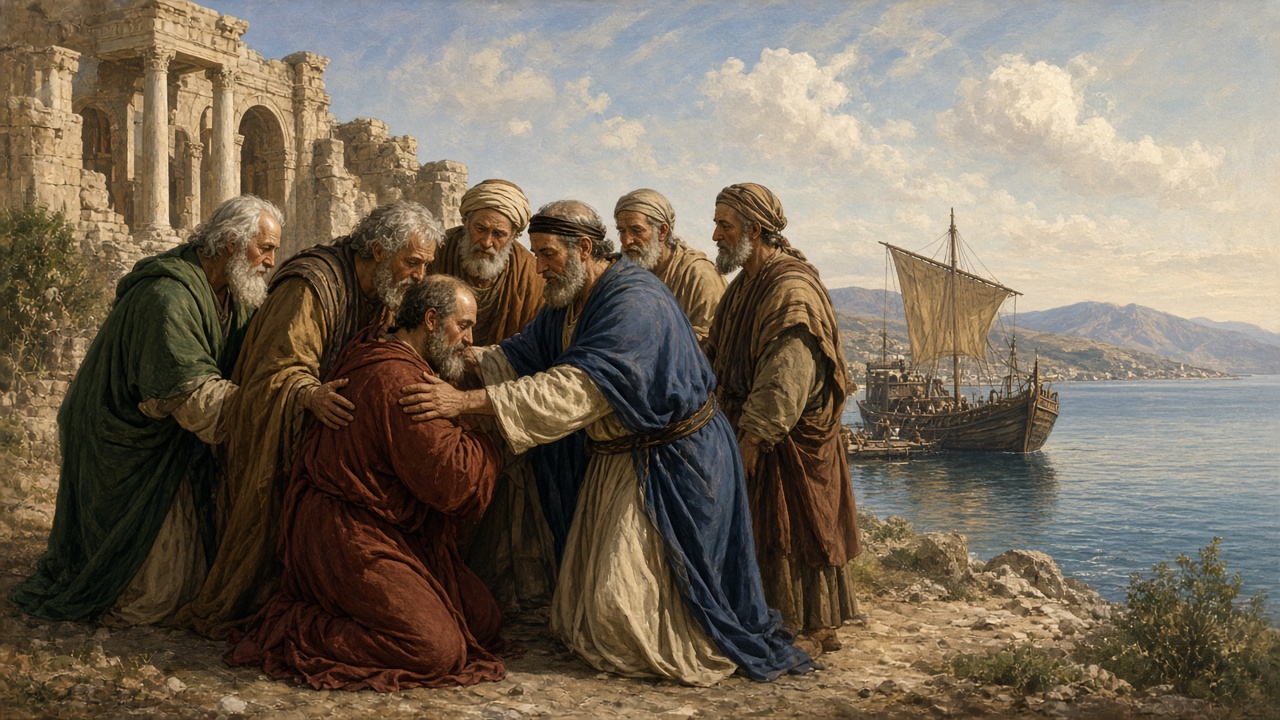
copyright © 2012 Wycliffe Bible Translators, Inc.
Language: Hopi
Translation by: Wycliffe Bible Translators, Inc.
Hopi [hop], USA
Copyright Information
© 2012, Wycliffe Bible Translators, Inc. All rights reserved.
This translation text is made available to you under the
terms of the Creative Commons License: Attribution-Noncommercial-No Derivative Works.
( http://creativecommons.org/licenses/by-nc-nd/3.0/ )
In addition, you have permission to port the text to different file formats, as long as you
do not change any of the text or punctuation of the Bible.
You may share, copy, distribute, transmit, and extract portions
or quotations from this work, provided that you include the above copyright
information:
You must give Attribution to the work.
You do not sell this work for a profit.
You do not make any derivative works that change any of the actual words or punctuation of the Scriptures.
Permissions beyond the scope of this license may be
available if you contact
us with your request.
The New Testament
in Hopi
© 2012, Wycliffe Bible Translators, Inc. All rights reserved.
This translation is made available to you under the terms of the
Creative Commons Attribution-Noncommercial-No Derivatives license 4.0.
You may share and redistribute this Bible translation or extracts from it in any format, provided that:
You include the above copyright and source information.
You do not sell this work for a profit.
You do not change any of the words or punctuation of the Scriptures.
Pictures included with Scriptures and other documents on this site are licensed just for use with those Scriptures and documents.
For other uses, please contact the respective copyright owners.
2014-04-25
Fuente: http://ebible.org/hopNT/ · eBible.org