Salmos 53
Tuivang Holy Bible · Toca un versículo para ver sus referencias cruzadas.
1Thlak qaw ingtaw ak kawk khuiawh, “Khawsa am awm hy,” tihy. Vemih thlangkhqi taw ak plawcikhqi na awm unawh, a khawboe qamlang awm tyih ak awm thlangkhqi na awm uhy. 2Zaaksimnaak ta nawh Khawsa ak sui, ak awm khoem hy voei nu tinawh, Khawsa ing khawk khan nakawng thlanghqing capakhqi ce nuk dan hy. 3Thlang boeih ing lam awhkawng pleng unawh, a cu boeih na plawci kang hawh uhy; ik-oeih leek ak sai u awm am awm hy, u pynoet ca awm am awm hy. 4Thlang ing phaihpi a ai amyihna kak thlangkhqi daih nawh Khawsa awm amak khy man ik-oeih che ak saikhqi ing a sim kaana awm kawm u nu? 5Kqih hly kawi ama awmnaak awh kqih awmnaak ing sing khqi hawh hy. Nang anik tukkhqi a quhkhqi ce Khawsa ing hqek phang tlang hawh hy; cekkhqi ce chahqai phyih sak khqi hawh hyk ti, kawtih, cekkhqi ce Khawsa ing kawna am sui voel hy. 6Aw, cawhkaw Israelkhqi hulnaak ce Zion awhkawng law lah voei! Khawsa ing ak thlangkhqi zo a seen law sak tlaih awhtaw, Jacob ing zeel seitaw Israel ing ak kaw zeel sak seh.
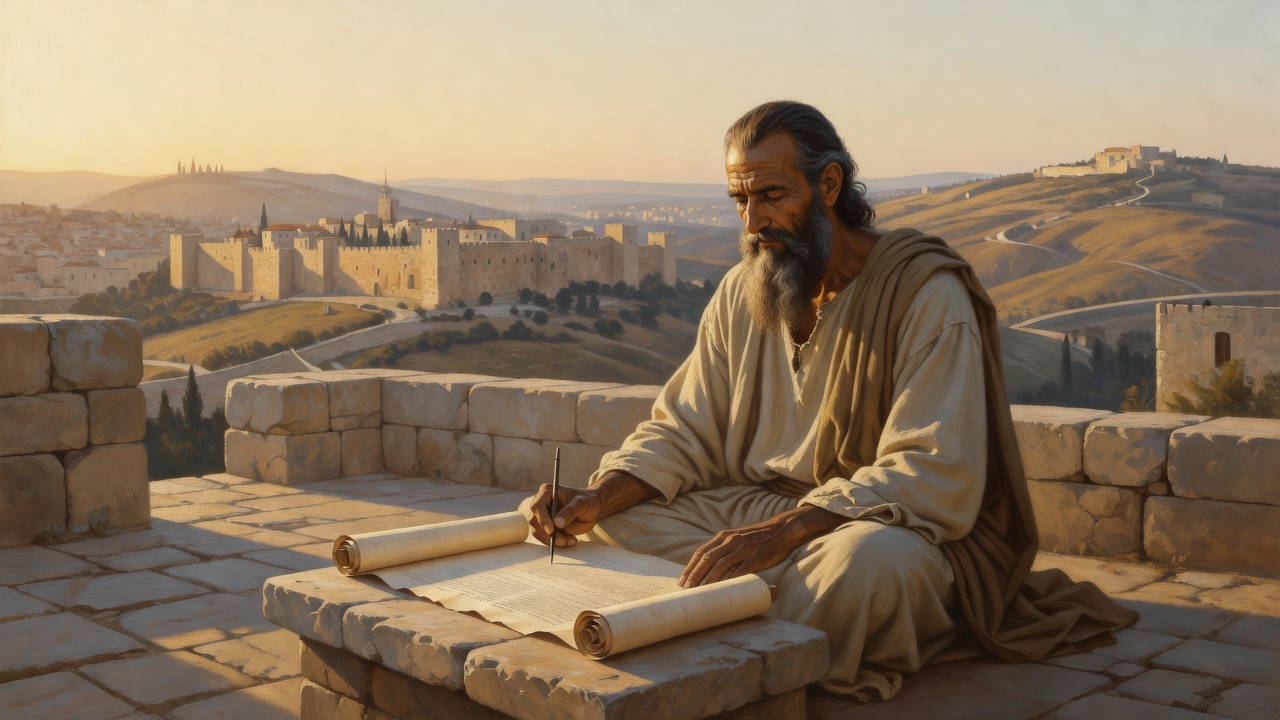
¿Sabías que…?
Una Reflexión sobre la Insensatez y la Liberación
- El salmo describe a Dios observando a la humanidad desde el cielo para ver si alguien Le busca, notando que todos se han desviado y corrompido.Fuentes: el propio texto bíblico
- El versículo final pide que la salvación provenga de Sion, la colina del sureste de Jerusalén donde David estableció su fortaleza y palacio tras tomarla de los jebuseos.Fuentes: el propio texto bíblico · Zion
- El poema concluye uniendo los nombres Jacob e Israel en un llamado al regocijo, recordando al patriarca Jacob, hijo de Isaac, a quien también se le dio el nombre de Israel.Fuentes: el propio texto bíblico · Jacob (Israel)
Notas escritas con ayuda de IA a partir de fuentes abiertas (Theographic Bible Metadata, CC BY-SA 4.0; Easton’s Bible Dictionary, dominio público) y revisadas antes de publicarse.
Lugares de este capítulo
- Zion · Hoy: Jerusalem · 31.777, 35.234 · versículo 6
Solo aparecen lugares identificados con alta confianza (90 % o más según las fuentes académicas reunidas por OpenBible). Mapa de la época: DARE (Digital Atlas of the Roman Empire), CC BY 4.0; mapa actual: © colaboradores de OpenStreetMap; lugares: OpenBible.info (CC BY 4.0).
Créditos y licencia de esta traducción
Tuivang Holy Bible
The Holy Bible in the Tuivang dialect of the Matu Chin language of Myanmar (Burma)
Copyright © 2020 Batupei Christian Fellowtship
Language: Tuivang (Chin, Matu)
Dialect: Tuivang
Copyright applies only in Myanmar. Outside Myanmar, this work is in the Public Domain.
This translation is made available to you under the terms of the
Creative Commons Attribution Share-Alike license 4.0.
You have permission to share and redistribute this Bible translation in any format and to make reasonable revisions and adaptations of this translation, provided that:
You include the above copyright and source information.
If you make any changes to the text, you must indicate that you did so in a way that makes it clear that the original licensor is not necessarily endorsing your changes.
If you redistribute this text, you must distribute your contributions under the same license as the original.
Pictures included with Scriptures and other documents on this site are licensed just for use with those Scriptures and documents.
For other uses, please contact the respective copyright owners.
Note that in addition to the rules above, revising and adapting God's Word involves a great responsibility to be true to God's Word. See Revelation 22:18-19.
2026-07-26
Fuente: http://ebible.org/hltthb/ · eBible.org