Salmos 14
Tuivang Holy Bible · Toca un versículo para ver sus referencias cruzadas.
1Thlak qaw ingtaw ak kawk khuiawh, “Khawsa am awm hy,” ti. Kawna amak awm, amak thym ik-oeih ce sai hy; ik-oeih leek ak sai thlang pynoet ca awm am awm qoe hy. 2Ak zasim thai awm nawh, Khawsa ak sui thlang ak awm khoem hy voei nu, tinawh khan nakawng Khawsa ing thlanghqing capakhqi ce nuk toek law hy. 3Ak chang na pleng boeih unawh, plawci kang hawh uhy; ik-oeih leek ak sai thalng pynoet awm am awm nawh, pynoet ca awm am awm hy. 4Ik-oeih che ak saikhqi - thlang ing phaihpi a ai amyihna kak thlang ak daihkhqi, Bawipa amak khy man thlangkhqi ing a sim kaana awm hly u nawh nu? 5Thlakdyngkhqi ing cunnaak awh Bawipa taw a awm dawngawh, a mingmih ing kqihnaak ing be uhy. 6Nangmih thlak chekhqi khawdengkhqi ing cainaak kang pe u tik seiawm, Bawipa taw a mingmih ang thuknaak na awm hy. 7Aw Israelkhqi thaawngnaak ce Zion awhkawng law lah voei! Bawipa ing ak thlangkhqi zoseennaak a peek tlaih awh, Jakob ing zeel seitaw Israel ing ak kaw zeel poe seh!
¿Sabías que…?
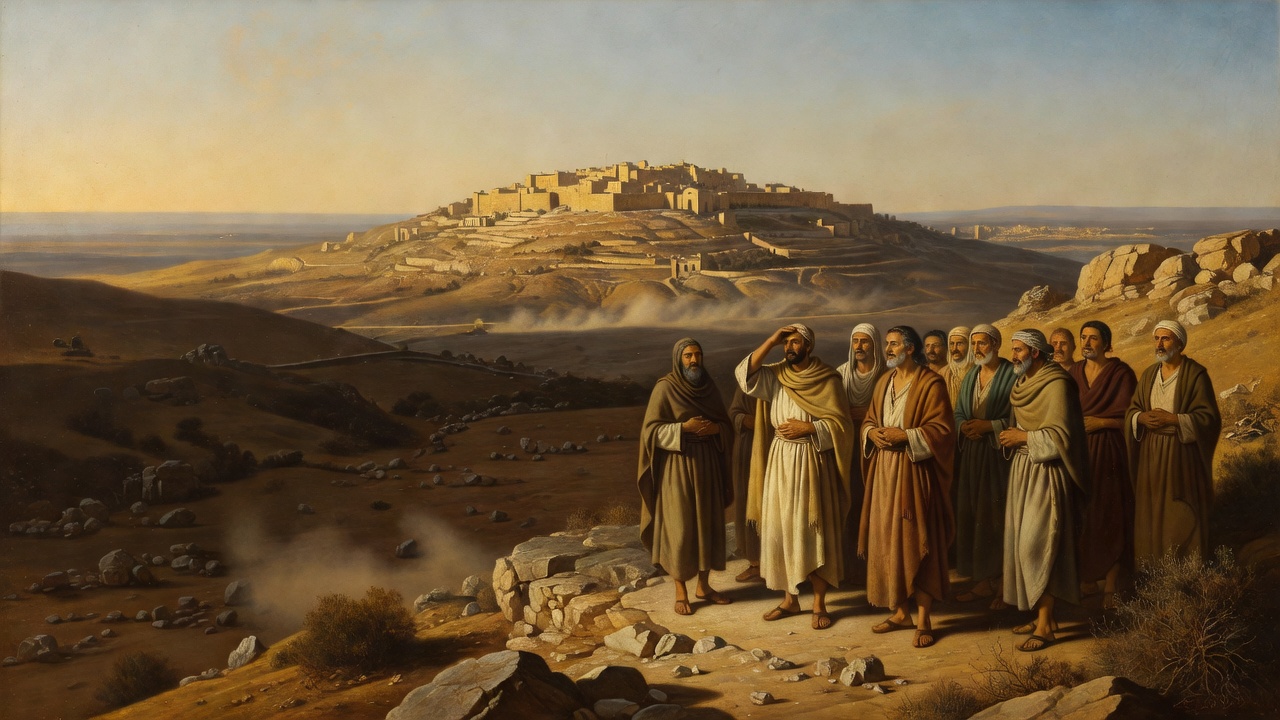
La corrupción humana y la esperanza de Sion
- El Salmo 14 describe la negación práctica de Dios como la causa de la corrupción generalizada y del maltrato a los oprimidos, afirmando que Dios sigue siendo un refugio para los justos.Fuentes: el propio texto bíblico
- En el versículo final, se aguarda la liberación procedente de Sion, la colina suroriental de Jerusalén donde el rey David estableció su ciudadela y ciudad real.Fuentes: Zion · el propio texto bíblico
- La mención paralela de Jacob e Israel evoca al patriarca Jacob, el segundo hijo gemelo de Isaac que también recibió el nombre de Israel, cuyos nombres pasaron a representar a toda la nación.Fuentes: Jacob (Israel) · el propio texto bíblico
Notas escritas con ayuda de IA a partir de fuentes abiertas (Theographic Bible Metadata, CC BY-SA 4.0; Easton’s Bible Dictionary, dominio público) y revisadas antes de publicarse.
Lugares de este capítulo
- Zion · Hoy: Jerusalem · 31.777, 35.234 · versículo 7
Solo aparecen lugares identificados con alta confianza (90 % o más según las fuentes académicas reunidas por OpenBible). Mapa de la época: DARE (Digital Atlas of the Roman Empire), CC BY 4.0; mapa actual: © colaboradores de OpenStreetMap; lugares: OpenBible.info (CC BY 4.0).
Créditos y licencia de esta traducción
Tuivang Holy Bible
The Holy Bible in the Tuivang dialect of the Matu Chin language of Myanmar (Burma)
Copyright © 2020 Batupei Christian Fellowtship
Language: Tuivang (Chin, Matu)
Dialect: Tuivang
Copyright applies only in Myanmar. Outside Myanmar, this work is in the Public Domain.
This translation is made available to you under the terms of the
Creative Commons Attribution Share-Alike license 4.0.
You have permission to share and redistribute this Bible translation in any format and to make reasonable revisions and adaptations of this translation, provided that:
You include the above copyright and source information.
If you make any changes to the text, you must indicate that you did so in a way that makes it clear that the original licensor is not necessarily endorsing your changes.
If you redistribute this text, you must distribute your contributions under the same license as the original.
Pictures included with Scriptures and other documents on this site are licensed just for use with those Scriptures and documents.
For other uses, please contact the respective copyright owners.
Note that in addition to the rules above, revising and adapting God's Word involves a great responsibility to be true to God's Word. See Revelation 22:18-19.
2026-07-26
Fuente: http://ebible.org/hltthb/ · eBible.org