Cantares 2
Baibal Olcim · Toca un versículo para ver sus referencias cruzadas.
1Kai tah Sharon rhaimoei neh tuikol kah tuilipai ni.
2Mutlo hling puem kah tuilipai bangla tanu lakli tah kamah cangyaeh van pawn ni.
3Duup thing lakli thaihthawn kah bangla tongpa lakli ah tah kamah hlo van pawn ni. A hlipkhup ah ka naep tih ka ngol vaengah a thaih khaw ka dang dongah didip mai. 4Misur im la kai n'khuen tih kai soah amah kah lungnah hnitai a hlaek. 5Ka lungnah he a tloh dongah yukhap neh kai n'duel tih thaihthawn neh kai n'caih sak. 6A banvoei kut te ka lu hmui la a tloeng tih a bantang kut loh kai n'kop. 7Jerusalem nu rhoek nang te kan caeng coeng. Kohong kah sakhi rhuinu long khaw sayuk long khaw n'haeng boel saeh. Lungnah loh a ngaih duela haenghang boeh.
Oila loh Tongpa A Oep
8Kai hlo ol tah tlang dong a poe, mol dong a buem tih ha pawk coeng he. 9Kamah hlo tah kirhang neh rhangrhaeh ca aka puet ni. Mah kah thoh hlip ah pai he ne, bangbuet lamloh m'hmaitang tih thohhuel lamloh khooi. 10Kamah hlo loh n'doo tih kai taengah, “Ka sakthen neh ka cangyaeh nang te thoo laeh, nang mah halo laeh,” a ti. 11Sikding, sikding a poeng atah khonal mael tih amah la cet coeng he. 12Diklai ah rhaipai phoe tih laa sak tue pai. Mah khohmuen ah vahu ol n'yaak coeng.
13Thaibu a haengkang te hminkhah coeng tih, misur thaihmoe loh hmuehmuei a yal coeng. Thoo laeh oe, ka sakthen neh ka cangyaeh nang te lo dae lamtah namah mah lo laeh.
14Ka vahui aw, thaelpang thaelrhaep ah khaw, longpoeng huephael ah khaw na mueimae te kai n'tueng lah. Na ol te tui tih na mueimae a rhoeprhui dongah na ol te ka yaak lah mako. 15Mah misurdum tah a thaihmoe dongah misurdum aka phae maetang, maetang ca rhoek te mah hamla tu sih. 16Kamah hlo tah kamah ham saeh lamtah kai khaw anih hamla tuilipai lakli ah ka luem. 17Khothaih thoeng tih khokhawn a rhaelrham hil khaw mael laeh. Kai hlo nang loh tlang naeng kah kirhang neh rhangrhaeh ca khaw puet lah.
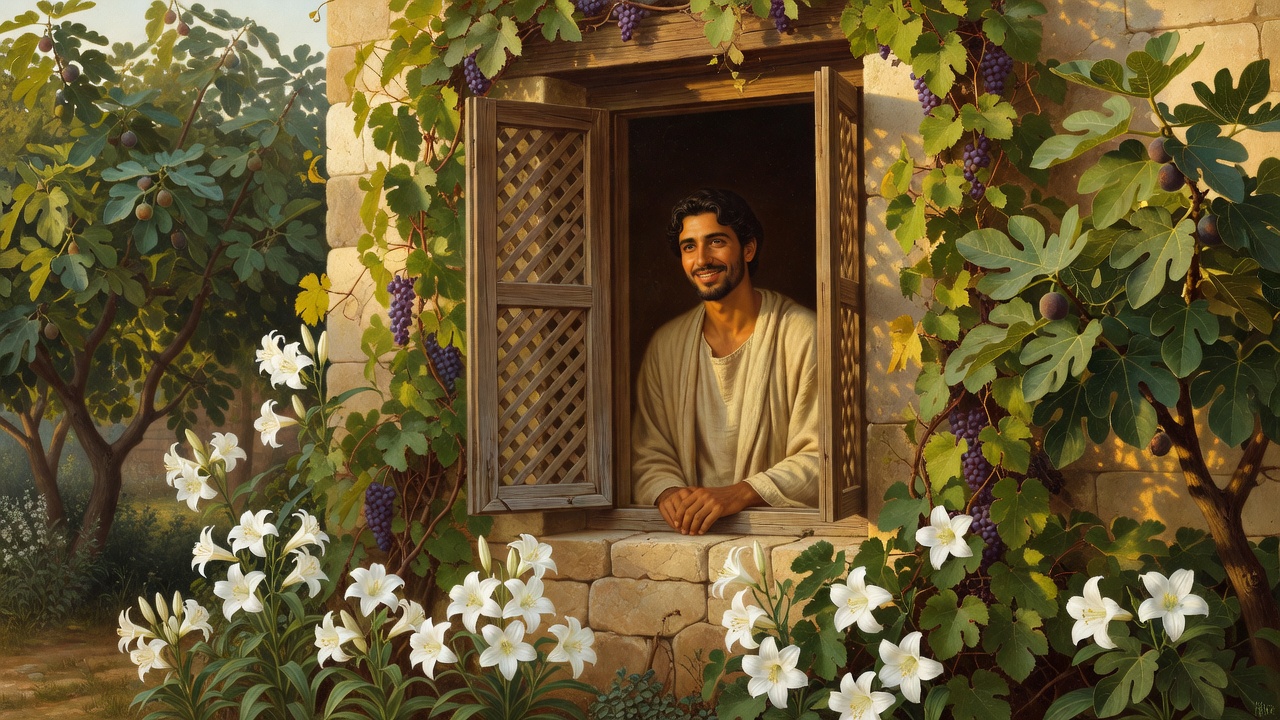
¿Sabías que…?
La Primavera y el Despertar del Amor
- Sarón era una fértil llanura costera que se extendía entre el mar Mediterráneo y las colinas al oeste de Jerusalén, célebre por su belleza y vegetación, lo que dio origen a metáforas como la rosa de Sarón.Fuentes: Saron · el propio texto bíblico
- El poema describe la llegada de la primavera mediante señales campestres, tales como el cese de las lluvias invernales, el arrullo de las tórtolas, los higos que maduran y las viñas en flor que debían cuidarse de los zorros.Fuentes: el propio texto bíblico
- La mujer apela repetidamente a las hijas de Jerusalén, formulando sus advertencias sobre el amor a través de figuras de la fauna silvestre, como gacelas y ciervas del campo.Fuentes: Jerusalem · el propio texto bíblico
Notas escritas con ayuda de IA a partir de fuentes abiertas (Theographic Bible Metadata, CC BY-SA 4.0; Easton’s Bible Dictionary, dominio público) y revisadas antes de publicarse.
Lugares de este capítulo
Solo aparecen lugares identificados con alta confianza (90 % o más según las fuentes académicas reunidas por OpenBible). Mapa de la época: DARE (Digital Atlas of the Roman Empire), CC BY 4.0; mapa actual: © colaboradores de OpenStreetMap; lugares: OpenBible.info (CC BY 4.0).
Créditos y licencia de esta traducción
Baibal Olcim
The Holy Bible in the Matupi Chin language of Mynmar. Matupi Chin Standard Bible
Public Domain
Language: Matupi Chin (Chin, Matu)
Published in Mynmar, which is not a signatory to international copyright treaties. Copyright may apply locally in Mynmar, where this is released under a Creative Commons Attribution Share-Alike 4.0 license.
2026-09-21
Fuente: http://ebible.org/hltmcsb/ · eBible.org