Jonás 4
Baibal Olcim · Toca un versículo para ver sus referencias cruzadas.
Jonah Sai
1Tedae thaehuet he Jonah taengah muep a thae pah tih amah khaw sai. 2Te dongah BOEIPA taengla thangthui tih, “Aw BOEIPA, ka hmuenlung ah ka om vaengah he he ka ol moenih a? Te dongah ni Tarshish la yong ham ka mah. Namah he lungvatnah neh thinphoei Pathen la kan ming ta. Thintoek na ueh tih sitlohnah loh a puh dongah boethae khui lamloh ko na hlawt. 3BOEIPA aw, kai lamkah ka hinglu te lo mai laeh. Ka dueknah he ka hingnah lakah then,” a ti. 4Tedae BOEIPA loh, “Nang taengah a sai te thuem a?” a ti nah.
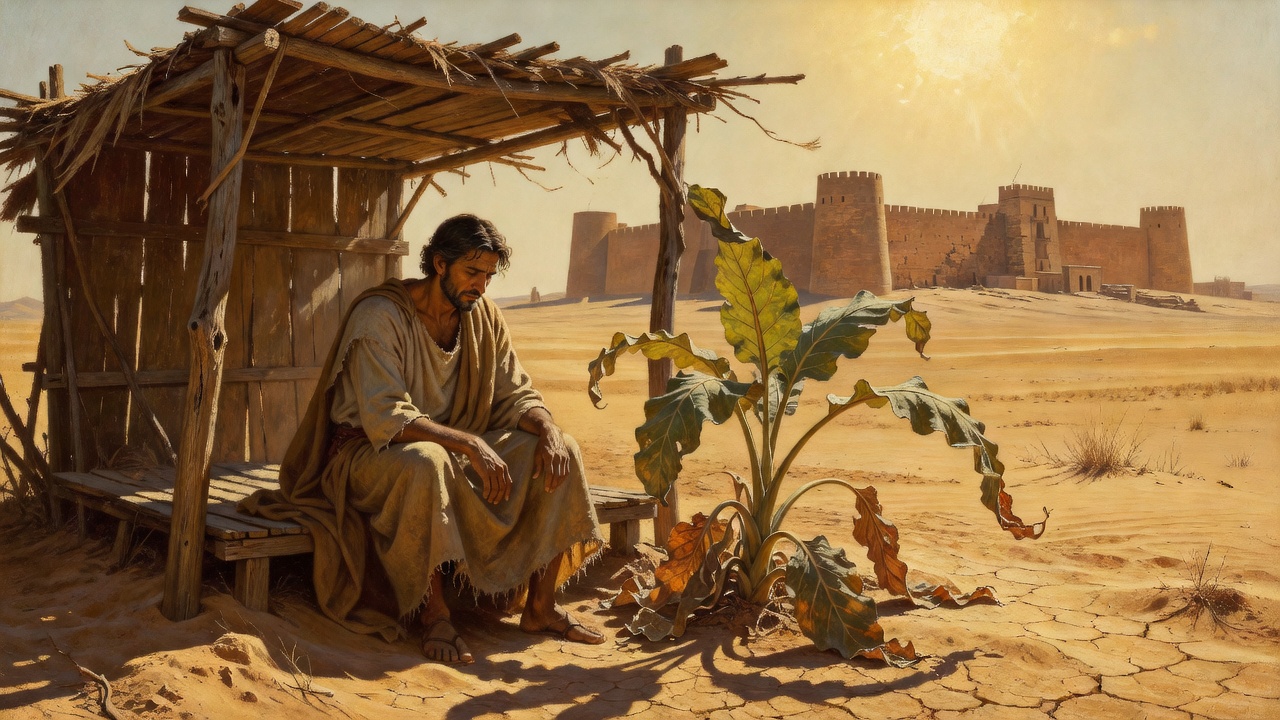
5Te phoeiah Jonah te khopuei lamloh cet tih khopuei kah khothoeng ah kho a sak. Te vaengah amah hamla poca pahoi a sak tih khopuei ah metla a om khaw hmuh hamla hlipkhup kah a hmui ah ngol. 6Te vaengah Pathen BOEIPA loh tuikung a khueh pah tih Jonah soah a yam pah. A lu soah hlipkhup la a om pah dongah anih ham tah a yoethaenah khui lamloh huul uh. Te dongah Jonah tah tuikung dongah te kohoenah neh bahoeng a kohoe. 7Tedae a vuen mincang a pha vaengah Pathen loh phol a khueh pah tih tuikung te a ngawn pah dongah a koh pah. 8Khomik a thoeng neh Pathen loh khothoeng yilh ling a paek. Te vaengah ah khomik loh Jonah lu te a do pah. Te dongah tawn coeng tih a hinglu te a duek ham ni a bih coeng. Te dongah, “Ka dueknah he ka hingnah lakah then,” a ti. 9Tedae Pathen loh Jonah te, “Tuikung dongah na sai te thuem a?” a ti nah vaengah, “Dueknah hil ka sai tueng ta,” a ti nah.
10Te dongah BOEIPA loh, “Nang loh tuikung te na rhen. Te ham te na thakthae pawt tih na rhoeng sak moenih. Te te hlaem khat ca ah poe tih hlaem khat ca ah ni a milh. 11Tedae kai loh Nineveh khopuei len ka rhen mahpawt nim? A khuiah a bantang laklo neh a banvoei laklo aka ming pawh hlang thawng ya pakul lakah a yet neh rhamsa khaw muep om ta,” a ti nah.
¿Sabías que…?
El enojo de Jonás y la compasión de Dios
- Jonás admite que originalmente intentó huir hacia Tarsis precisamente porque sabía que Dios es clemente, compasivo, lento para la ira y dispuesto a desistir de enviar calamidades. Su aflicción surgió cuando Dios decidió perdonar a Nínive en lugar de destruirla.Fuentes: el propio texto bíblico · Tarshish
- Nínive, la floreciente capital del Imperio Asirio, se describe al final del libro con más de 120.000 personas que no saben distinguir entre su mano derecha y su izquierda, además de muchos animales. Dios resalta esta inmensa población para contrastar la compasión divina con el apego de Jonás a una sola planta marchita.Fuentes: el propio texto bíblico · Nineveh
Notas escritas con ayuda de IA a partir de fuentes abiertas (Theographic Bible Metadata, CC BY-SA 4.0; Easton’s Bible Dictionary, dominio público) y revisadas antes de publicarse.
Lugares de este capítulo
- Nineveh · 36.359, 43.153 · versículo 11
Solo aparecen lugares identificados con alta confianza (90 % o más según las fuentes académicas reunidas por OpenBible). Mapa de la época: DARE (Digital Atlas of the Roman Empire), CC BY 4.0; mapa actual: © colaboradores de OpenStreetMap; lugares: OpenBible.info (CC BY 4.0).
Créditos y licencia de esta traducción
Baibal Olcim
The Holy Bible in the Matupi Chin language of Mynmar with Strong's numbers
Public Domain
Language: Matupi Chin (Chin, Matu)
Published in Mynmar, which is not a signatory to international copyright treaties. Copyright may apply locally in Mynmar.
2026-07-16
Fuente: http://ebible.org/hlt/ · eBible.org