1 Samuel 3
Baibal Olcim · Toca un versículo para ver sus referencias cruzadas.
Samuel Khuenah
1Camoe Samuel tah Eli mikhmuh ah BOEIPA hamla thotat. Te vaeng tue ah BOEIPA kah ol khaw kuelka pueng tih mangthui khaw pungtai pawh.
2Te khohnin ah Eli tah a hmuen ah yalh. A mik khaw hmaang coeng tih hmu thai voel pawh.
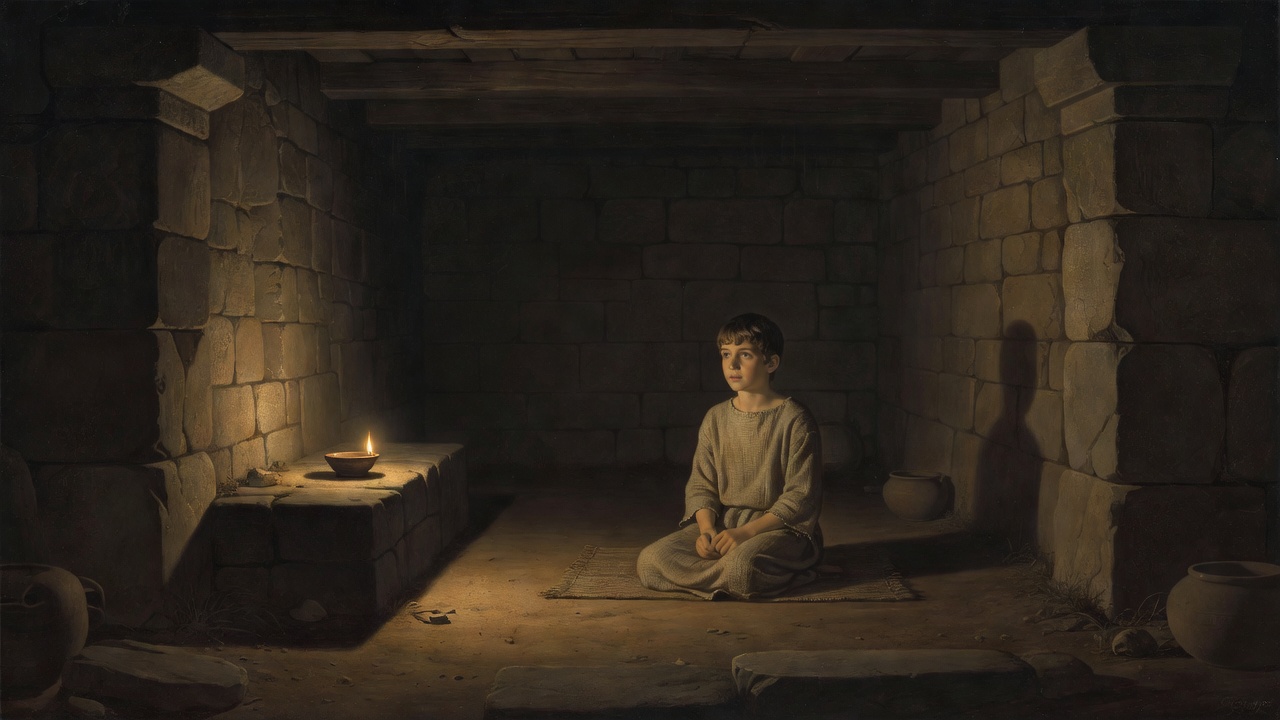
3Pathen kah hmaiim a thih hlanah Samuel khaw BOEIPA kah bawkim ah yalh. Teah te Pathen kah thingkawng om.
4Te vaengah Samuel te BOEIPA loh a khue hatah, “Kai ka om he,” a ti nah.
5Te phoeiah Eli taengla yong tih, “Kai nang khue tih ka om ta he,” a ti nah.
Tedae, “Kang khue moenih, bal lamtah yalh laeh,” a ti nah vanbangla cet tih yalh.
6Te phoeiah Samuel a khue te BOEIPA loh koep a rhaep. Te dongah Samuel te thoo tih Eli taengla cet. Te vaengah, “Kai nang khue tih ka om ta he,” a ti nah.
Tedae, “Ka ca, kan khue moenih, bal lamtah yalh laeh,” a ti nah.
7Te vaengah Samuel loh BOEIPA te hmat hlan tih BOEIPA ol khaw anih taengah phoe hlan. 8A pathum dongah khaw BOEIPA loh a rhaep tih Samuel te a khue. Te dongah a thoh hang neh Eli taengla cet tih, “Kai nang khue tih ka om ta he,” a ti nah.
Te daengah camoe te BOEIPA loh a khue tila Eli loh a yakming. 9Te vaengah Samuel te Eli loh, “Cet lamtah yalh laeh, nang te ng'khue atah, 'BOEIPA han thui lah, Na sal long he ka hnatun ngawn,’ ti nah,” a ti nah.
Te dongah Samuel te cet tih amah hmuen ah koep yalh.
10Te phoeiah BOEIPA te ha pawk tih pai. A noek noek kah bangla, “Samuel, Samuel,” a ti nah.
Samuel loh, “Na sal long he ka hnatun dongah han thui ngawn,” a ti nah.
11Te daengah Samuel te BOEIPA loh, “Israel ah hno ka saii coeng ne. Te te aka ya boeih ham a hna bok umya bitni. 12Tekah khohnin dongah a imkhui ah ka thui ham ka tong tih ka khah boeih nen te Eli ka pai thil ni. 13Amah im ah kai loh lai ka tloek te amah taengah ka puen coeng. Kumhal duela thaesainah te a ming. A ca rhoi te pamdah tih amih rhoi taengah a ueih moenih. 14Eli imkhui te ka toemngam coeng dongah Eli imkhui kathaesainah a dalh te hmueih nen khaw khocang nen khaw kumhal duela dawth boel saeh,” a ti nah.
15Samuel khaw mincang duela yalh tih BOEIPA im kah thohkhaih te a ong. Tedae a manghmuhnah te Eli taengah thui ham Samuel loh a rhih. 16Tedae Samuel te, Eli loh a khue tih, “Ka ca Samuel,” a ti nah hatah, “Kai ka om he,” a ti nah.
17Te phoeiah, “Nang taengah mebang ol lae a thui. Kai taengah phah boeh. Pathen loh nang ham a saii bitni. Nang taengah a thui ol boeih khuiah ol te kai taengah na phah vetih khoengvoep uh ve,” a ti nah.
18Te daengah Samuel loh olka boeih te phah kolla Eli taengah a thui pah. Te vaengah, “BOEIPA amah loh a mikhmuh ah then a ti bangla saii nawn saeh,” a ti. 19Samuel a puel hang vaengah BOEIPA khaw anih taengah om. Te vaengah BOEIPA ol pakhat khaw diklai la rhul sak pawh. 20Dan lamloh Beersheba duela Israel pum loh Samuel tah BOEIPA kah tonghma la cak coeng tila a ming uh. 21Shiloh kah a phoe ham te BOEIPA loh a khoep. Te dongah BOEIPA tah BOEIPA ol nen ni Shiloh kah Samuel taengla a phoe pah.
¿Sabías que…?
El Llamamiento de Samuel
- El santuario que albergaba el arca de Dios estaba ubicado en Silo, donde el joven Samuel servía bajo la tutela del sumo sacerdote Elí. El texto señala que las revelaciones divinas y las visiones eran escasas en aquellos días, antes de que el Señor volviera a revelarse a Samuel en Silo.Fuentes: el propio texto bíblico · Shiloh · Eli
- Elí ejerció el sumo sacerdocio y juzgó a Israel durante cuarenta años, pero no reprendió con severidad a sus hijos corruptos, Ofni y Finees, lo que provocó un juicio divino sobre su casa. El oficio sacerdotal permaneció en su linaje hasta que el rey Salomón depuso a Abiatar y nombró a Sadoc.Fuentes: Eli · el propio texto bíblico
- La frase desde Dan hasta Beerseba designa toda la extensión territorial de la Tierra Prometida, desde su frontera norte en Dan hasta el extremo sur en Beerseba, una distancia de unas 144 millas. Su mención destaca que toda la nación reconoció a Samuel como un profeta acreditado.Fuentes: Beersheba · el propio texto bíblico
Notas escritas con ayuda de IA a partir de fuentes abiertas (Theographic Bible Metadata, CC BY-SA 4.0; Easton’s Bible Dictionary, dominio público) y revisadas antes de publicarse.
Lugares de este capítulo
- Dan · Hoy: Tel Dan · 33.249, 35.652 · versículo 20
- Shiloh · Hoy: Khirbet Seilun · 32.056, 35.290 · versículo 21
Solo aparecen lugares identificados con alta confianza (90 % o más según las fuentes académicas reunidas por OpenBible). Mapa de la época: DARE (Digital Atlas of the Roman Empire), CC BY 4.0; mapa actual: © colaboradores de OpenStreetMap; lugares: OpenBible.info (CC BY 4.0).
Créditos y licencia de esta traducción
Baibal Olcim
The Holy Bible in the Matupi Chin language of Mynmar with Strong's numbers
Public Domain
Language: Matupi Chin (Chin, Matu)
Published in Mynmar, which is not a signatory to international copyright treaties. Copyright may apply locally in Mynmar.
2026-07-16
Fuente: http://ebible.org/hlt/ · eBible.org