Apocalipsis 21
U BULUNGANA U NIGA · Toca un versículo para ver sus referencias cruzadas.
U kolö u tsimus nu puta u tsimus
1Ba lia u tareto u kolö u tsimus nu puta u tsimus. U kolö mam nu puta mam e tia hakapa tala, na e moa lel has tu tasi. 2Ba lia u tareto a Taun a Goagono, a Jerusalem a tsimus, ba te lakasa ba nenama i Kolö te kana e Sunahan me la puta nama. Nonei e taratara haniga herei a tahol te hitöl mena a tson i tanen ba te hase iena a man hasobu a man niga. 3Ba lia e hengoegu u ranga pan te butuma tere Sunahan te gumia turu gumgum u goagono me poiena, “Tara iam. A luma tere Sunahan e ka gono tala merena u katun. Nonei e ka gono mera noen ba nori te katun uariou i tanen. Ne Sunahan noa has te ka gono mera noen. 4Ba nonei te hasokolei ranoen. Na e moa lel ta tou mate na ta nitatagi nu tabe nu kamits. Taraha, a nikaka mam e tia hakapa tala.”
5Ne Sunahan te gumia turu gumgum u goagono e poei, “Alia e kato hatsimus talegu a mamana ka.” Ba nonei e poe hasena i tar, “Alö go kolotein a man ka teka, taraha u ranga teka e matsköna ne mana hasina.” 6Ba nonei e poiena i tar, “E kapa tala! Alia a hatania na kapakapa. Alia e hale gou u ramun tara katun te makana tara kioun ramununa tara nitoatoa, ne moa ta hol. 7A katun te tagala saluhena a nomi e lue nou a man ka teka. Na alia e Sunahan uagou i tanen ba nonei te pien uanou i tar. 8Kaba u katun u bulbulu, na pala te hahamanar, nu katun te hakats homir, nu katun u hihipuli, nu katun u tsiktsikolo na hahaloku, nu katun u matuna, nu katun te hatsunoner u keisa, nu katun u gamogamo — a han i taren e kana romana i iahana kiou pan te kulupuna u tula u uahiahi u kapan koru. A ka teka nonei a hahuoluna a tou mate.”
A Jerusalem a tsimus
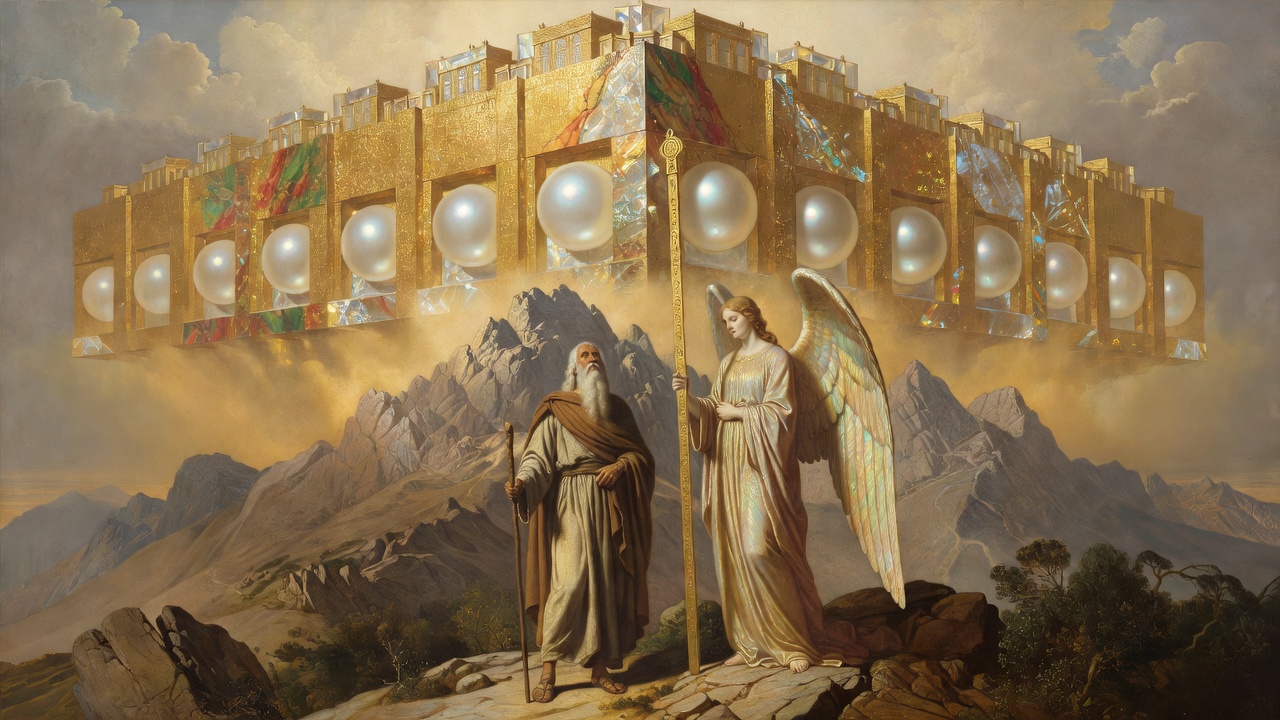
9Na toa angelo e la uama i tar. Nonei a toa tara elahit a angelo ti ka mei a tohit a gotana ti saputi a tohit a nomi te kato homir u katun. Ba nonei e poiena i tar, “Lama, ba lia te na harutse goi lö a Tahol tara Tunan Sipsip.” 10Na lia u kaia turu Namnamei tere Sunahan ne herei nonei a angelo e soata menai lia turu toa u pokus pan koru. Ba nonei e harute noi lia a han i Jerusalem a taun a goagono te koulma tere Sunahan i Kolö. 11A taun teka e alesala mei u ualesala tere Sunahan. Nonei e kankanaha herei a hatu a tsaspa te hol sei koruna ba te tara butu here nei u galas. 12A taun e ka mei a ololo pan a pia koru te hahisen ba te ka mena a 12 a tamana i tanen, na 12 a angelo i taratara kapin a man tamana. Na turu tamana i koloto nia a solor a 12 a hun katun tara barebanar i Israel. 13Topisa tamana i kaia tara pala te purus nama a pitala, na tana topisa i pal saut, na tana topisa tamana i kaia i pal not, na tana topisa tara pala te tsirukuna a pitala. 14A ololo tara taun teka i hatakeia i ieluna a 12 a hatu ti koloto nia u solona a 12 a aposol tara Tunan Sipsip.
15Nonei a angelo te ranga meio lia e ka mei u toa u roein tutuna u goul ba te katsin tune iena a taun na ololo i tanen nu tamana tara ololo. 16A angelo e tunei a taun u roein tutuna i tanen, ba ningahangaha tara taun e antunana tara 2400 kilomita. Na nitatabala i tanen e kato has u i iesana ba te antunana tara 2400 kilomita. Na te la sei uen e antuna hasia tara 2400 kilomita. 17Ba angelo e tuna hasena a ololo ba te pia hapopona tara 36 a ngaha, te mar tuna uanen. 18A ololo teka i kuiei a hatu a tsaspa, na man ka i iahana taun i kuiei a goul a niga habong ba te tara butu here nei u galas. 19Na i kopina ololo tara taun e ka mei a mamana mar hatu a niga te hol seina. A hatu tutun e ngöeri a tsaspa, na hahuol e ngöeri a sapaia ba te ruruhanana, na hatopisa e ngöeri a aget ba te hiakana, na hatohats e ngöeri a emeral ba te bibilina. 20Na hatolimana hatu a niga teka e kolkolotona ba te ngöeri a onikis, na hatönomo e mararana ba te ngöeri a konilian, na hatohit e ngöngöanana ba te ngöeri a krisolait, na hatoal e bibil here nei u tasi te kakahina ba te ngöeri a beril. Na hatosiena hatu a niga teka a solonen a topas ba te ngöngöana halhalina, na hamaloto a solonen a krisopres ba te bibil ngöngöanana, na hamaloto na toa a solonen a haiasin ba te ruruhana halhalina, na hamaloto na huol a solonen a ametis ba te marahina. 21A 12 a tamana tara ololo i kuiei a 12 a hatu a perpererena i tasi te hol seina te ngöeri a pel. A toa tamana i kuiei e na toa e na pel ba te kato talasina. Na kalana i iahana taun teka i kuiei a goul a niga habong ba te tara butu here nei u galas.
22Na lia u ma tarei ta luman lotu i iahana taun teka, taraha a Tsunono e Sunahan te tagala saluhena na Tunan Sipsip nori e hereri a luman lotu i tanen. 23Na taun e ma ngile noi a pitala na tsihau te ga piri u i tanen, taraha u ualesala tere Sunahan e piri nitoa uanou i tanen, na Tunan Sipsip e here noi u lam i tanen. 24A man hun katunur i puta e lala meriou romana u ualesala te alesala nama tara taun teka, nu kingir i puta e la meriou romana a hiharuto na nikapan i taren i iahanen. 25U tamana tara taun teka e kalata nitoa riou romana. E moa te gi tatei hapili lel menien. Ne moa has nou ta bong teka. 26A nikapan na mamana ka a niga turu hun katunur i puta e la meriou romana i iahana taun teka. 27Kaba e moa koru te gi tasu u romana a ka a omi na katun a katokato homi na katun a gamogamo i iahana taun teka. U katun peisa a soloren ti koloto ria i iahana u bukuna tara nitoatoa tara Tunan Sipsip te tatei tasu riou romana i iahana taun teka.
¿Sabías que…?
La nueva Jerusalén
- En esta visión, la ciudad que desciende del cielo es llamada la ciudad santa, la nueva Jerusalén. Jerusalén también era conocida como la ciudad santa y la ciudad de Dios, y en árabe es el-Khuds, que significa la santa. El nombre está en forma dual y significa posesión de paz o fundamento de paz.Fuentes: el propio texto bíblico · Jerusalem
- Al vidente lo llevan en el Espíritu a un monte grande y alto y le muestran esa ciudad santa que desciende. Jerusalén se describe como una ciudad de montaña entronizada en una fortaleza de montaña, y la forma dual del nombre probablemente se refiere a los dos montes sobre los que fue edificada, Sion y Moriah, o, como suponen algunos, a la ciudad alta y la ciudad baja.Fuentes: el propio texto bíblico · Jerusalem
- La muralla de la ciudad tiene doce puertas, tres a cada lado, inscritas con los nombres de las doce tribus de Israel. Israel es otro nombre de Jacob, explicado como el que sigue los talones de otro, o como un suplantador.Fuentes: el propio texto bíblico · Jacob (Israel)
Notas escritas con ayuda de IA a partir de fuentes abiertas (Theographic Bible Metadata, CC BY-SA 4.0; Easton’s Bible Dictionary, dominio público) y revisadas antes de publicarse.
Lugares de este capítulo
Solo aparecen lugares identificados con alta confianza (90 % o más según las fuentes académicas reunidas por OpenBible). Mapa de la época: DARE (Digital Atlas of the Roman Empire), CC BY 4.0; mapa actual: © colaboradores de OpenStreetMap; lugares: OpenBible.info (CC BY 4.0).
Créditos y licencia de esta traducción
U BULUNGANA U NIGA
The New Testament in the Halia Language of Papua New Guinea
Nupela Testamen long tokples Halia long Niugini
copyright © 2020 Wycliffe Bible Translators, Inc.
Language: Halia
Translation by: Wycliffe Bible Translators
This translation is made available to you under the terms of the
Creative Commons Attribution-Noncommercial-No Derivatives license 4.0.
You may share and redistribute this Bible translation or extracts from it in any format, provided that:
You include the above copyright and source information.
You do not sell this work for a profit.
You do not change any of the words or punctuation of the Scriptures.
Pictures included with Scriptures and other documents on this site are licensed just for use with those Scriptures and documents.
For other uses, please contact the respective copyright owners.
2022-06-08
Fuente: http://png.bible/hla/ · eBible.org