Salmos 128
KAKAƗYARI NIUKIEYA XAPAYARI WIXARIKAKƗ · Toca un versículo para ver sus referencias cruzadas.
Ku'uwamete wakwikari.
1'Aixɨa mepɨ'itɨarie kemɨ'ane Yawé memayemakaxe,
kehate huyetana memuhu.
2Peti'uximayatɨ tita pemɨtiukaxexeiyani, mɨkɨkɨ pepɨti'amikwani,
'aixɨa 'iyari xepu'uwani meta xepɨte'ukaxexeiyani.
3'A'ɨya 'akie pukani,
kaxie nanari witsimɨtixuawe hepaɨ pɨ'aneni,
'amexatsie 'aniwema meputiteni,
witsimepɨteyuxexeiyani huriwu yɨrameyari hepaɨ.
4Mɨkɨ pɨhɨkɨ tewi 'aixɨa kemu'itɨarieni
kemɨ'ane Yawé mayemakaxe.
5Yawé 'aixɨa kemetsiyurieka Tsiyuni paitɨ,
meta peke'uniere Kerutsaremetsie ke'aixɨa mɨtiyɨaneni
kepaɨmexɨa tukari pemɨyurieni.
6'Aniwema waniwema pemɨwaxeiyakɨ peke'uyeikani.
'Ixaheri kwieyaritsie kayuwatɨ ke'umaka.
¿Sabías que…?
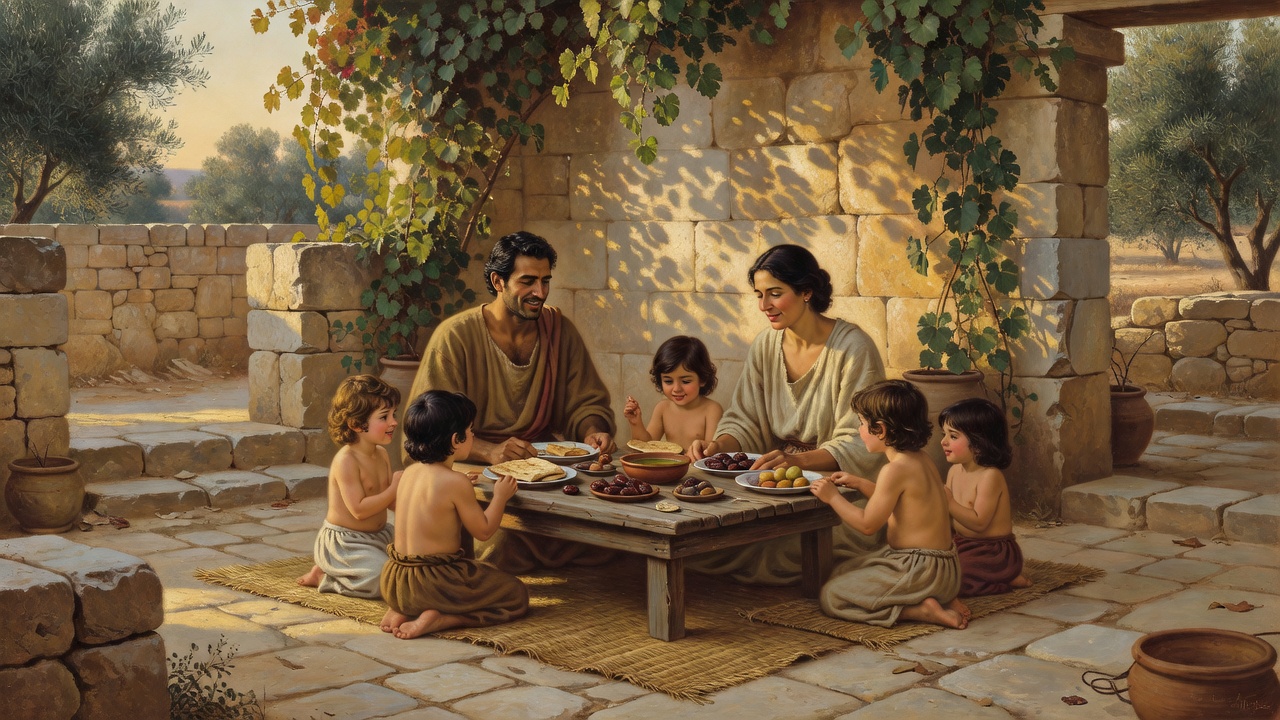
Bendiciones Familiares y la Paz de Jerusalén
- El Salmo 128 utiliza metáforas agrícolas familiares para describir la abundancia doméstica, comparando a la esposa con una vid fructífera y a los hijos alrededor de la mesa con vigorosos renuevos de olivo.Fuentes: el propio texto bíblico
- El salmo está catalogado como un Cántico de ascenso gradual, vinculando el trabajo cotidiano y la dicha familiar con el bienestar colectivo de Sion y Jerusalén.Fuentes: el propio texto bíblico · Zion
- La bendición final de paz sobre Israel hace eco del significado tradicional de Jerusalén, cuyo nombre alude a una posesión o fundamento de paz.Fuentes: el propio texto bíblico · Jerusalem
Notas escritas con ayuda de IA a partir de fuentes abiertas (Theographic Bible Metadata, CC BY-SA 4.0; Easton’s Bible Dictionary, dominio público) y revisadas antes de publicarse.
Lugares de este capítulo
Solo aparecen lugares identificados con alta confianza (90 % o más según las fuentes académicas reunidas por OpenBible). Mapa de la época: DARE (Digital Atlas of the Roman Empire), CC BY 4.0; mapa actual: © colaboradores de OpenStreetMap; lugares: OpenBible.info (CC BY 4.0).
Créditos y licencia de esta traducción
KAKAƗYARI NIUKIEYA XAPAYARI WIXARIKAKƗ
The Holy Bible in the in Huichol language of Mexico, 2020 edition
La Santa Biblia en lengua huichol de México, edición 2020
copyright © 2020 Wycliffe Bible Translators, Inc.
Language: Huichol
Translation by: Wycliffe Bible Translators, Inc.
Huichol [hch], Mexico
Copyright Information
© 1988-2020, Wycliffe Bible Translators, Inc.
This translation text is made available to you under the
terms of the Creative Commons License: Attribution-Noncommercial-No Derivative Works.
( http://creativecommons.org/licenses/by-nc-nd/3.0/ )
In addition, you have permission to port the text to different file formats, as long as you
do not change any of the text or punctuation of the Bible.
You may share, copy, distribute, transmit, and extract portions
or quotations from this work, provided that you include the above copyright
information:
You must give Attribution to the work.
You do not sell this work for a profit.
You do not make any derivative works that change any of the actual words or punctuation of the Scriptures.
Permissions beyond the scope of this license may be
available if you contact
us with your request.
The Holy Bible
in Huichol
© 1988-2020, Wycliffe Bible Translators, Inc.
This translation is made available to you under the terms of the
Creative Commons Attribution-Noncommercial-No Derivatives license 4.0.
You may share and redistribute this Bible translation or extracts from it in any format, provided that:
You include the above copyright and source information.
You do not sell this work for a profit.
You do not change any of the words or punctuation of the Scriptures.
Pictures included with Scriptures and other documents on this site are licensed just for use with those Scriptures and documents.
For other uses, please contact the respective copyright owners.
2025-09-03
Fuente: http://ebible.org/hch/ · eBible.org