Cantares 2
Bib Sen An · Toca un versículo para ver sus referencias cruzadas.
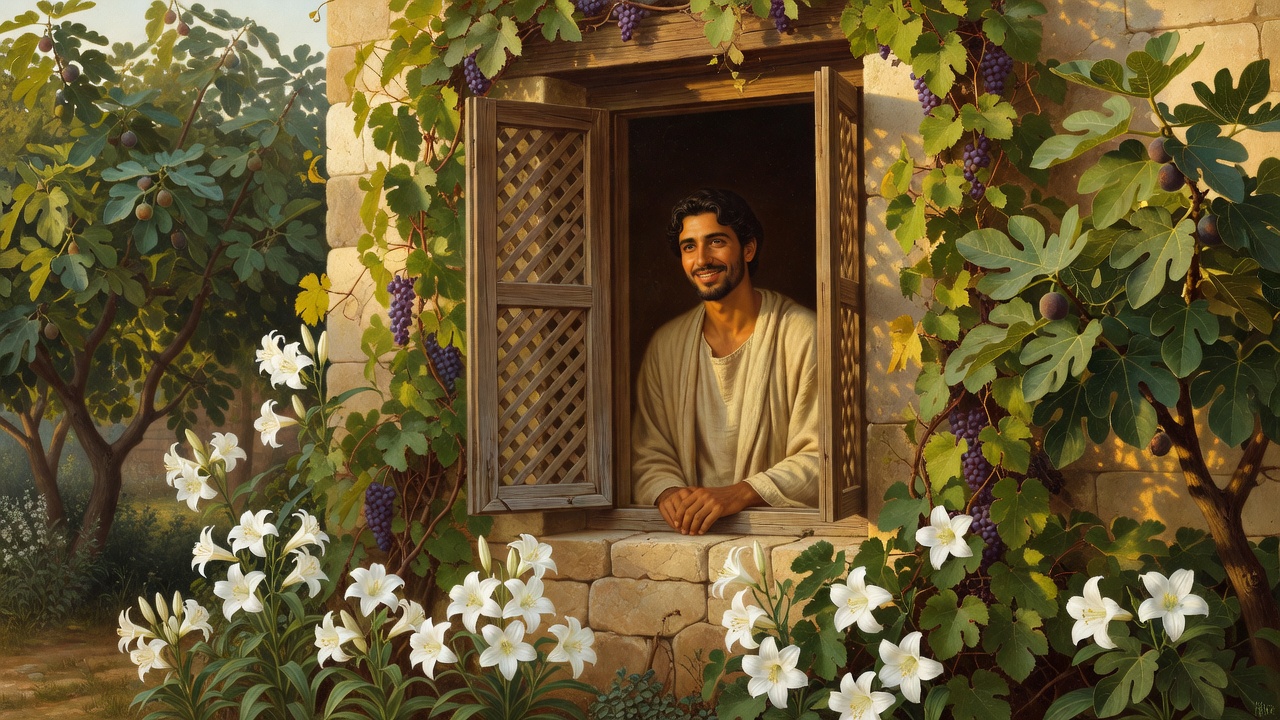
1Mwen se flè Woz Saron an,
flè Lis a vale yo.
2Tankou yon flè lis pami pikan yo,
se konsa cheri mwen an ye
pami tout jenn fi yo.
3Tankou yon pye pòm pami bwa nan forè,
se konsa cheri mwen an ye pami jennonm yo.
Nan lonbraj li mwen te pran gwo plezi pou m te chita;
konsa fwi li te dous nan gou m.
4Li te mennen m nan gwo sal bankè li,
e drapo li monte sou mwen an se lanmou.
5Ban m fòs ak gato rezen,
rafrechi m ak pòm,
akoz mwen malad ak lanmou.
6Kite men goch li rete anba tèt mwen
ak men dwat li pou l anbrase m.
7M ap avèti nou, O fi a Jérusalem yo,
nan non antilòp ak bich mawon an,
pou nou pa fè lanmou m leve,
ni ouvri zye li jiskaske se plezi li.
8Koute! Men cheri mwen an!
Men l ap vini!
L ap monte sou mòn yo,
epi vòltije sou kolin yo!
9Cheri mwen an tankou yon antilòp,
oswa yon jenn sèf.
Gade byen, li kanpe dèyè mi kay nou an;
l ap gade nan fenèt yo, l ap gade nan jalouzi a.
10Cheri mwen an te reponn mwen
e te di m: “Leve vini cheri mwen an,
pi bèl mwen an.
11Paske gade, sezon fredi a fin pase,
lapli fin pati nèt.
12Flè yo deja parèt nan peyi a;
tan chante a fin rive!
Vwa toutrèl la ap koute deja nan peyi a.
13Fwi pye fig etranje a fin mi,
e chan rezen yo bay odè pafen.
Leve vini, annou pati!”
14O toutrèl nan fant wòch mwen an,
nan kote sekrè chemen ki monte apik,
kite mwen wè figi ou, kite mwen tande vwa ou!
Paske vwa ou dous e fòm ou bèl nèt.
15Kenbe rena yo pou nou,
ti rena k ap detwi chan rezen yo,
paske chan nou yo ap fè flè.
16Cheri mwen an se pa m,
e mwen se pa l.
Li fè patiraj twoupo li pami flè lis yo.
17Jiskaske joune a vin fè fre
lè lonbraj yo kouri ale;
vire, cheri mwen an,
fè tankou antilòp la, oswa jenn sèf sou mòn Bether a.
¿Sabías que…?
La Primavera y el Despertar del Amor
- Sarón era una fértil llanura costera que se extendía entre el mar Mediterráneo y las colinas al oeste de Jerusalén, célebre por su belleza y vegetación, lo que dio origen a metáforas como la rosa de Sarón.Fuentes: Saron · el propio texto bíblico
- El poema describe la llegada de la primavera mediante señales campestres, tales como el cese de las lluvias invernales, el arrullo de las tórtolas, los higos que maduran y las viñas en flor que debían cuidarse de los zorros.Fuentes: el propio texto bíblico
- La mujer apela repetidamente a las hijas de Jerusalén, formulando sus advertencias sobre el amor a través de figuras de la fauna silvestre, como gacelas y ciervas del campo.Fuentes: Jerusalem · el propio texto bíblico
Notas escritas con ayuda de IA a partir de fuentes abiertas (Theographic Bible Metadata, CC BY-SA 4.0; Easton’s Bible Dictionary, dominio público) y revisadas antes de publicarse.
Lugares de este capítulo
Solo aparecen lugares identificados con alta confianza (90 % o más según las fuentes académicas reunidas por OpenBible). Mapa de la época: DARE (Digital Atlas of the Roman Empire), CC BY 4.0; mapa actual: © colaboradores de OpenStreetMap; lugares: OpenBible.info (CC BY 4.0).
Créditos y licencia de esta traducción
Bib Sen An
The Holy Bible in Haitian Creole, 2023 update
copyright © 2017-2023 Ron Smith
Language: Kreyòl Ayisyen (Haitian)
Translation by: Ron Smith
Contributor: Felix Nixon
This translation is made available to you under the terms of the
Creative Commons Attribution Share-Alike license 4.0.
You have permission to share and redistribute this Bible translation in any format and to make reasonable revisions and adaptations of this translation, provided that:
You include the above copyright and source information.
If you make any changes to the text, you must indicate that you did so in a way that makes it clear that the original licensor is not necessarily endorsing your changes.
If you redistribute this text, you must distribute your contributions under the same license as the original.
Pictures included with Scriptures and other documents on this site are licensed just for use with those Scriptures and documents.
For other uses, please contact the respective copyright owners.
Note that in addition to the rules above, revising and adapting God's Word involves a great responsibility to be true to God's Word. See Revelation 22:18-19.
2026-06-11
Fuente: http://ebible.org/hatbsa/ · eBible.org