Job 27
Bib Sen An · Toca un versículo para ver sus referencias cruzadas.
1Alò, Job te kontinye diskou li. Li te di:
2Kon Bondye viv la, ki te retire dwa m,
Toupwisanki te fè m gen nanm anmè a,
3paske tan lavi toujou nan mwen.
Souf Bondye la nan nen m.
4Lèv mwen, anverite, p ap pale sa ki pa dwat,
ni lang mwen pa p pale manti.
5Fòk se lwen m pou m ta bay ou rezon.
Jiskaske m mouri, mwen p ap lage entegrite m.
6Mwen kenbe fèm a ladwati mwen.
Mwen p ap lage l menm.
Kè m pa repwoche m depi gen lavi ladan m.
7“Kite lènmi m kapab tankou mechan a.
Kite sila ki leve kont mwen, san jistis.
8Paske ki espwa sila ki san Bondye a genyen
lè l koupe retire nèt,
lè Bondye fè l oblije bay lavi li?
9Èske Bondye va tande kri li lè malè rive li?
10Èske li va pran plezi nan Toupwisan an?
Èske li va rele non Bondye a nan tout tan sa yo?
11Mwen va enstwi ou nan pwisans Bondye.
Pwojè Toupwisan an, mwen p ap kache l.
12Gade byen, nou tout gen tan wè sa.
Ebyen, poukisa nou aji nan foli?
13“Sa se pòsyon a moun mechan an ki va sòti Bondye,
ak eritaj ke mechan yo va resevwa nan men Toupwisan an.
14Malgre fis li yo anpil, yo destine pou nepe.
Konsa, desandan li yo ap toujou manke pen.
15Sila ki swiv li yo va antere nan lamò
e vèv li yo p ap kriye pou li.
16Malgre li fè gwo pil ajan an vin tankou se tè
e prepare vètman anpil tankou ajil,
17li kab prepare l, men se moun ladwati yo k ap mete li,
se inosan yo k ap divize ajan an.
18Li te bati kay li tankou papiyon,
oswa tankou kay poto gadyen te fè.
19Li kouche byen rich, men li pa janm vin genyen ankò;
li ouvri zye li, men li pa la.
20Gwo laperèz yo rive pran l tankou yon flèv.
Yon move tan vole retire l pandan lannwit.
21Van lès la pote l ale e li pati.
Li fè l vire tounen kite plas li.
22Paske l ap plonje sou li san epanye,
pandan li eseye envite l chape nan men l.
23Pèp la va bat men yo sou li.
Yo va sifle sou li kon koulèv,
pou li kite plas li a.”
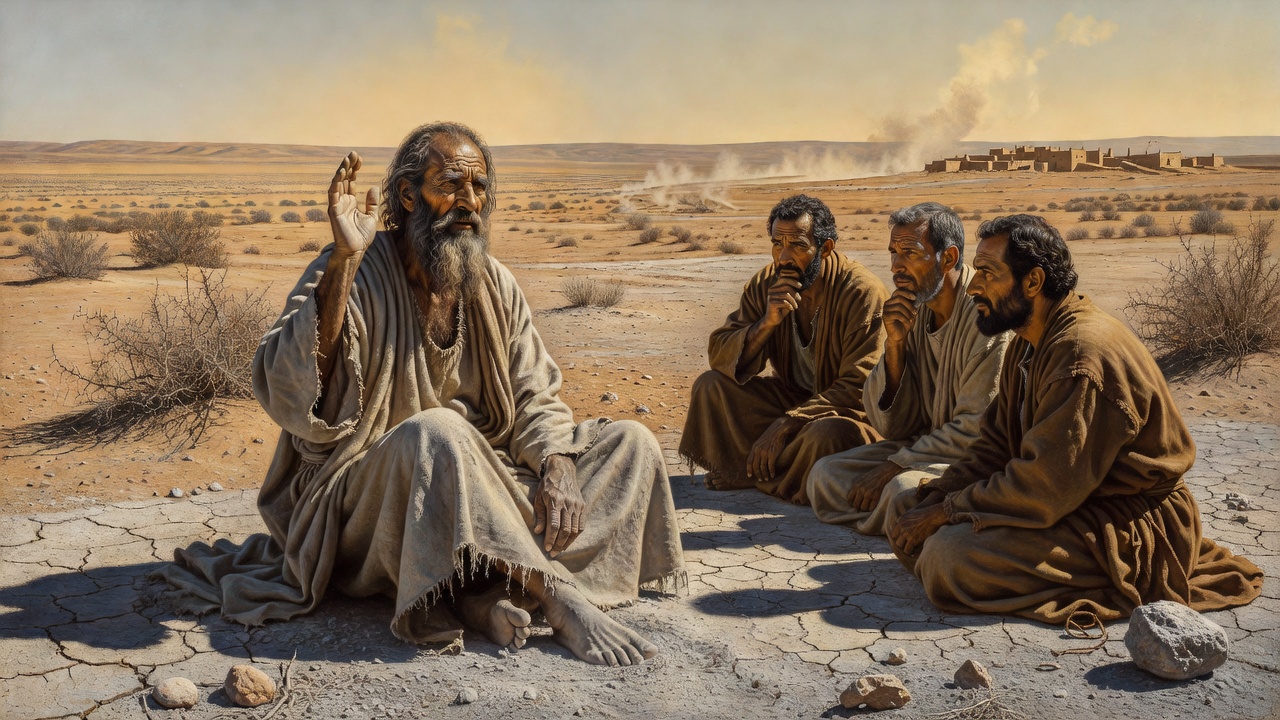
¿Sabías que…?
El juramento de integridad de Job y el destino de los impíos
- En este discurso, Job pronuncia un juramento solemne por la vida de Dios, afirmando que mantendrá su integridad y una conciencia limpia hasta la muerte antes que admitir falsamente una culpa ante sus compañeros.Fuentes: el propio texto bíblico · Job
- Job describe la vanidad final de las riquezas mal habidas, explicando que, aunque el impío acumule plata como el polvo, sus posesiones terminarán en manos de los justos e inocentes mientras él es arrastrado por una calamidad repentina.Fuentes: el propio texto bíblico
Notas escritas con ayuda de IA a partir de fuentes abiertas (Theographic Bible Metadata, CC BY-SA 4.0; Easton’s Bible Dictionary, dominio público) y revisadas antes de publicarse.
Créditos y licencia de esta traducción
Bib Sen An
The Holy Bible in Haitian Creole, 2023 update
copyright © 2017-2023 Ron Smith
Language: Kreyòl Ayisyen (Haitian)
Translation by: Ron Smith
Contributor: Felix Nixon
This translation is made available to you under the terms of the
Creative Commons Attribution Share-Alike license 4.0.
You have permission to share and redistribute this Bible translation in any format and to make reasonable revisions and adaptations of this translation, provided that:
You include the above copyright and source information.
If you make any changes to the text, you must indicate that you did so in a way that makes it clear that the original licensor is not necessarily endorsing your changes.
If you redistribute this text, you must distribute your contributions under the same license as the original.
Pictures included with Scriptures and other documents on this site are licensed just for use with those Scriptures and documents.
For other uses, please contact the respective copyright owners.
Note that in addition to the rules above, revising and adapting God's Word involves a great responsibility to be true to God's Word. See Revelation 22:18-19.
2026-06-11
Fuente: http://ebible.org/hatbsa/ · eBible.org