Proverbios 30
Tupàn ze'eg · Toca un versículo para ver sus referencias cruzadas.
Agur ize'eg ikatu ma'e
1Na'aw Agur Zak ta'yr ize'eg ikatu ma'e xe kury.
Tupàn nuiko kwaw herehe we a'e.
Tupàn nuiko kwaw herehe we a'e.
Ni amo nahepytywà kwaw a'e wà.
2Naiko kwaw teko ài.
Aiko miar ài.
Nakwaw kwaw ma'e teko wazàwe ihe.
3Nazemu'e pixik kwaw ma'e kwaw katu haw romo hereko àwàm rehe ihe.
Nakwaw kwaw Tupàn ikatuahy ma'e ihe.
4Mo ukwaw ywak rehe har paw rupi.
Mo upyhyk ywytu opo pupe.
Mo uwàuwàn 'y pàn pupe.
Mo omono ita ywyzaw muite wera'u har rehe.
Aipo erekwaw a'e awa. Aipo erekwaw ta'yr.
5Tupàn hemimume'u kwer paw azeharomoete har romo a'e. Aze teko uzepyro kar izupe wà, wiko wamimaw romo a'e. 6Aze Tupàn ni'i kwaw amo ma'e nehe, — Tupàn umume'u a'e ma'e a'e, ere zo nehe. Aze ere nehe, Tupàn uzepyk putar nerehe nehe. Wexak kar putar hemu'em ma'e romo nereko haw purupe a'e nehe no.
Tupàn pe ze'egaw
7Aenoz ko ma'e newe kury, o Tupàn. Emur mokoz ma'e ihewe hemàno 'ym mehe we nehe. 8Ezapo kar zo heremu'emaw ihewe nehe. Hemuigo kar zo hemetarer katu ma'e romo nehe. Hemuigo kar zo hemetarer 'ym ma'e romo nehe no. Emur xo heremi'u ràm hemuigo kar àràm zo ihewe nehe. 9Ta'e aze heta wera'u ma'e ihewe nehe, — Naputar kwaw Tupàn ihe, a'e putar ru'u newe nehe. Aze hemetarer 'ym ma'e romo aiko nehe, hemunar putar ru'u ma'e rehe nehe. Nezewe mehe arur putar maranugar haw Tupàn hezar her rehe nehe.
Amo ze'eg xirogatu ma'e
10Eze'eg zemueteahy pixik zo uma'ereko ma'e rehe izar pe nehe. Omono putar ru'u ze'egaiw nerehe wà nehe. Erepuraraw putar ru'u iaiw paw nehe no.
11Heta u rehe ze'egaiw imono har wà. — Hehy numur kwaw ma'e ihewe a'e, i'i e amo wà no.
12— Aiko ikatu 'ymaw hereko 'ymar romo ihe, i'i amo uzeupe wà. Izipiw a'e rihi, ta'e nuzepuez kwaw a'e rihi xe.
13Heta wiko wera'u ma'e wà. — Iaiw ma'e wà, i'i amo wanupe wà.
14Amo teko imunar hemetarer 'ym ma'e wama'e rehe wà, ma'e hereko 'ymar wama'e rehe wà no. Nupurupuhareko kwaw wà.
15Heta mokoz ta'yr tuwy kwer ipyter har wanupe wà. — Emur ihewe, emur ihewe, i'i waner wà. Heta 4 ma'e tetea'u iputar ire upytu'u 'ym ma'e wà:
16Umàno ma'e kwer wapyta haw.
Kuzà imemyr 'ym ma'e.
Ywy uxinig ma'e kwer 'y tuweharupi iputar har.
Tata tàpuz hapy har.
17Aze amo uze'eg urywahyahy u rehe, aze uze'eg zemueteahy uhy rehe, itua'uhez mehe ihya'uhez mehe apitaw u'u putar wano'o kwer a'e wà nehe. Zàpuun u'u putar waneha kwer wà nehe.
18Heta 4 ma'e ikwaw pyr 'ym wà. Napuner kwaw wakwaw paw rehe ihe. Amume'u putar newe xe nehe kury:
19Wiràhu ywak rehe uwewe ma'e.
Moz ita rehe uzemutyk ma'e.
Kanuhu yryhu rehe oho àwàm hexakar.
Awa kuzà rehe we uzeamutamutar katu haw.
20Kuzà umen 'ym puhe oho ma'e wiko nezewe a'e: Uker umen 'ym puhe. A'e re uzahak. A'e re — Nazapo kwaw ikatu 'ym ma'e ihe, i'i uzeupe.
21Teko ywy rehe har na'iakatuwawahy kwaw 4 ma'e rehe wà. Amume'u putar xe newe nehe kury:
22Amo pe uma'ereko ma'e tuwihawete romo uzeapo ma'e.
Iranaiw ma'e wyzài wemi'u ràm tetea'u hereko har.
23Kuzà na'arewahy wikwahy ma'e umen ràm hexak arer.
Uma'ereko e ma'e kuzà uzar hekuzaromo wiko ma'e kwer.
24Heta 4 ma'ea'yr pixika'i ma'e wà. Nezewe rehe we ukwaw katu ma'e a'e wà.
25Tahyw wà. Na'ikàg kwaw wà. Nezewe rehe we omono'og wemi'u ràm àmàkymehe wà.
26Tapixi ka'a pe har wà. Na'ikàg kwaw a'e wà no. Nezewe rehe we omono'ono'og ita wàpuz romo iapo pà wà.
27Tukur wà. Naheta kwaw wanuwihawete wanupe. Nezewe rehe we uzemono'ono'og pitài ma'e romo amo me oho mehe wà.
28Tezu wà. Wyzài teko upuner wapyhykaw rehe wà. Nezewe rehe we uzexak kar te tuwihawete wanàpuz me wà.
29Heta 4 wikuwe ma'e wà. Wata mehe teko ipytuhegatu wanexak mehe wà.
30Zàwàruhu wà. Ikàg wera'u amo miar wanuwi a'e wà. Nukyze kwaw ma'e wi wà.
31Àràpuhàràn wà.
Zapukaz awa wà. Wata upuxi'a hupir pà a'e wà.
Tuwihawete wemiaihu wanenataromo upu'àm ma'e.
32Aze iranaiw ma'e romo ereiko, ereiko wera'u ru'u amo wanuwi. Eremume'u ru'u ikatu 'ym ma'e neremiapo ràm no. Aze ereiko nezewe, epytu'u nehe. Nema'enukwaw katu nehe.
33Aze eremokotokotok ma'e kamy kwer nehe, eremuhem kar ikawer izuwi nehe. Aze amo ukwar nexi rehe nehe, umuhem kar putar neruwykwer nehe. Aze eremuikwahy kar amo nehe, neàmàtyry'ym putar a'e nehe.
¿Sabías que…?
Los Dichos de Agur
- Proverbios 30 se atribuye a Agur, hijo de Jaqué, quien dirigió sus palabras a Itiel y Ucal. Más allá de lo que está registrado en este capítulo, no se sabe nada más acerca de Agur o de su padre.Fuentes: Agur · Jakeh · Ucal · el propio texto bíblico
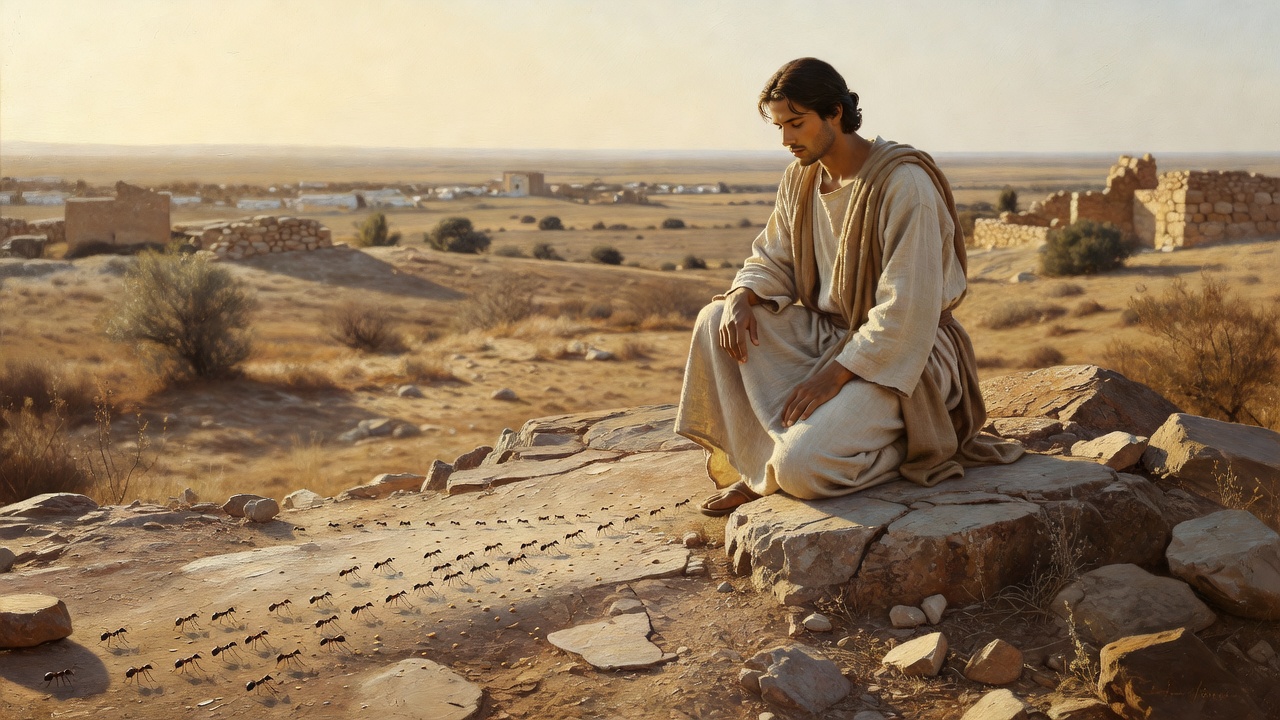
- El capítulo utiliza con frecuencia un patrón numérico graduado ('tres cosas... cuatro que...') para agrupar observaciones sobre la naturaleza y la conducta humana. Agur aplica esta estructura a maravillas de la creación, alteraciones sociales, seres de andar imponente y cuatro pequeñas criaturas que muestran una notable sabiduría: hormigas, damanes, langostas y lagartijas.Fuentes: el propio texto bíblico
- Agur hace una petición específica de dos partes, pidiendo que no se le dé ni pobreza ni riquezas, sino solo su porción diaria de comida. Explica que tener en abundancia podría llevar a alguien a negar al Señor, mientras que caer en la pobreza podría tentar a la persona a robar.Fuentes: el propio texto bíblico
Notas escritas con ayuda de IA a partir de fuentes abiertas (Theographic Bible Metadata, CC BY-SA 4.0; Easton’s Bible Dictionary, dominio público) y revisadas antes de publicarse.
Créditos y licencia de esta traducción
Tupàn ze'eg
Bible without Deuterocanon in Guajajára (BR:gub:Guajajára)
copyright © 2007 Wycliffe Bible Translators, Inc.
Language: Guajajára
Translation by: Wycliffe Bible Translators, Inc.
Guajajára [gub], Brazil
Copyright Information
© 2007, Wycliffe Bible Translators, Inc. All rights reserved.
This translation text is made available to you under the
terms of the Creative Commons License: Attribution-Noncommercial-No Derivative Works.
( http://creativecommons.org/licenses/by-nc-nd/3.0/ )
In addition, you have permission to port the text to different file formats, as long as you
do not change any of the text or punctuation of the Bible.
You may share, copy, distribute, transmit, and extract portions
or quotations from this work, provided that you include the above copyright
information:
You must give Attribution to the work.
You do not sell this work for a profit.
You do not make any derivative works that change any of the actual words or punctuation of the Scriptures.
Permissions beyond the scope of this license may be
available if you contact
us with your request.
Printed book ISBN 9788531109713
The Bible without Deuterocanon
in Guajajára
© 2007, Wycliffe Bible Translators, Inc. All rights reserved.
This translation is made available to you under the terms of the
Creative Commons Attribution-Noncommercial-No Derivatives license 4.0.
You may share and redistribute this Bible translation or extracts from it in any format, provided that:
You include the above copyright and source information.
You do not sell this work for a profit.
You do not change any of the words or punctuation of the Scriptures.
Pictures included with Scriptures and other documents on this site are licensed just for use with those Scriptures and documents.
For other uses, please contact the respective copyright owners.
2020-03-30
Fuente: http://ebible.org/gubBl/ · eBible.org