Mateo 3
Tupàn ze'eg · Toca un versículo para ver sus referencias cruzadas.
Zuàw purumuzahazahak ma'e umume'u Tupàn ze'eg oho iko teko wanupe a'e
1A'e 'ar mehe Zuàw purumuzahazahak ma'e wata oho tàpuz heta 'ymaw pe a'e kury, Zutez ywy rehe a'e kury. Uzypyrog Tupàn ze'eg imume'u pà a'e. 2— Pepytu'u ikatu 'ym ma'e iapo re nehe, Tupàn pe pezewyr pà nehe, hehe pezeruzar wi pà nehe, i'i oho iko teko wanupe a'e. — Ta'e amo 'ar mehe Tupàn weruze'eg putar teko tetea'u a'e nehe xe. Uhem etea'i a'e 'ar a'e kury, i'i oho iko purupe.
3Amo Tupàn ze'eg imume'u har kwehe arer a'e, Izai her ma'e a'e, umume'u Zuàw tur àwàm teko wanupe a'e, Tupàn ze'eg imuapyk pà pape rehe a'e. Na'aw ize'eg awer xe a'e kury.
Amo awa uhapukaz putar oho iko
Teko heta 'ymaw pe, ywyxig heta haw pe a'e nehe,
— Pemukatu Zanezar hape ràm izupe nehe, i'i putar oho iko purupe nehe, — Aze iapar hape ràm nehe, pemu'àgatu nehe,
I'i putar oho iko purupe nehe.
4Zuàw a'e, kawaru kupewa'a hawer uzapo ukamir romo a'e, ma'e pirer izeku'apixi haw romo no. U'u tukur. U'u hàir no. 5Teko tetea'u ur ipyr wà, ize'eg henu pà wà. Zeruzarez tawhu pe har wà, Zutez ywy rehe har wà no, Zotàw yrykawaz rehe har wà no. 6Uzemono oho a'e pe wà, Tupàn pe wà, wemiapo kwer katu 'ym ma'e wi uhem pà wà. — Nahekatu kwaw ihe, i'i izupe wà.
— Azapo ikatu 'ym ma'e tuweharupi ihe, i'i izupe wà. — Apytu'u putar ikatu 'ym ma'e iapo re nehe, i'i izupe wà. Umuzahazahak Zuàw a'e uze'eg ma'e kwer a'e wà, Zotàw yrykaw pupe a'e wà.
7Amo ze'eg kwehe arer kwaw par parizew her ma'e a'e wà, ur ipyr uzemuzahazahak kar pà izupe a'e wà no. Amo xaxeto hemetarer katu ma'e xatuxew her ma'e a'e wà no, ur ipyr a'e wà no. Wanexak mehe Zuàw uze'eg ahyahy wanupe.
— Mozaiw ài peiko pe. Mozaiw uxi'u teko wazuka pà a'e wà. Nezewegatete pemu'e teko temu'emaw rehe pe wà no, tatahu pe wamono kar pà pe wà no, i'i wanupe. — Aipo pepuner pehemaw rehe Tupàn wi nehe, aipo nuzepyk kwaw penehe a'e nehe. Ni amo napemuhem kar kwaw zepykaw wi a'e wà nehe, i'i wanupe. 8— Aze pepytu'u wer ikatu 'ym ma'e iapo re nehe, a'e mehe pezapo ikatuahy ma'e peho peiko nehe, pezemumikahy haw hexak kar pà Tupàn pe nehe, i'i wanupe.
9— Àmàrààw ureipy romo hekon a'e, peze zo nehe. — Ta'e Tupàn upuner mo 'àg ita iapo haw rehe Àmàrààw izuapyr romo a'e xe, aze mo ipurapo wer hehe a'e, i'i wanupe. — Aze awa Àmàrààw zuapyr romo hekon a'e nehe, aze noho kwaw Tupàn hape rupi a'e nehe, Tupàn uze'eg putar nezewe izupe nehe — Nereiko kwaw Àmàrààw izuapyr romo heruwa rupi ne, i'i putar izupe nehe. Uzepyk putar hehe azeharomoete a'e nehe.
10— Itazy ma'ywa 'yw hapo huwake tuz a'e kury. Izar uhaw putar ma'ywa 'yw heityk pà a'e nehe. Aze ma'ywa 'yw na'i'a kwaw nehe, aze i'a kwer na'ikatu kwaw nehe, uhaw putar heityk pà tata pupe nehe, i'i Zuàw teko wanupe. (Ikatu 'ym ma'e iapo har wanehe uze'eg uzeruzar 'ym ma'e wanehe a'e. Tupàn uzepyk putar uze'eg heruzar 'ymar wanehe a'e nehe.)
11— Apumuzahazahak 'y pupe ihe, Tupàn pe pezewyr haw hexak kar pà purupe ihe. Awa heraikweromo ur ma'e ràm a'e nehe, pemuzahazahak putar a'e nehe.
Napemuzahazahak kwaw 'y pupe a'e nehe. Wekwe Puràg pupe tata pupe pemuzahazahak kar putar a'e nehe, i'i wanupe. — Tuwihaw heraikweromo ur ma'e ràm a'e, ikàg wera'u ihewi a'e. Napuner kwaw ni ipy rehe har ihàm ikwaraw paw rehe izuwi ihe, i'i wanupe. 12— Yrypemutu opo pe hereko har umuwewe aroz apirer heityk pà izuwi a'e. Omono'og aroz hyru pupe. Wapy iapirer tata pupe. Heraikweromo ur ma'e ràm wiko a'e yrypemutu hereko har zàwenugar romo a'e. (Uzeruzar ma'e a'e wà, aroz ài wanekon a'e wà. Omono kar putar Tupàn pyr a'e wà nehe. Uzeruzar 'ym ma'e a'e wà, iapirer ài wanekon a'e wà. Omono kar putar tatahu pe a'e wà nehe, a'e tata uwew 'ym ma'e pupe a'e wà nehe, i'i Zuàw a'e, a'e ze'eg kwehe arer kwaw par wanupe a'e).
Zuàw umuzahazahak Zezuz a'e kury
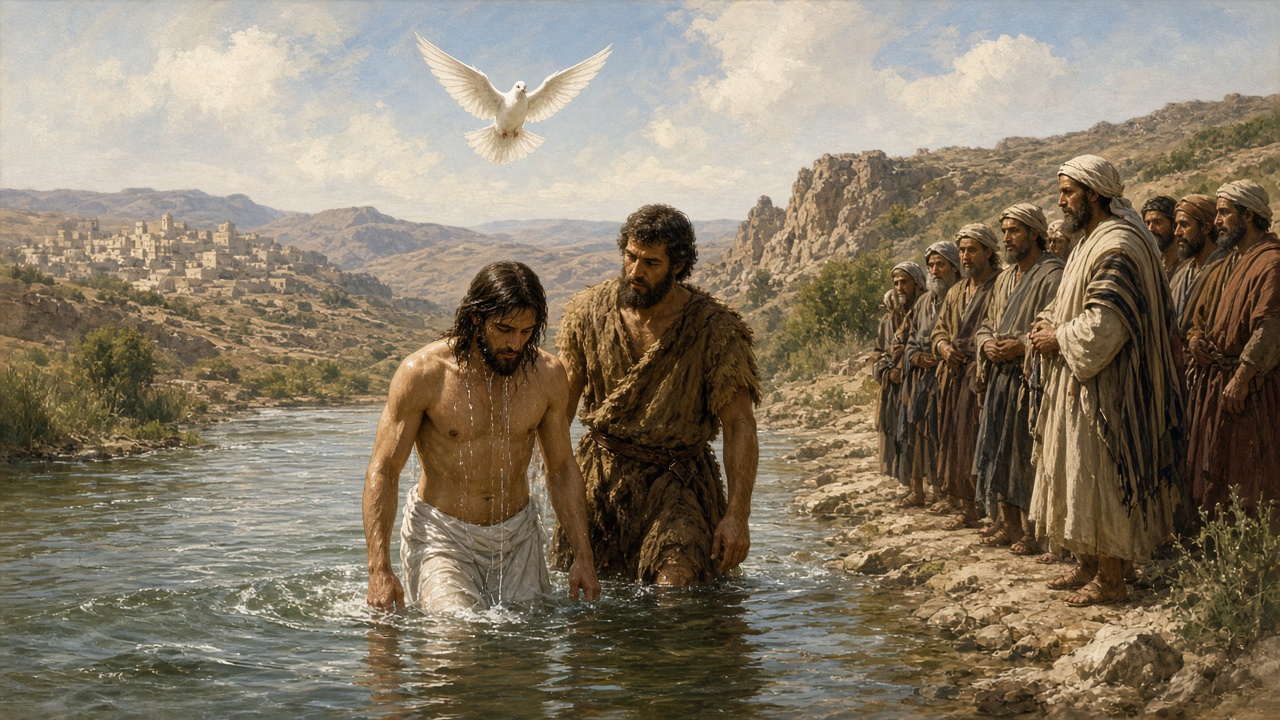
13A'e 'ar rehe wata Zezuz oho Karirez ywy wi Zotàw yrykaw pe kury. Uhem wà Zuàw huwake kury. — Hemuzahazahak pe ne nehe ty, i'i izupe. 14Na'e Zuàw a'e, uzapo amo uze'eg izupe a'e. — Nan, i'i izupe. — Ihe ae aputar hemuzahazahakaw ihe, i'i Zuàw Zezuz pe.
15Na'e i'i Zezuz izupe kury. — Tuwe nezewe nehe ty, eruzar heze'eg nehe ty, i'i izupe. Nezewe mehe xiapo putar Tupàn hemiapo putar haw rupi nehe, i'i izupe. — Aze pa, i'i Zuàw izupe.
16Na'e Zezuz uzemuzahazahak kar Zuàw pe kury. Uzemuzahazahak kar ire, uhem wà 'y wi kury. A'e 'ar mehe we ywak uzewàpytymawok i'aromo kury. Tupàn Hekwe wezyw pykahu ài wà hehe a'e. Wapyk wà hehe. Zuàw wexak iwezyw mehe. 17Na'e amo uze'eg ywak wi a'e kury, Zezuz huwake har wanupe a'e kury.
— Aikwez hera'yr heremiamutar a'e. Turywete haw imur har ihewe a'e, i'i wanupe. (Tupàn a'e uze'eg ma'e kwer romo hekon a'e.)
¿Sabías que…?
Arrepentimiento y bautismo en el Jordán
- Mateo identifica a Juan el Bautista como aquel de quien habló el profeta Isaías: una voz que clama en el desierto: “Preparen el camino del Señor”. El Diccionario Bíblico de Easton (1897) registra que la misión de Juan fue objeto de profecía, al citar este pasaje, Isaías 40:3 y Malaquías 3:1, y que era de linaje sacerdotal: su padre Zacarías, sacerdote del turno de Abías, y su madre Elisabet, de las hijas de Aarón. Una cronología fecha tanto el inicio del ministerio de Juan como su bautismo de Jesús en el año 26 d. C.Fuentes: el propio texto bíblico · John the Baptist · John the Baptist Begins Ministry · John Baptizes Jesus
- Juan vino predicando en el desierto de Judea, y personas de Jerusalén, de toda Judea y de toda la región alrededor del Jordán salieron a su encuentro, confesando sus pecados y siendo bautizadas en el río Jordán. El Diccionario Bíblico de Easton (1897) señala que, bajo los romanos, en el tiempo de Cristo, Judea designaba la más meridional de las tres divisiones de Palestina, distinta de Galilea y Samaria, e incluía los territorios de Judá, Benjamín, Dan, Simeón y parte de Efraín. Jesús vino de Galilea —llamada Galil por los judíos— al Jordán para ser bautizado por Juan.Fuentes: el propio texto bíblico · Judea · Galilee
- Juan advirtió a los fariseos y saduceos que no se apoyaran en la afirmación “Tenemos a Abraham por padre”, diciendo que Dios podía levantar hijos para Abraham de entre las piedras. El Diccionario Bíblico de Easton (1897) explica el nombre Abraham como “padre de una multitud” y lo describe como hijo de Taré, nombrado antes que sus hermanos mayores porque era el heredero de las promesas.Fuentes: el propio texto bíblico · Abraham
Notas escritas con ayuda de IA a partir de fuentes abiertas (Theographic Bible Metadata, CC BY-SA 4.0; Easton’s Bible Dictionary, dominio público) y revisadas antes de publicarse.
Lugares de este capítulo
- Judea · Hoy: Judea 1 · 31.777, 35.234 · versículos 1, 5
- Jerusalem · 31.777, 35.234 · versículo 5
- Jordan · Hoy: Jordan River · 31.761, 35.558 · versículos 5, 6, 13
- Galilee · 32.760, 35.527 · versículo 13
Solo aparecen lugares identificados con alta confianza (90 % o más según las fuentes académicas reunidas por OpenBible). Mapa de la época: DARE (Digital Atlas of the Roman Empire), CC BY 4.0; mapa actual: © colaboradores de OpenStreetMap; lugares: OpenBible.info (CC BY 4.0).
Créditos y licencia de esta traducción
Tupàn ze'eg
Bible without Deuterocanon in Guajajára (BR:gub:Guajajára)
copyright © 2007 Wycliffe Bible Translators, Inc.
Language: Guajajára
Translation by: Wycliffe Bible Translators, Inc.
Guajajára [gub], Brazil
Copyright Information
© 2007, Wycliffe Bible Translators, Inc. All rights reserved.
This translation text is made available to you under the
terms of the Creative Commons License: Attribution-Noncommercial-No Derivative Works.
( http://creativecommons.org/licenses/by-nc-nd/3.0/ )
In addition, you have permission to port the text to different file formats, as long as you
do not change any of the text or punctuation of the Bible.
You may share, copy, distribute, transmit, and extract portions
or quotations from this work, provided that you include the above copyright
information:
You must give Attribution to the work.
You do not sell this work for a profit.
You do not make any derivative works that change any of the actual words or punctuation of the Scriptures.
Permissions beyond the scope of this license may be
available if you contact
us with your request.
Printed book ISBN 9788531109713
The Bible without Deuterocanon
in Guajajára
© 2007, Wycliffe Bible Translators, Inc. All rights reserved.
This translation is made available to you under the terms of the
Creative Commons Attribution-Noncommercial-No Derivatives license 4.0.
You may share and redistribute this Bible translation or extracts from it in any format, provided that:
You include the above copyright and source information.
You do not sell this work for a profit.
You do not change any of the words or punctuation of the Scriptures.
Pictures included with Scriptures and other documents on this site are licensed just for use with those Scriptures and documents.
For other uses, please contact the respective copyright owners.
2020-03-30
Fuente: http://ebible.org/gubBl/ · eBible.org