Job 42
Tupàn ze'eg · Toca un versículo para ver sus referencias cruzadas.
Upaw hawazar haw kury
1Na'e Izo uwazar ize'eg nezewe izupe kury.
2O Tupàn Tuweharupi Wiko Ma'e. Erepuner wyzài ma'e iapo haw rehe ne.
Ni amo nupuner kwaw nemupytu'u kar haw rehe neremimutar iapo mehe wà.
3— Màràzàwe tuwe nerezeruzar kwaw hema'ekwaw katu haw rehe, ere ihewe.
Ta'e aiko ma'e ikwaw 'ymar romo ihe xe.
Aze'eg ma'e heremigwaw 'ym rehe ihe.
A'e ma'e ikatuahy wera'u ihewe.
Napuner kwaw ikwaw paw rehe.
4Erenu kar neze'eg ihewe.
Erewazar kar nepuranu haw ihewe no.
5A'e 'ym mehe xo nerehe amo waze'egaw zo akwaw.
Ko 'ar rehe uruexak kwez hereha pupe kury.
6A'e rupi hemaranugar heremimume'u kwer nànàn.
Xe tanimuk rehe heapyk mehe ywy rehe azemumikahy heremimume'u kwer rehe.
UZEAPO MA'E KWER IAHYKAW MEHE ARER
Izo na'iruz hemyrypar wà
7Izo pe uze'eg pawire Tupàn Tuweharupi Wiko Ma'e uze'eg Eripaz Temà ywy rehe har pe kury. — Aikwahy newe ihe, mokoz nemyrypar wanupe ihe no. Ta'e napemume'u kwaw ze'eg azeharomoete har herehe peze'eg mehe xe. Heremiruze'eg Izo umume'u ze'eg azeharomoete har a'e. 8Pepyhyk 7 tapi'ak awa wà kury, 7 àràpuhàràn hawitu ma'e wà no. Peraha zo pe wà nehe. Pezuka herenataromo penemiapo kwer hekuzaromo pe wà nehe. Heremiruze'eg Izo uze'eg putar ihewe penehe a'e nehe. Aenu katu putar ize'eg nehe. Nazepyk kwaw penehe nehe. Penemu'em Izo pe herehe peze'eg pà. Izo umume'u ze'eg azeharomoete har. Nezewe rehe we nazepyk kwaw penehe nehe.
9Na'e Eripaz Temà pe har a'e, Minaz Xuwa pe har a'e no, Zopar Nama pe har a'e no, oho Tupàn Tuweharupi Wiko Ma'e hemiapo kar kwer iapo pà wà kury. Tupàn wenu katu Izo ize'eg.
Uzemupyahu wi Izo wà no
10Izo uze'eg Tupàn pe umyrypar wanehe. Amo 'ar pawire Tupàn Tuweharupi Wiko Ma'e umuigo kar wi Izo hemetarer katu ma'e romo kury. Aze pitài ma'e wereko kwehe mehe, umur mokoz izupe kury. 11Tywyr paw wà, heinyr paw wà no, oho hexak pà wà. Uzapo mai'u hawhu wanupe wàpuz me. — Uruzemumikahy ma'e newe uzeapo ma'e kwer rehe ure, i'i izupe wà. — Tupàn umur kar iaiw paw tetea'u nerehe a'e. Uruzemumikahy henu mehe ure, i'i izupe wà. Pitàitàigatu umur temetarer izupe wà. Umur kwàku'aw har or iapo pyrer izupe wà no.
12Tupàn Tuweharupi Wiko Ma'e umur uze'egatu Izo rehe heko haw iahykaw rehe. Ikatu wera'u heko haw a'e 'ar rehe har a'e, heko awer izypy mehe arer wi kury. Heta tetea'u heimaw izupe wà: 14.000 àràpuhàràn hawitu ma'e wà, 6.000 kawaru kupewa'a wà, 2.000 tapi'ak wà, 1.000 zumen wà. 13Heta amo 7 ta'yr izupe wà. Heta amo na'iruz tazyr izupe wà no. 14Omono Zemima her romo wazyr ipy pe. Omono Kezià her romo mokoz haw pe. Omono Kerez-Apuk her romo na'iruz haw pe. 15Naheta kwaw kuzà ipuràgeteahy ma'e tazyr zàwenugar ywy rehe wà. — Herazyr upyhyk putar hema'e ikurer hemàno re a'e wà nehe no, hera'yr wainuinuromo a'e wà nehe no, i'i wanupe.
16A'e re Izo umumaw 140 kwarahy wiko pà a'e. Wexak wemimino wà. Wexak wemimino wana'yr wà no. 17Xo utua'uhez mehe azeharomoete umàno a'e. Upaw.
¿Sabías que…?
La Restauración y Bendición de Job
- Dios ordenó a Elifaz, Bildad y Zofar que ofrecieran siete novillos y siete carneros en holocausto y pidieran la intercesión de Job, pues no habían hablado de Él con rectitud. El Señor aceptó la oración de Job por sus amigos y restauró su prosperidad tras interceder por ellos.Fuentes: el propio texto bíblico · Bildad · Zophar
- Las hijas de Job nacidas tras su prueba recibieron nombres descriptivos: Jemima significa paloma, y Keren-hapuc significa frasco de afeite o caja de cosméticos. Job otorgó a estas hijas una herencia entre sus hermanos varones.Fuentes: el propio texto bíblico · Jemima · Keren-happuch
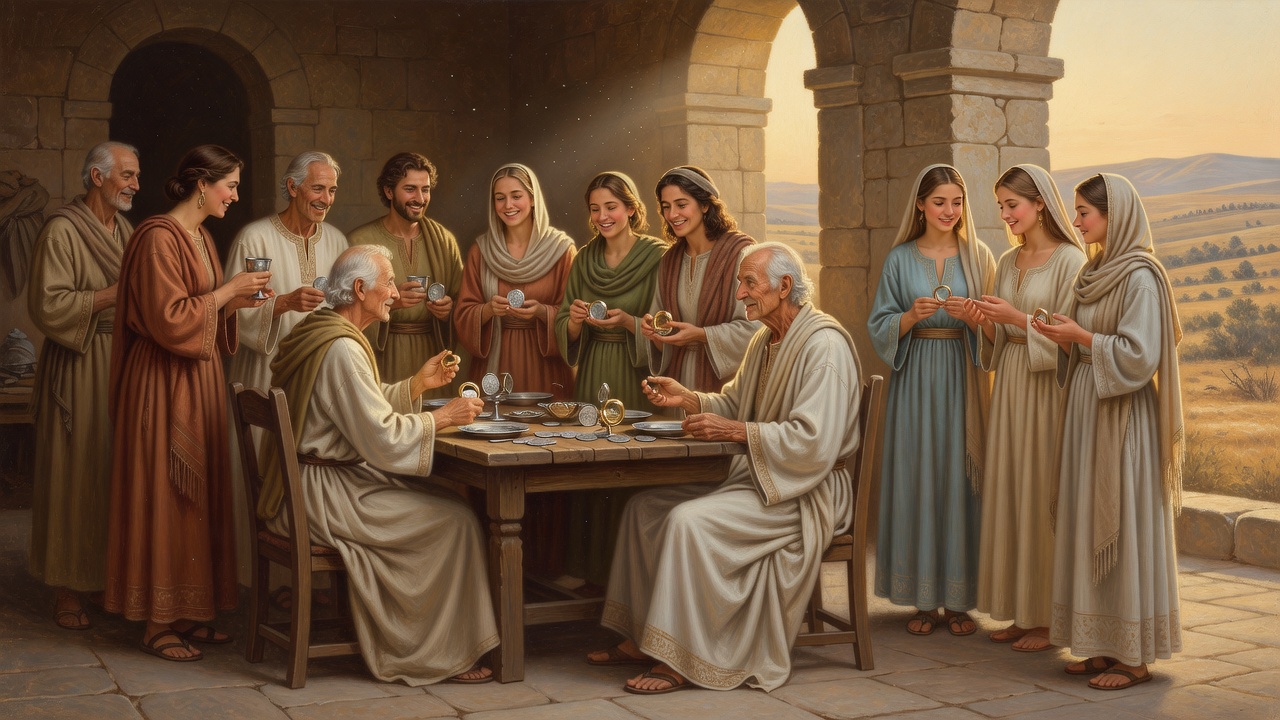
- Tras sus aflicciones, los hermanos, hermanas y conocidos de Job se reunieron en su casa para consolarlo, obsequiándole cada uno una pieza de plata y un anillo de oro. Job vivió ciento cuarenta años más, vio cuatro generaciones de descendientes y murió en avanzada edad.Fuentes: el propio texto bíblico · Job
Notas escritas con ayuda de IA a partir de fuentes abiertas (Theographic Bible Metadata, CC BY-SA 4.0; Easton’s Bible Dictionary, dominio público) y revisadas antes de publicarse.
Créditos y licencia de esta traducción
Tupàn ze'eg
Bible without Deuterocanon in Guajajára (BR:gub:Guajajára)
copyright © 2007 Wycliffe Bible Translators, Inc.
Language: Guajajára
Translation by: Wycliffe Bible Translators, Inc.
Guajajára [gub], Brazil
Copyright Information
© 2007, Wycliffe Bible Translators, Inc. All rights reserved.
This translation text is made available to you under the
terms of the Creative Commons License: Attribution-Noncommercial-No Derivative Works.
( http://creativecommons.org/licenses/by-nc-nd/3.0/ )
In addition, you have permission to port the text to different file formats, as long as you
do not change any of the text or punctuation of the Bible.
You may share, copy, distribute, transmit, and extract portions
or quotations from this work, provided that you include the above copyright
information:
You must give Attribution to the work.
You do not sell this work for a profit.
You do not make any derivative works that change any of the actual words or punctuation of the Scriptures.
Permissions beyond the scope of this license may be
available if you contact
us with your request.
Printed book ISBN 9788531109713
The Bible without Deuterocanon
in Guajajára
© 2007, Wycliffe Bible Translators, Inc. All rights reserved.
This translation is made available to you under the terms of the
Creative Commons Attribution-Noncommercial-No Derivatives license 4.0.
You may share and redistribute this Bible translation or extracts from it in any format, provided that:
You include the above copyright and source information.
You do not sell this work for a profit.
You do not change any of the words or punctuation of the Scriptures.
Pictures included with Scriptures and other documents on this site are licensed just for use with those Scriptures and documents.
For other uses, please contact the respective copyright owners.
2020-03-30
Fuente: http://ebible.org/gubBl/ · eBible.org