Jeremías 14
Tupàn ze'eg · Toca un versículo para ver sus referencias cruzadas.
Àmàn ikyr 'ym àwàmuhu
1Tupàn Tuweharupi Wiko Ma'e uze'eg àmàn ikyr 'ym àwàmuhu rehe ihewe.
2— Teko Zuta ywy rehe har nuzawy kwaw umàno ma'e kwer rehe uzai'o ma'e wà. Uzai'o waiko wà.
Waneko haw tawhu umàno waiko wà.
Uzemumikahy ukene'o pà wà.
Zeruzarez uhapukaz uzepyro àwàm henoz pà wà.
3Hemetarer katu ma'e omono kar uma'ereko ma'e 'y hekar kar pà wanupe wà.
Oho yzygwar pe wà.
Nezewe rehe we nuexak kwaw 'y wà.
Weruzewyr y'a ipor 'ym pà wà.
Pezupyk peàkàg nehe.
Pezemumikahy awyzewyze haw 'ym rehe nehe.
4Uma'ereko ma'e upyk wàkàg a'e wà no.
Hehaite wà, ta'e nukyr kwaw àmàn xe.
Uxinig ywy.
5Kaiwer pe arapuha weityk umemyr wà.
Naheta kwaw ka'api'i wanupe.
6Zumen hehaite ma'e upyta ywytyr apyr wà.
Nur kwaw ywytu wanupe, a'e rupi ipytuhem awarahu ài wà.
Nuexak katu kwaw ma'e
ta'e naheta kwaw temi'u wanupe xe.
7Hemiaihu uze'eg wà kury.
— O Tupàn Tuweharupi Wiko Ma'e. Ureremiapo kwer ikatu 'ym ma'e umume'u urekatu 'ymaw.
Urenoz urepytywà àwàm newe.
Ta'e eremume'u urepytywà àwàm urewe kwehe mehe ne xe.
Urutyryk tetea'u newi ure.
Uruzapo ikatu 'ym ma'e tetea'u nerenataromo no.
8Xo nerehe zo Izaew uzeruzar wà.
Ereiko urepyro har romo
urereko haw zawaiw katu mehe.
Màràzàwe tuwe ereiko
amo ae ywy rehe har ài ureywy rehe.
Màràzàwe tuwe ereiko wata ma'e ài pitài haw uker ma'e ài.
9Màràzàwe tuwe ereiko
awa imukuhemahy kar pyrer ài.
Màràzàwe tuwe ereiko zauxiapekwer ikàg 'ym ma'e ài, amogwer wapytywà har 'ym ài.
Ereiko ureinuinuromo ne, o Tupàn Tuweharupi Wiko Ma'e.
Uruiko neremiaihu romo ure no.
Urereityk zo pe nehe, i'i hemiaihu ihewe wà.
10Tupàn Tuweharupi Wiko Ma'e uze'eg nezewe a'e teko wanehe.
— Wata e kwe rupi wà. Ikatu wata e haw wanupe. Nukwaw kwaw uzeruze'egaw rehe wà. A'e rupi na'ikatu kwaw ihewe wà. Hema'enukwaw putar wanemiapo kwer ikatu 'ym ma'e rehe ihe nehe. Azepyk putar wanehe hekuzaromo ihe nehe, i'i Tupàn.
11Na'e Tupàn Tuweharupi Wiko Ma'e uze'eg ihewe kury.
— Epytywà 'aw teko ne wà nehe, ere zo ihewe nehe, i'i ihewe. 12Aze uzekwaku wà nehe, umai'u 'ym pà wà nehe, aze uze'eg tetea'u ihewe wà nehe, nezewe rehe we nainu kwaw ihe wà nehe. Aze uzuka ma'ea'yr herenataromo wà nehe, aze werur arozràn ihewe wà nehe, nezewe rehe we namuawyze kwaw ihe wà nehe. Nan. Azuka kar zauxiapekwer wanupe zeàmàtyry'ymawhu pe ihe wà nehe. Azuka putar ma'uhez hawhu pupe ihe wà nehe, ma'eahy haw tetea'u pupe ihe wà nehe no, i'i ihewe.
13Na'e aze'eg izupe ihe kury.
— O Tupàn Tuweharupi Wiko Ma'e hezar. Amo neze'eg imume'u har uze'eg waiko nezewe teko wanupe wà. — Naheta kwaw zeàmàtyry'ymawhu nehe, i'i wanupe wà. — Naheta kwaw ma'uhez hawhu nehe, i'i wanupe wà. — Xo zeàmàtyry'ym 'ymaw zo heta putar peywy rehe nehe, i'i waiko teko wanupe wà, a'e Tupàn pe.
14Tupàn Tuweharupi Wiko Ma'e uwazar a'e ze'eg ihewe a'e kury.
— A'e heze'eg imume'u har umume'u temu'emaw waiko herer rehe wà. Namono kar kwaw ihe wà. Nazapo kar kwaw ma'e wanupe. Namume'u kwaw ma'e wanupe. — Tupàn wexak kar ma'e urewe urepuahu mehe a'e, i'i mua'u wà. Umume'u uzeapo ma'e ràm teko wanupe. Nukwaw pixik kwaw uzeapo ma'e ràm wà. Ima'enukwaw e uzeapo ma'e ràm rehe wà. Na'e umume'u mua'u a'e ma'e teko wanupe wà, ta'e hemu'em wer wanupe wà xe. 15Ihe Tupàn Tuweharupi Wiko Ma'e amume'u putar a'e heze'eg imume'u mua'u har wanupe heremiapo ràm ihe nehe kury. Namono kwaw teko wanupe ihe wà. Nezewe rehe we umume'u ma'e herer rehe wà. — Naheta kwaw zeàmàtyry'ymawhu nehe, i'i mua'u wà. — Naheta kwaw ma'uhez hawhu nehe, i'i mua'u wà. Azuka kar putar a'e ma'e imume'u har zeàmàtyry'ymawhu pe ihe wà nehe, ma'uhez hawhu pupe ihe wà nehe no. 16Umume'u a'e ma'e amo teko wanupe wà. Azuka kar putar a'e teko zeàmàtyry'ymawhu pe ihe wà nehe, ma'uhez hawhu pupe ihe wà nehe no. Zauxiapekwer weityk putar wanetekwer pe rupi Zeruzarez tawhu pupe wà nehe. Naheta kwaw wanetekwer watymar wà nehe. Uzeapo putar wanupe paw rupi nehe: wanemireko wanupe, wana'yr wanupe, wanazyr wanupe. Umekuzar putar ukatu 'ymaw wà nehe.
17— Emume'u nezemumikahy haw teko wanupe nehe, i'i Tupàn ihewe. Aze'eg nezewe wanupe.
— Tuwe hereha uzakook herehaykwer tuweharupi nehe, 'aromo nehe, pyhaw nehe no. Tuwe nupytu'u kwaw uzai'o re nehe.
Ta'e heremiaihu ikàg 'ym ma'e upuraraw ma'erahy tetea'u wà xe.
Nuzawy kwaw teko ikutuk pyrer ikixi pyrer wà.
18Kaiwer pe heho mehe
aexak awa zeàmàtyry'ymawhu pe izuka pyrer wanetekwer ihe wà.
Tawhu pupe hereixe mehe
aexak teko ma'uhez haw wi umàno etea'i ma'e ihe wà.
Tupàn ze'eg imume'u har a'e wà, xaxeto a'e wà no, uzapo wi wi uma'ereko haw wà.
Nezewe rehe we nukwaw kwaw wemiapo wà.
Teko umume'u wemiapo kwer ikatu 'ym ma'e Tupàn pe wà
19O Tupàn Tuweharupi Wiko Ma'e, aipo ereityk tuwe Zuta ywy rehe har wà.
Aipo teko Xiàw rehe har iro tuwe newe wà.
Màràzàwe tuwe urekutuk pe ne.
Nurupuner kwaw urekatu haw rehe kury.
Uruàro zeàmàtyry'ym 'ymaw.
Nezewe rehe we nuzeapo kwaw ikatu ma'e.
— Uremukatu putar a'e nehe, uru'e urezeupe.
Ur purumukyzeahy haw.
20O Tupàn Tuweharupi Wiko Ma'e, urumume'u ureremiapo kwer ikatu 'ym ma'e newe ure kury,
ureipy wanemiapo kwer ure no.
Azeharomoete uruzapo ikatu 'ygwer neruwa rupi ure.
21Nema'enukwaw neremimume'u kwer rehe nehe.
Urereityk zo pe nehe.
Eityk kar zo Zeruzarez tawhu zauxiapekwer wanupe nehe.
Ta'e nerenaw ipuràg eteahy ma'e a'e pe hin a'e xe.
Nema'enukwaw neze'eg awer neremiaihu wanehe we neremiapo katu kwer rehe nehe.
Epytu'u zo ma'e iapo re a'e ze'eg rupi nehe.
22Ni amo tupàn a'ua'u amo ywy rehe har wazar nupuner kwaw àmàn imugyr kar haw rehe wà.
Ni ywak nupuner kwaw àmàn imu'ar kar haw rehe.
Uruzeruzar nerehe,
o Tupàn Tuweharupi Wiko Ma'e urezar.
Ta'e ereiko ma'e paw iapo har romo ne xe, i'i teko Tupàn pe wà.
¿Sabías que…?
La Gran Sequía y los Falsos Profetas
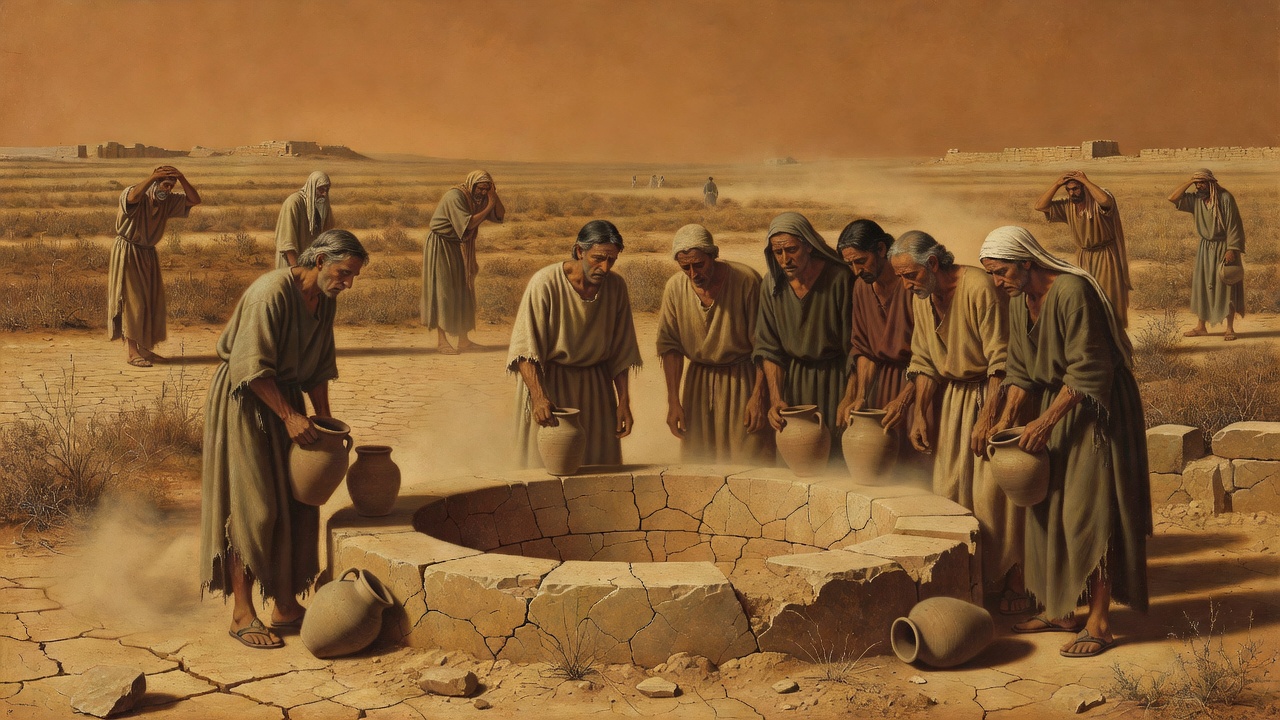
- El capítulo comienza con la descripción de una severa sequía en Judá, mostrando a siervos enviados por los nobles en busca de agua que regresan con vasijas vacías, mientras los campesinos se cubren la cabeza desesperados ante la tierra agrietada.Fuentes: el propio texto bíblico
- Jeremías lamenta la influencia de los falsos profetas en Jerusalén que aseguraban paz e inmunidad frente al desastre, aunque Dios afirma que no los envió y que la espada y el hambre acabarían con ellos.Fuentes: el propio texto bíblico · Jeremiah · Jerusalem
- En su ruego por la tierra afligida, Jeremías resalta que los ídolos extranjeros no pueden producir lluvia, afirmando que solo el Dios de Israel tiene el poder de enviar lluvias y guardar Su pacto.Fuentes: el propio texto bíblico
Notas escritas con ayuda de IA a partir de fuentes abiertas (Theographic Bible Metadata, CC BY-SA 4.0; Easton’s Bible Dictionary, dominio público) y revisadas antes de publicarse.
Lugares de este capítulo
- Jerusalem · 31.777, 35.234 · versículos 2, 16, 21
- Zion · Hoy: Jerusalem · 31.777, 35.234 · versículo 19
Solo aparecen lugares identificados con alta confianza (90 % o más según las fuentes académicas reunidas por OpenBible). Mapa de la época: DARE (Digital Atlas of the Roman Empire), CC BY 4.0; mapa actual: © colaboradores de OpenStreetMap; lugares: OpenBible.info (CC BY 4.0).
Créditos y licencia de esta traducción
Tupàn ze'eg
Bible without Deuterocanon in Guajajára (BR:gub:Guajajára)
copyright © 2007 Wycliffe Bible Translators, Inc.
Language: Guajajára
Translation by: Wycliffe Bible Translators, Inc.
Guajajára [gub], Brazil
Copyright Information
© 2007, Wycliffe Bible Translators, Inc. All rights reserved.
This translation text is made available to you under the
terms of the Creative Commons License: Attribution-Noncommercial-No Derivative Works.
( http://creativecommons.org/licenses/by-nc-nd/3.0/ )
In addition, you have permission to port the text to different file formats, as long as you
do not change any of the text or punctuation of the Bible.
You may share, copy, distribute, transmit, and extract portions
or quotations from this work, provided that you include the above copyright
information:
You must give Attribution to the work.
You do not sell this work for a profit.
You do not make any derivative works that change any of the actual words or punctuation of the Scriptures.
Permissions beyond the scope of this license may be
available if you contact
us with your request.
Printed book ISBN 9788531109713
The Bible without Deuterocanon
in Guajajára
© 2007, Wycliffe Bible Translators, Inc. All rights reserved.
This translation is made available to you under the terms of the
Creative Commons Attribution-Noncommercial-No Derivatives license 4.0.
You may share and redistribute this Bible translation or extracts from it in any format, provided that:
You include the above copyright and source information.
You do not sell this work for a profit.
You do not change any of the words or punctuation of the Scriptures.
Pictures included with Scriptures and other documents on this site are licensed just for use with those Scriptures and documents.
For other uses, please contact the respective copyright owners.
2020-03-30
Fuente: http://ebible.org/gubBl/ · eBible.org